
If your coat sleeves seem too long, try the coat over the layers you expect to wear, let your arms rest naturally and check how it moves before asking for a shorter hem. A sleeve that covers more hand than you want may need attention, but shortening won’t solve tight shoulders or crowded sleeves.
There isn’t one useful cuff-exposure rule for every winter coat. A tailored coat, a deliberately roomy design and outerwear with an inner knit cuff serve different preferences. Start with the actual garment and the coverage you need rather than borrowing a suit-jacket measurement.
Look at the resting sleeve first
Stand without pulling the coat downward or pushing the sleeves up. Wear your usual sweater and notice where each sleeve ends when your hands are relaxed. Can you use your hands without repeatedly moving the cuffs? Do you like the amount of coverage? Check both arms rather than assuming one pinned length answers everything.

The navy-coat illustration shows relaxed arms and visible sleeve edges. It supplies a viewing position, not a measured ideal. Your own hand position, coat design and preferred coverage matter more than matching the photograph exactly.
Keep the comparison fair. Wear the same underlayer when comparing two coats. A thin tee and a substantial sweater can change the room you need inside a sleeve, so switching layers halfway through can obscure the fit question.
Reach, bend and fasten the coat
Next, reach forward as you would for a bag, bend your elbows and try the fastening you expect to use. Some sleeve movement is ordinary; the useful question is whether you can move comfortably and retain the coverage you want. A sleeve moving upward during a reach isn’t, by itself, proof that you need a longer sleeve.

In this illustration, the camel coat and burgundy knit move with a forward reach. The photo doesn’t demonstrate tested comfort or predict how another coat will behave. Repeat the movement yourself and notice whether the back, upper arm or elbow feels restrictive.
| What you notice | Useful next comparison |
|---|---|
| Cuffs cover more hand than you want with relaxed arms | Discuss sleeve length after confirming the rest of the coat fits. |
| Upper arms or back feel tight when reaching | Compare sleeve room and coat cut before treating this as a hem problem. |
| Only a thick sweater makes the sleeves feel crowded | Try the intended layers together, or compare another outerwear cut. |
| Several fit points feel wrong at once | Compare another size or proportion range before committing to alterations. |
Check the cuff before assuming a simple alteration
Look for lining, vents, buttons, zippers, tabs or an inner cuff. These are useful details to show an alteration professional. Don’t assume that every sleeve can be shortened from the bottom while keeping every existing detail in the same relationship.
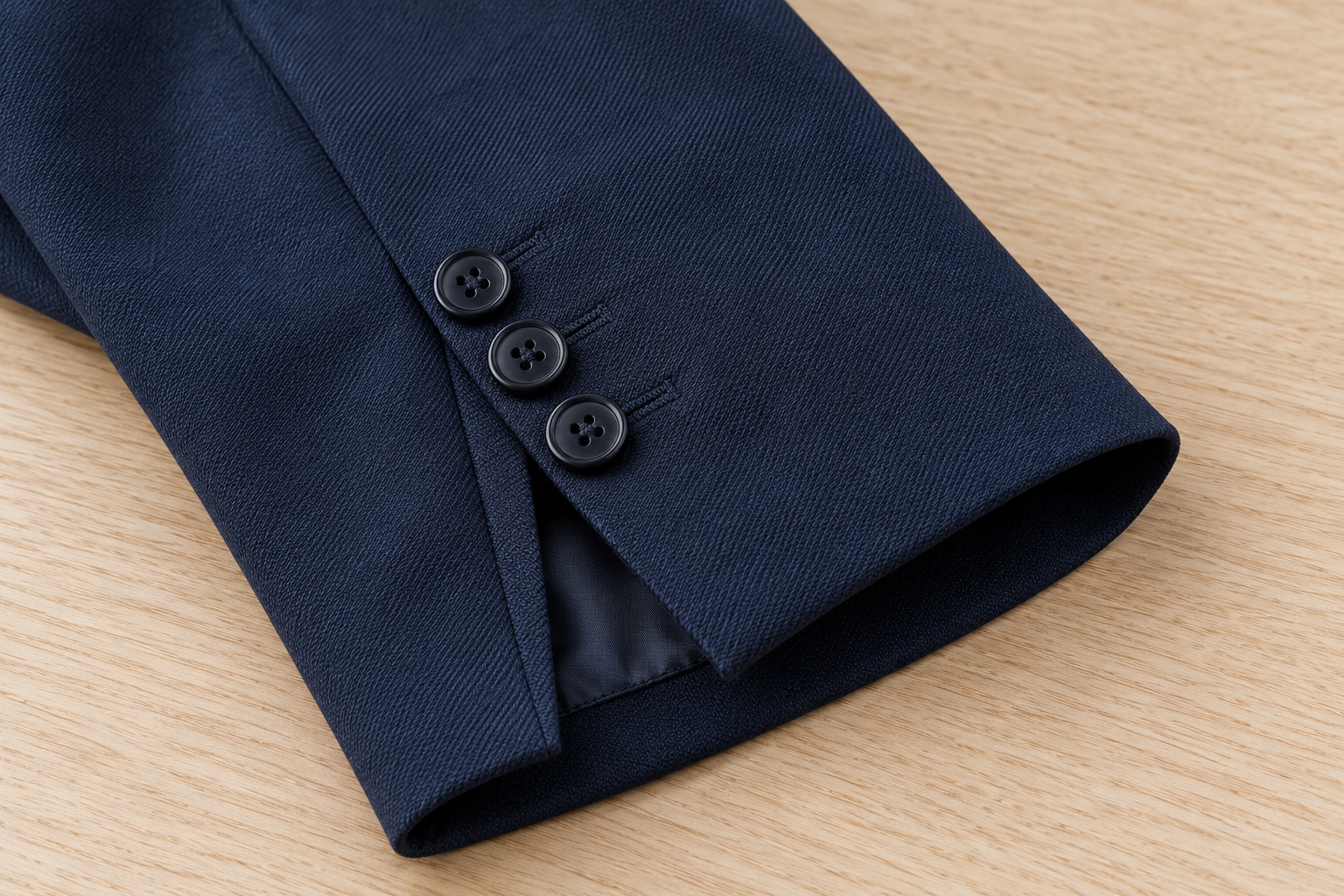
This close-up shows a vent, three buttons and a glimpse of lining. It doesn’t establish whether a real garment’s buttonholes function. Inspect your own cuff rather than treating the illustration as proof of its construction.
In Threads’ jacket-sleeve tutorial, sewing educator Pamela Howard describes a method specifically for nonworking vents and shows how lining and buttons enter the process. That limited scope matters: it isn’t a promise that every coat cuff can be altered the same way.
Bring the complete setup. Take the coat and intended sweater to the appointment. Explain what bothers you at rest and in movement, ask what details would change, and request the price and expected result before approving the work.
Know when another cut is the better comparison
If the shoulder area, upper arms and sleeve length all feel wrong, try another cut as well as another size. Our petite versus short sizing guide explains why a proportion range can change more than one length. A shorter sleeve alone won’t necessarily address the rest of the coat.
Once the fit is settled, these everyday outfit combinations can help you choose the base layers. Keep your actual plans in mind: carrying a tote and reaching for a car door may reveal a different preference from standing still in a fitting room.
Don’t wash a coat in hopes of shrinking only the sleeves. Follow its actual label; the FTC’s garment care guidance explains the role of those item-specific instructions. Before altering a new purchase, check the seller’s return terms and decide whether another coat is the more useful option.
Images are original AI-generated editorial illustrations, not measured garments, alteration guarantees or evidence of a personal wear test.

Alia Hashim
I'm Alia Hashim — a passionate blogger and founder of Modern Lady Magazine. I started this platform to create a space where women could find inspiration, empowerment, and real-life solutions for style, beauty, wellness, and beyond. Through Modern Lady Magazine, I aim to celebrate the modern woman — confident, creative, and full of dreams — while sharing ideas that help nurture both inner strength and outer beauty. Every story, every tip, every idea here is crafted to inspire you to embrace your journey and live life beautifully, one step at a time.
View author profile →





3 Comments