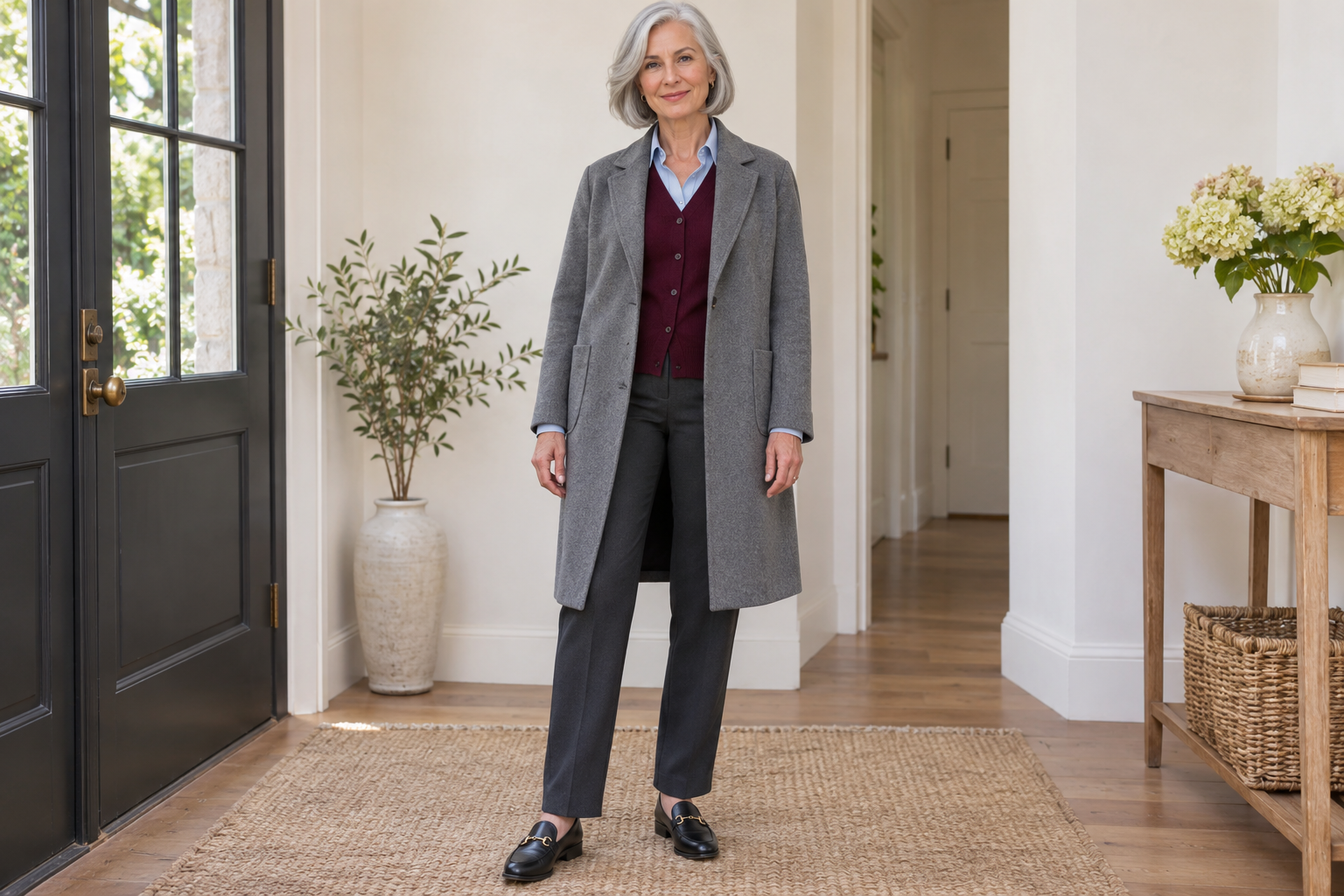
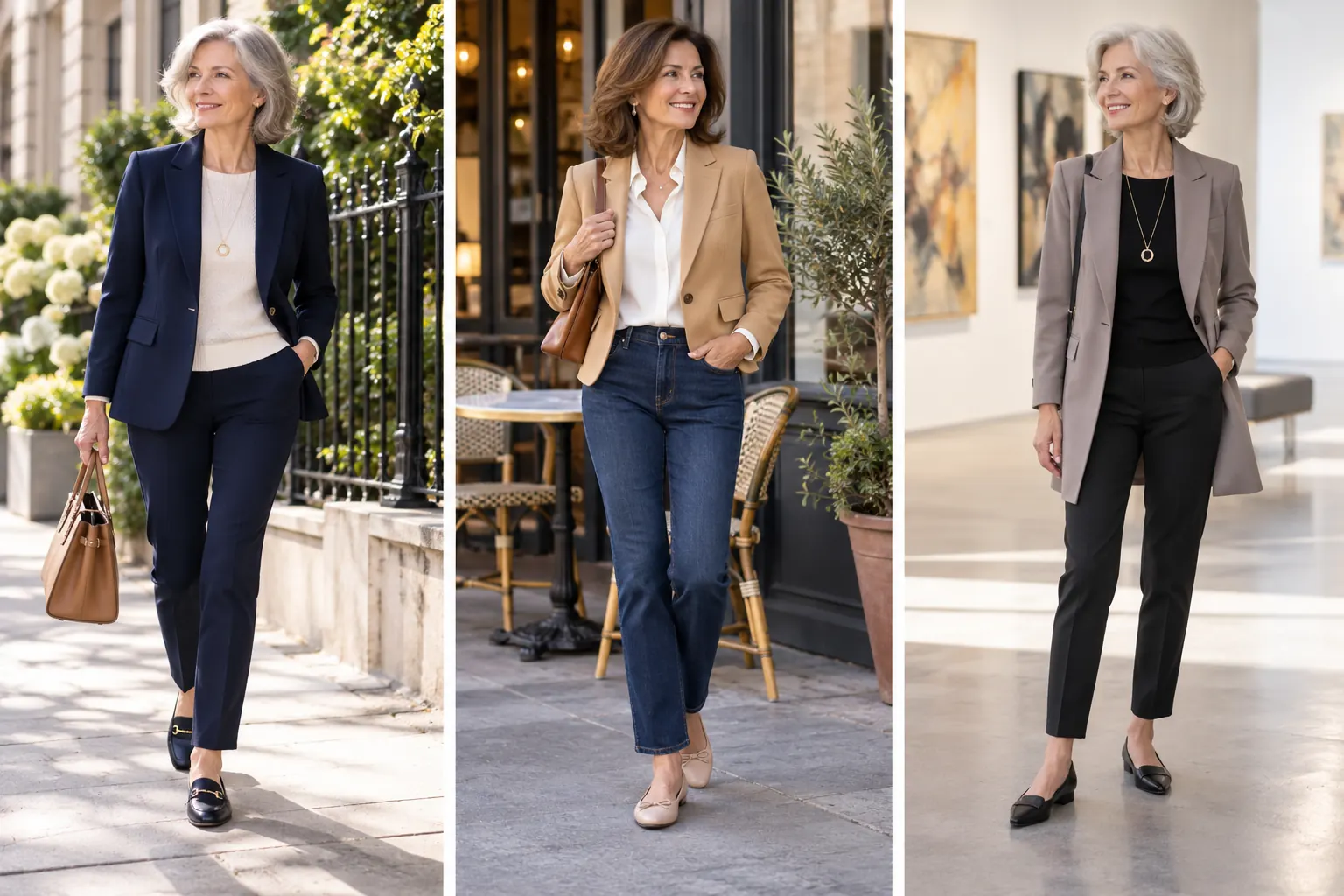
Wear a long cardigan over a base outfit you already like, then compare the weight, sleeves and hems together. Straight jeans are one option, but a pleated skirt, a dress or wider pants can work as a personal styling choice too. These long cardigan outfit ideas show sixteen different combinations without prescribing one belt or length for every shorter frame.
Choose the example closest to your closet and use its specific comparison. You might change the tee edge, the bag position or the underlayer before changing the cardigan. The aim is a layer you enjoy wearing, not a fixed formula about making yourself appear taller.
Start with the outfit underneath
Try the top and bottom without the cardigan first. Check coverage, movement and the shoes you intend to wear. If you expect to remove the knit indoors, that base should still feel complete. The everyday outfit guide offers familiar starting pieces when you want a second idea.
Then add the long layer and look at the whole shape while moving. A heavy knit, a smooth fine knit and a tied wrap do not behave identically. Their appearance in these illustrations cannot establish warmth, fiber content or how another garment will drape on you.
Try one change at a time: Keep the cardigan and shoes steady while comparing two base tops. If one catches or gathers underneath, adjust that particular pairing. Adding a belt is a choice to compare afterward, rather than the first repair for every long layer.
Long layers with pants, skirts and dresses
The outfits below vary the cardigan length, base shape and color relationship. Read the advice beside each photo to see what that combination helps you compare. A visible detail is a starting point for your own try-on, not proof that the same garment will behave identically in another wardrobe.
Oatmeal Over Dark Straight Denim

The white tee and dark jeans already make an ordinary outfit; the oatmeal cardigan adds a longer, softer outline. Brown loafers and the tan crossbody keep the accessories quiet. This is a useful starting point when you want to try a long layer without changing every piece underneath.
Begin with the tee length. Look at it loose over the jeans, then compare a small tuck only if you want one. The photograph leaves the tee untucked, so there is no hidden waist treatment required to reproduce the idea.
Add the cardigan and put your usual items in the bag. Check whether the strap gathers the knit at one shoulder when you walk. If it does, adjust the carrying arrangement before deciding that the cardigan’s length is the problem.
Navy Knit With Cream Tailoring

Navy knit frames a light blouse and cream pants, with burgundy loafers supplying a restrained color change. The long cardigan and full-length pants are both plain, making their separate edges easy to see. You can borrow the dark-over-light contrast without needing these exact shades.
Wear the pants with the intended loafers before checking the whole outfit. Watch the back of the hem during a turn; changing from a thicker sole to a thinner one may alter where it falls. The cardigan does not resolve a pant length that catches beneath a shoe.
Then compare the blouse lightly tucked and loose. Keep whichever treatment lets you move comfortably and leaves the cardigan fronts hanging as you prefer. A belt is optional; the navy frame already separates the lighter center from the outer layer.
A Rust Layer With a Black Dress
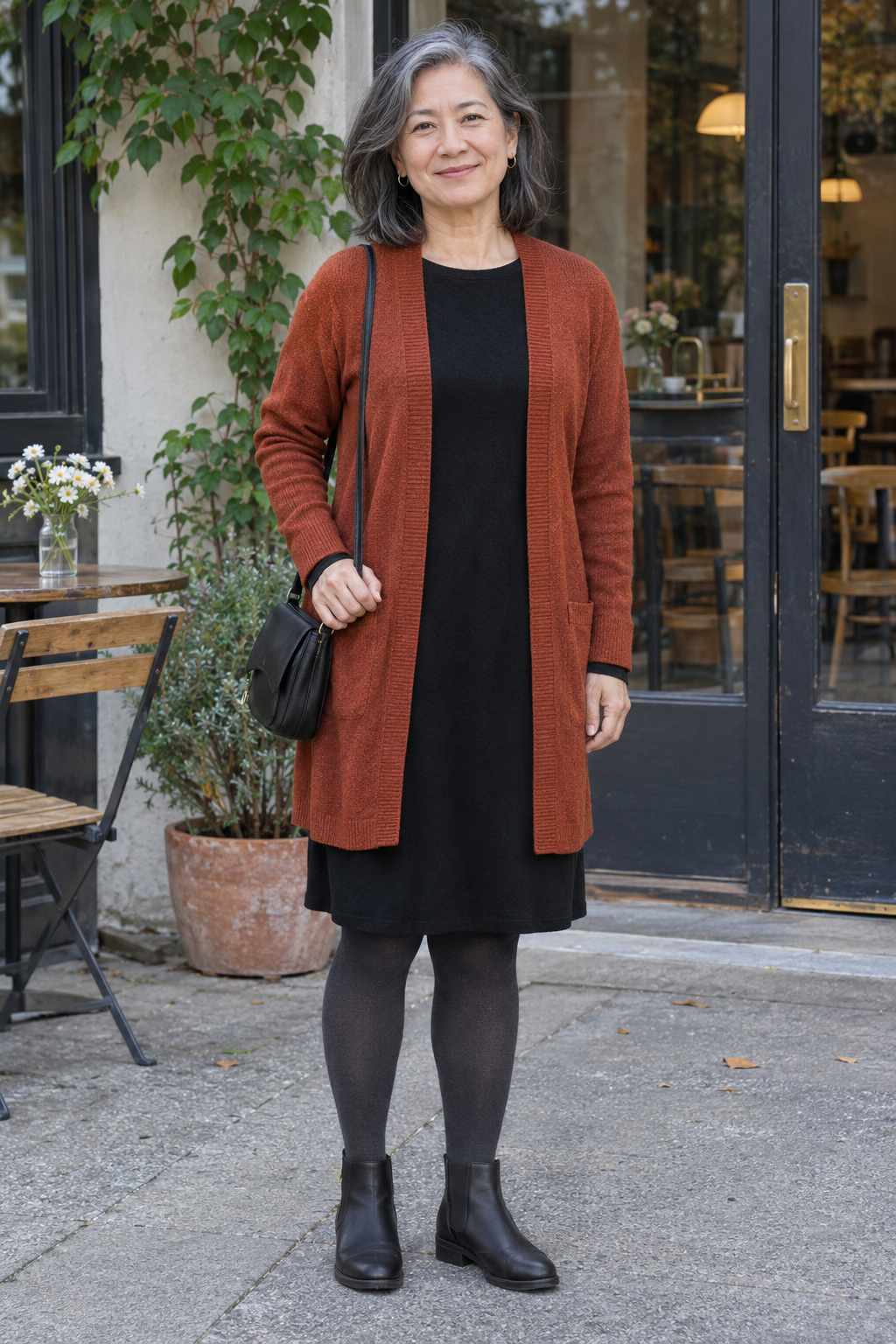
A rust cardigan gives a plain black shift a different mood without adding pattern. Charcoal tights and black ankle boots keep the lower half simple. This example suits someone who likes a dress as the base and wants the long layer to provide most of the color.
Try the dress alone first. Check its neckline, sleeves and seated coverage so that removing the cardigan leaves something you still enjoy wearing. A colorful outer layer should not be the only reason the base feels usable.
With the cardigan on, reach forward and notice how the dress sleeves sit inside it. Compare that combination rather than judging each piece separately. The illustrated knit is a styling suggestion; its appearance cannot establish how warm your own cardigan will feel or how it should be cleaned.
Sage and a Dark Denim Skirt

Sage softens the dark denim skirt while tan loafers keep the finish lighter than black shoes would. An ivory tee leaves the center plain, so the A-line skirt and long open knit provide the main shapes. There is no requirement to replace the skirt with narrow pants to wear this cardigan.
Turn in your own skirt and watch the two hems. Does the knit slide easily over the denim, or do the layers catch together? That observation is more useful than a fixed rule about how many inches should separate them.
Compare the cardigan open before adding a belt. If you prefer more waist definition, try another tee placement first and see whether it changes enough. Keep the skirt’s movement if that is what you like about it, rather than narrowing every layer automatically.
Gray Knit Over Burgundy Pants

A pale gray cardigan lets burgundy pants provide the color while a charcoal top and black loafers keep the rest understated. The long fronts are clean and unfastened. This is an alternative to making the cardigan itself the brightest part of the outfit.
Use the crossbody for the items you need to carry. If your own cardigan has pockets, compare its drape empty before filling them; weight on one side may change how it hangs. The point is to judge the outfit in use, not only with both hands held still.
Check the charcoal top without the cardigan, too. Its neckline and length remain part of the outfit when the layer comes off. Burgundy ankle pants can preserve the same palette with a different shoe, provided you check that actual hem and opening together.
Camel With a Navy Pleated Midi

The navy top and pleated skirt make a related-color base beneath a camel cardigan. Burgundy ballet flats and the shoulder bag add another warm note. The pleats bring movement that straight pants do not, so let them be part of the comparison rather than treating them as excess fabric.
Try your cardigan with the skirt and walk a few steps. Notice whether its weight settles smoothly over the pleats or makes them bunch at the sides. A lighter or smoother knit may behave differently, but the photograph cannot predict that for your garments.
Keep the plain navy top near the waistband as your first version. If the center gathers while seated, compare another top length before adding a tuck or belt. You can keep the camel-and-navy idea while choosing the particular layers that move easily together.
A Blue Cardigan With Gray Jeans

Dusty blue knit changes gray jeans and a white tee without making the lower half complicated. White sneakers repeat the tee, while a gray tote stays close to the denim. This is a casual option when the cardigan is the one layer you expect to remove and carry.
Look at the tee and jeans on their own before adding the blue knit. Choose the tee coverage you want rather than relying on the long cardigan to conceal a fit you dislike. A complete base makes the outfit easier to adapt indoors.
Then compare the cardigan sleeves with your normal reach and carrying position. If the tote keeps pushing one front backward, try another way to carry it before changing the knit. The blue color and longer outline are the ideas to borrow; your own bag and sneaker shape can differ.
Chocolate Knit With Ecru Jeans

A chocolate cardigan creates a dark outer frame around an ivory top and ecru jeans. Brown loafers and a brown shoulder bag keep the warm palette connected. The longer knit makes this visibly different from the mid-thigh denim examples above.
Try the pale base without the cardigan first. Choose the scoop-neck coverage and jeans fit you want, including the actual underlayers, before judging the outer length.
Then sit in a chair and stand again. Notice where the cardigan lands and whether you need to gather it away from the seat. That small rehearsal helps you decide whether you enjoy this length for the day you have planned.
If you prefer a shorter version, keep the chocolate-and-cream colors. You can borrow the contrast without committing to a below-knee hem or replacing jeans you already like.
A Burgundy Layer Over Small Stripes

Small navy stripes give a burgundy cardigan a patterned center, while navy pants and loafers keep the bottom half quiet. A navy bag repeats the darker base. This is a way to use color in the long layer without making every garment a different shade.
Look at the tee’s neckline before choosing a scarf. The stripes already create detail near the face, and a scarf adds both pattern and fabric. Compare it only if you want that addition or need it for your own conditions.
The tee is worn loose in the illustration. Check its edge against your waistband and the cardigan fronts after movement. If the fabrics collect together, try a smoother tee or another length before assuming a tuck or belt is necessary. Keep the parts that feel easy in your actual wardrobe.
Charcoal With a Plum Midi Dress

A plum dress brings color beneath charcoal knitwear without needing separate tops and bottoms. The dress flares gently below the cardigan, and black ballet flats keep the shoe choice simple. This provides a different silhouette from the straighter black shift in the earlier rust-cardigan example.
Compare the dress’s V neckline with the open cardigan edge. You may like both visible lines, or prefer another neckline in your own dress. Neither is a rule about which shape a shorter woman should wear; the useful question is your preferred coverage and outline.
Walk and sit before choosing this pair for lunch. Check that the knit moves over the skirt instead of catching against it. If the dress is comfortable alone, a different cardigan weight may preserve the combination without changing the dress or adding a belt.
Cream Cable Knit With Olive Pants
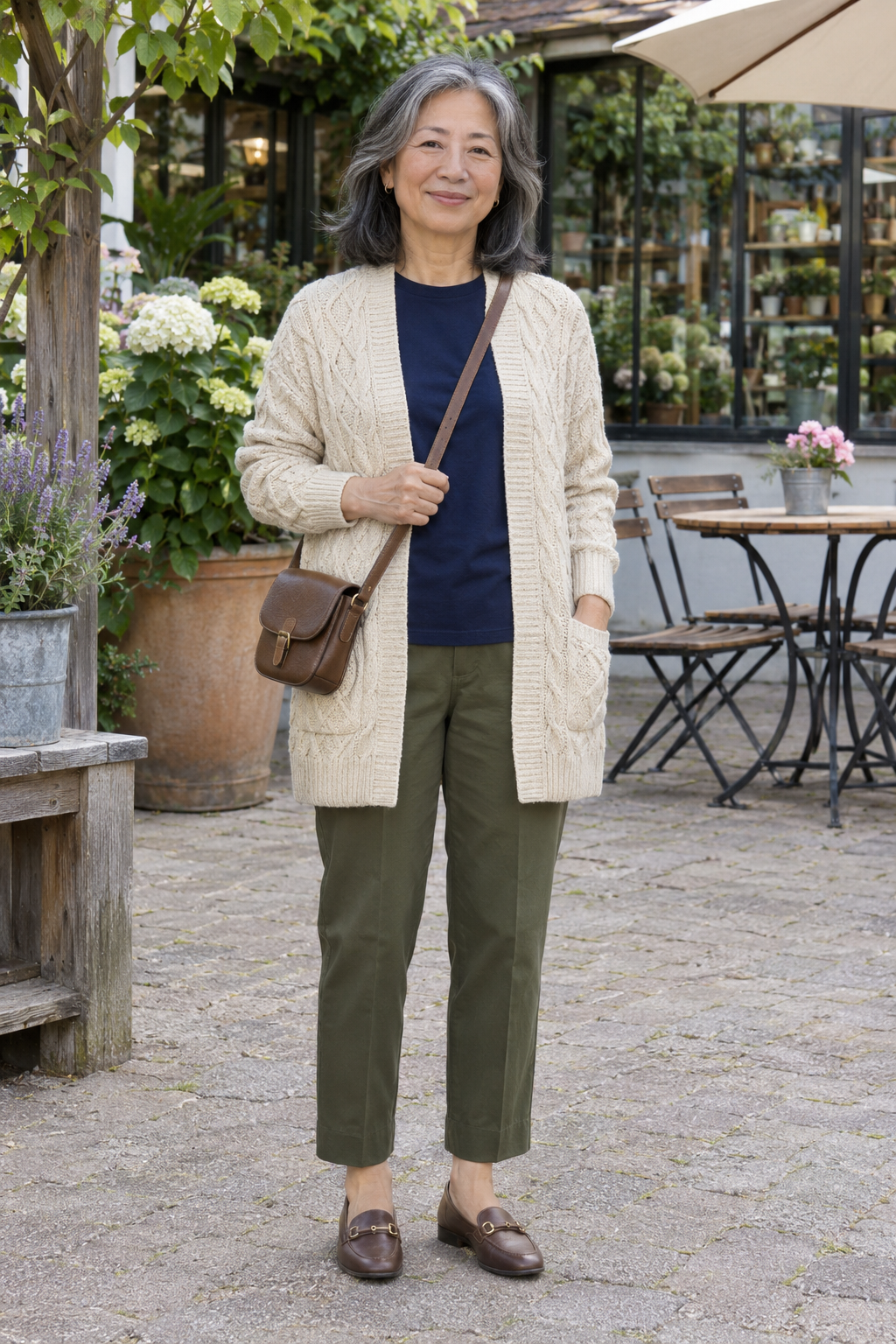
Cream cable knitting gives olive pants and a navy tee a more textured upper layer. Brown loafers and the small crossbody stay understated. The cardigan supplies the main surface detail, so the plain base can remain exactly that: plain, without another pattern to make it feel finished.
Try your actual tee inside the sleeves and reach forward. Cable texture does not tell you how much room the garment has through the upper arm. Compare the whole layer rather than deciding from an empty cardigan on a hanger.
If you want a long-sleeve base instead, test it separately because it may take more room. Keep the olive-and-navy colors if you like them. The photograph is a clear styling reference, but it cannot establish fiber, warmth or the care method for another textured knit.
A Navy Base Under Soft Pink
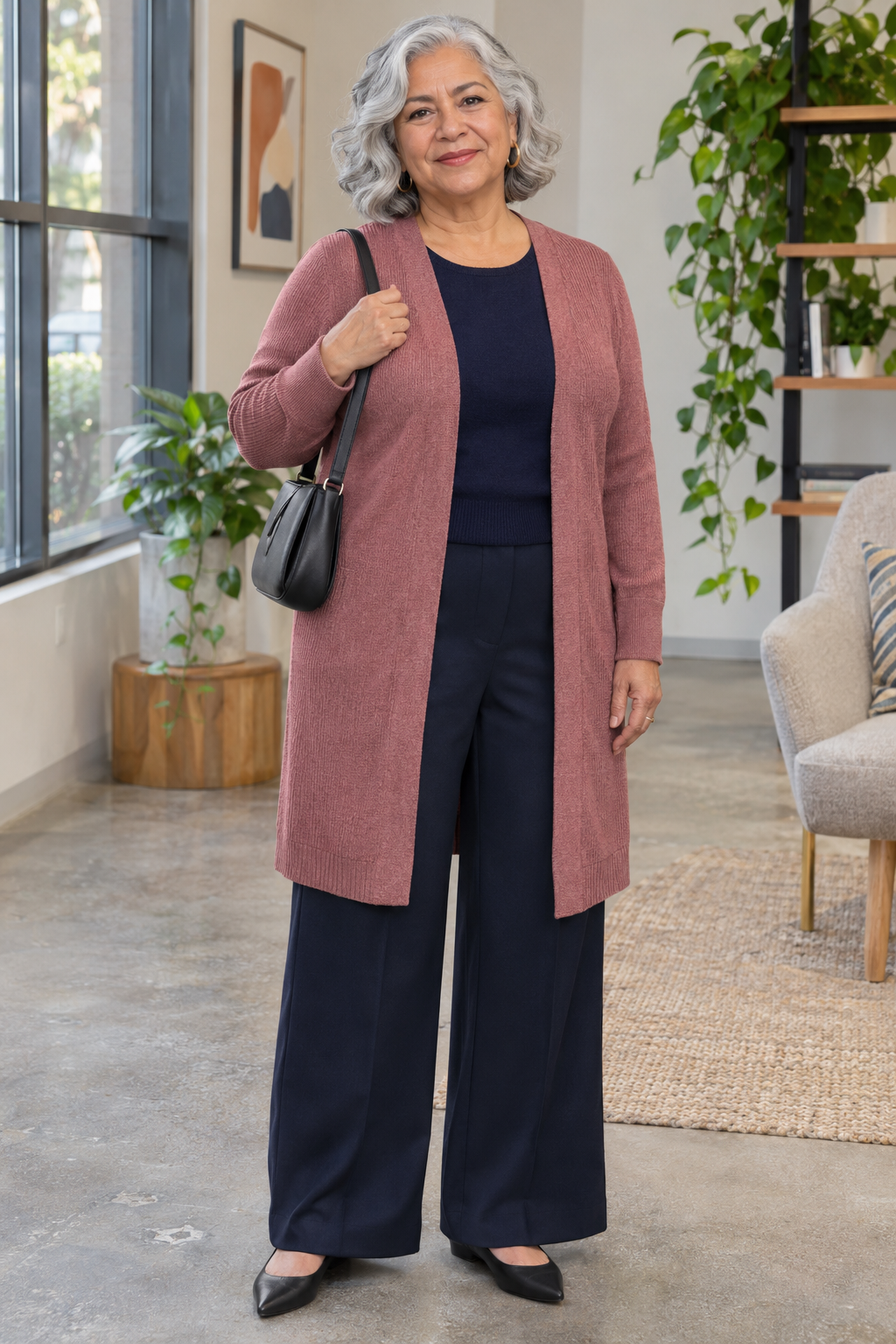
A muted rose cardigan surrounds a navy shell and wide-leg pants, leaving the base close in color. Black pointed flats and a small black bag keep the accessories restrained. This is a deliberately broad pant shape beneath a long layer, rather than a narrow-pants requirement.
Look at the navy base first, then add the cardigan. Notice whether the combination moves as you want when you turn. If it feels fuller than you prefer, compare a lighter knit before deciding the pants themselves are wrong.
Check the full-length hem on the actual flats; a pointed toe does not tell you the sole height. Keep the shell’s neckline comfortable on its own in case you remove the cardigan. The rose color can supply the change you want without extra jewelry or another contrasting piece.
Olive Knit With a Printed Skirt
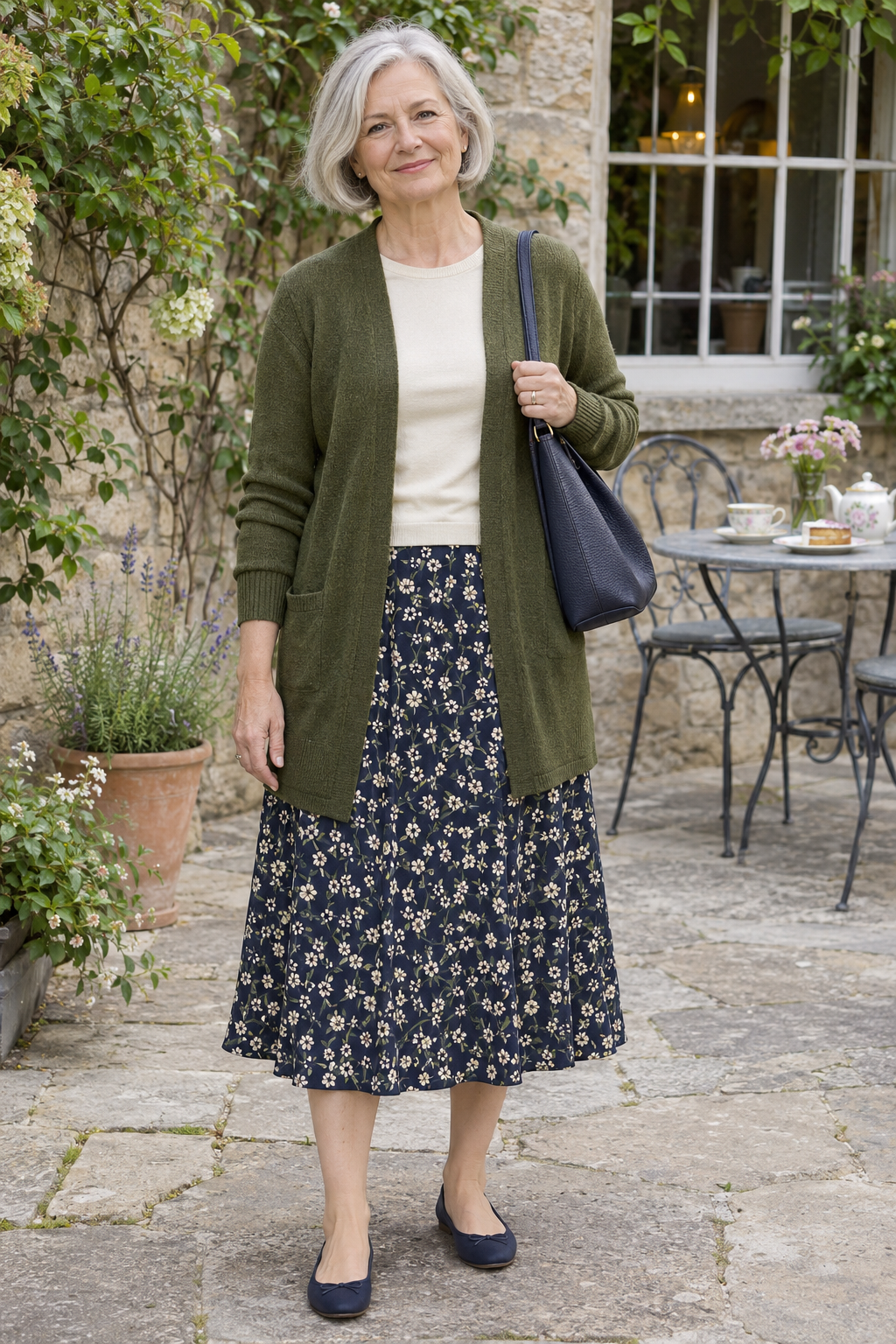
An olive cardigan picks up the earthy mood of a navy floral skirt without matching it exactly. The cream top echoes the small flowers, and navy ballet flats repeat the skirt background. The long layer and A-line skirt both stay visible as separate shapes.
Let the print be the detail during the first comparison. Look at the cream neckline without a necklace, then decide whether you want one. A patterned skirt does not need a matching patterned accessory, nor does its scale have to follow a body-height rule.
Check the skirt and knit together while walking. A pocket or bag strap may affect where the cardigan front rests, so include what you plan to carry. If you prefer another cardigan color, keep the cream-and-navy base and change only that outer piece.
Black Cardigan With a Blue Shirt
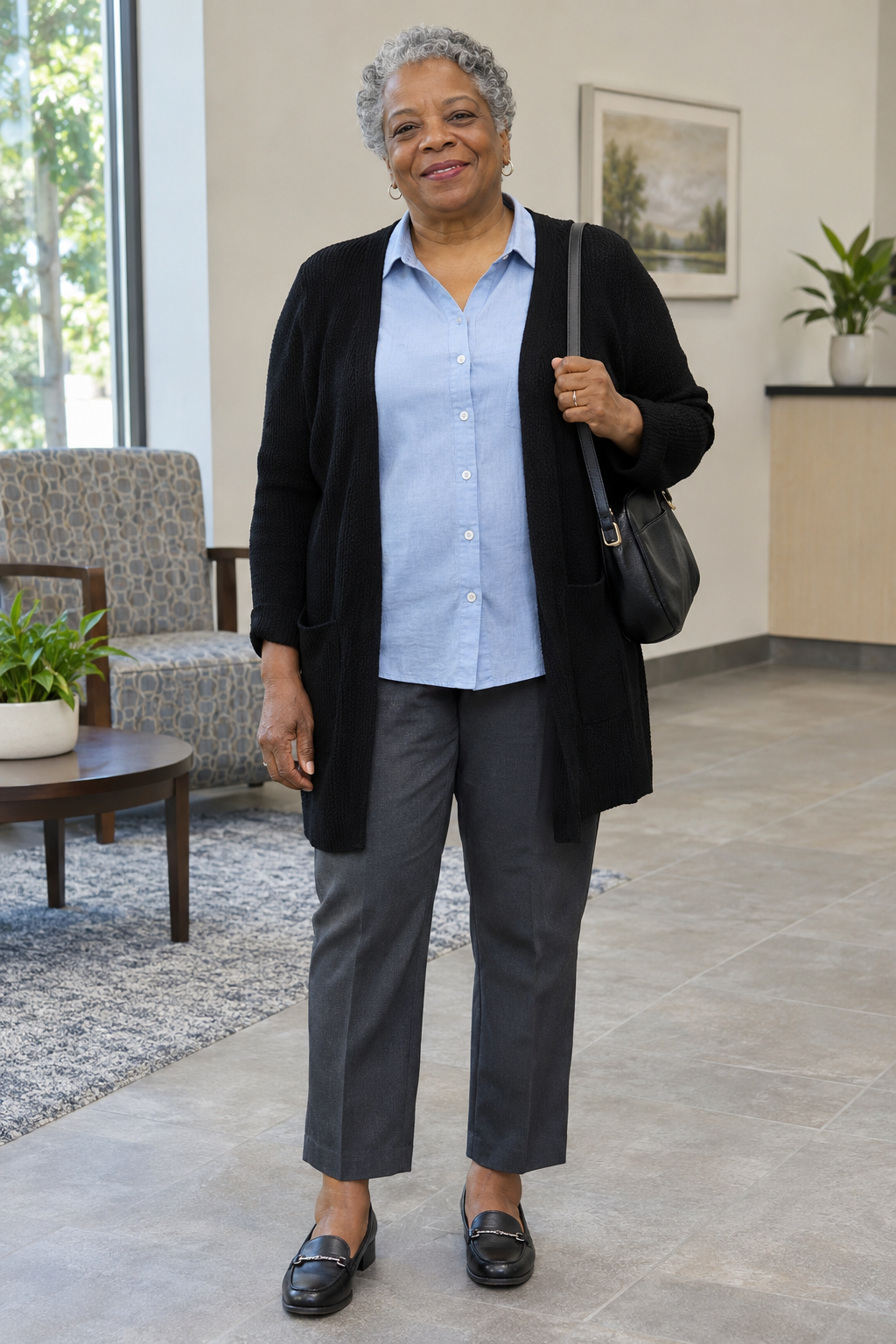
A blue shirt adds a visible collar and a lighter center under black knitwear, with charcoal ankle pants and black loafers keeping the rest close in tone. The shirt is left untucked, making this a layered alternative to a shell or plain tee.
Start at the wrists. Compare the shirt cuffs inside the cardigan sleeves with your arms relaxed and then extended. If the cuffs fold back or feel crowded, another sleeve width may matter more than shortening the entire cardigan.
Look at the shirt hem from the side, too. It can end above the long knit without being tucked into the pants. Choose the amount of overlap you enjoy, then check it seated. The small black bag is optional; a different carrying arrangement can preserve the same quiet palette.
A Teal Layer With a Cream Dress
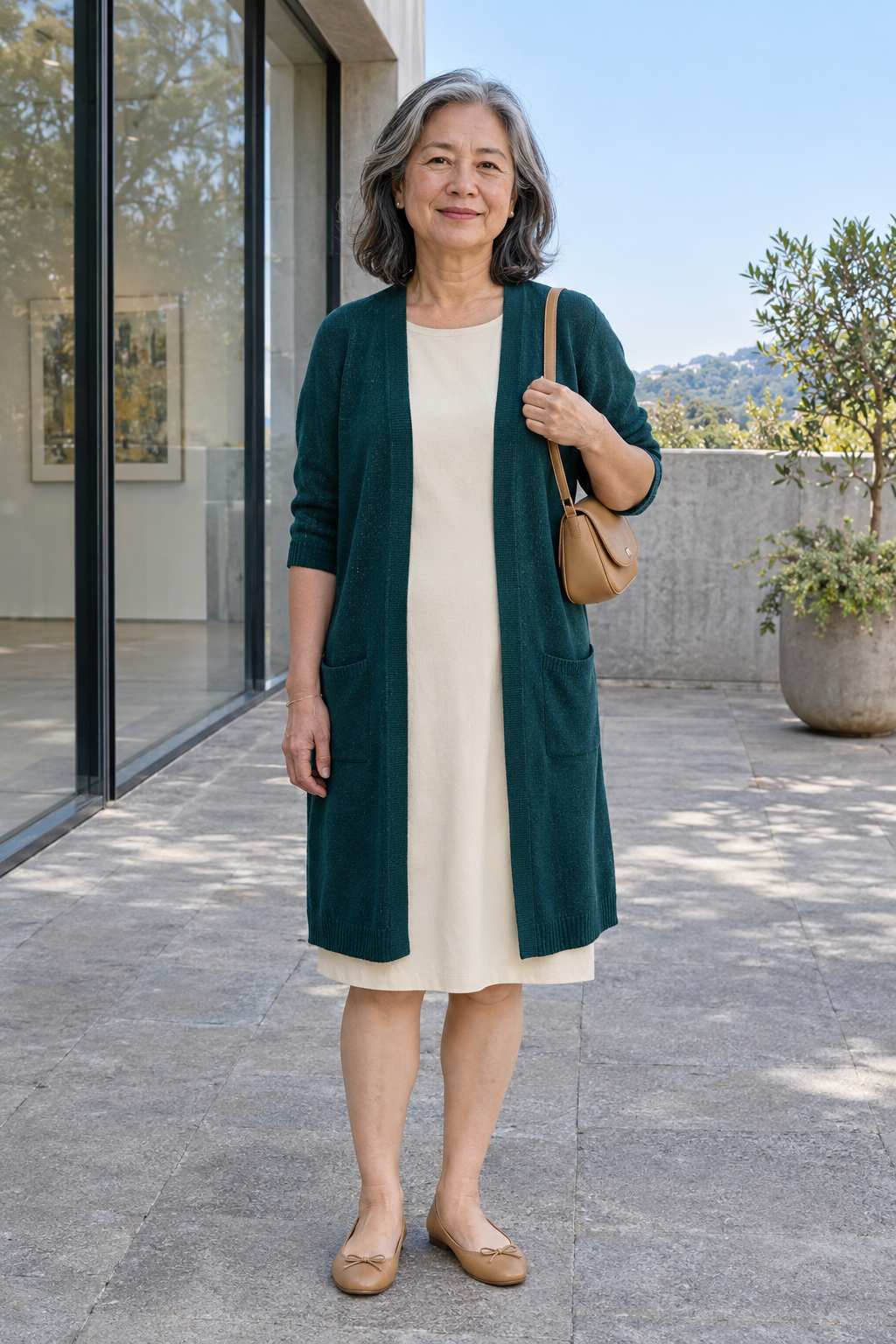
Deep teal provides the color around a cream shift, with tan ballet flats and a small shoulder bag keeping the accessories light. The dress and cardigan hems sit close together in the illustration. That is one option to compare, rather than a rule that the dress must always extend well below the knit.
Try the dress without the cardigan and check the sleeves and coverage you prefer. If you expect to remove the layer indoors, choose the base on its own merits. Pale fabric should be checked in your actual light with the underlayers you intend to wear.
Then walk and sit with both pieces on. Look at how the cardigan fronts move around the dress and whether the sleeves settle easily. Keep the teal-and-cream contrast if you like it, even if another dress length or a different flat works better in your wardrobe.
A Belted Knit With Gray Tailoring

The oatmeal wrap cardigan uses its own knit tie, creating a different shape from the open-front examples. A charcoal shell, gray straight pants and black loafers keep the base plain. This is a way to compare a designed fastening, not an instruction to belt every cardigan you own.
Start with the tie loose, then fasten it comfortably and sit down. Notice whether the overlap stays where you want it and whether the knot presses against you. The amount of definition you prefer matters more than reproducing the exact tension shown in the photograph.
Check the shell at the neckline and when the cardigan is open. If you like both versions, you have two ways to wear the same pieces. Keep the actual shoes on while checking the full-length pants, because changing the tie does not solve a hem that catches beneath a heel.
Check the layer during ordinary transitions
Before choosing an outfit for the day, sit, stand and put your bag on in your usual way. Notice whether the cardigan trails into a chair, catches against the skirt or gathers under the strap. Those are useful observations about a particular pairing, rather than reasons to rule out long knitwear altogether.
When comparing two cardigans, keep the same base outfit for both. A difference in weight or sleeve shape may matter more than a small difference in length. Choose the version that suits how you intend to wear it, including whether you want to fasten it or leave it open.
If the outfit feels crowded: Identify where that happens. Two necklines, a bulky sleeve inside a narrow sleeve or a bag pulling one front are separate problems. Change the affected piece first, then reassess the whole outfit before adding another accessory or buying a replacement.
Keep the useful comparison
A long cardigan does not require narrow pants, a tucked top or a belt in every outfit. These are options you can compare against the actual shape you like. Keep a short note about the combination that works for you, especially the base top, shoes and carrying arrangement.
Follow the real garment’s label for care; the FTC’s care-label guidance explains why appearance alone is insufficient. These newly generated AI editorial photos illustrate styling ideas, not wear-tested products, temperature guarantees or photographed recommendations for the venues shown.

Alia Hashim
I'm Alia Hashim — a passionate blogger and founder of Modern Lady Magazine. I started this platform to create a space where women could find inspiration, empowerment, and real-life solutions for style, beauty, wellness, and beyond. Through Modern Lady Magazine, I aim to celebrate the modern woman — confident, creative, and full of dreams — while sharing ideas that help nurture both inner strength and outer beauty. Every story, every tip, every idea here is crafted to inspire you to embrace your journey and live life beautifully, one step at a time.
View author profile →