
To plan a winter outfit around your existing main coat, start with where you are going, choose a complete indoor outfit, then try everything on with the coat fastened. Keep the pieces that work together for your actual journey. Change one awkward layer before deciding that you need another coat or a whole new outfit.
Your everyday coat is a useful starting point because it is already part of your routine. Its sleeves, length and closure give you something concrete to work with. You can build a repeatable combination from that coat, a familiar top, bottoms and the shoes you intend to wear.
The images in this guide are AI-generated illustrations, not wear tests. They show wardrobe arrangements and garment relationships; they cannot establish warmth, weather resistance or comfort.
Give the coat one real outing to dress for
“Winter” covers very different days. A walk to a nearby café, a car journey to lunch and an afternoon waiting outside may call for different clothing. Write down the part of the outing that is hardest to dress for: time outdoors, the journey home or a warm indoor room.
Check the local forecast before relying on your usual combination. If the coat does not meet the conditions you expect, choose suitable outerwear for that outing. Styling an existing coat is useful only when the garment can do the job you need.
REI’s layering guide distinguishes next-to-skin, insulating and outer layers, and explains that activity and conditions affect the combination. You do not need to copy a hiking outfit for lunch in town. The useful point is to think about what each actual garment contributes, instead of assuming a thick-looking photograph proves warmth.
Before you get dressed
Choose the outing first
Let the journey and destination narrow the choice before you add more garments.
- Outside: Check the forecast and the part of the journey spent outdoors.
- Inside: Choose clothes you want to wear after removing the coat.
- Try together: Fasten the coat over those exact clothes before leaving.
Lay out a small starting combination
Put the coat beside one top, one pair of pants or a skirt, and your intended shoes. Begin with pieces you already reach for. Familiar clothes make it easier to notice which new interaction needs attention.
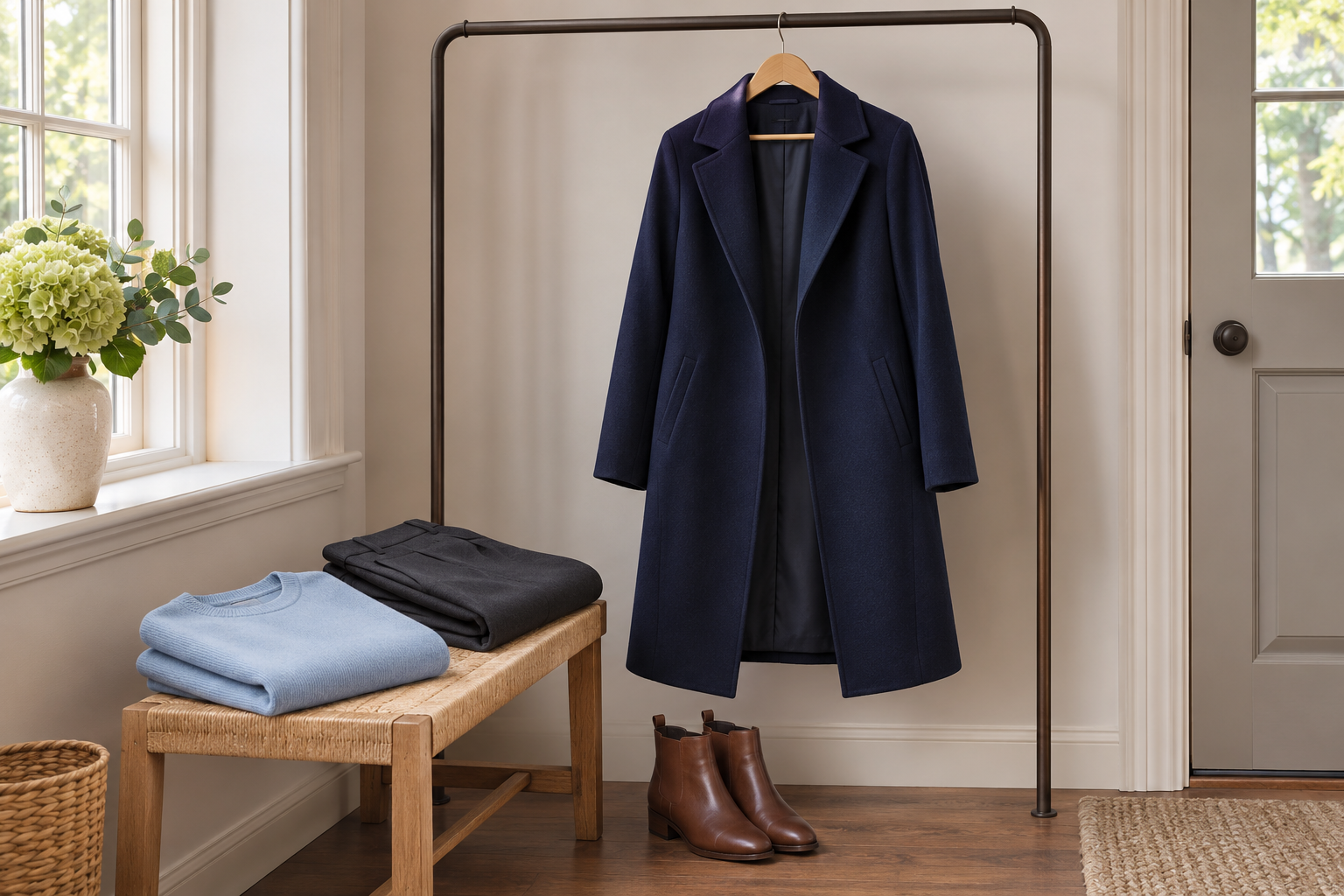
In the illustration, navy outerwear sits with a pale blue sweater, charcoal pants and brown boots. The arrangement shows a possible starting palette, not a shopping list. If your coat is olive, your favorite pants are cream or you prefer a skirt, keep those choices and assess the same practical questions.
Leave extra options in the closet for now. Comparing six sweaters at once can turn a simple choice into a larger task. First find out whether one complete outfit works. You can save a second version after the first is settled.
Make the outfit work when the coat comes off
Try the indoor clothes before adding outerwear. Consider the room, the seating and what you will be doing. A top that you enjoy under an open coat may need a different neckline, sleeve arrangement or layer for the destination.

Here, the pale blue sweater and charcoal pants remain visible as a simple outfit after the coat is removed. That is the question to borrow from the image: would you be happy spending the indoor part of your outing in the clothes underneath?
If the answer is no, name the reason. You may want another removable layer for a cool room, more sleeve coverage or shoes that suit the activity. Solve that specific need. Adding a scarf to the coat will not change how the base feels after you leave the coat on a hook.
For more combinations once you have a workable base, our winter outfit gallery compares different outer layers and separates. Use it for alternatives rather than replacing every piece you already own.
Fasten the coat before judging the combination
An open front gives only part of the picture. Put on the actual underlayers, arrange the sleeves and fasten the closures you normally use. Stand naturally, then bend your elbows, reach forward and sit if that is part of the outing. Pay attention to what you feel as well as what the mirror shows.

Notice whether the front closes without being held in place, whether a sweater sleeve collects inside the coat and whether the collar arrangement lets you turn your head. A particular crease is not a diagnosis. Compare the same coat over a different inner garment to see whether the interaction changes.
If the sleeves seem too long, avoid making an alteration decision from one pose. Our coat sleeve guide explains why it helps to check the layers and ordinary movement before deciding what to shorten.
Check the lower half with the actual shoes
Put on the shoes before settling on the pants or skirt. Walk a short distance indoors and look at where the hem meets the footwear. Notice catching, dragging or folds you find distracting. Assess your normal stride rather than standing still with one foot carefully placed.
A coat and skirt do not need identical hems. Nor does a petite outfit require one universal coat length. You may like a visible skirt beneath the coat or prefer the outer garment to cover it. Choose the relationship deliberately, then check that the clothes move as you need.
Footwear also has a practical job. Check the actual product information and condition for your route and weather. The brown boots in these illustrations do not establish grip, waterproofing or suitability for ice.
Change the part that is causing trouble
If the outfit is close, keep most of it in place. A useful comparison changes one thing, so you can tell whether it helped.
| What you notice | What to try next |
|---|---|
| Sleeves feel crowded | Try a smoother or less bulky inner top, then repeat the same movements. |
| The neck feels crowded | Rearrange the scarf or compare a different neckline before adding another piece. |
| The indoor outfit feels unfinished | Adjust the base outfit with the coat off, then check it under the coat again. |
| A hem catches at the shoes | Compare a different hem or shoe combination using your ordinary stride. |
| The coat cannot meet the expected conditions | Choose appropriate outerwear for that outing; an accessory is not proof of weather protection. |
There is no need to make every change at once. If a different sweater solves the sleeve problem and still suits the room indoors, you may already have your answer.
Save the outfit you would actually repeat
Take a quick personal reference photo if you find it helpful, or write a short note with the garment names. Include the shoes and the underlayer, not just “navy coat outfit.” That detail makes the record useful on a rushed morning.
An example to adapt
Save the actual garments
The illustrated pieces give you a starting point; keep the version that works in your closet.
- Coat: Navy everyday coat.
- Indoor base: Pale blue sweater and charcoal pants.
- Finish: Brown ankle boots; add a bag that suits the outing.
Before the next similar plan, check the forecast and pull out that saved combination. Start with what already worked, then adjust only for the day’s different needs.

Alia Hashim
I'm Alia Hashim — a passionate blogger and founder of Modern Lady Magazine. I started this platform to create a space where women could find inspiration, empowerment, and real-life solutions for style, beauty, wellness, and beyond. Through Modern Lady Magazine, I aim to celebrate the modern woman — confident, creative, and full of dreams — while sharing ideas that help nurture both inner strength and outer beauty. Every story, every tip, every idea here is crafted to inspire you to embrace your journey and live life beautifully, one step at a time.
View author profile →