
Compare indoor layers with your actual outerwear fit by trying the complete indoor outfit first, adding the coat, then changing just one layer if something feels crowded. Check sleeves, neckline, front closure and ordinary movement. A top that works on its own does not automatically work beneath every coat.
The goal is a combination you can wear through the whole outing. You need clothes you like after the coat comes off, as well as outerwear that works over them. This guide helps you locate the interaction that needs changing without replacing a whole outfit.
All photographs here are AI-generated illustrations. They show different useful views, not a controlled before-and-after test of the same garments. Fit, warmth and comfort need to be checked with your own clothes.
Set aside the clothes you need indoors
Start at the destination. Will you keep a cardigan on at your desk, take it off over lunch or spend most of the visit in a shirt? Put together that outfit before judging it beneath outerwear. Include any sleeves you expect to wear all day.

The illustrated open cardigan and blue shirt make the indoor outfit easy to see. If those are the pieces you need for the room, they belong in the coat comparison. Trying the coat over a much thinner top would answer a different question.
Use the fastening arrangement you intend to wear. A cardigan buttoned at the middle can sit differently from the same garment left open. Neither arrangement is automatically better; the point is to compare the version you will actually use.
Notice what already happens without the coat
Bend your elbows, reach toward a tabletop and sit briefly in the indoor clothes. Notice a cuff that folds back, a collar that shifts or a waistband that feels crowded. Record those observations before adding another garment.
This separates an existing issue from one introduced by outerwear. If the shirt already pulls under the cardigan, changing the coat will not necessarily solve it. Try the indoor pieces together until you have a base worth keeping.
Your starting comparison
Check the indoor base
An indoor baseline helps you notice what changes only after the coat goes on.
- Put it on: Wear the shirt and cardigan as you intend to use them.
- Move normally: Bend your elbows and reach toward a table.
- Notice one thing: Locate any cuff, collar or waistband you keep adjusting.
Find where the sleeve layers meet
Put on the coat without changing the base. Ease the inner sleeves into place once, then let your arms rest naturally. Check the wrist and upper arm separately. They are different parts of the fit, and an adjustment at one point may leave the other unchanged.
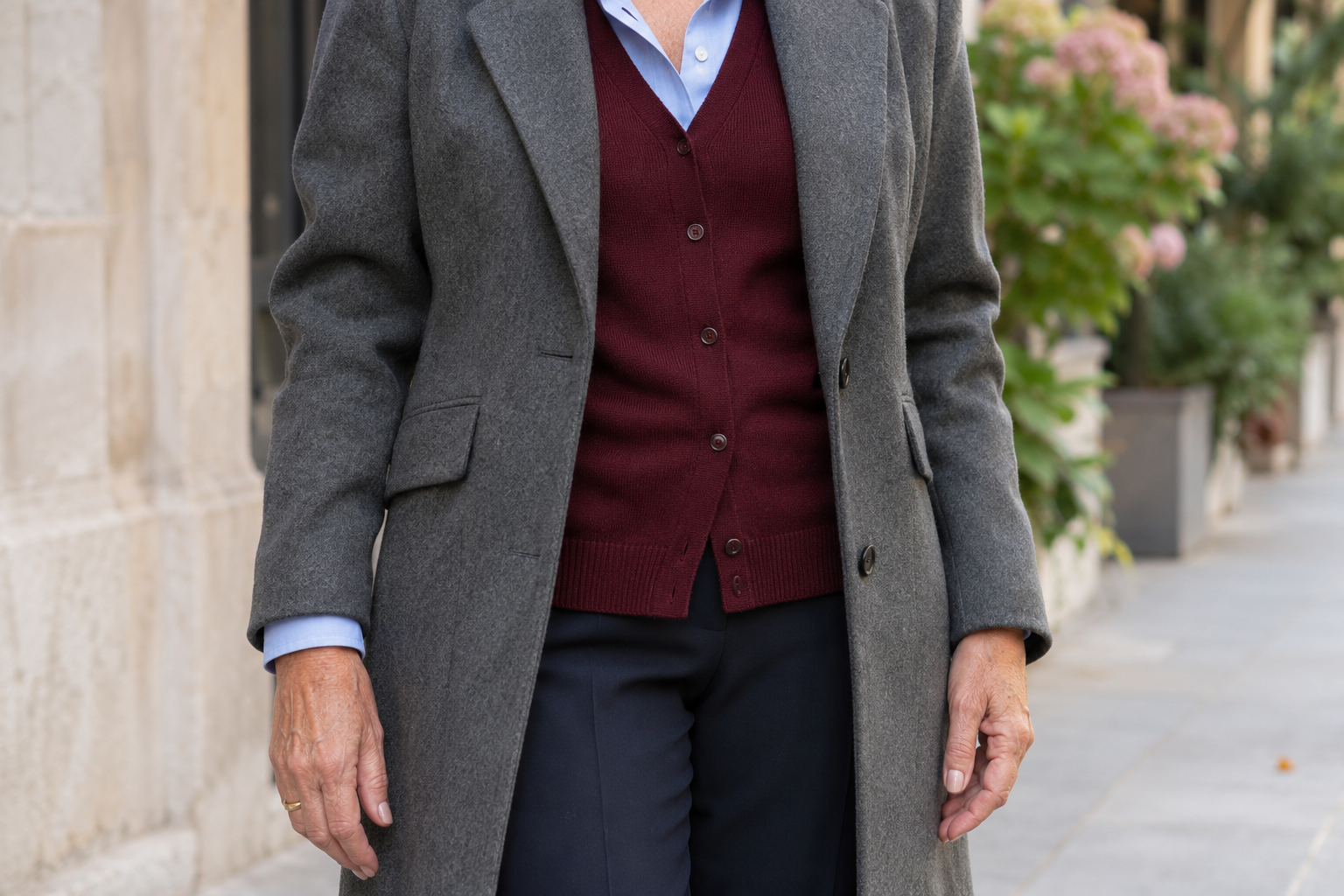
In this close view, a blue cuff extends below one coat sleeve while the burgundy knit sits between the shirt and outer layer. That is a visible relationship, not a required cuff measurement. Your preferred amount of shirt showing may be different.
If a folded cuff is caught inside a sleeve, straighten it and repeat the movement. If the arrangement still needs constant adjustment, compare another sleeve combination. You might try the same shirt with a less bulky cardigan, or a sleeveless indoor layer if that suits the destination.
For a problem that remains at the outer cuff, our coat sleeve guide considers the layers before an alteration decision. Do not shorten a coat simply to compensate for an inner sleeve that is temporarily bunched.
Arrange the neckline before closing the front
A shirt collar, knit neckline, coat collar and scarf can all arrive at the same small area. Try the arrangement you expect to wear outdoors. Turn your head in both directions and notice whether one piece pushes another out of place.
Remove the scarf for a comparison if needed, then add it back differently. Or compare a lower inner neckline with the same coat. You are looking for the particular interaction that bothers you, not a rule that all collared shirts or high necks are unsuitable.
Check the coat closure next. Fasten it in its intended way without changing your posture to make the fronts meet. Notice pressure or restriction. A photograph of a smooth front cannot tell you whether breathing, sitting or reaching feels comfortable.
Repeat the movements that matter to the outing
Choose a few familiar tasks: reaching for keys, holding a bag, using a desk or sitting on the chair you have available. Keep the movements within your normal comfortable range. You do not need an exaggerated stretch to make the comparison useful.

The closed-coat illustration shows bent elbows and the front fastening. Use those locations as reminders of where to pay attention. It does not show how the wearer feels, and its underlayers are illustrative rather than a matched experimental set.
Ask whether the coat changes a task that was easy in the indoor base. If reaching becomes restricted only after the coat goes on, note the area where you feel it. Avoid diagnosing the cause from one crease or assuming that a larger size is always the answer.
Change one garment and compare again
Keep the coat, shirt and pants in place while you swap the cardigan, for example. Repeat the same task. If several pieces change at once, it becomes harder to know which change helped.
On a small screen, scroll the comparison sideways to read every column.
| Location | Useful observation | Next comparison |
|---|---|---|
| Wrist | The shirt cuff folds inside the outer sleeve. | Straighten it; compare a different cuff arrangement if it returns. |
| Upper arm | Reaching feels different after the coat is added. | Compare one less bulky indoor layer with the same coat. |
| Neck | The scarf moves the collar when you turn. | Rearrange the scarf or compare a different neckline. |
| Front | The closure feels restrictive over the complete base. | Compare another layer or coat cut appropriate to the outing. |
A change that improves room inside the coat still needs to work indoors. Do not remove a layer you rely on at the destination just to make an unsuitable outer garment appear to fit. Compare the coat as well if needed.
Keep warmth and fit as separate questions
More room and fewer folds do not establish weather protection. Check the forecast, the time outside and the actual garment information. REI’s layering advice explains that combinations need adjustment for conditions and activity; it does not rate the fashion garments shown here.
If you need a different weather layer, repeat the fit comparison with that real piece. For more outerwear combinations, the winter outfit gallery offers visual alternatives. Keep the practical requirements of your journey in charge of the final choice.
Save the combination and the reason it works
A short record prevents the same trial and error next time. Name the actual garments and the task you checked. Include anything you plan to remove indoors.
A comparison worth keeping
Record the change that helped
A useful note names the single change and the task you repeated.
- Keep steady: Use the same coat, shirt and ordinary task.
- Change one layer: Compare a different cardigan or sleeve arrangement.
- Save the result: Name the garments and the specific interaction that improved.

Alia Hashim
I'm Alia Hashim — a passionate blogger and founder of Modern Lady Magazine. I started this platform to create a space where women could find inspiration, empowerment, and real-life solutions for style, beauty, wellness, and beyond. Through Modern Lady Magazine, I aim to celebrate the modern woman — confident, creative, and full of dreams — while sharing ideas that help nurture both inner strength and outer beauty. Every story, every tip, every idea here is crafted to inspire you to embrace your journey and live life beautifully, one step at a time.
View author profile →