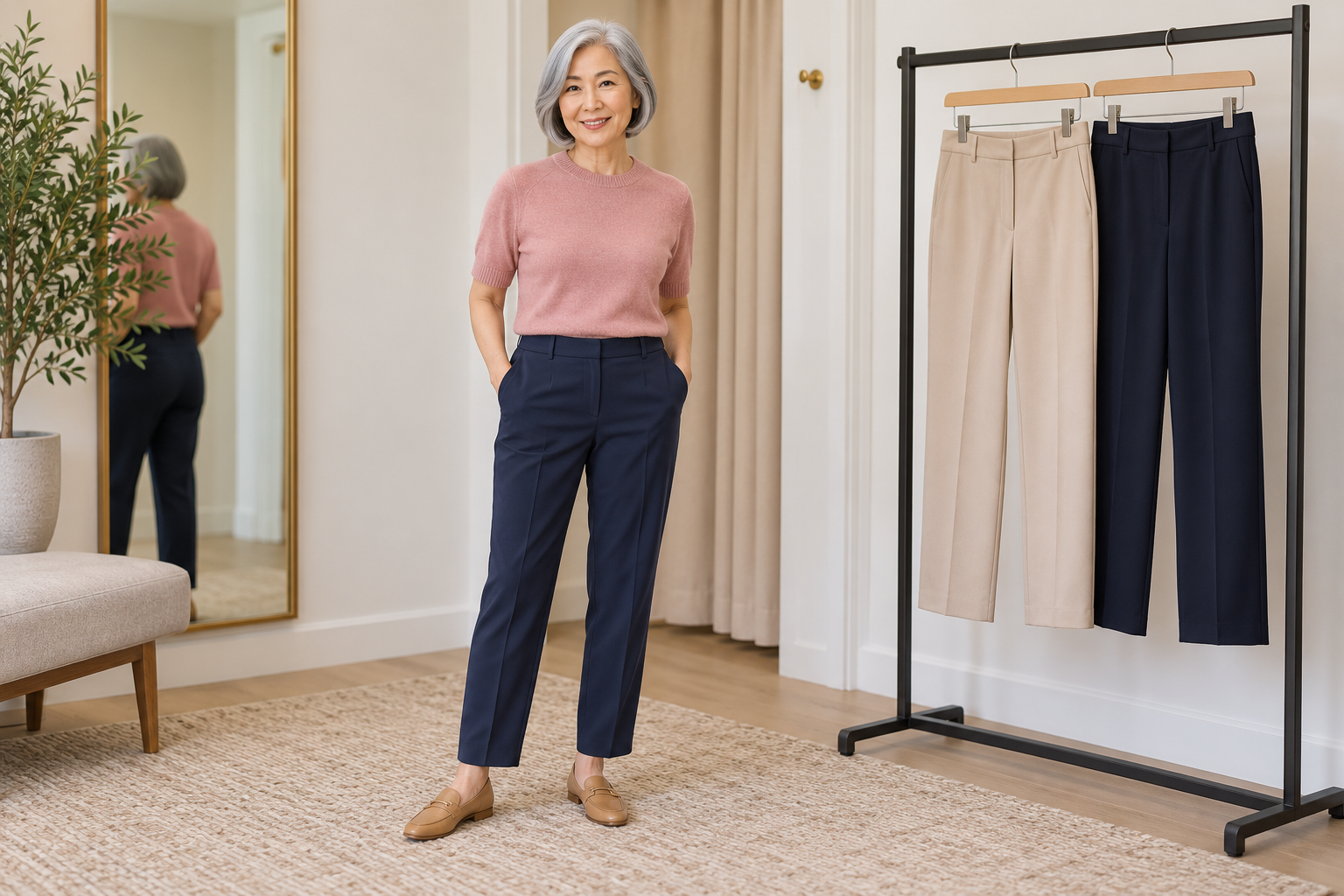
Choose short pants when the upper fit already works and you mainly need less leg length. Try a petite cut when the rise or placement of the shaping also feels too long. Those are useful starting points, not universal sizing rules: brands use “short” and “petite” differently, so compare the exact style’s measurements and try the pants sitting as well as standing.
For petite women over 50, the practical question is which pair fits your waist, seat and legs comfortably. You don’t have to buy petite in every garment, and a shorter hem won’t solve every fitting problem.
Petite and short can share an inseam without sharing the whole fit
A length label tells only part of the story. The Christopher & Banks size guide, for example, lists the same 26–28-inch range for missy short and petite average pants. It also tells shoppers to check each style’s exact inseam. That shared range doesn’t establish that two styles have identical rises or shaping.
Some petite ranges change proportions above the hem. Lands’ End describes a shorter rise in its petite pants. Use that as an example of what can change, then check the brand you’re considering rather than assuming every petite label follows that specification.
Rise is the length from the crotch seam to the top of the waistband, measured at the front or back. It influences where the waist sits and how much room the pants provide through that area. Inseam, by contrast, describes the inside leg length. A pair can have the right inseam and still feel wrong above it.
Start with the problem, then choose what to compare. More than one fit issue can produce similar wrinkles, so treat these as try-on clues rather than a diagnosis from appearance alone.
| What you notice | Useful next comparison |
|---|---|
| Waist, seat and leg shape feel right; the hem is too long | Try the same style in a shorter length, or ask about hemming. |
| The crotch hangs lower than you want when the waistband is comfortable | Compare the rise and try a different cut, including a petite version where available. |
| The waistband pulls down or feels restrictive when you sit | Recheck size, rise and seat room before assuming a shorter rise is the answer. |
| The flare or shaped knee begins lower than you like | Compare a petite-proportioned version or another leg shape before shortening the bottom. |
Settle the waist and seat before looking at the hem
Start with the pants resting where you naturally want the waistband. Fasten them without pulling the waistband higher just to lift the hems. If you have to hold the pants in an unnatural position to make the legs look right, the comparison needs to start above the ankle.

The standing illustration makes the waistband, front of the pants and full leg shape easy to see. When trying your own pair, check whether the pockets lie as you prefer, whether the seat has enough room, and whether the waistband stays where you placed it. A photograph can’t establish comfort or tell you the correct size.
Next, compare the same or a similar style in another length or proportion range. Changing the fabric, cut, size and length all at once makes it harder to know which change helped. You may find that a regular cut in a short length fits your upper body better than the petite option.
A seated check can change your first impression
Sit in an ordinary chair with your feet supported, then stand and take a few steps. Notice the waistband, lap and seat rather than watching only how far the hems rise. Decide whether you can move as you need to without tugging the pants back into place.
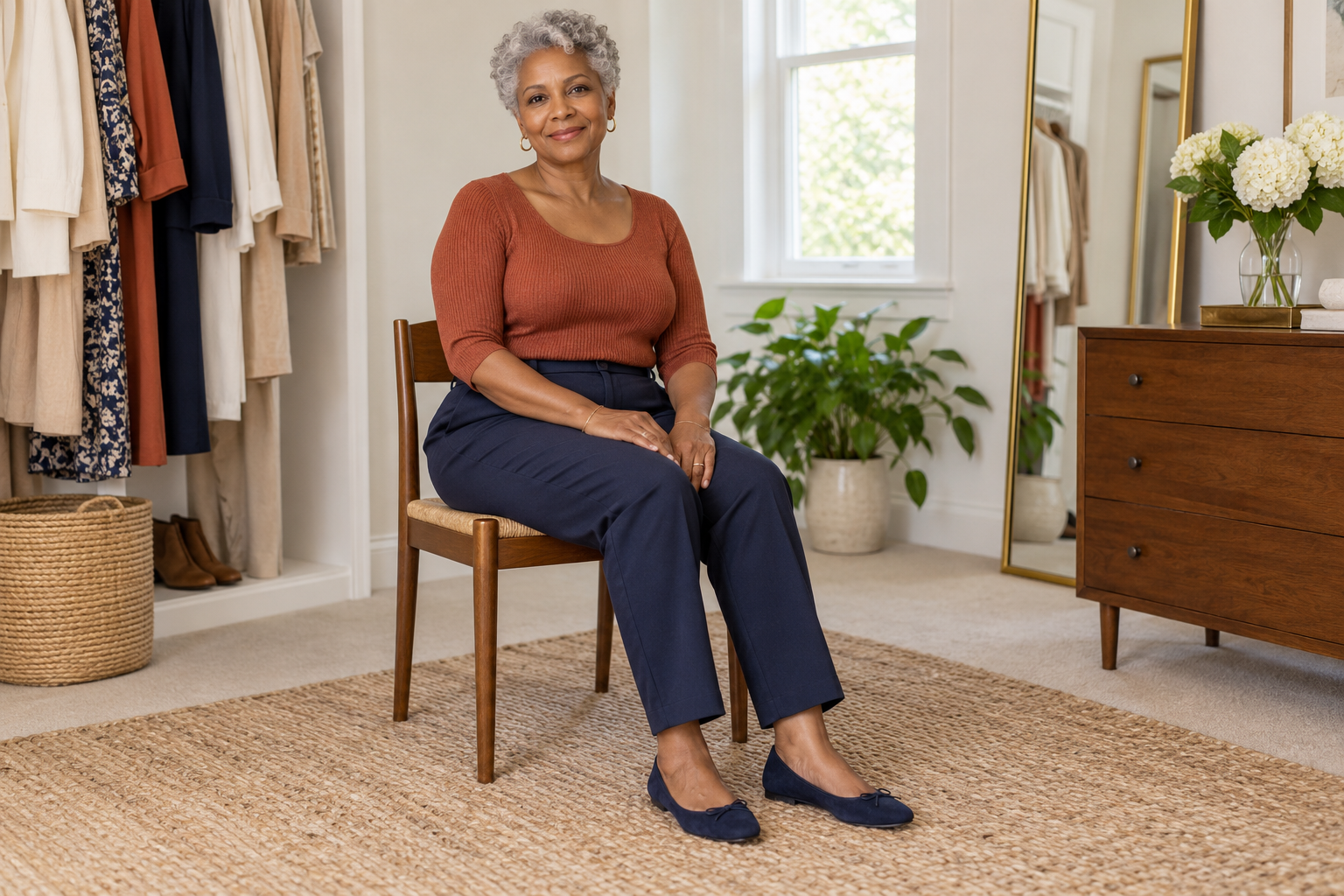
The seated image illustrates that separate check: the rust top leaves the waistband visible, and both feet rest on the floor. It doesn’t show a measured rise or prove that this particular design is comfortable. In the fitting room, use your own movement and preferences to decide.
If a petite pair feels too restrictive through the rise, don’t keep sizing down or choosing a shorter version because you’re under a particular height. Compare a different rise, more room through the seat or another cut. If the waistband gaps while the hips fit, simply shortening the legs won’t address that either.
Look at where the leg shape starts
With straight pants, you may have little shaped knee detail to assess. With a bootcut, flare or strongly tapered leg, the placement of that shaping can matter more. Stand naturally and look at the entire leg, including the point where it widens or narrows.
If the hem is long but everything above it looks and feels right, shortening may be enough. If the flare begins too low for the shape you want, removing fabric only at the bottom won’t move that starting point. A petite version or a different style is worth comparing before paying for alterations.
Bring the shoes you expect to wear. Once you’ve settled the upper fit and leg shape, our guide to choosing a jeans inseam explains how to compare ankle and full-length finishes. That final hem decision comes after choosing the cut that works for you.
When short length or hemming may be enough
Keep a well-fitting upper half when it already does its job. If the only issue is excess fabric below the length you want, ask whether the style comes in a shorter inseam. Check that the shorter option retains the rise and cut you liked; the label alone doesn’t confirm it.
For alterations, ask a tailor what shortening will do to the opening, cuff or decorative hem. A plain straight leg and a sharply flared leg may need different discussions. Read the care instructions and return policy before washing, marking or altering a pair you might exchange.
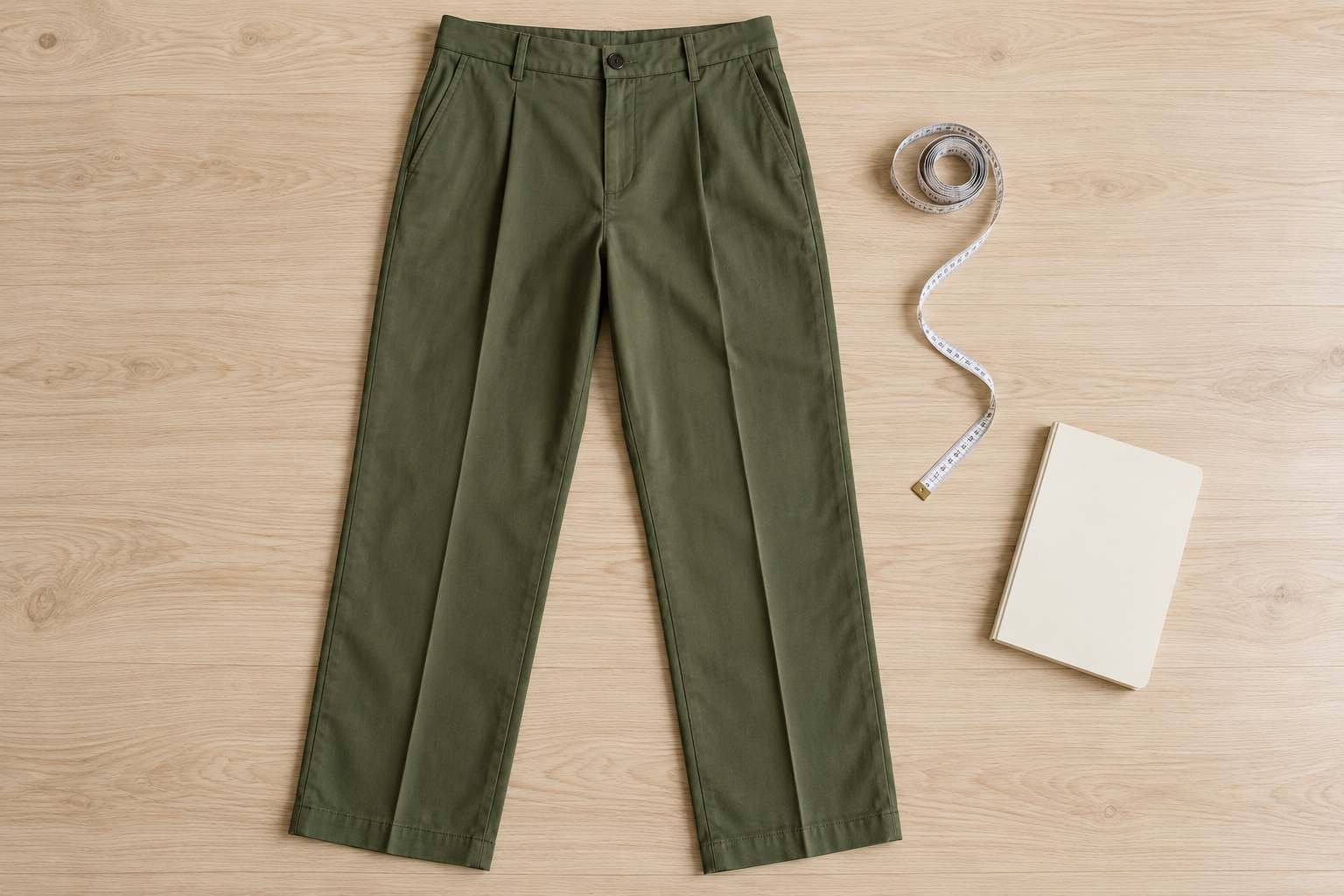
A whole-garment view helps when keeping a reference note. The olive pants illustration shows the waist, seat area and legs together; the tape beside them isn’t a usable measurement. Record your own pair’s brand, style, size, rise information if supplied, inseam and the fit issue you want to change.
Ask one specific question before ordering
If a product page lists only inseam, customer service may be able to clarify whether short and petite options use different proportions. Ask about the exact product and size; a general brand chart may not describe every style.
A useful retailer question: “I’m comparing this style in regular short and petite. In my size, do the front rise, back rise or knee placement change, or is the difference only the inseam? Where can I find those garment measurements?”
If the retailer can’t confirm the difference, keep that uncertainty in mind and review the return terms. Don’t treat two identical inseam numbers as proof of an identical fit above the hem.
When you find a pair that works, note which range you chose rather than assuming that choice applies across your closet. You can build everyday outfits around that pair using our casual outfit ideas for petite women over 50.
Can you wear petite pants if you need a larger size?
Yes, where a suitable size and fit are offered. Petite proportions and waist or hip size answer different questions. Check the available measurements and size range rather than treating petite as a synonym for a small waist. The right label is the one attached to pants that fit your body.
Do you need petite pants just because you’re short?
No. Two people of the same height can prefer different rises and need different leg lengths. Try the range that addresses your actual fit problem. Being over 50 doesn’t add a separate requirement to choose petite or short.
Which pair should you keep?
Keep the pair that fits comfortably through the waist and seat, places the shaping where you like it and works with your intended shoes. If only the hem needs attention, solve the length. If the upper fit is wrong, compare cuts before reaching for a shorter inseam.
Images are original AI-generated editorial illustrations, not tested garments or verified measurements.

Alia Hashim
I'm Alia Hashim — a passionate blogger and founder of Modern Lady Magazine. I started this platform to create a space where women could find inspiration, empowerment, and real-life solutions for style, beauty, wellness, and beyond. Through Modern Lady Magazine, I aim to celebrate the modern woman — confident, creative, and full of dreams — while sharing ideas that help nurture both inner strength and outer beauty. Every story, every tip, every idea here is crafted to inspire you to embrace your journey and live life beautifully, one step at a time.
View author profile →


3 Comments