The best dress length for petite women over 50 is the one that sits where you want it on your body and stays comfortable when you move. A hem around the knee is a useful first length to try. A midi or maxi can work just as well when the waist, skirt shape and shoes feel right. There is no birthday that makes a particular hemline compulsory.
Start with your own knee and ankle positions, rather than a fixed number of inches or the word “midi” on a product page. Two women of the same height can have different torso and leg proportions, so the same dress can land differently on each.
This guide offers fitting suggestions, not rules about hiding your body. Choose the coverage you enjoy, then use a few practical checks to decide whether to keep, exchange or alter a dress.
Choose a starting hemline
Use this comparison as a fitting-room shortlist. Try your intended shoes first, then check the dress while standing, sitting and walking. The landing point on your body matters more than the name printed on its label.
| Length to try | Useful starting point | What to check |
|---|---|---|
| Around the knee | Everyday dresses when you want an easy first comparison | Seated coverage, movement and whether the waist sits comfortably |
| Midi | A longer skirt without a floor-length hem | The exact calf landing point, skirt width and the effect of your shoes |
| Maxi | Long coverage or a flowing silhouette | Floor clearance and enough room for your usual stride |
| Above the knee | Shorter coverage if that is your preference | How far the hem rises when sitting, bending or reaching |
Try a knee-length dress as your reference point
If you are unsure where to begin, try a dress that finishes around your knee. That gives you a clear body landmark against which to compare a slightly shorter or longer hem. It is a starting point, not a claim that every petite woman looks best at the same length.
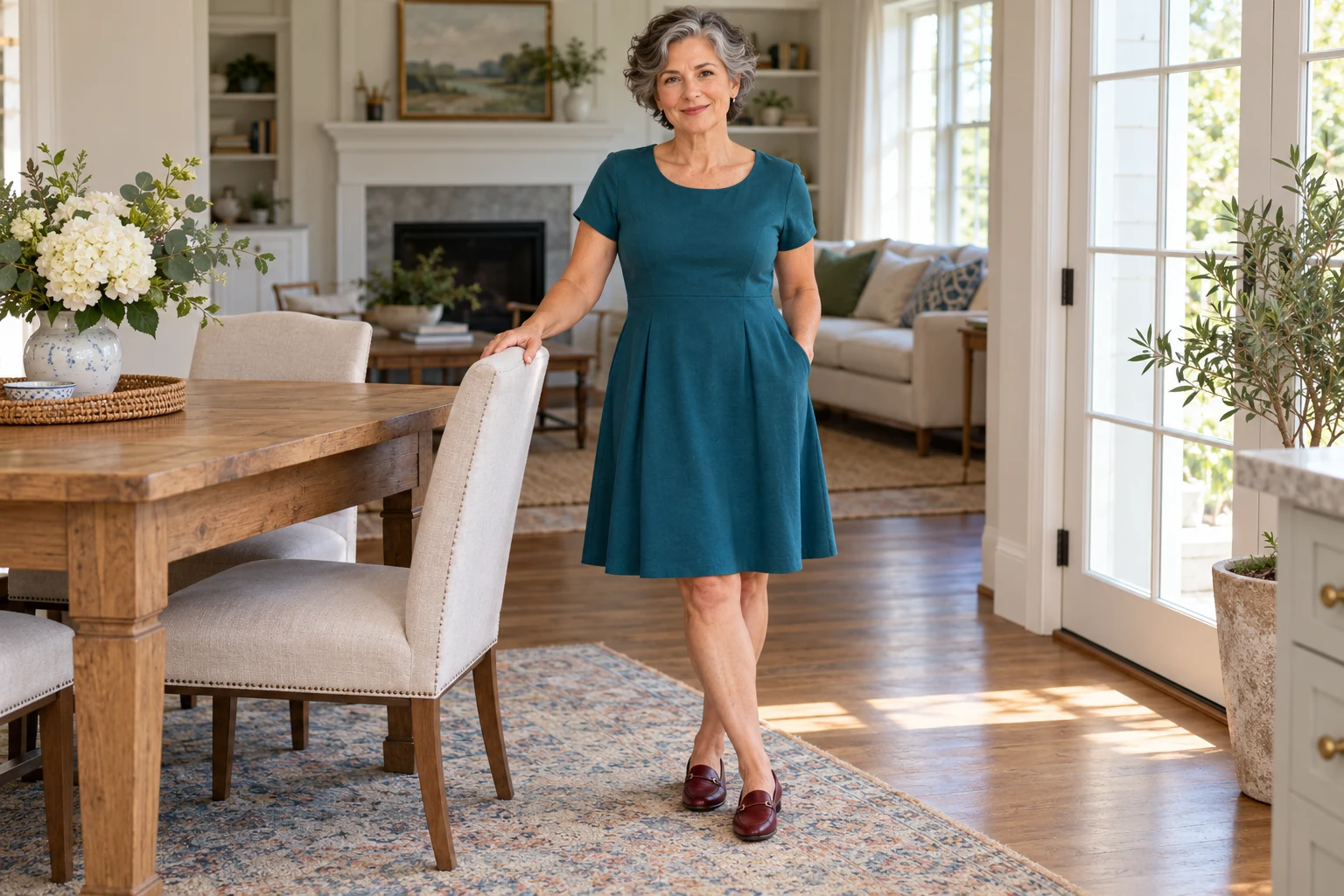
A softly shaped dress and loafers can make this test straightforward: you can see the hem, knee and shoe together without a long coat changing the outline. In the teal example, the hem sits just above the knee and the flat shoes keep the outfit practical.
Then sit down. A hem you like while standing may rise farther than you want on a chair. If you keep pulling the skirt down, try more length, a different skirt shape or more room through the hips. Extra length alone will not fix fabric that is being pulled upward by a tight fit.
For a dress you plan to wear with a knit layer, repeat the check with that layer on. Our cardigan outfit guide for petite women over 50 can help you compare shorter and longer layers once the dress itself fits.
Choose a midi by where it lands on your calf
Midi describes a broad area between the knee and ankle. It does not promise one precise hem position. If a dress feels visually heavy, try a small change in length before deciding that all midis are unsuitable for you.
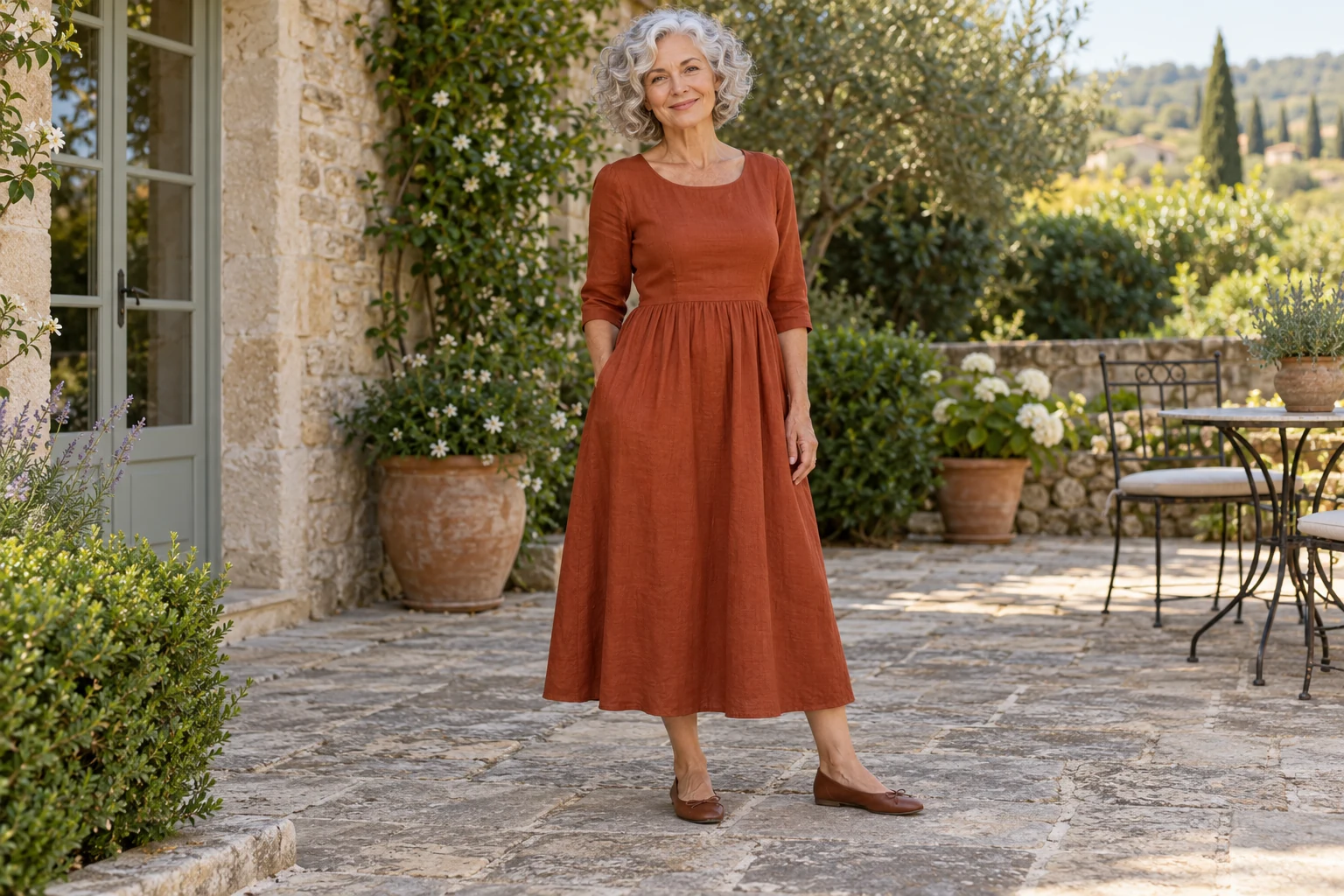
The rust dress shown here finishes on the lower calf with some ankle visible. Its skirt opens gently rather than clinging to the legs. That is one possible combination, not a requirement to show a particular amount of ankle or wear a certain skirt width.
Use temporary fabric clips or ask a tailor to pin an alternative length, then compare the whole outfit in a mirror. A small adjustment can change the balance, but so can a different shoe. Look at the dress from the side as well as the front.
You do not need heels to wear a midi. Try your own flats, loafers or boots and see whether you like the result. If boots meet the hem, check that the skirt moves over the boot shaft without catching. For flatter footwear combinations, see our petite outfits with loafers.
Let a maxi clear the ground in your actual shoes
A maxi can suit a short frame, but its practical length needs attention. Try it with the shoes you expect to wear most often. The hem should clear the floor and stay out from under your feet during an ordinary stride.
Walk forward, turn and step onto a low step if one is safely available. Notice whether you need to lift the skirt constantly. A dress that works in heels may drag when you change into flats, so decide which shoes the alteration is meant to accommodate.
If you want one dress for several shoe heights, ask a tailor what compromise is realistic. Do not assume the longest possible hem is the most flattering. A slightly shorter finish that lets you move comfortably may be the better everyday choice.
Measure a dress you already enjoy wearing
An existing dress is a more useful personal reference than an isolated product measurement. Choose one with a similar silhouette, lay it flat without stretching it and note how its hem sits when worn. A fitted knit dress and a loose woven dress may behave differently even at the same listed length.
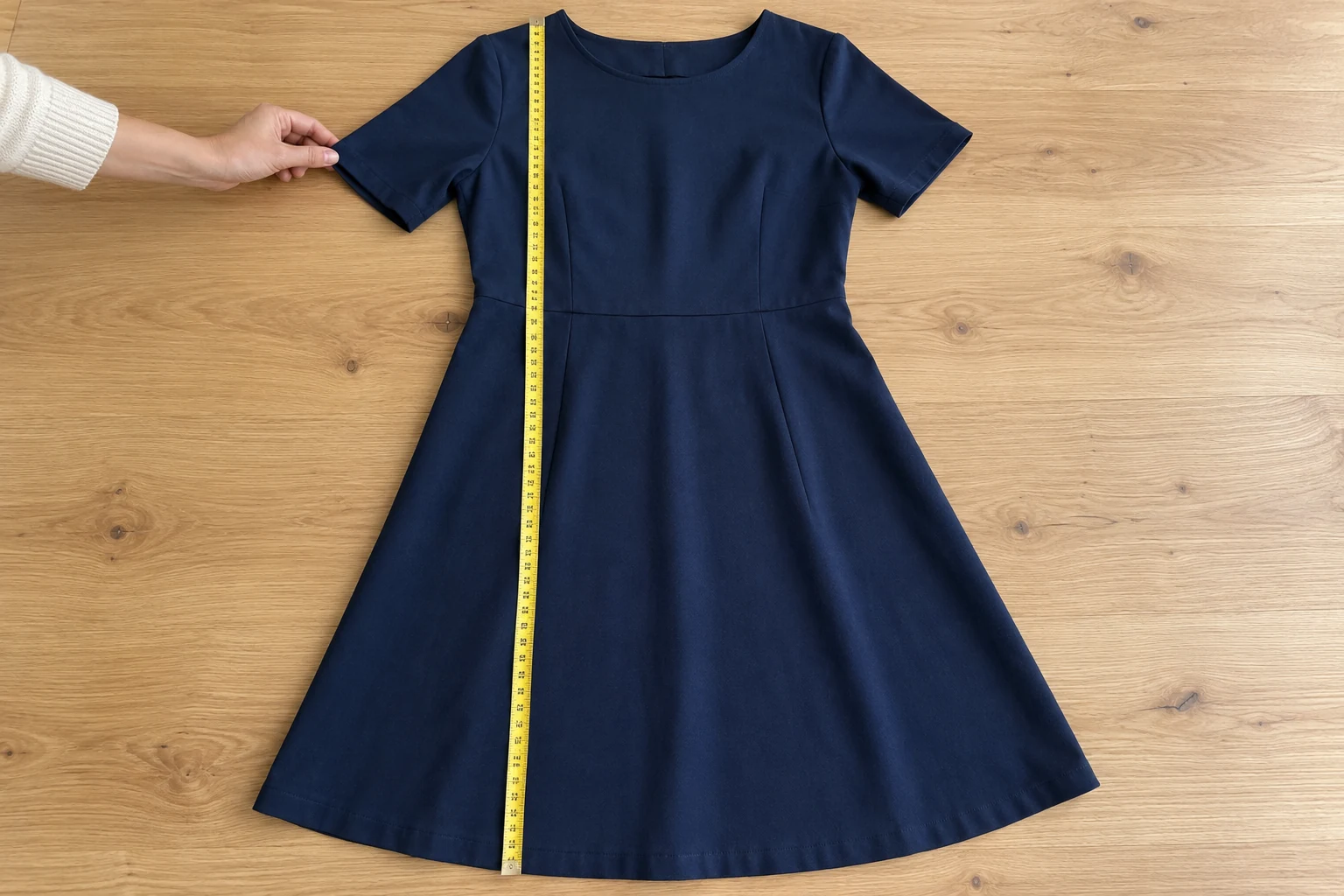
Find out where the retailer measures from. If it specifies the high shoulder point, place your tape near the neckline at that shoulder point and measure down to the hem using the same method. If it measures from the centre back, use that method instead. The illustration shows a shoulder-to-hem measurement; its tape numbers are not a sizing recommendation.
Record the measurement, the dress style and the shoes you wear with it. For example, a note such as “comfortable knee hem with loafers” is useful alongside your measurement. A number alone does not explain where the waist seam sits or how the skirt moves.
Check whether the online length refers to a specific size or to the regular fit. If a petite version has a separate measurement, compare that figure directly. When the product page does not explain its measuring method, ask the retailer before relying on a close comparison.
Decide whether you need petite proportions or just a shorter hem
Shortening the bottom edge cannot reposition a waist seam, shoulder line or armhole. Before paying for a hem alteration, check whether the upper half of the dress fits comfortably. If the waist sits too low and the bodice feels long, try a petite cut or a different style.
Petite sizing is about proportion, and brands set their own ranges. For example, the Talbots size chart describes its petite range for women from 4 feet 11 inches to 5 feet 4 inches. That is this retailer’s stated range, not a universal definition or a guarantee that every dress will fit you.
A regular-size dress can still work if its bodice fits and only the hem needs adjustment. Check the lining, pockets, slit, embroidery and any border print before altering it. Shortening a decorated hem may require a different approach or may change the design more than you want.
A fitting-room check before you buy
Give the dress a short movement test while wearing your intended shoes. You are looking for comfort and the outline you prefer, rather than matching a rule about your age or height.
- Check that shoulders and armholes sit comfortably before judging the hem.
- Look at the waist seam from the front and side; notice pulling or excess bodice length.
- Sit down and check that the coverage still feels right.
- Walk and turn without holding the skirt out of the way.
- Compare one alternative hem position if the first length feels awkward.
- Check the lining and care label before committing to an alteration.
Common questions about petite dress lengths after 50
The useful answer usually depends on the dress you are trying, the shoes you choose and your preferred coverage. These are the questions to resolve before you buy another size or pay for an alteration.
Should women over 50 always cover their knees?
No. Age does not determine how much knee you should show. Choose the coverage that feels comfortable for you and appropriate for the occasion. If you prefer a longer hem, check it while seated as well as standing.
What is the best dress length for someone who is 5 feet tall?
There is no single shoulder-to-hem measurement that works for everyone at that height. Torso length, leg length, dress construction and where the garment sits all affect the result. Compare the product measurement with a similar dress you already wear, using the same measuring method.
Can petite women wear mid-calf dresses with flats?
Yes. Try the combination and judge the whole outfit rather than ruling it out. If you dislike the balance, compare a slightly different hem, skirt shape or shoe. You do not have to switch to heels to make a midi acceptable.
Should I buy a dress that needs shortening?
It can be worthwhile when the shoulders, bodice and waist already fit. Check the likely alteration cost first, especially for lined, pleated or embellished dresses. If several parts of the garment need moving, a petite cut or another style may be a simpler choice.
Images are AI-generated styling illustrations. Fit suggestions are editorial guidance; retailer measurements and individual preferences vary. Primary sizing reference checked on 30 October 2026.

Alia Hashim
I'm Alia Hashim — a passionate blogger and founder of Modern Lady Magazine. I started this platform to create a space where women could find inspiration, empowerment, and real-life solutions for style, beauty, wellness, and beyond. Through Modern Lady Magazine, I aim to celebrate the modern woman — confident, creative, and full of dreams — while sharing ideas that help nurture both inner strength and outer beauty. Every story, every tip, every idea here is crafted to inspire you to embrace your journey and live life beautifully, one step at a time.
View author profile →