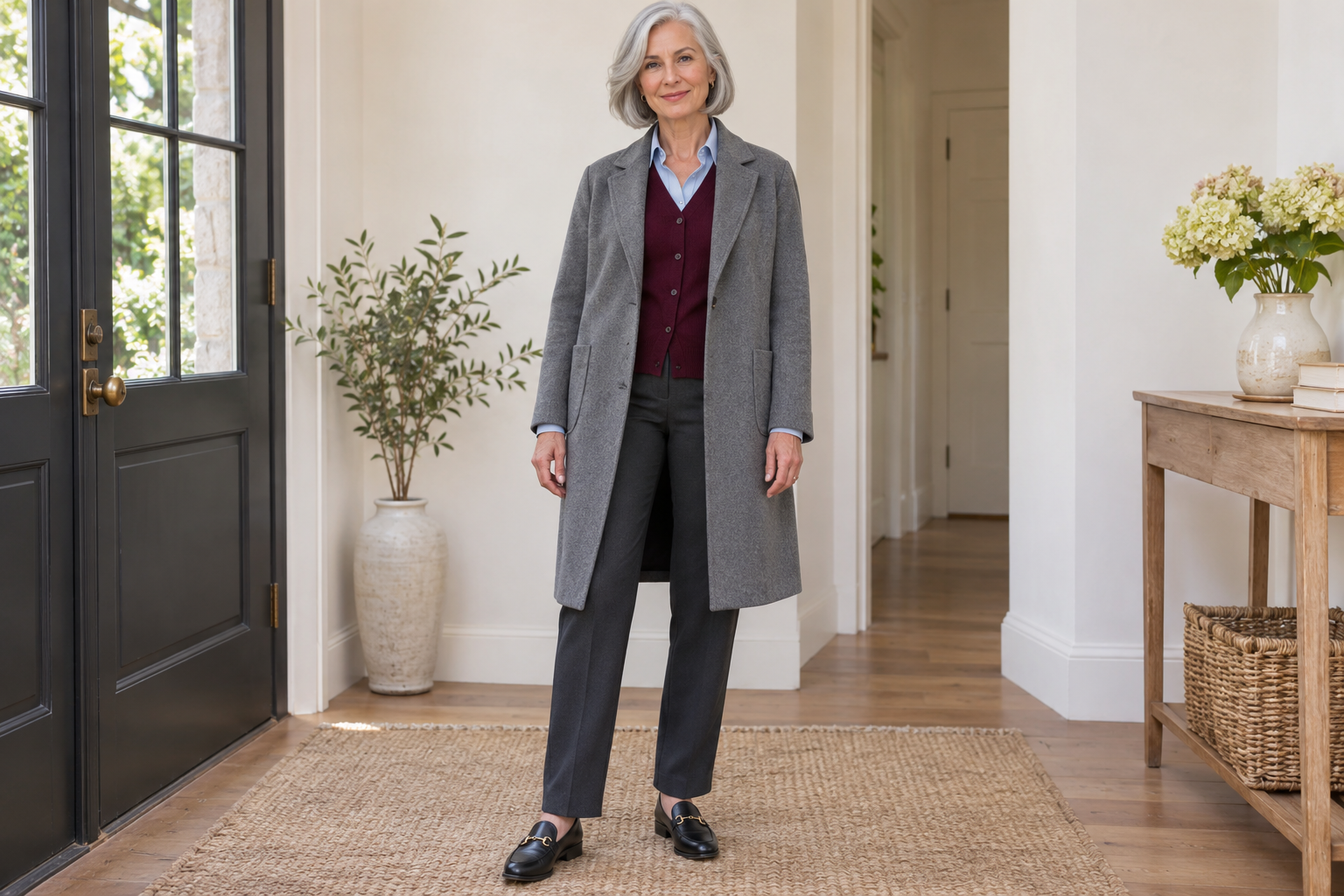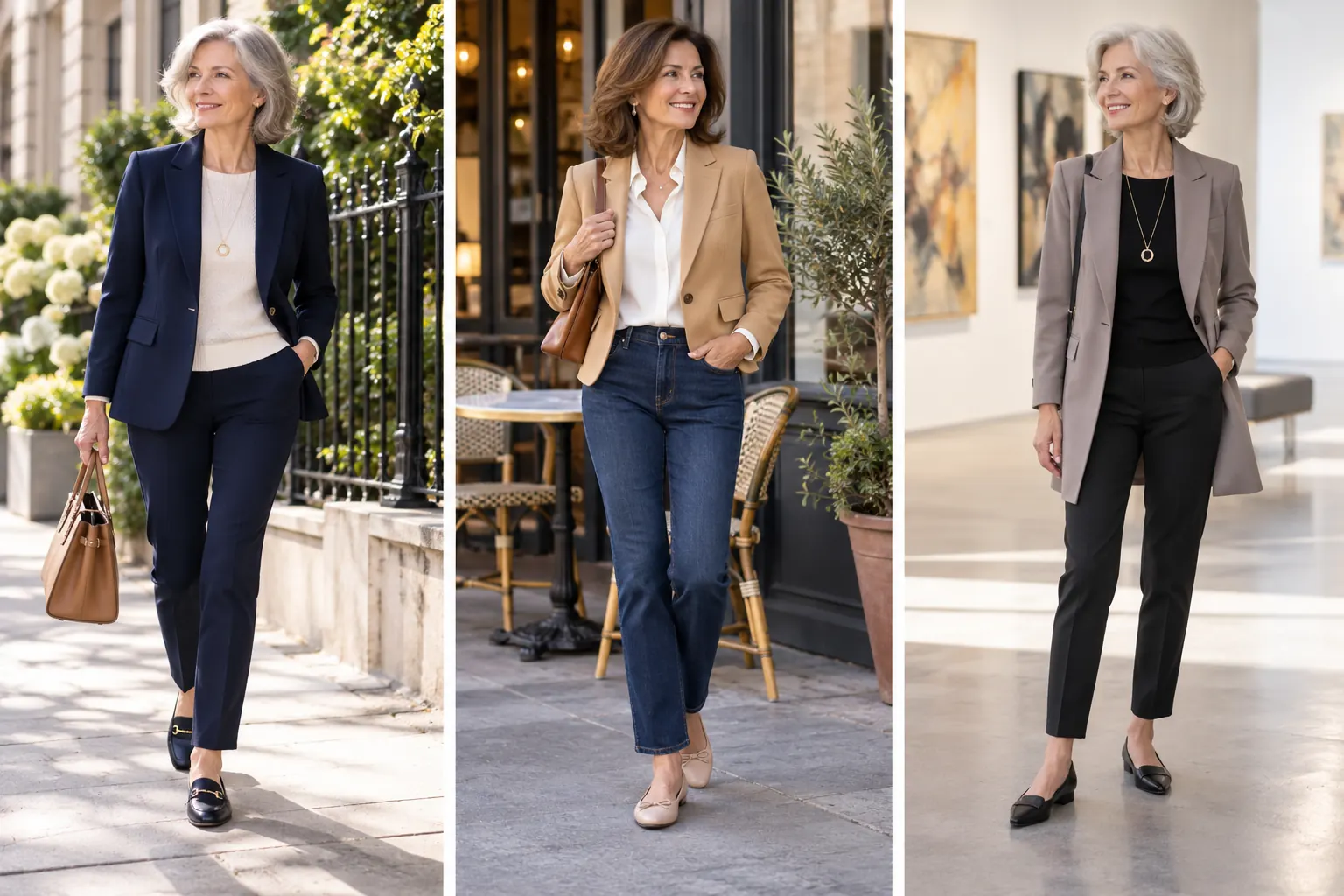
A blazer can make jeans feel intentional, give a simple dress a sharper outline, or turn a matching pair of trousers into an outfit you enjoy wearing. But when you are petite, even a beautiful blazer can feel awkward if its shoulders sit too far out, its waist shaping lands too low, or its sleeves hide your hands. The best blazer length for a petite woman over 50 is the length that balances her actual torso, hip shape, and outfit—not a single measurement or a rule tied to age.
Start with the shoulders, then decide where you want the hem to end. A shorter jacket may work beautifully with a higher-rise trouser or skirt; a longer one can look elegant worn open over a simple column of color. What matters is whether the jacket moves with you and makes the outfit feel like your own. If you are exploring more tailored combinations, the site’s dress-to-impress outfit ideas offer additional inspiration for wearing blazers beyond the office.
The Five-Minute Petite Blazer Check
- Shoulder: the seam should sit near the natural shoulder unless the oversized silhouette is deliberate.
- Sleeve: the cuff should not swallow the base of your hand; allow comfortable wrist movement.
- Closure: buttoning should not pull into a tight X across the chest or waist.
- Hem: try the blazer with your actual trousers, jeans, or dress—not just by itself.
- Movement: reach forward, sit down, and raise your arms before you decide.
What Blazer Length Works Best on a Petite Frame?
There is no universal best length, because two people of the same height can have different torso lengths, waist positions, and leg proportions. Think in terms of where the jacket creates a horizontal line. A hem close to the natural waist can visually emphasize the lower body. A blazer finishing around the high hip may feel easy with jeans. A longer hem can create an intentional, streamlined look if the jacket fits in the shoulders and the clothes underneath are not bulky. Try each option from the front and side while wearing shoes you actually use.
A Cropped Blazer for Waist Definition
A cropped jacket often sits at the waist or just below it and reveals more of a skirt or trouser. It is useful when you want to show the shape of high-rise bottoms without adding a belt. However, cropped does not mean it must stop at the narrowest possible point. If the waist is short or a waistband sits higher than comfortable, a slightly longer crop may be easier to wear. Check whether the hem rises uncomfortably when you sit.
A High-Hip Blazer for Everyday Outfits
A blazer that ends around the upper hip is a flexible starting point for denim, ankle trousers, or a straight skirt. Leave it open over a neatly fitting knit and look at the space between jacket hem and trouser waistband; you should be able to see the outfit’s structure. If you want a looser fit, size the jacket for movement and check the sleeve and shoulder proportions rather than just buying a smaller number. A high-hip blazer with a simple outfit can feel modern without looking overly formal.
A Longer Blazer When You Prefer More Coverage
Longer blazers can absolutely work on petite women. A beautifully cut longer jacket offers warmth and coverage, especially over slim or straight bottoms. The key is intentionality: consider wearing it open, keeping the inner layers relatively uncluttered, and making sure the shoulder width still fits. If a long jacket ends at an awkward point for your proportions, it may be worth trying a different style rather than assuming every long blazer needs to be shortened.
Start with the Shoulder Before Considering the Hem
The shoulder is often the most expensive part of a jacket to change. Place your arms by your sides and find the top of your shoulder. On a classic tailored blazer, the shoulder seam should sit close to that point; extra fabric should look intentional, not as though the jacket slipped off a larger person. Notice whether the upper arm is smooth, the lapels lie flat, and the jacket pulls back when you reach for a bag. Those details matter as much as the hemline.
Petite clothing usually changes more than the overall length. Brands may adjust sleeve length, waist placement, armhole position, and lapel proportions; the exact grade varies. Macy’s petite fit guide explains the difference between petite and regular sizing, while the Talbots size charts show why matching body measurements to the brand’s actual size range is more useful than guessing from a letter alone. Neither source replaces trying on a particular jacket.
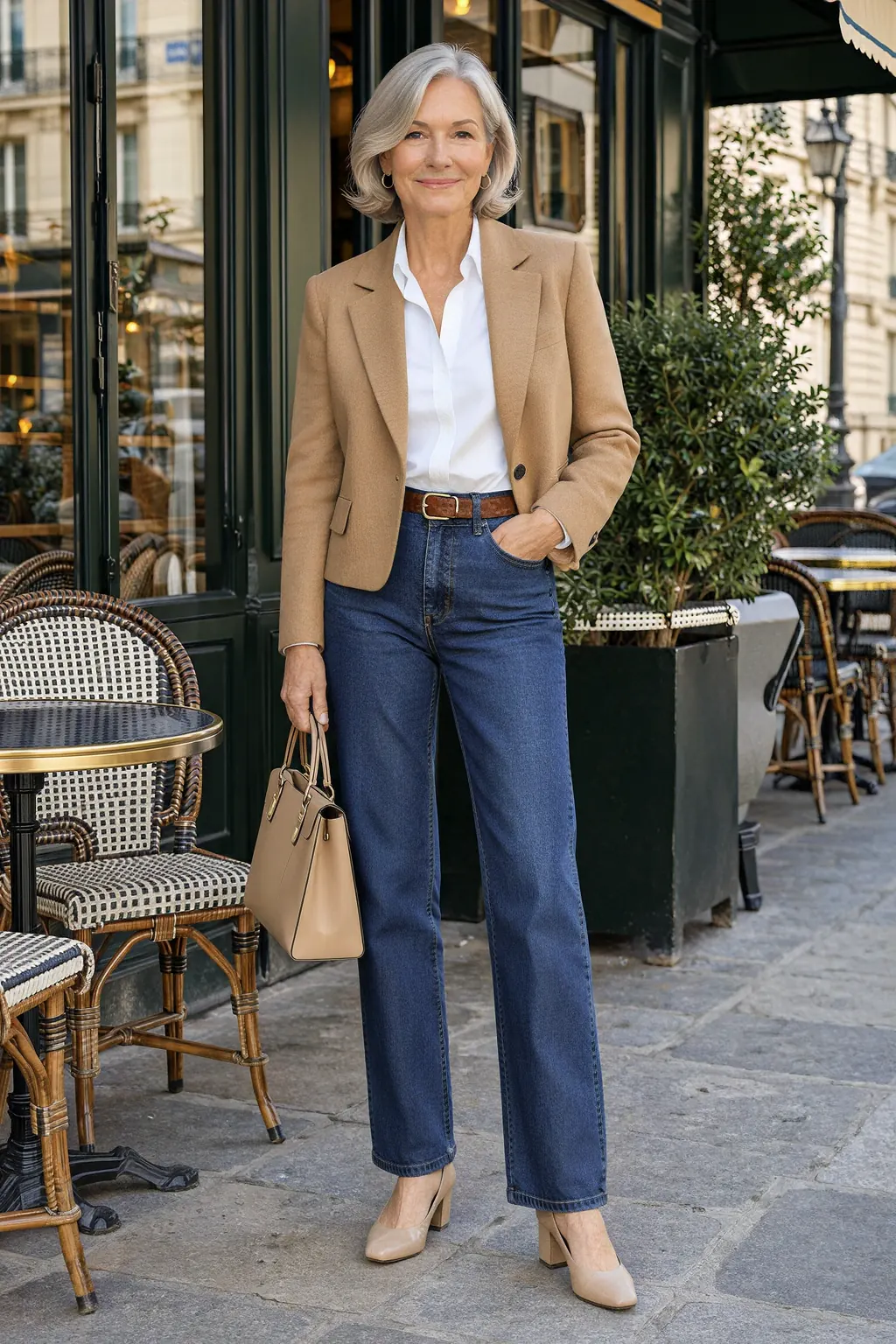
Look One: A Short Camel Blazer with Jeans
A camel blazer, white shirt, mid- to high-rise straight jeans, and low block heels make a polished daytime outfit that is easy to adapt. Notice how the jacket in this styling illustration finishes around the high hip and allows the jeans to show their rise. A narrow belt defines the waistband without needing a long tucked-in shirt. For a different mood, swap the heels for comfortable loafers and keep the same general lines. The main fitting test is whether the blazer closes without pulling when you sit down.
If you are styling a skirt rather than denim, a similar high-hip jacket can sit neatly above an A-line silhouette. Our existing skirt outfit ideas include tailored-jacket combinations, although their styling is not specifically graded for petite proportions.
Which Fit Is Worth Altering?
| Fit issue | Best next step |
|---|---|
| Sleeve a little long | Ask a tailor to assess cuff, lining, and buttons first |
| Hem slightly too low | Compare another length before altering pockets or vents |
| Shoulders substantially too wide | Usually try another jacket or petite cut |
| Pulling at bust or upper arms | Try a different size or cut; do not force a tight closure |
These are practical shopping decisions, not a promise that a specific alteration will work. Construction and the tailor’s assessment determine what is feasible.
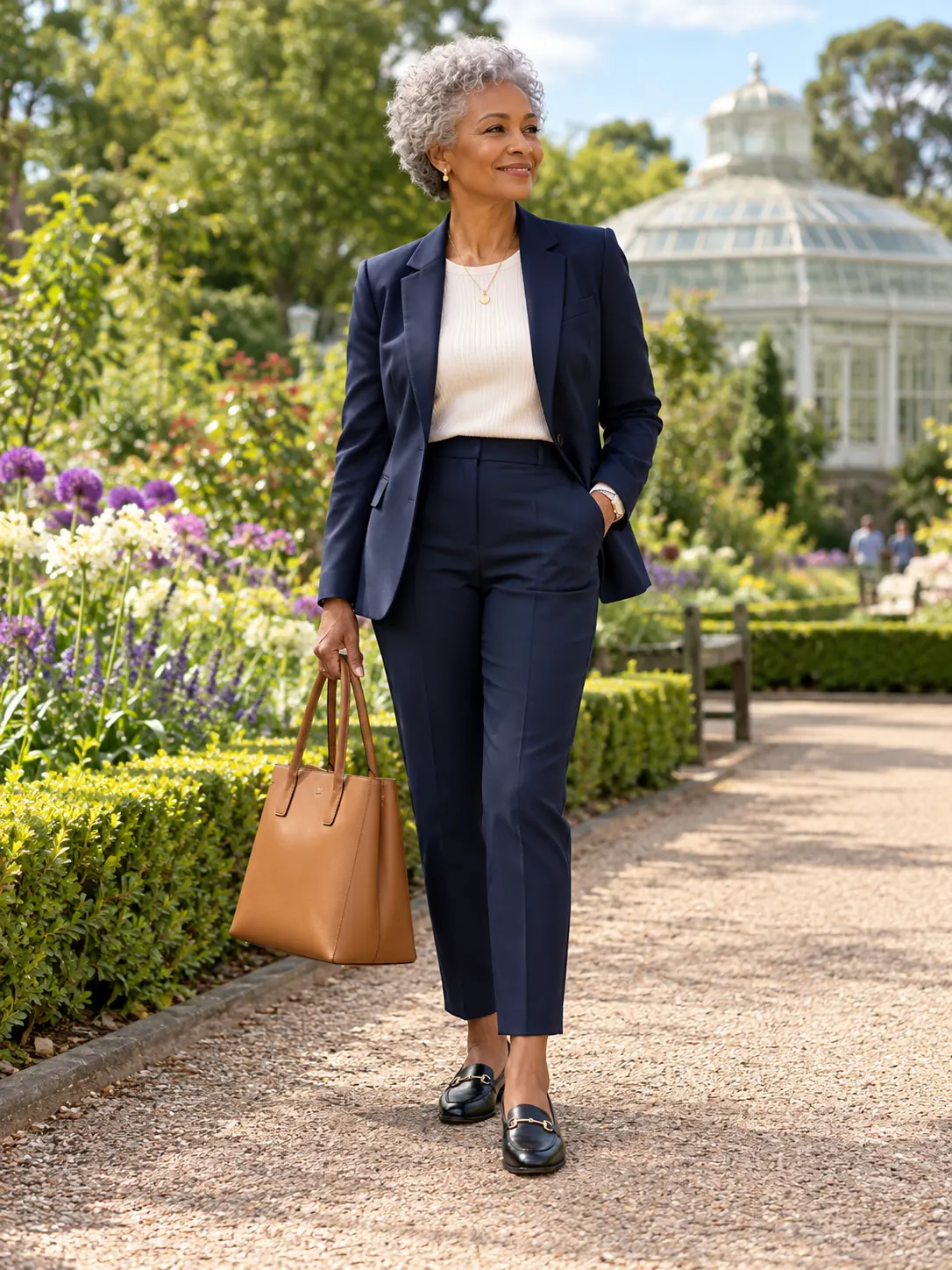
Look Two: A Navy Blazer with Matching Trousers
For a coordinated outfit, try a navy tailored blazer over an ivory ribbed knit with matching navy trousers and black loafers. This combination creates continuity through the body, but the trousers do not need to be narrow or the shoes heeled. The botanical-garden styling illustration below shows a longer jacket balanced by a simple inner layer and clean trouser line. If you prefer a different neckline, a soft blouse can work just as well. Evaluate the full outfit rather than the blazer alone: trouser hem, pocket placement, and sleeve length all contribute to how the pieces sit together.
There is also no need to buy an entire matching suit. A navy blazer could work with clothes you already own. If the fit is almost right but the garment needs a minor refresh, exploring ways to repurpose pieces already in your wardrobe may be more useful than purchasing new items.
How Long Should Blazer Sleeves Be?
On a conventional long-sleeved blazer, a good practical benchmark is that you can move your hands freely and the cuff does not engulf the palm. The ideal visible wrist or shirt-cuff amount depends on the design and what feels comfortable. Try the jacket while reaching for a shelf or steering wheel: sleeves that look fine while standing can pull or bunch in motion. If the cuff has decorative buttons or working buttonholes, ask a tailor about cost and construction before buying with the assumption that the sleeves can easily be shortened.
Should a Petite Blazer Be Fitted or Relaxed?
Both are valid. A fitted shape draws attention to the waist and is easy to combine with fuller skirts or trousers. A relaxed blazer can be comfortable over knits and has an effortless feel, particularly when the shoulders are intentionally softened and the sleeves can be rolled or altered neatly. The important distinction is between relaxed by design and oversized accidentally. If the neckline shifts backward, the sleeves twist, or the shoulder drops farther than intended, try the same silhouette in a petite cut before rejecting the look.
What to Check in the Fitting Room or at Home
Bring—or put on—the top and trousers you would really wear with the blazer. Button and unbutton it, then sit for a minute. Examine the back for persistent pulling and confirm that you can bend your elbows. Notice where the pockets land; oversized patch pockets can be a design feature, but they can also visually dominate a smaller frame. Finally, take a photograph from a normal standing height rather than an extreme mirror angle. It is a clearer way to judge the complete silhouette.
The Three-Outfit Test Before You Buy
Try the same jacket with jeans and flats, tailored trousers, and a dress or skirt. If it looks good only with one exact outfit, it might still be worth owning—but it is not automatically a versatile staple. For a capsule wardrobe, choose a shape you can use repeatedly with the garments you already reach for. That reduces returns and prevents buying a blazer solely because a product photograph looked polished on someone else.
Frequently Asked Questions
These answers focus on practical fit and personal choice, rather than age-based fashion rules.
Can Petite Women Over 50 Wear Oversized Blazers?
Yes. An oversized blazer can feel contemporary on a petite frame when the overall effect is deliberate. Try wearing it open with a simple base layer and check whether the sleeves, shoulders, and jacket length give you comfortable movement. If you want the relaxed look but not extra bulk, a petite-sized relaxed cut may be easier to wear than a regular jacket several sizes larger.
Are Double-Breasted Blazers Suitable for Petite Women?
Absolutely. The overlapping front creates a more structured look, especially when worn buttoned. Pay attention to button placement, lapel width, and whether the jacket pulls across your bust while seated. If it feels too heavy with wide-leg trousers, try a straight trouser or skirt. The goal is a balanced outfit, not a rule against any jacket closure.
Should I Always Shorten a Blazer that Covers My Hips?
No. Coverage can be part of the jacket’s appeal. A longer blazer may suit your wardrobe better than a cropped one, particularly if you wear it over dresses, matching trousers, or a column of color. Shortening can interfere with pockets, lining, and vents, so compare a shorter ready-made style before paying for alterations.
A Better Fit Is More Useful Than a Fashion Rule
A petite blazer is not about dressing younger, taller, or following one ideal silhouette. It is about finding proportions that work with your height, posture, movement, and the clothes you actually wear. Start with shoulder fit, choose the hem for the outfit you have in mind, and make sure the sleeves and closure feel comfortable. When those details are right, both cropped and longer blazers can become dependable pieces for everyday life.
Visual disclosure: The outfit photographs on this page are AI-generated styling illustrations. They are not photographs of specific items for sale or claims of personal product testing.

Alia Hashim
I'm Alia Hashim — a passionate blogger and founder of Modern Lady Magazine. I started this platform to create a space where women could find inspiration, empowerment, and real-life solutions for style, beauty, wellness, and beyond. Through Modern Lady Magazine, I aim to celebrate the modern woman — confident, creative, and full of dreams — while sharing ideas that help nurture both inner strength and outer beauty. Every story, every tip, every idea here is crafted to inspire you to embrace your journey and live life beautifully, one step at a time.
View author profile →