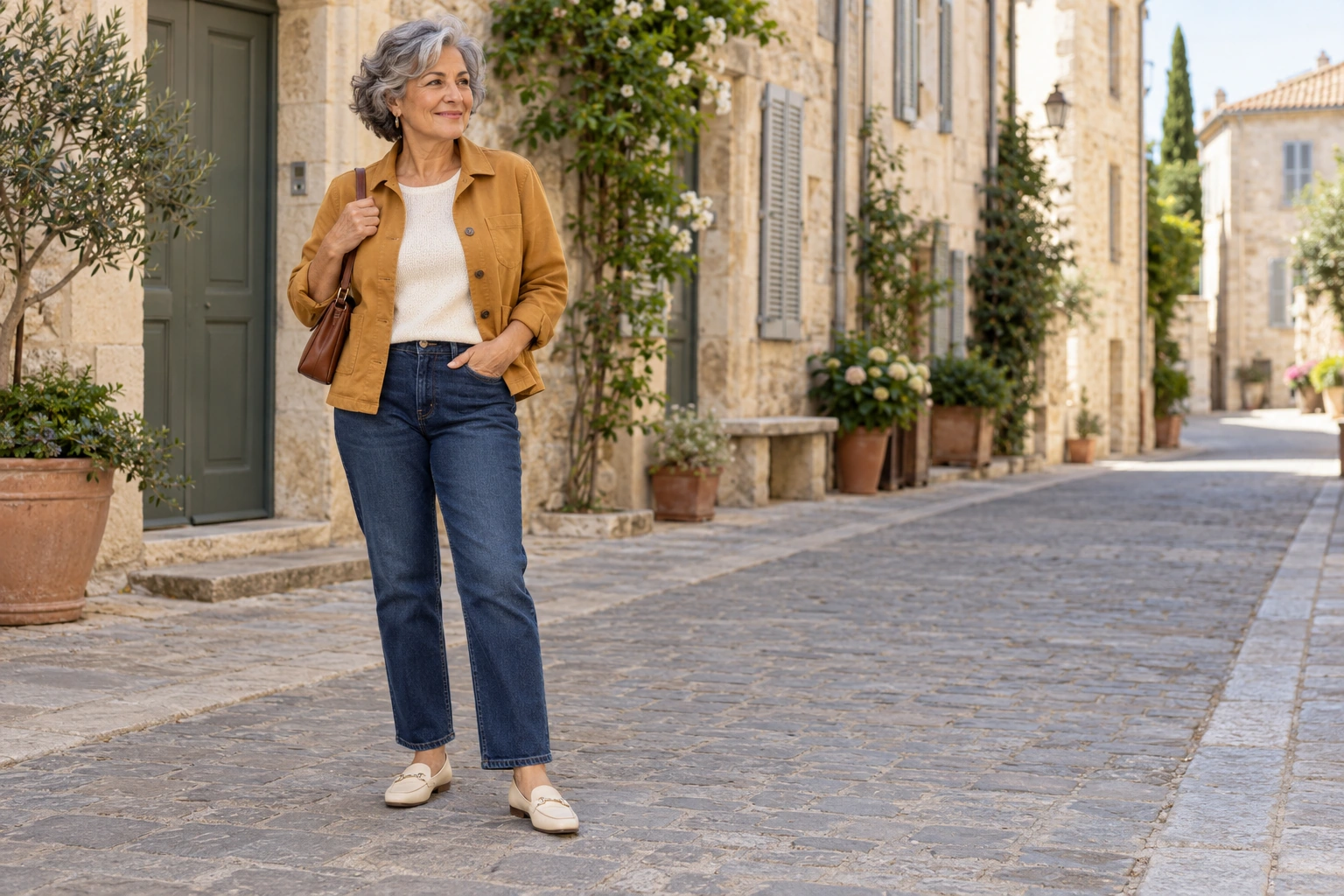
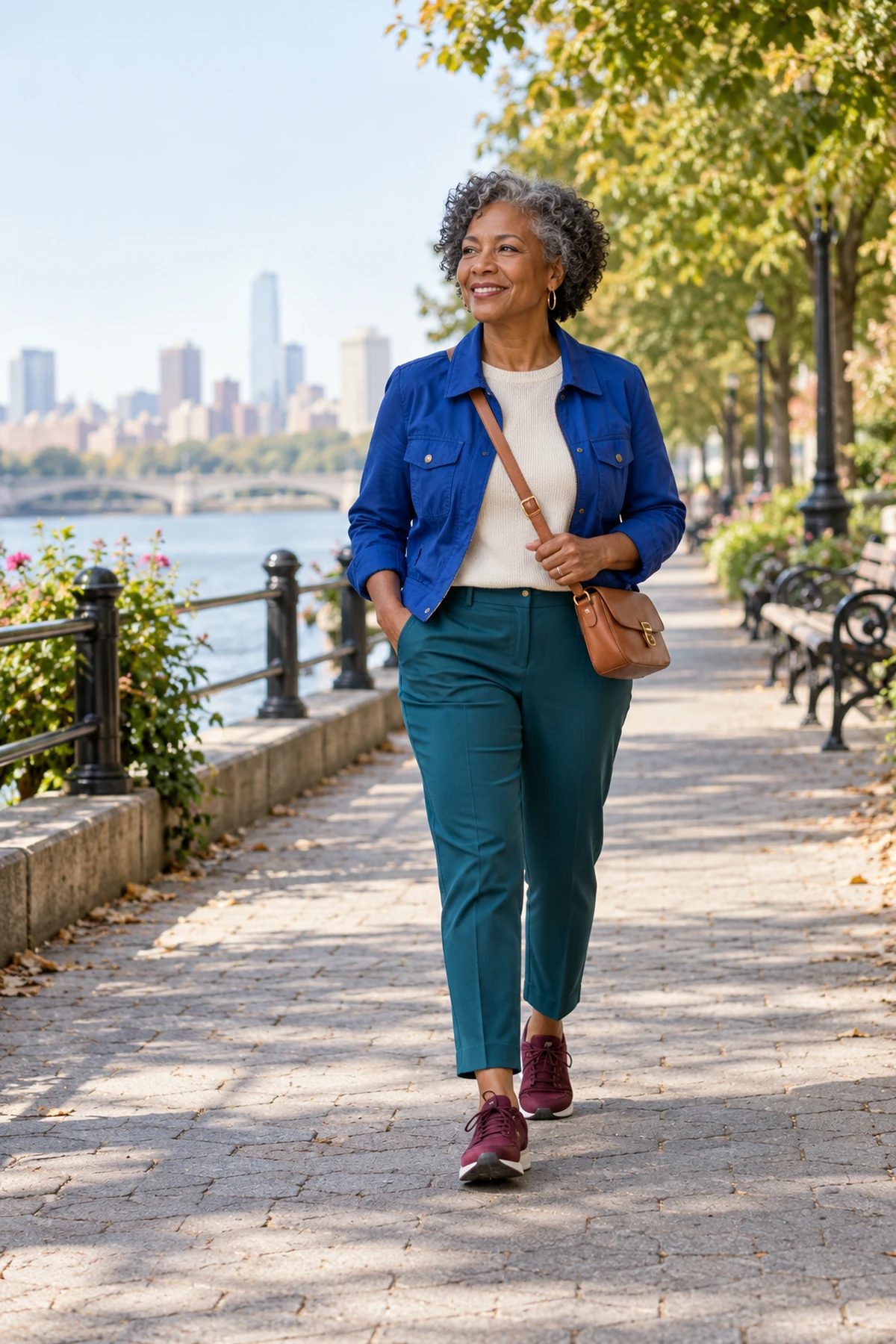
Loafer outfits for petite women over 50 can start with jeans, a skirt or a dress you already own. The useful question is where that garment finishes against your actual shoes. A trouser hem that suited boots may sit differently over a low loafer; socks can change both the visible combination and how the shoe fits.
These 19 original illustrated looks compare different shapes, not compulsory rules for age or height. Choose coverage and footwear for your own plans. For a simple top to begin with, our white T-shirt outfit guide offers ways to use a familiar base without buying a complete wardrobe.
Compare the Hem Before Changing the Shoes
There is no single correct ankle gap. Use these comparisons to identify what feels unresolved, then change one element at a time. Try temporary folds before committing to an alteration.
| Garment Shape | What to Observe | Useful Comparison |
|---|---|---|
| Straight ankle trousers | How much shoe opening shows | Stand, sit and compare the rising hem. |
| Full-length wide legs | Whether fabric drags or catches | Wear the exact sole height when assessing length. |
| Midi skirt or dress | Stride, seated coverage and lower-leg contrast | Compare hosiery and shoe colour before cutting a hem. |
| Cropped trousers with socks | Sock band and shoe fit together | Try the actual sock thickness inside both shoes. |
Start With the Garment Shape You Already Wear
Familiar separates make the first comparison easier. Keep the top and bag you like, put on the loafers, and look at the lowest part of the outfit. The opening, fabric movement and visible hosiery usually give you a more useful adjustment to try than a universal instruction to show more ankle.
Straight Jeans With Penny Loafers
Dark straight jeans stop above cognac penny loafers, leaving their stitched fronts easy to see. Navy knitwear keeps the upper half simple, while a little white tee appears at the neckline and hem. The tan bag echoes the shoes without matching every detail.
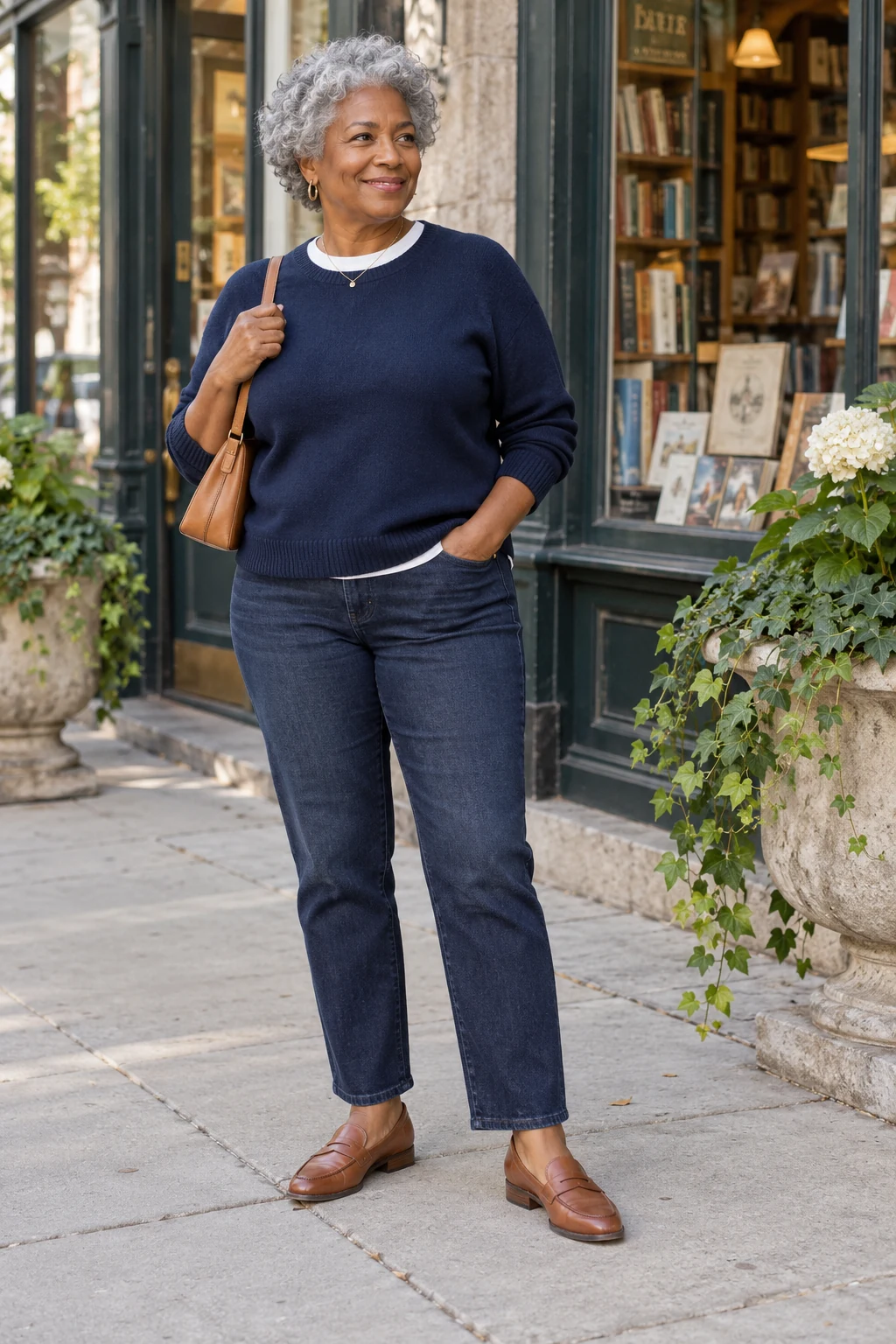
Use the shoe opening as a reference, not a prescribed ankle gap. Fold your jeans temporarily, then compare the result standing and seated. A hem that looks tidy in one pose may rise farther than you prefer when your knees bend.
Keep the sweater untucked if its length suits you. If you want more waistband visible, try a shallow front tuck before assuming the jeans need shortening.
Pleated Ankle Trousers With a Short Jacket
Small gold bars make the black loafers slightly dressier without adding a high heel. Above them, charcoal trousers narrow towards the ankle, while an ivory textured jacket finishes near the waistband. A muted-rose blouse softens the contrast between those two tailored pieces.

Pleats need room. When trying a similar pair, sit down and see whether the front folds spread more than you want. Changing the waistband fit can alter how the whole leg hangs, so assess that before paying for a hem adjustment.
- Compare the jacket cuff with your wrist when carrying your bag.
- Try the trousers with the exact loafers; a different toe shape changes how much shoe shows.
A Pleated Midi With Dark Tights
Navy tights connect the pleated skirt to burgundy tassel loafers without requiring bare ankles. Forest-green knitwear adds another deep colour, and the small handbag repeats the footwear. Narrow pleats give the skirt movement while leaving its waistband clearly visible.

A midi does not have to finish at one approved point on every petite body. Compare the hem with your own stride, then sit down and check how the pleats fall over your knees. The shoe’s low profile remains visible below the dark hosiery.
Keep the sweater tuck light rather than packing extra fabric into the waist. If you prefer it untucked, compare a shorter knit before changing a skirt you already enjoy wearing.
A Shirt Dress With Tassel Loafers
A shirt dress handles most of the outfit in one piece. Terracotta fabric, a self-tie belt and a row of buttons create a clear shape above dark-brown tassel loafers. The small cream bag introduces contrast without competing with the dress front.
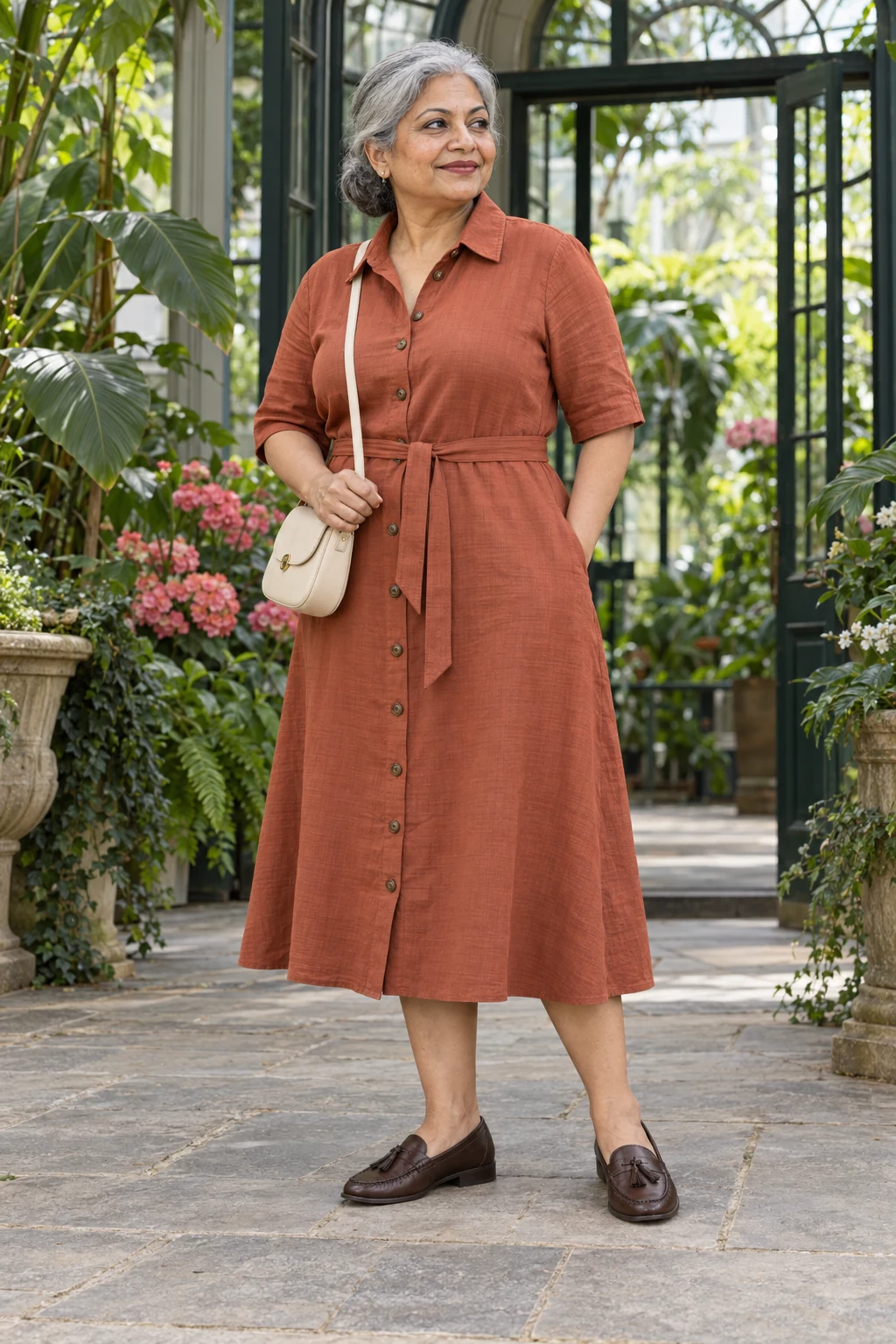
Check where the belt sits on your torso before deciding the dress is too long. Its position changes how much fabric gathers above the waist. Then sit down to assess button spacing and skirt coverage; a standing photo cannot answer either question.
Elbow-length sleeves leave the wrists uncluttered. For a different finish, compare the same dress without its belt rather than adding several accessories at once. Keep whichever version lets the garment move as you prefer.
Wide-Leg Denim With a Boxy Knit
A short cream knit ends close to the top of wide-leg jeans, so the waistband remains easy to locate. Black penny loafers have a visibly thicker sole than the earlier pairs. That extra sole depth changes where a full-length hem meets the ground.

Assess the actual sole height before deciding how much denim to remove. Walk in the jeans and check whether the back edge drags or the front catches on the shoe. A folded trial hem can help you compare lengths without making an irreversible cut.
The boxy sweater does not need a deep tuck. Let its shorter shape do the work, and keep the small shoulder bag clear of the wide trouser line.
A Column Skirt With a Cardigan
A straight charcoal skirt gives black loafers a quieter setting than a full pleated shape. Plum knitwear is buttoned over a matching inner top, and a compact grey bag stays close to the body. The visible slit is the key movement detail.
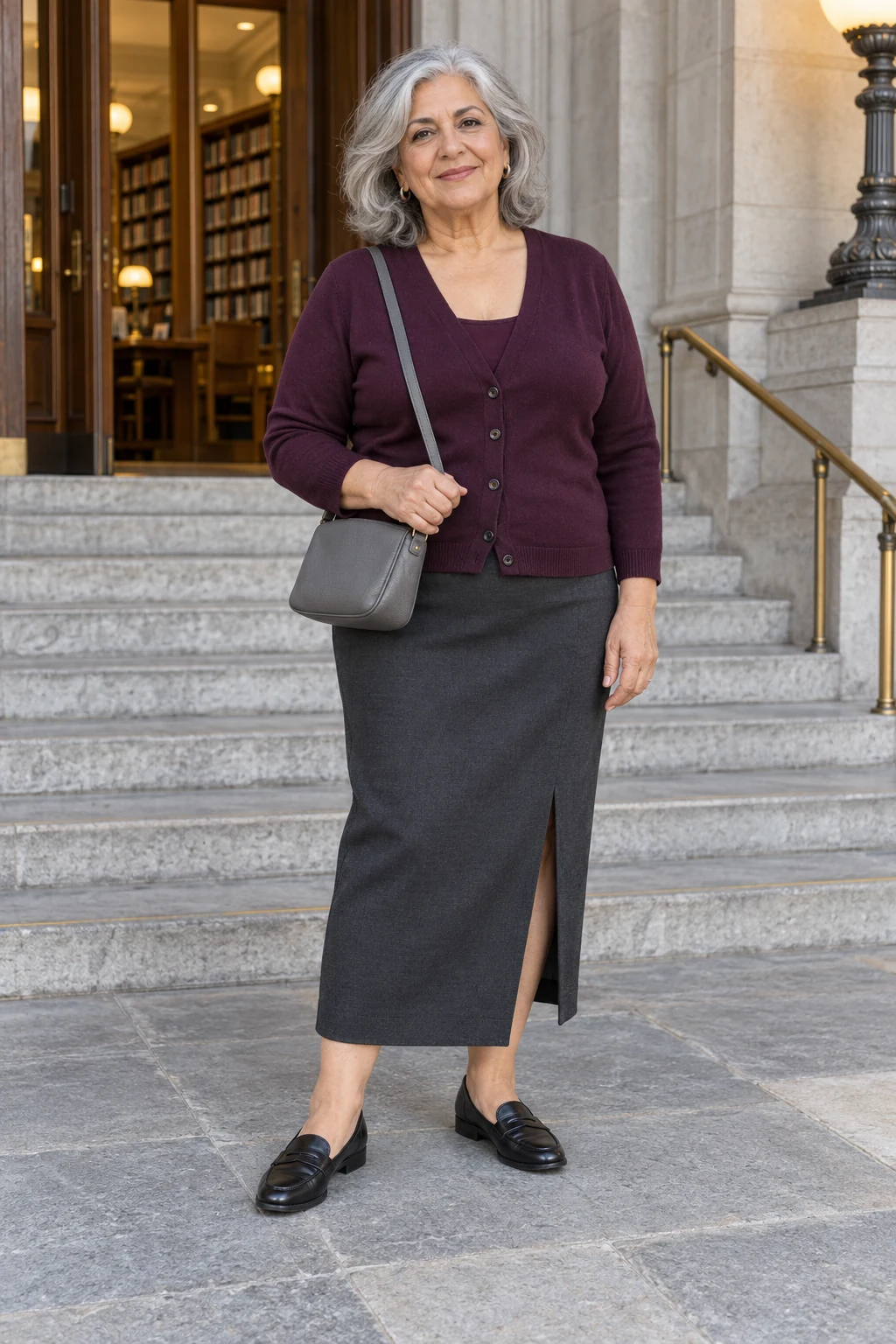
Test the stride. A column skirt can look roomy while standing yet restrict a longer step. Walk, turn and sit in the actual garment, checking both the opening and your preferred coverage. There is no need to shorten the whole skirt if its existing length works for you.
Keep the cardigan button arrangement comfortable when seated. If the hem pulls across the skirt waistband, compare leaving the lowest button open before changing the size.
Cropped Cords With Ribbed Socks
Visible oatmeal socks turn the space below cropped cords into part of the outfit. Their colour repeats the shirt, while brown penny loafers connect with the satchel. Corduroy ridges add texture without needing another print.

Try the socks inside both shoes before judging the trouser length. A thicker layer can alter the fit even when its colour looks right. The photo shows one visual combination, not proof that those particular shoes would fit your feet.
- Check whether the sock band stays where you want it after walking.
- Compare a finer sock before changing the trouser hem.
- Keep the shirt tuck loose enough for sitting, especially with a more structured corduroy waistband.
Give Wider Legs and One-Piece Outfits Their Own Check
A wide trouser opening, a skirt and a jumpsuit behave differently even when their hems finish at a similar height. Our petite wide-leg pants guide provides more width comparisons. Use the exact loafers when judging a long hem, and assess waist or torso fit before assuming every length issue begins at the ankle.
A Relaxed Suit With Low Loafers
A navy suit can finish with low loafers instead of a taller shoe. The pale-blue blouse keeps the jacket opening simple, and gold bars add a small detail at the feet. Matching jacket and trousers leave the trouser hem particularly easy to compare.
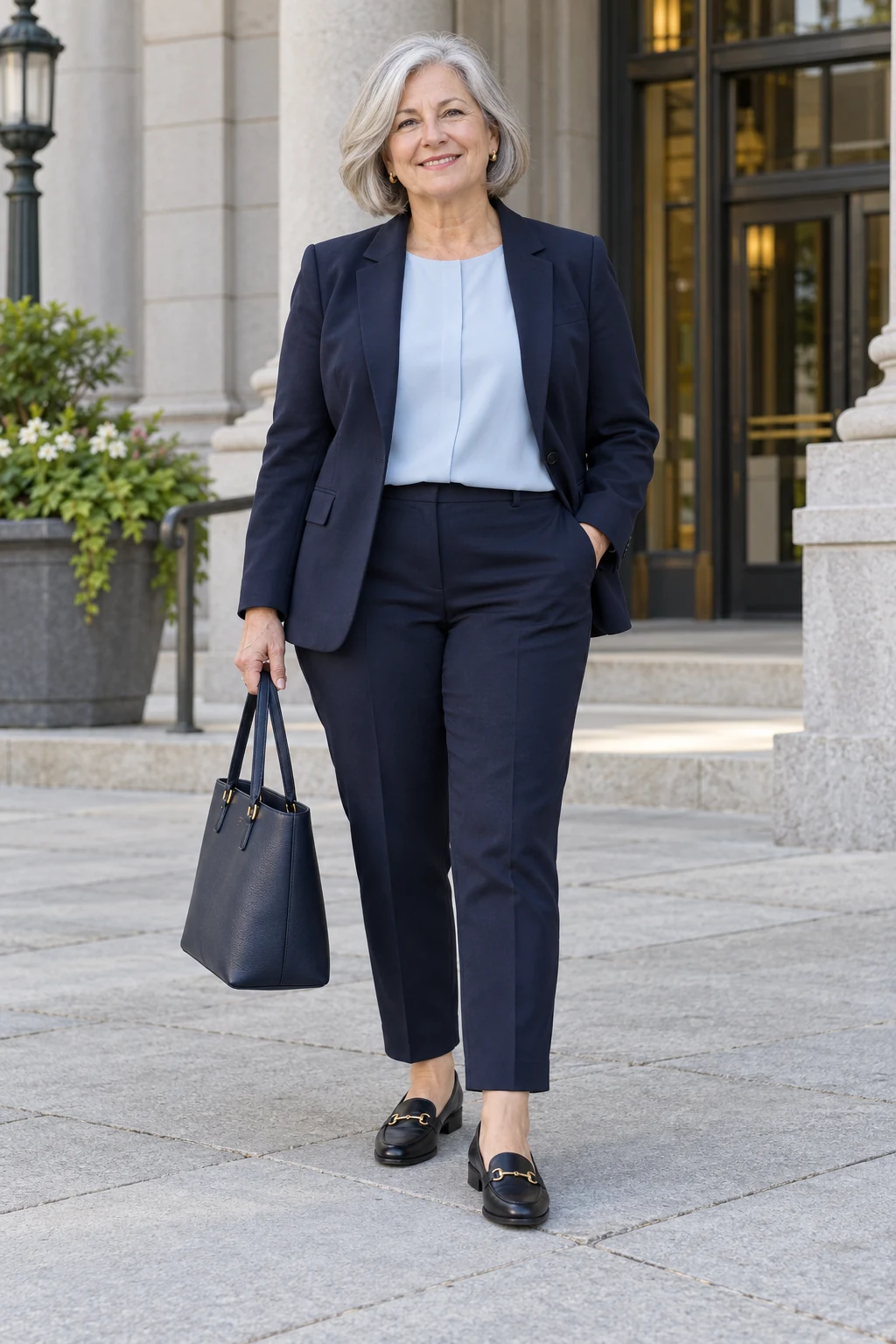
Check the front crease as it reaches the shoe. Here, ankle-length legs stop clear of the loafer fronts rather than forming a break, meaning a fold of fabric resting on the shoe. Neither finish is compulsory; compare the one you prefer in your own trousers.
Carry your usual bag during the fitting. Its weight and your normal arm position can help reveal a jacket cuff or shoulder adjustment that a hands-free mirror pose misses.
Culottes With a Fine Polo Knit
Culottes bring width without a floor-length hem. Cream legs open well below the knee, with cognac tassel loafers fully visible beneath them. A rust polo knit gives the upper half a simple collar and a clearly marked waistband.
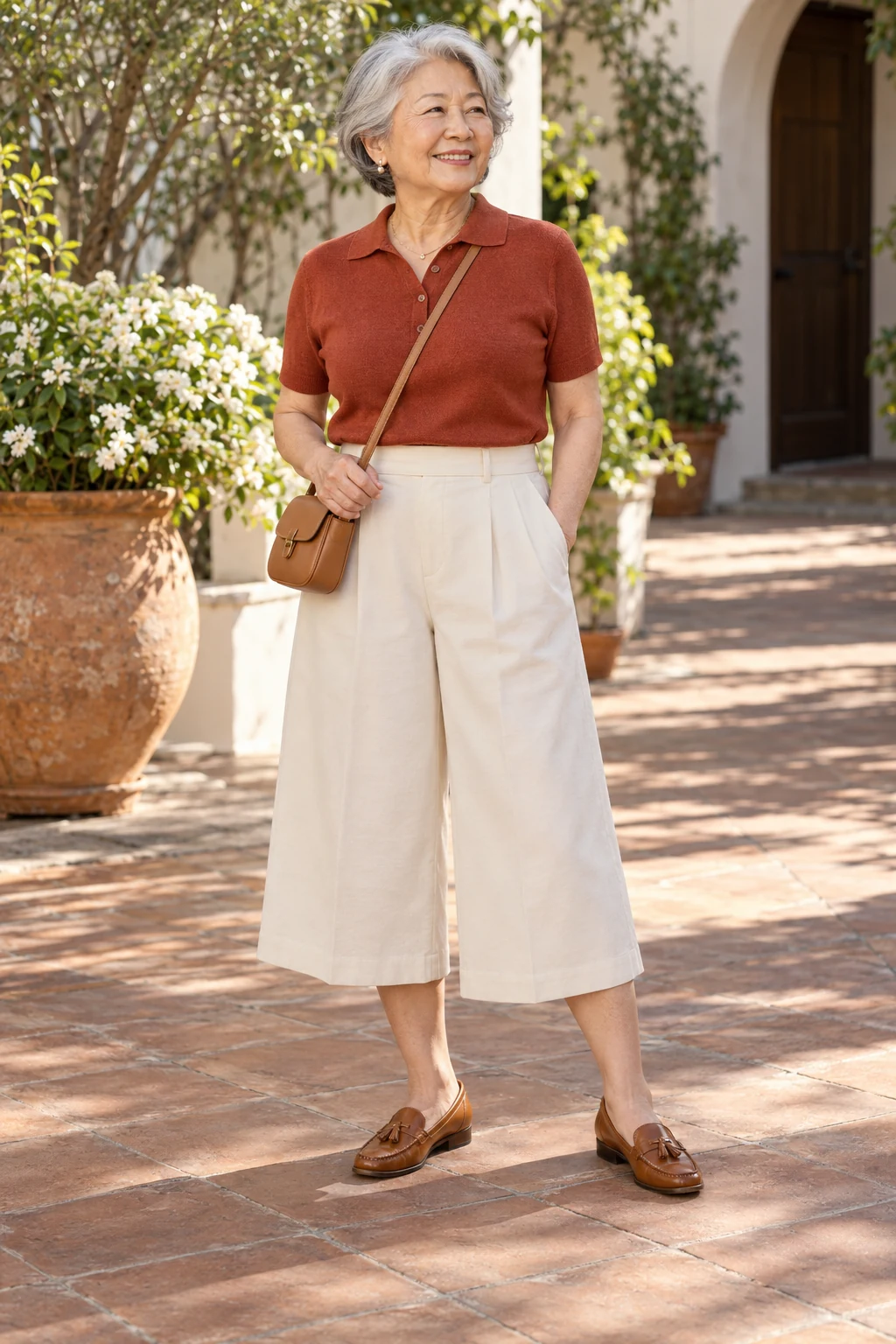
Walk before judging. Wide cropped openings shift around the calves, so a still mirror view is only one part of the comparison.
Try the top tucked and lightly bloused rather than pulling it tight. That small change can reveal whether the waistband position suits your own torso.
The bag repeats the loafers’ warm colour. Keep it compact if you want the trouser shape to remain the main feature, or use your normal larger bag and assess the complete outfit.
A Denim Midi With a Striped Shirt
Vertical shirt stripes sit above a broad A-line denim skirt, while burgundy penny loafers provide a darker accent at ground level. The button row makes the skirt front distinct from the pleated and column shapes earlier. Rolled cuffs keep the shirt relaxed.

Try the tuck before changing the skirt. Pulling every inch of shirt firmly inside can create more fabric at the waist than you want. A little looseness above the waistband may give you the finish you were seeking from a different hem.
Check the Button Front
Sit down and look for unwanted gaps along the fastening. Assess the actual skirt’s room and closure rather than assuming sturdy-looking denim means it will fit comfortably.
A Sock Comparison You Can Repeat at Home
Lay out the loafers with the socks or tights you would actually wear. Try both shoes, take a few steps indoors and compare the outfit while standing and seated. Clarks’ shoe-fitting guidance likewise recommends trying both feet and using intended socks. A photograph cannot establish whether a shoe fits your foot.
- Compare one fine sock with another before changing several garments.
- Look at the visible sock band from a normal viewing distance.
- Check how the shoe feels with that layer; appearance does not prove comfort.
A Jumpsuit With a Defined Waist
Teal runs from the wrap-style neckline to straight ankle legs, interrupted only by a matching tie belt. Ivory loafers and a small structured bag provide two pale accents. The shoes’ apron seams keep them recognisably loafer-shaped rather than resembling pumps.
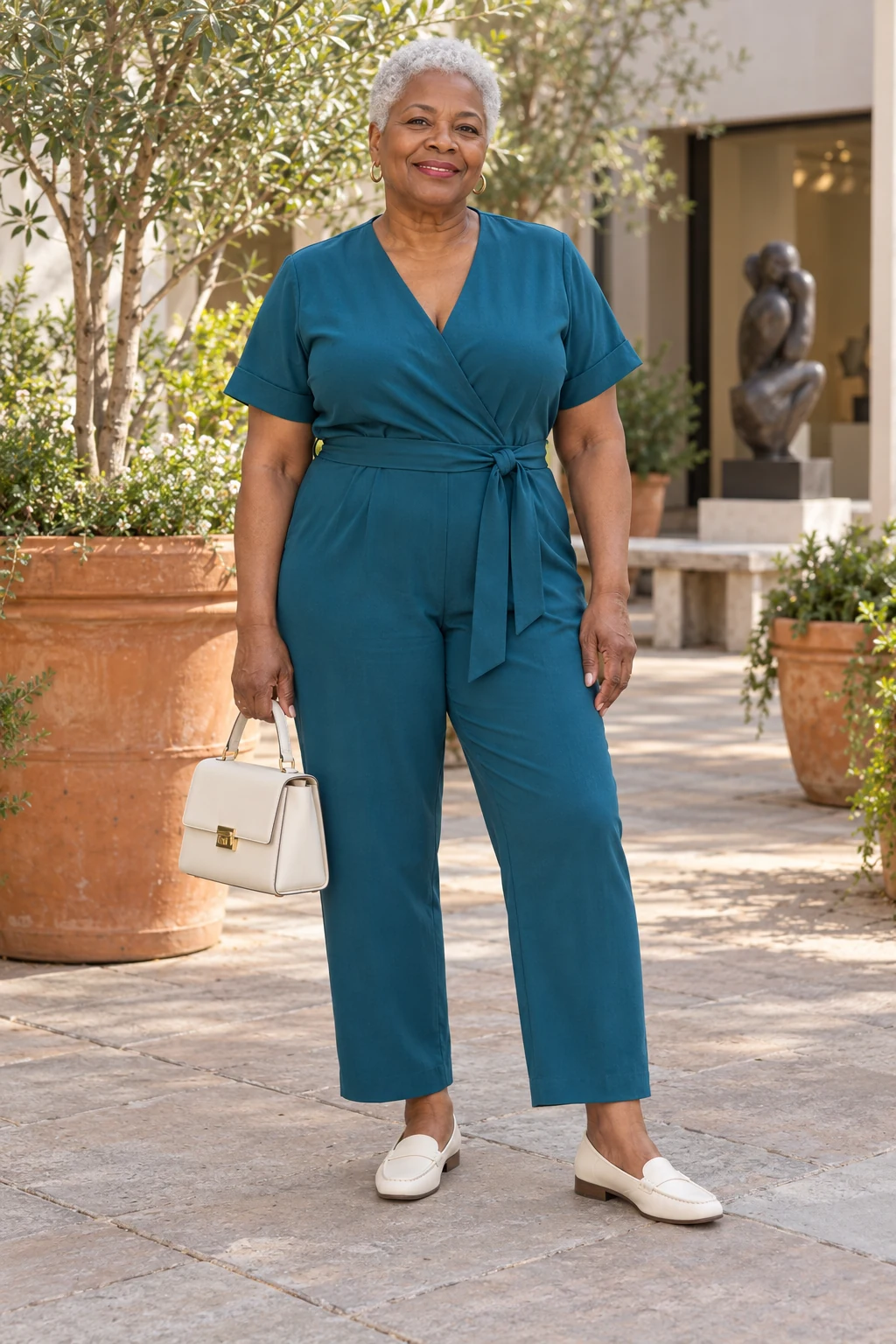
A jumpsuit asks for a torso-fit check first. Sit, reach and raise your arms in the real garment before deciding the legs need shortening. If the upper section pulls, an ankle alteration alone will not resolve the way the piece fits.
Adjust the tie without cinching it firmly, then compare how the fabric settles above and below the waist. The visible hem leaves both shoe fronts clear, but your preferred length can be different.
Barrel Jeans With a Neat Knit Vest
Ecru jeans have a softly curved leg that narrows again towards the ankle. Oxblood penny loafers repeat the small crossbody, while a charcoal sweater vest separates the pale trousers from the blue shirt. The shape is relaxed without relying on an oversized top.

Before shortening barrel-shaped denim, check where its fullest part sits around your knees. A hem adjustment changes length but does not move that curved section higher. Compare the actual leg shape on your body as well as the amount of ankle showing.
Sleeveless knitwear adds texture without another sleeve beneath the rolled shirt cuffs. If the vest feels long over the waistband, compare a shorter version before trying a bulky tuck into the jeans.
A Wrap Midi With Plain Loafers
Tiny cream motifs in a navy wrap dress pick up the pale loafers without requiring another patterned piece. Three-quarter sleeves and a small navy handbag keep the combination focused. The overlapping skirt gives a different lower edge from a straight, evenly cut midi.
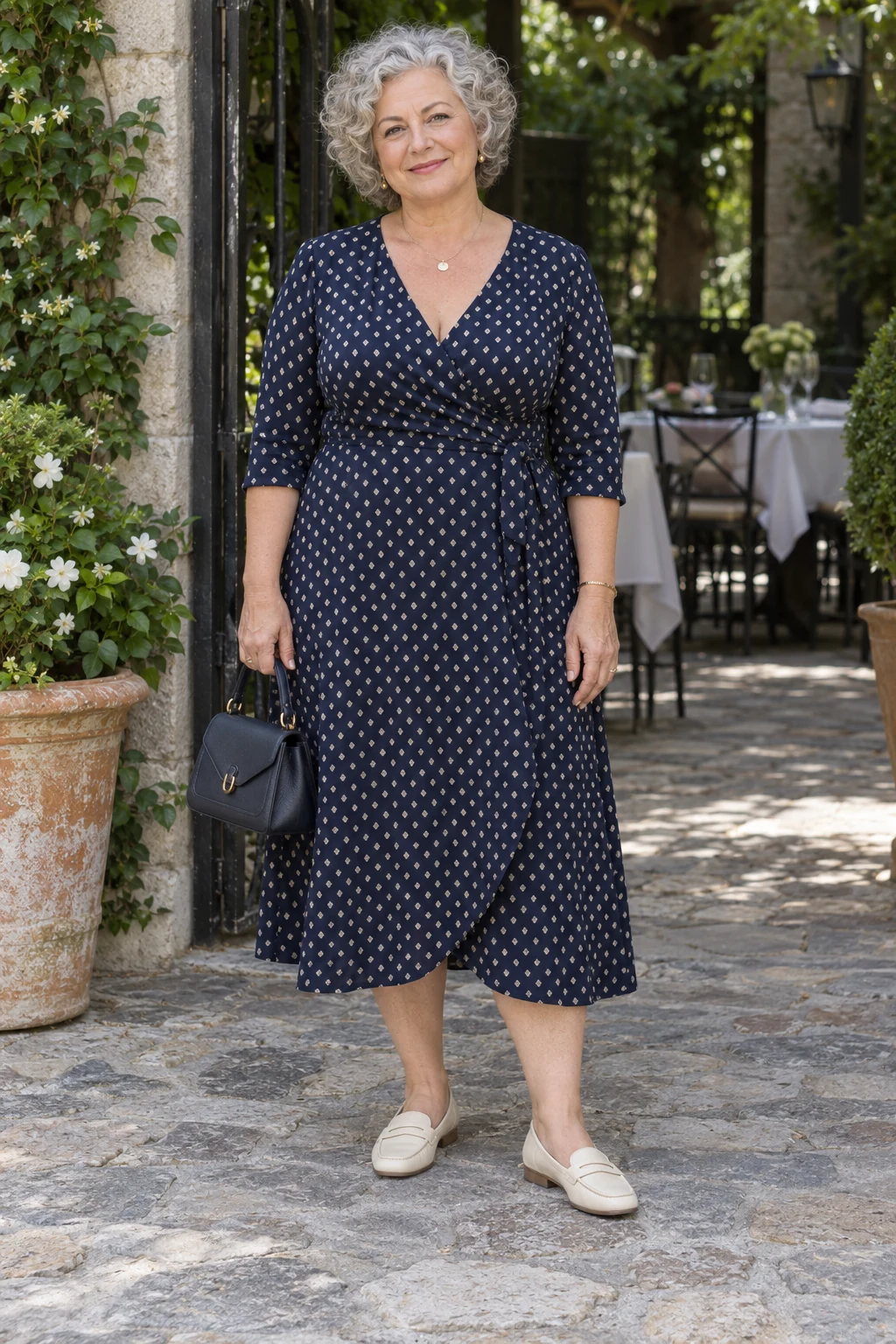
Check the wrap overlap during ordinary movement. Sit down, reach across a table and take a normal step in the actual dress before deciding whether its coverage suits you. A tied waist and a still image cannot establish how securely another garment will stay in place.
Plain penny loafers leave the print as the main detail. If you want a different shoe colour, use the same dress first so you can judge that single change.
Sailor Trousers With a Short Cardigan
Two rows of buttons give navy sailor trousers their own waist detail. An open burgundy cardigan frames the ivory tee above them, and brown tassel loafers echo the shoulder bag. There is enough interest already without introducing another belt.

Notice how the cardigan ends close to the upper buttons. Try your own knit open and closed to see whether it catches on the fastening or covers a detail you want visible. A shorter cardigan is one option, not a requirement for every petite torso.
- Sit down to assess pressure around the buttoned waistband.
- Check both trouser legs over the loafers rather than judging only the forward foot in a mirror pose.
Choose Coverage and Finish for the Actual Occasion
The last group compares a softly draped skirt, a dress, longer layers and tailored shorts. These are options for different climates and venues, not a requirement to bare legs or cover them after a certain age. Notice how much of the shoe is visible, then decide which garment length you want to keep.
A Slip Skirt With a Fine Sweater
Soft shine in the chocolate skirt contrasts with a matte sage sweater. Dark-brown penny loafers stay close to the skirt’s colour, and the small handbag continues the same restrained palette. A slight front tuck shows where the two garments meet.

A bias-cut skirt is cut diagonally across the fabric grain, which can influence its drape. Judge the actual garment after walking and sitting, especially around the hips and knees. The illustrated sheen does not confirm its fibre content or how another skirt will behave.
Leave enough sweater loose above the waistband to avoid pulling the knit tight. If you dislike the tuck, try it fully untucked and assess the hem relationship from a normal viewing distance.
Bermuda Shorts With a Light Blazer
Tailored Bermuda shorts make the loafer shape especially visible. Navy fabric finishes near the knees, while a beige blazer and white tee keep the upper layers familiar. Burgundy bit loafers and a matching bag add colour without another large garment.

Choose the coverage you want. Sit down in the actual shorts to see where the hem rises, then check the waistband with the tee tucked. A knee-length standing view is not a guarantee of the same coverage in every position.
- Assess the blazer length against the shorts while the jacket is open and closed.
- Use the combination for an appropriate venue and climate; the illustrated light layers are a styling idea, not weather protection.
A Knit Dress With a Long Vest
A long camel vest sits just above the charcoal dress hem, creating two distinct lower edges. Black tights and penny loafers keep the footwear area quiet. The open sleeveless layer adds another shape without covering the dress sleeves.

Look at the space between the hems before adding a belt or scarf. If two lengths feel busy, try a different vest length while keeping the dress. The purpose is to identify the detail you want to change, not to enforce one proportion for every short frame.
Reach forward and sit in the actual knit dress to assess movement and coverage. A small crossbody leaves the long vest fronts visible, while its dark colour relates to the shoes and hosiery.
A Ponte Tunic With Slim Trousers
A longer purple tunic offers an alternative to the tucked tops elsewhere in the gallery. Its side slit reveals a little of the black trousers beneath, while low tassel loafers continue the darker lower half. A silver-grey bag provides a smaller contrast.

Leave the tunic out. Trying to force a substantial side-slit top into the waistband would remove the shape that makes this combination different. Instead, assess how the slit opens when you sit and whether the trousers move freely underneath.
Check the sleeve length with your arms relaxed, then reach forward. The slim trouser hem leaves the loafer fronts visible; you can keep that detail without needing a shorter top or an exposed waistband.
A Checked Skirt With a Denim Shirt
Grey socks pick up one colour from the checked skirt, while burgundy loafers repeat another. A soft blue denim shirt keeps the pattern confined to the lower garment. The A-line shape leaves the sock-and-shoe combination clearly visible below its hem.

Consider the pattern and sock band together. A busy skirt does not automatically need bare ankles; a plain sock in one of its colours is another option. Try the real pair inside your loafers before deciding how much band you want showing.
The shirt is tucked with a little looseness above the waist. Sit and stand to assess that amount, then check whether the skirt settles evenly. Keep the handbag plain if you want the checks to remain prominent.
Keep the Useful Clothes and Adjust One Detail
Begin with the combination that asks the least of your wardrobe: a familiar top, a bottom whose fit you already like, and loafers that suit your feet. Compare a temporary hem fold, a lighter tuck or different hosiery before changing everything. Our guide to reusing clothes in new outfits offers more starting points for pieces you already have.
Check real labels before cleaning garments or assuming their composition. The FTC’s apparel-label guidance explains the role of fibre information and care instructions. The photos here illustrate appearance; they do not identify real products, demonstrate wear-testing or prove that a glossy shoe or skirt uses a particular material.

Alia Hashim
I'm Alia Hashim — a passionate blogger and founder of Modern Lady Magazine. I started this platform to create a space where women could find inspiration, empowerment, and real-life solutions for style, beauty, wellness, and beyond. Through Modern Lady Magazine, I aim to celebrate the modern woman — confident, creative, and full of dreams — while sharing ideas that help nurture both inner strength and outer beauty. Every story, every tip, every idea here is crafted to inspire you to embrace your journey and live life beautifully, one step at a time.
View author profile →