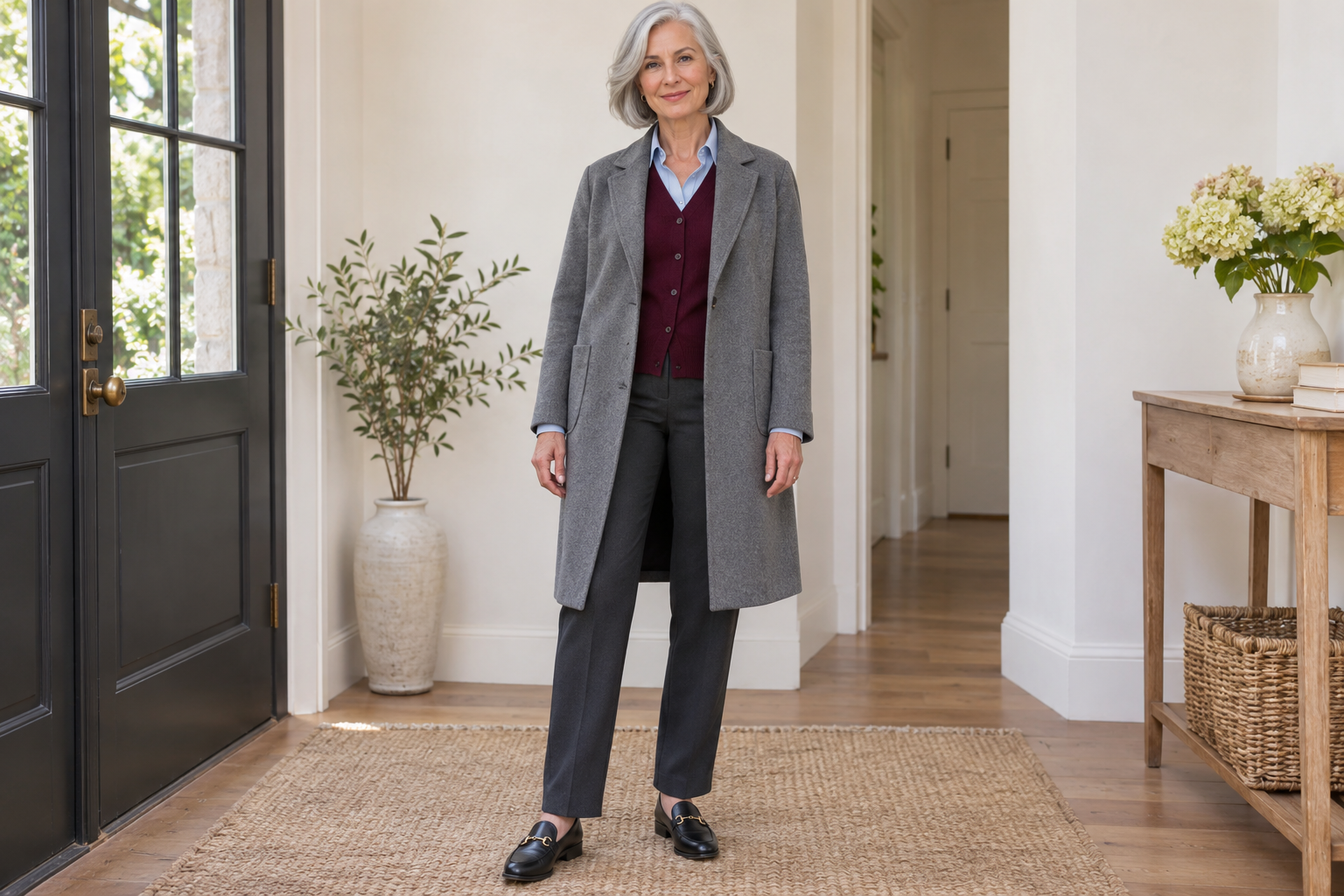
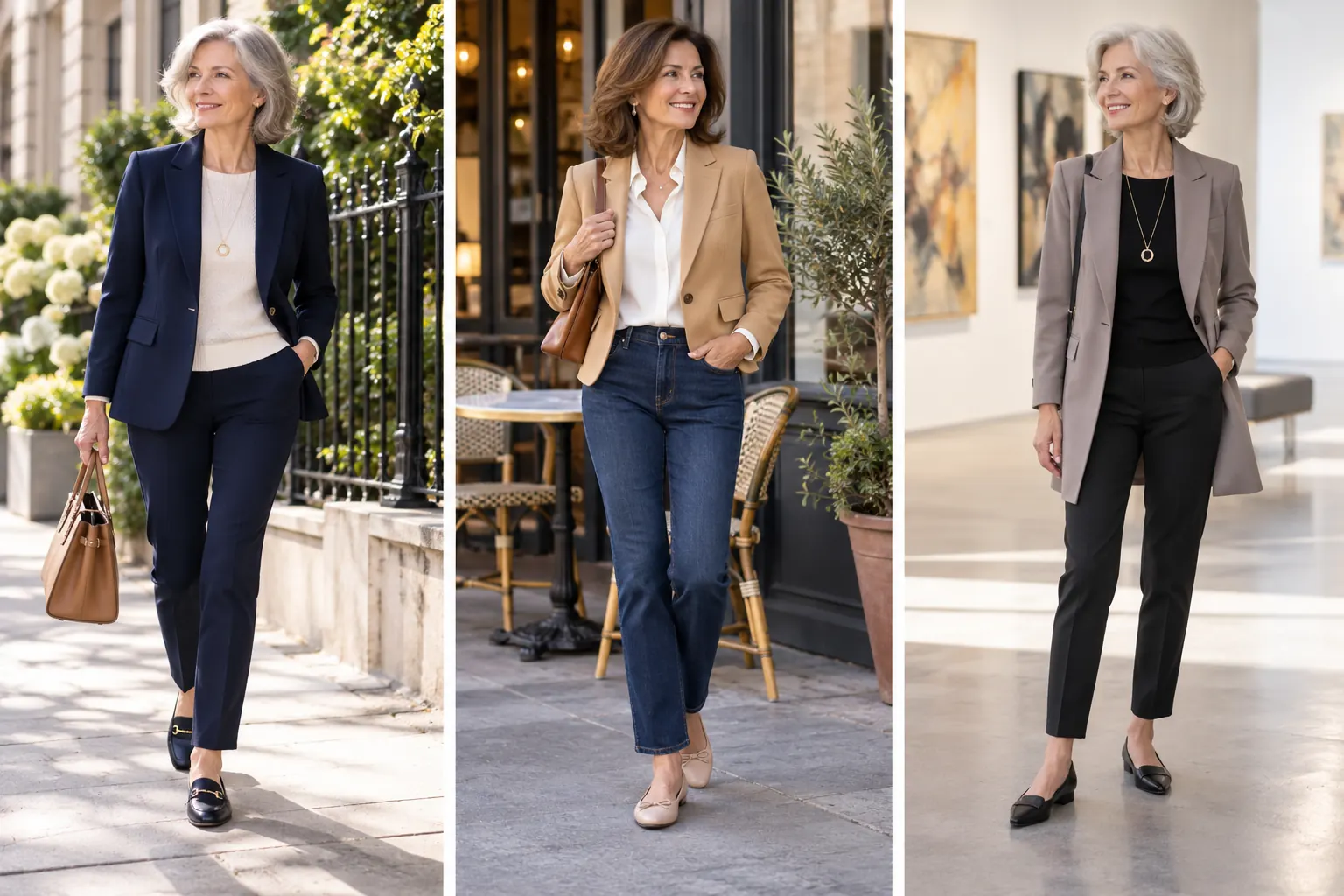
For turtleneck layering outfits, choose the outer garment and the knit together. A fine base can sit beneath a blazer, shirt or sleeveless dress; a substantial ribbed sweater may work better as the main layer. These thirteen combinations show both approaches with familiar pants, dresses and flat shoes.
Start with the amount of fabric at the neck and sleeves rather than adding accessories immediately. If the layers feel crowded, compare a finer knit or a different outer opening. Changing a bag won’t solve a collar or underarm that feels too full.
Try the closed version too. An open jacket can look comfortable in a photograph while feeling quite different fastened. Test the combination in the way you actually intend to wear it, including your usual bag and sleeves.
Choose the layer for the day ahead
A blazer, denim shirt and sleeveless dress ask different things of the knit underneath. The outfits below make those differences visible. Compare their neck openings, sleeve space and hem positions, then begin with the version closest to your plans rather than trying to recreate every accessory in a photograph.
Ivory Knit Under a Navy Blazer

For an office day, an ivory turtleneck supplies a plain center beneath a navy blazer. Charcoal ankle pants and black loafers keep the rest restrained. The rolled neck replaces the shirt collar you might otherwise wear, while the open blazer leaves the knit visible from neckline to hem.
Check the two layers together before deciding the blazer is the right size. Reach forward and bend your elbows; the sleeves should accommodate the knit you actually intend to wear. A jacket that works over a camisole may feel quite different over long sleeves.
Leave the sweater hem loose as shown if that feels comfortable. Tucking a thicker ribbed edge is optional and can add fabric inside an already fitted waistband.
Black Turtleneck With an Open Denim Shirt

An open denim shirt gives a black turtleneck a casual frame for a coffee stop. Olive pants, tan ankle boots and a tan crossbody make the palette less stark than black and denim alone. The shirt falls below the knit, so the separate hems remain part of the look.
Decide how much sleeve detail you want. The image has turned-back denim cuffs; on your own shirt, check that the knit sleeves don’t gather beneath them. You could leave the cuffs down instead, especially if rolling them creates a tight band around your forearm.
The longer shirt doesn’t need to be tucked to work. Compare its side and back length with your pants before making the center more complicated with a belt.
Cream Neckline Beneath a Burgundy Pinafore

A burgundy pinafore makes a cream turtleneck the visible sleeve and neckline layer for a museum visit. The A-line dress supplies the main shape, with charcoal tights and flat black ankle boots beneath it. A small black bag leaves the dress color as the strongest detail.
Try the dress over this specific knit before deciding its armholes have enough room. Reach across your body and lift your arms. The additional sleeve fabric changes the fit compared with a sleeveless base, even when the dress still closes comfortably at the waist.
Check the neckline as well: the dress edge should sit where you like without pulling the rolled neck down. A finer base can be worth comparing if the layers feel crowded.
Oatmeal Rib With Dark Straight Jeans
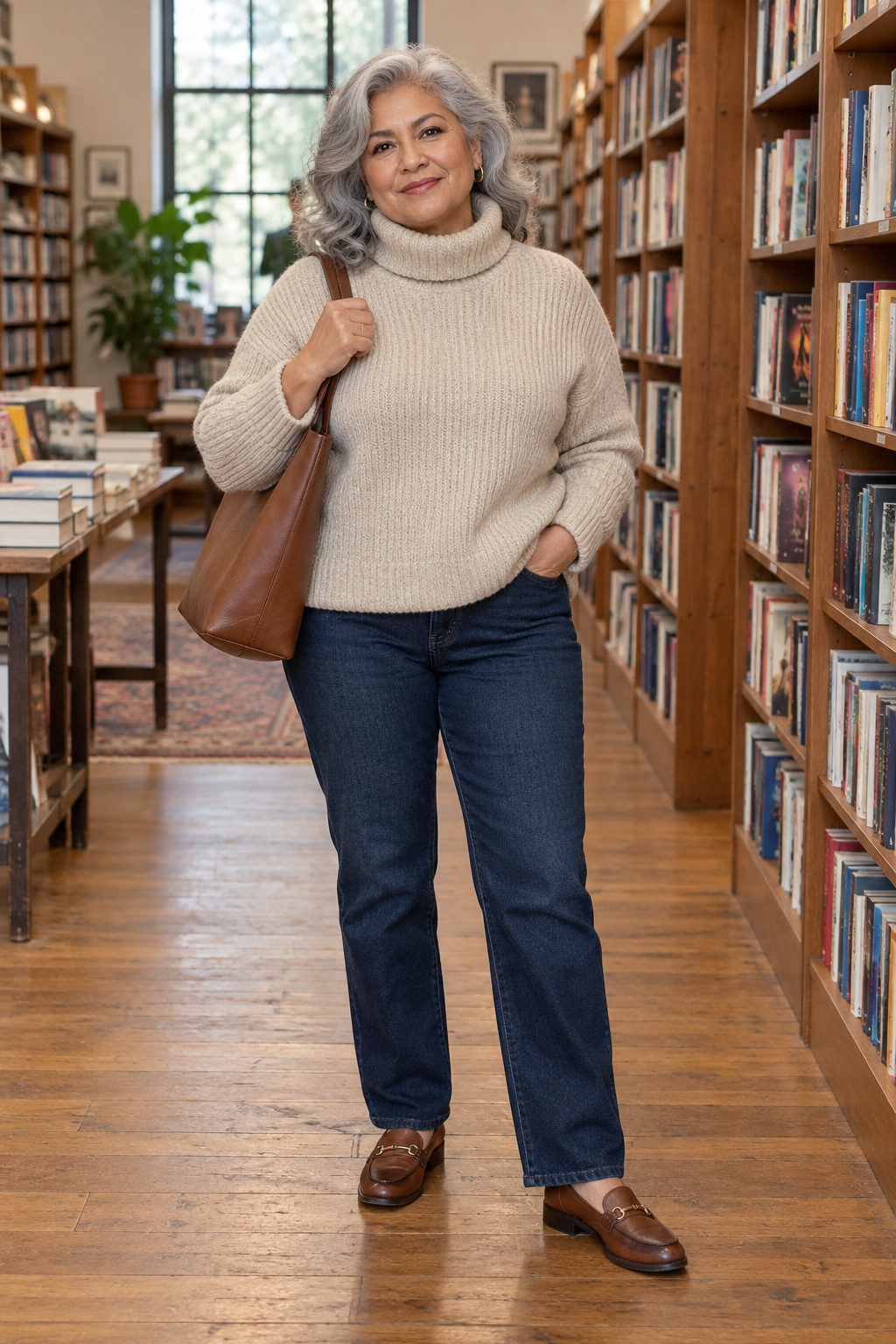
This bookstore outfit lets a substantial oatmeal ribbed sweater be the main layer. Dark straight jeans, brown loafers and a roomy tote leave its texture in view. There is no close-fitting jacket competing for space around the rolled neck or the generous sleeves.
If you love a thick sweater, you don’t have to force it into every layered combination. First decide whether you need another garment for your plans and the conditions. When you do, try the actual coat over it rather than assuming your usual size will have enough sleeve room.
The sweater sits loose over the waistband here. Compare that with your own jeans while seated; folding a heavy knit inside them can change the fit considerably.
Forest Knit Under a Camel Coat

Forest green and camel make the high neckline clear beneath an open coat. Dark brown pants and matching ankle boots keep the lower half quiet, while a brown shoulder bag repeats the same family of colors. The knee-length outer layer is the major difference from the shorter jackets in this guide.
Close your own coat before deciding the neck area has enough space. An open-front photograph cannot show whether the lapels, fastening and rolled knit feel comfortable together when you need the coat closed. Turn your head and try your normal bag position as well.
The picture illustrates color and layering, not tested weather protection. Choose the actual garments for your conditions, and use the care labels rather than the image to identify their materials.
Navy Knit and a Short Tweed Jacket
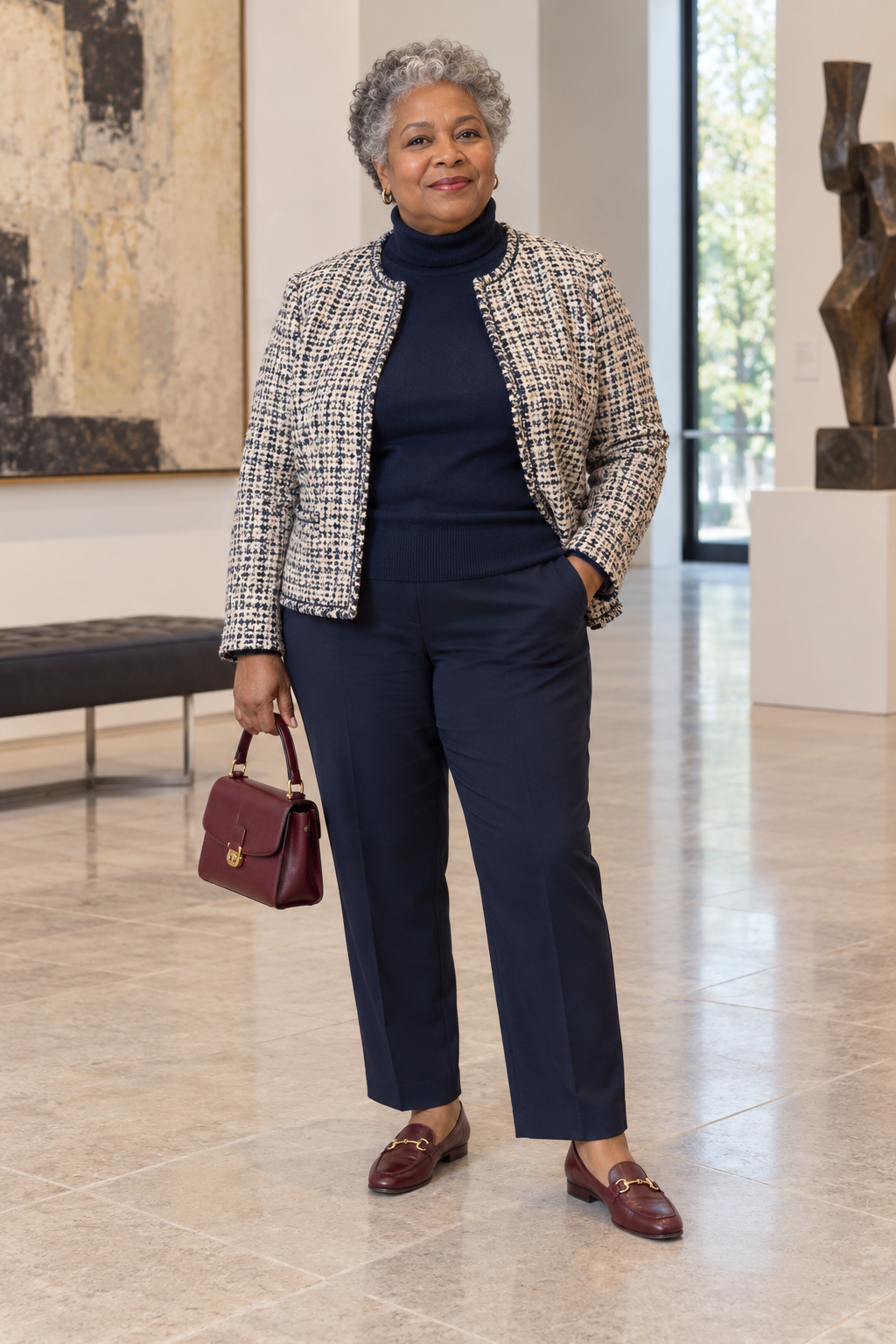
A collarless cream-and-navy jacket lets a navy rolled neck stand on its own. Navy pants continue the dark center, while burgundy loafers and a structured little bag provide a restrained accent for a gallery visit. The nubby jacket surface adds detail without another collar.
Compare the jacket edge with the height of your own knit neckline. A short, open outer layer can show more of the sweater, but there isn’t one required height for the roll. Fold it in the way that feels natural instead of repeatedly stretching it into a particular shape.
If you want to close the jacket, try that before leaving home. The fit across the chest matters as much as the neat open edges shown in the illustration.
Gray Turtleneck Under a Plaid Overshirt
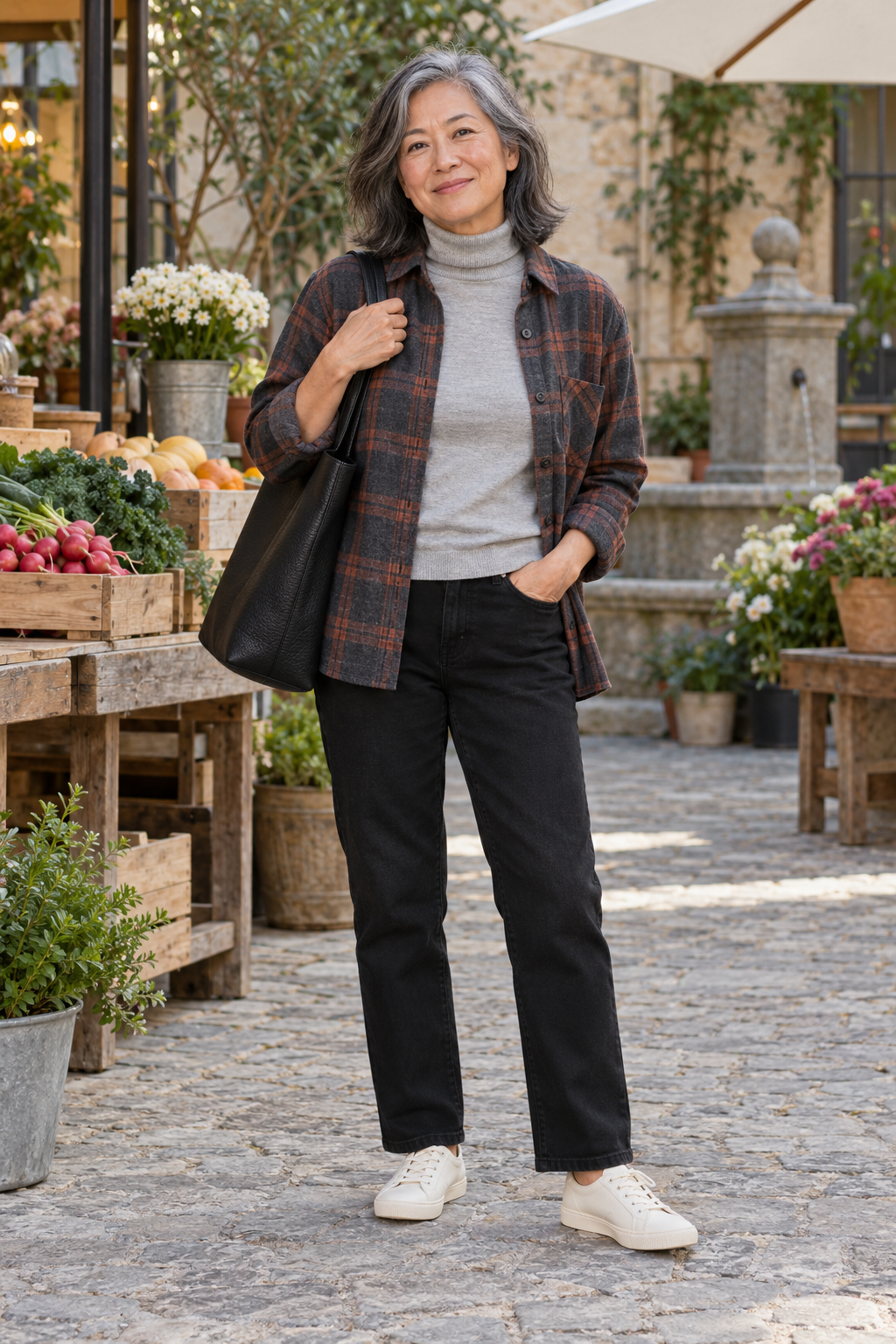
A gray turtleneck makes a quiet base beneath a charcoal-and-rust plaid overshirt. Black jeans and cream sneakers suit a weekend market, with a black tote for carrying purchases. The plaid supplies the pattern; a printed scarf would be another choice, not an essential finishing step.
Raise your arms with both layers on and notice where the fabric gathers. A relaxed overshirt can still feel crowded at the underarm if the base has roomy sleeves of its own. Compare a finer or closer sleeve before automatically choosing an oversized outer garment.
The turned-back cuffs expose the wrist here. Leave them down if you prefer, and make sure your own shirt sleeves don’t pull the knit sleeves upward every time you move.
Chocolate Knit With an Open Long Cardigan
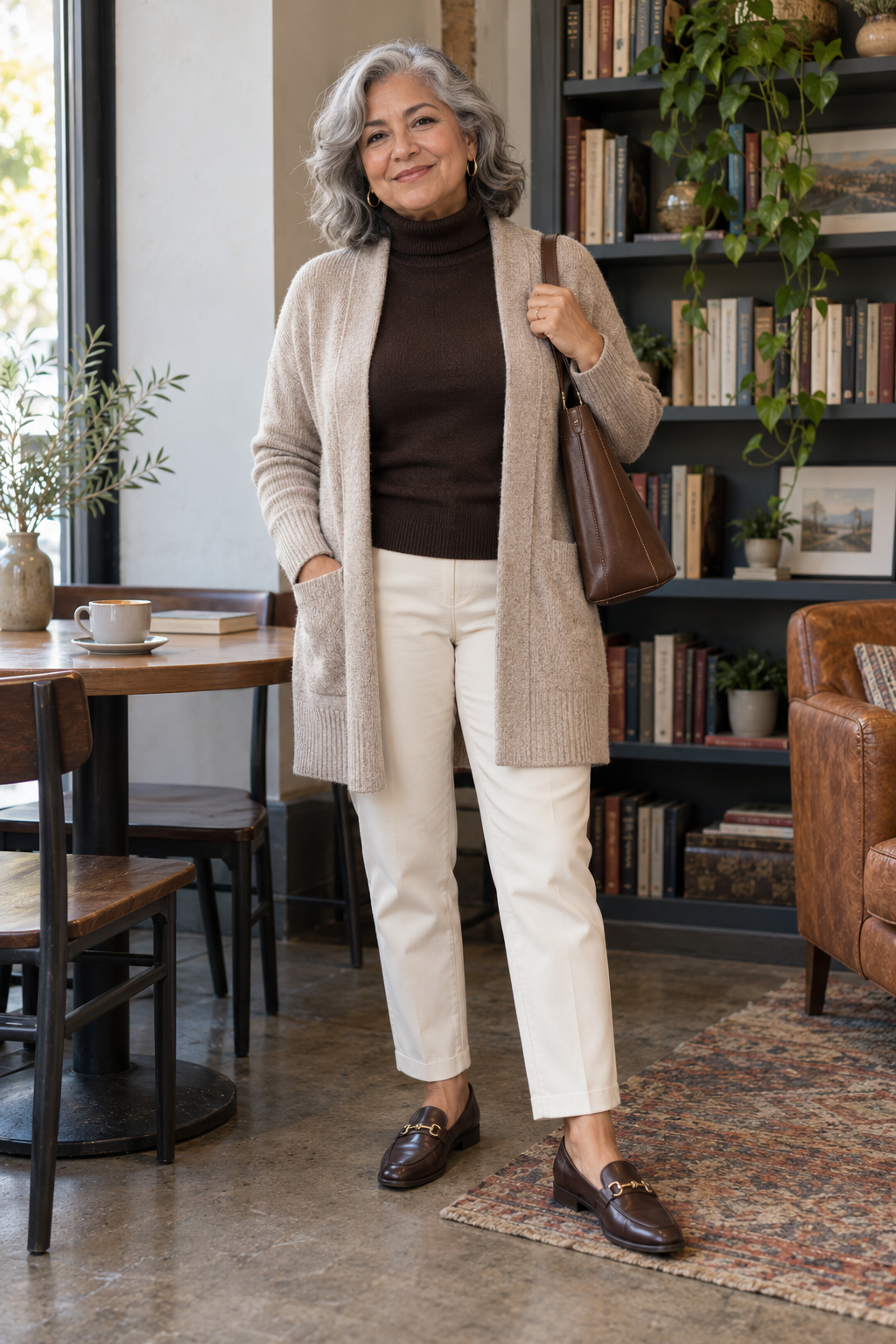
A chocolate turtleneck keeps one clear neckline beneath a long oatmeal cardigan. Cream ankle pants and brown loafers make the cafe outfit lighter below, with a brown shoulder bag repeating the base knit. The cardigan’s open edges frame the center rather than adding another fastening at the throat.
Compare the two knit surfaces on your own garments. A soft cardigan may cling to a textured base instead of hanging freely, particularly across the back. Walk and turn before deciding whether you like the combination; the smooth front view is only part of the decision.
If the layers catch, try a smoother base before changing the cardigan length. Keeping one garment fixed makes it easier to identify which change improves the way the outfit hangs.
Striped Neckline Beneath a Navy Jacket
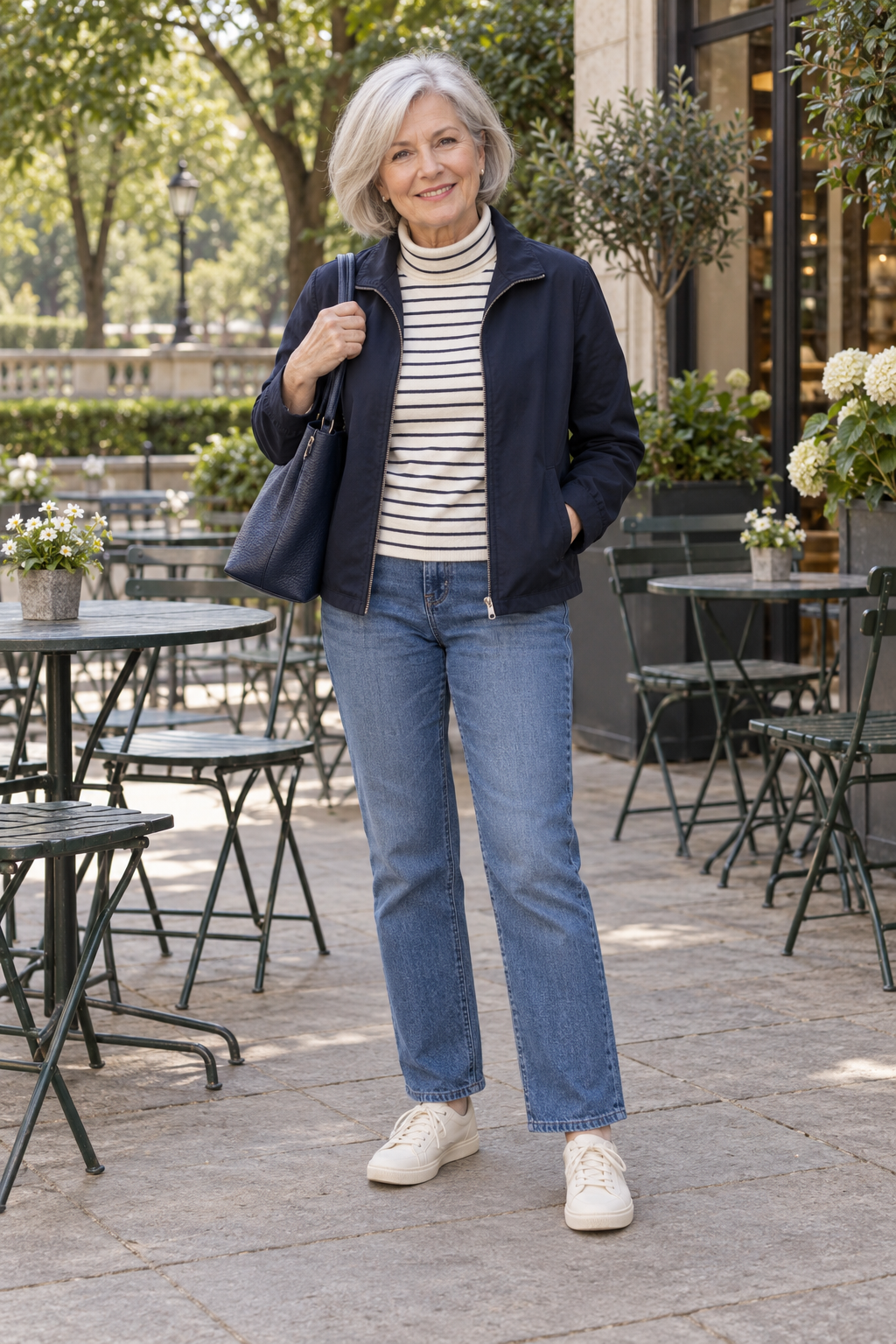
For a park cafe, an ivory-and-navy striped turtleneck sits beneath a plain navy zip jacket. Straight blue jeans and cream sneakers keep the outfit casual. The stripe is narrow enough to read as one area of pattern, while the bag repeats the jacket color instead of adding another print.
Check the jacket’s zipper near your rolled neck when fastening it. The open version shown leaves plenty of the stripe visible, but the closed version may bring several edges together at the throat. Choose how you want to wear it before judging the fit.
You can keep the rest of the outfit unchanged when comparing another jacket length. That is a useful way to see whether a shorter outer edge suits these particular jeans.
Rust Turtleneck With a Black Sleeveless Dress

A rust turtleneck turns a plain black sleeveless dress into a two-layer evening option. Opaque tights, flat ankle boots and a small black shoulder bag leave the rust sleeves as the main color. The straight dress shape differs from the A-line pinafore earlier, so it deserves its own movement check.
Sit and reach while wearing your actual knit beneath the dress. The extra layer can affect the fit through the chest, armholes and seat even if the zipper still closes. Don’t rely on the standing photograph to establish that the combination will feel roomy enough.
If the dress pulls, compare a finer base or another cut rather than assuming the solution is a tighter knit. Keep the coverage you prefer without crowding the layers.
Blue Knit Under a Soft Gray Vest
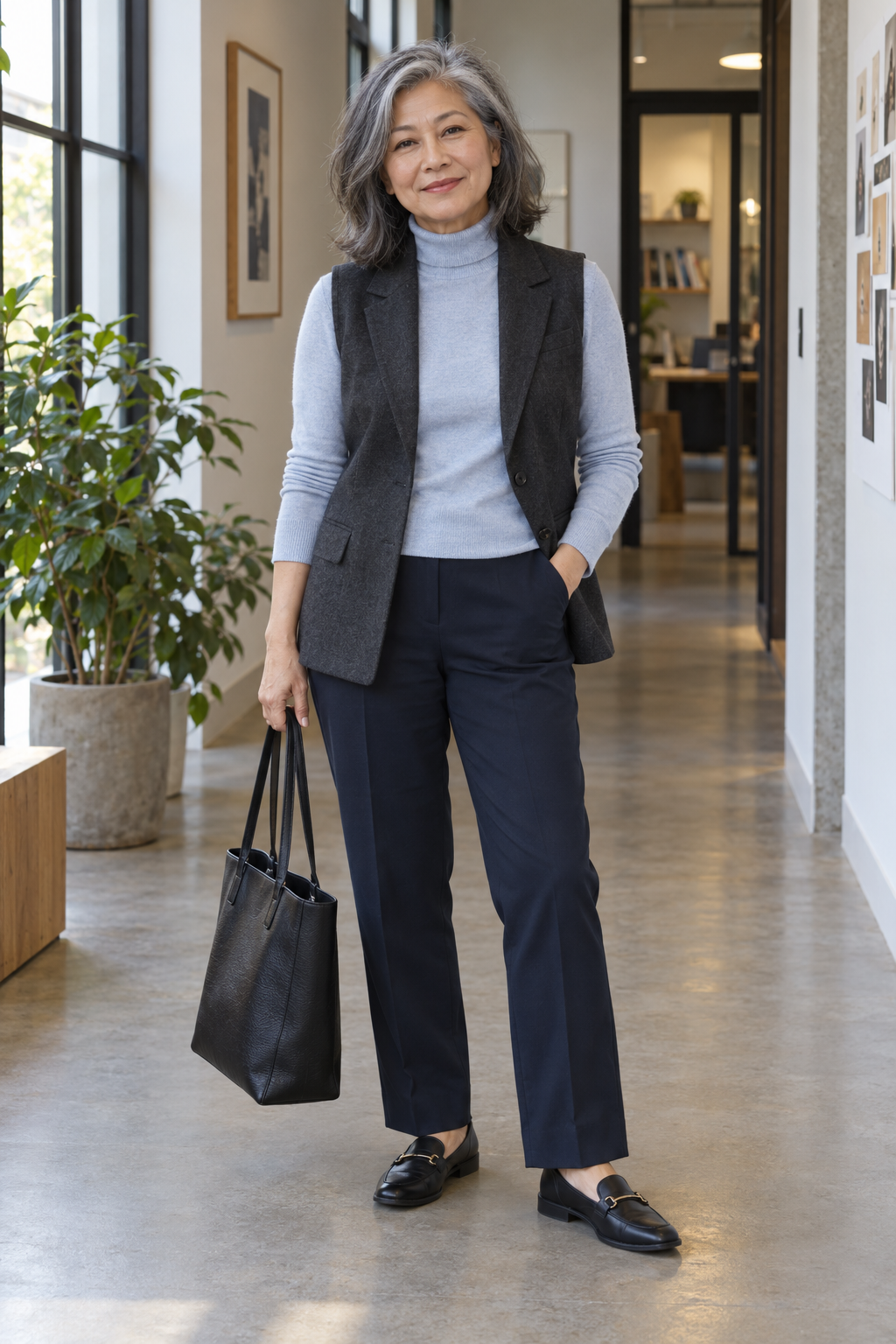
A pale blue turtleneck gives a charcoal tailored vest a softer center for a creative office day. Navy pants and black loafers keep the lower half simple, with a black tote for the everyday carry. The open vest adds lapels without another set of long sleeves.
Look at the vest’s shoulder edge when comparing sizes. It should sit in a way you like over the knit rather than extending awkwardly just because you wanted a longer front. Try another cut as well as another size if the shoulder and hem seem to need opposite changes.
Leave the vest open as shown or test it buttoned before deciding. A comfortable open front doesn’t prove that the fastening will sit smoothly over the sweater.
Cream Mock Neck and a Green Utility Jacket

A cream mock neck offers a shorter standing neckline beneath an olive utility jacket. Dark straight jeans, tan loafers and a tan crossbody suit a garden-center visit. The jacket’s pockets bring the visual detail, while the base stays plain and the collar remains lower than the folded versions elsewhere.
This is an option when you like a high neckline but don’t want a full roll. Compare the actual collar height against your own jacket opening; labels such as mock neck don’t guarantee that every top will feel the same around the throat.
The jacket reaches the hip in this illustration. Check where your own pocket and hem positions land, especially if you plan to carry things in those pockets rather than only wear the jacket open.
Burgundy Knit Beneath a Soft Gray Blazer

Burgundy knit and a soft gray blazer make a restrained early-dinner combination. Black wide-leg pants reach over flat loafers, while a burgundy bag repeats the sweater color. The open jacket shows a compact knit hem above the wider pants instead of covering the entire center.
Try the pants with these actual shoes before deciding the hem length. A full leg can fall close to the ground without showing as much ankle as the cropped outfits elsewhere. Walk normally and check that the fabric clears the floor rather than adding heels simply to avoid an alteration.
Keep the blazer open for this comparison, then test it fastened if that is how you prefer to wear it. One photograph doesn’t determine the best jacket position for your own garments.
Compare the neckline before adding another collar
A folded turtleneck and a shorter standing mock neck aren’t identical. Glamour’s guide to high-neck styling distinguishes the rolled version from a single-layer mock neck. Use that distinction when browsing, but judge the actual garment: the name alone doesn’t establish how high, loose or substantial its neckline will be.
Try turning your head, looking down and sitting in the complete combination. If a folded neck feels too full beneath your jacket, you might prefer a shorter mock neck or another neckline altogether. You don’t need to tolerate a detail you dislike to make a particular outfit idea work.
Give each layer a job. Decide whether the outer garment supplies pockets, coverage or a visual change. If it adds nothing you need and makes movement harder, compare the knit on its own before buying another layer.
Choose the sleeve and hem relationship deliberately
Two long sleeves can gather at the elbow even when each garment fits on its own. Bend your arms with both on, then see whether the cuffs remain where you like them. A turned-back outer cuff is a styling option, not a substitute for comfortable room inside the sleeve.
If the fit itself is uncertain, our guide to proportion ranges and short lengths explains the label distinction. For more everyday combinations after settling your layers, see these casual outfits with familiar closet pieces.
Read each garment’s own label before laundering the layers together. Similar-looking knits can have different instructions. The FTC’s care-label guidance supports using the item’s instructions; neither a photograph nor the surface texture can establish its fiber content or cleaning limits.
Images are original AI-generated editorial illustrations, not tested garments or evidence of a personal wear test.

Alia Hashim
I'm Alia Hashim — a passionate blogger and founder of Modern Lady Magazine. I started this platform to create a space where women could find inspiration, empowerment, and real-life solutions for style, beauty, wellness, and beyond. Through Modern Lady Magazine, I aim to celebrate the modern woman — confident, creative, and full of dreams — while sharing ideas that help nurture both inner strength and outer beauty. Every story, every tip, every idea here is crafted to inspire you to embrace your journey and live life beautifully, one step at a time.
View author profile →