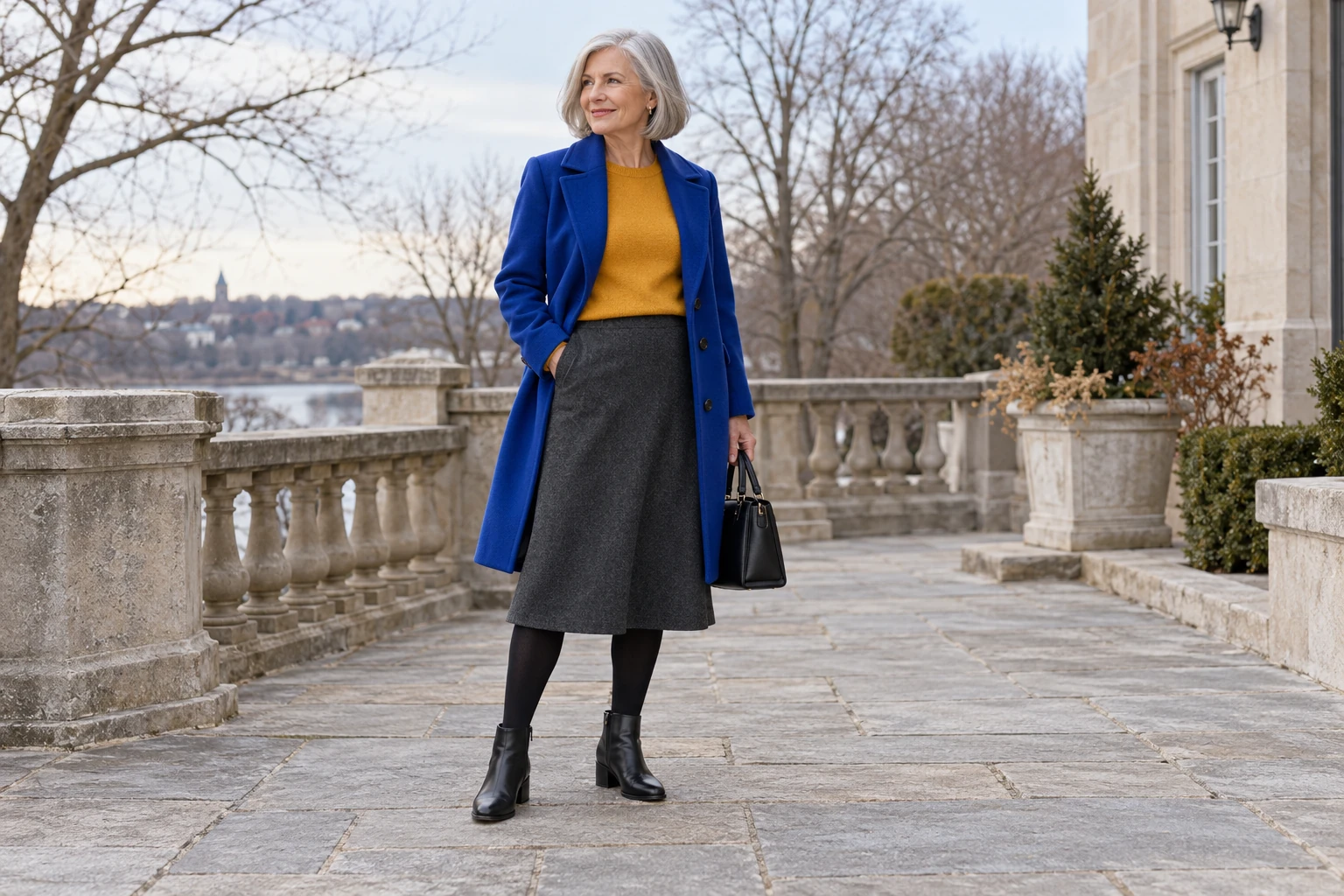
Winter outfit ideas for petite women over 50 become easier to use when the clothes fit together, not just separately. Start with the coat or jacket you need for your plans, then try its underlayers before judging sleeves, hems and waistbands. Shorter proportions do not require one compulsory coat length or an age-based list of clothes to avoid.
The 18 original illustrated outfits below compare long coats, quilted jackets, skirts, dresses and trousers. Choose actual garments for your local weather and activity; a picture cannot establish insulation, waterproofing or shoe grip. If a simpler base would help, our white T-shirt styling guide offers ideas for a plain layer beneath removable pieces.
Find Where the Layers Compete
When an outfit feels awkward, locate the point of contact before replacing the whole combination. A collar, cuff or waistband may need one small adjustment. Use these comparisons with the actual clothes you intend to wear.
| You Notice | Compare | One Adjustment to Try |
|---|---|---|
| Pressure at the neck | Hood, knit collar and scarf together | Remove or reposition one competing piece. |
| Crowded sleeves | Inner cuffs under the coat | Try a smoother base or one fewer sleeve layer. |
| A bulky waistband | Tucks, coat tie and trouser rise | Loosen one tuck or remove the belt. |
| Fabric catching on boots | Actual hem with your chosen footwear | Compare a different length or opening. |
Choose an Outer Layer With Room for the Clothes Beneath
The first group compares familiar coats and jackets over different bases. Fit the outer garment with those layers on, then sit, reach and walk. A larger size may change shoulder position as well as room inside, so assess the complete combination rather than assuming size alone solves the problem.
A Camel Coat Over a Navy Roll Neck
Camel, navy and dark denim make a clear starting point when winter dressing begins to feel complicated. The open coat shows a fine roll neck rather than several competing collars, while cognac ankle boots repeat the crossbody’s warm tone. A loose cream scarf supplies another removable piece.

The useful check happens with the coat fastened. Reach forward and bend your elbows while wearing the actual knit underneath. A coat that fits over a thin tee may feel different over even a modest sweater.
Set the jeans length with your chosen boots. Here, the hems meet the shafts without a thick rolled cuff. Choose a different heel height if preferred, then reassess the hem rather than copying the whole outfit unchanged.
A Short Quilted Jacket With Straight Trousers
A short quilted jacket gives the cream sweater a different frame from a long tailored coat. Black trousers continue into Chelsea boots, while the burgundy beanie provides a small separate color accent. The shoulder bag stays close to the jacket’s darker tone.
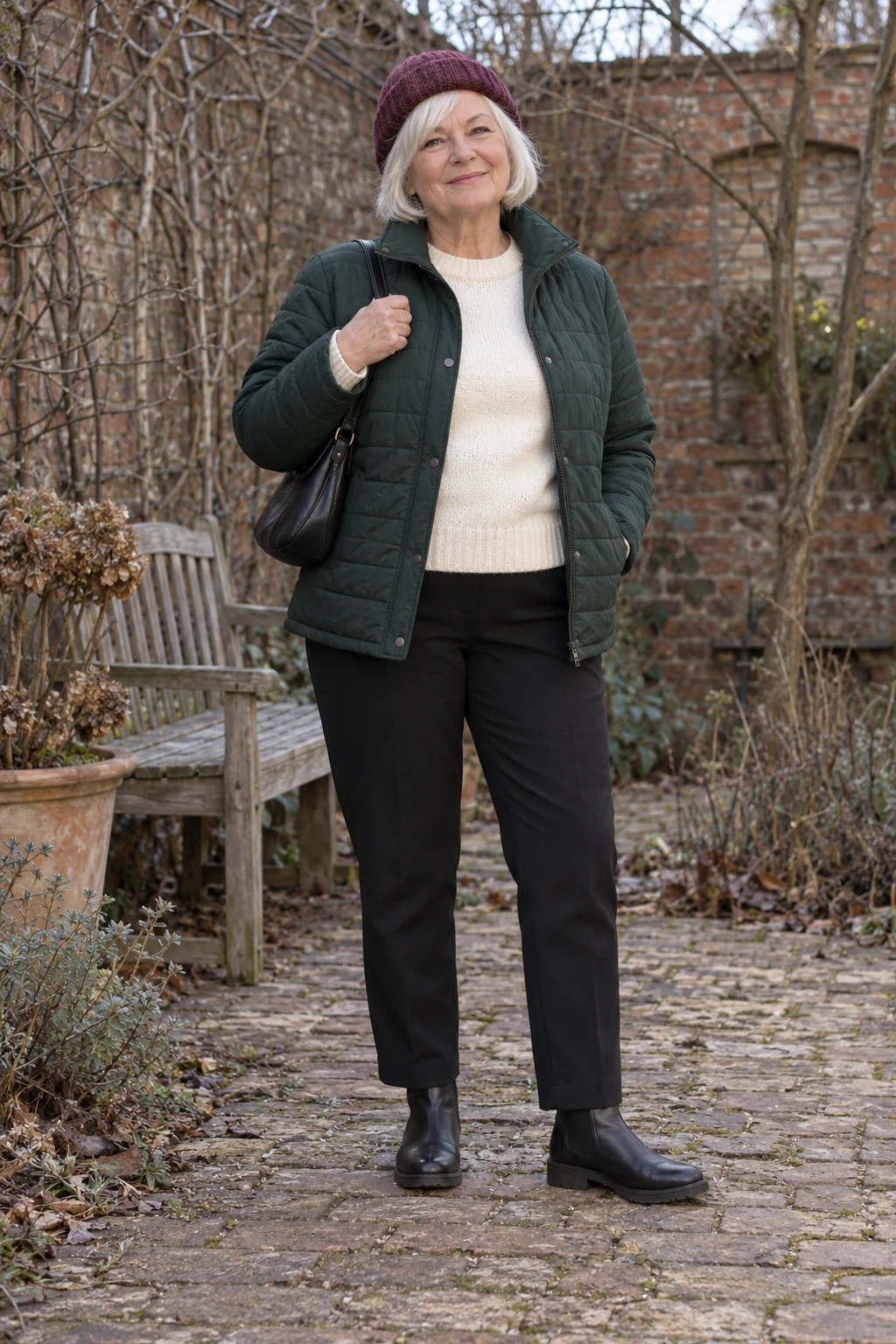
Notice the visible knit cuffs. One layer peeking out can be useful; several thick folds may feel crowded inside your own jacket sleeves. Try fastening and unfastening the jacket before deciding which base knit to use.
- Compare the jacket hem with the trouser waistband while seated, so coverage matches your preference.
- Check the beanie with your hairstyle and coat collar rather than adding a scarf automatically.
A Navy Coat With a Burgundy Knit Dress
A collared knit dress creates an indoor outfit before the coat is added. Burgundy remains visible between the navy lapels, and a matching handbag repeats the dress color without introducing another large accessory. Black tights and ankle boots finish the lower half.

Notice how closely the coat and dress hems sit. They do not need to align exactly, but compare them while walking so neither catches or folds awkwardly against the other. Sit in both garments before judging the combination.
Plan for Coat Removal
Check the dress sleeves and neckline on their own. If you will spend most of the outing indoors, the underlayer deserves as much attention as the outer photograph suggests.
A Rust Wrap Coat With Wide Trousers
A rust wrap coat makes the main color decision, leaving grey trousers and brown boots to support it. The ivory knit is visible at the neckline, and a brown shoulder bag repeats the footwear. The tied front shows a different outer shape from the open coats nearby.

Before tightening the belt, check what sits underneath it. A thick sweater tuck and trouser waistband can collect at the same point. Loosen or remove one fold rather than pulling the tie harder to create a particular silhouette.
Choose the trouser length with your actual boots on. The wide hems here fall near the uppers without dragging; another heel height will change that relationship. Make the comparison standing and after several ordinary steps.
A Taupe Puffer With a Hoodie
A hoodie and puffer offer an informal alternative to tailored outerwear. Charcoal sits between the taupe jacket and navy trousers, and white sneakers provide contrast at ground level. The black crossbody leaves the hands free without adding another large garment.
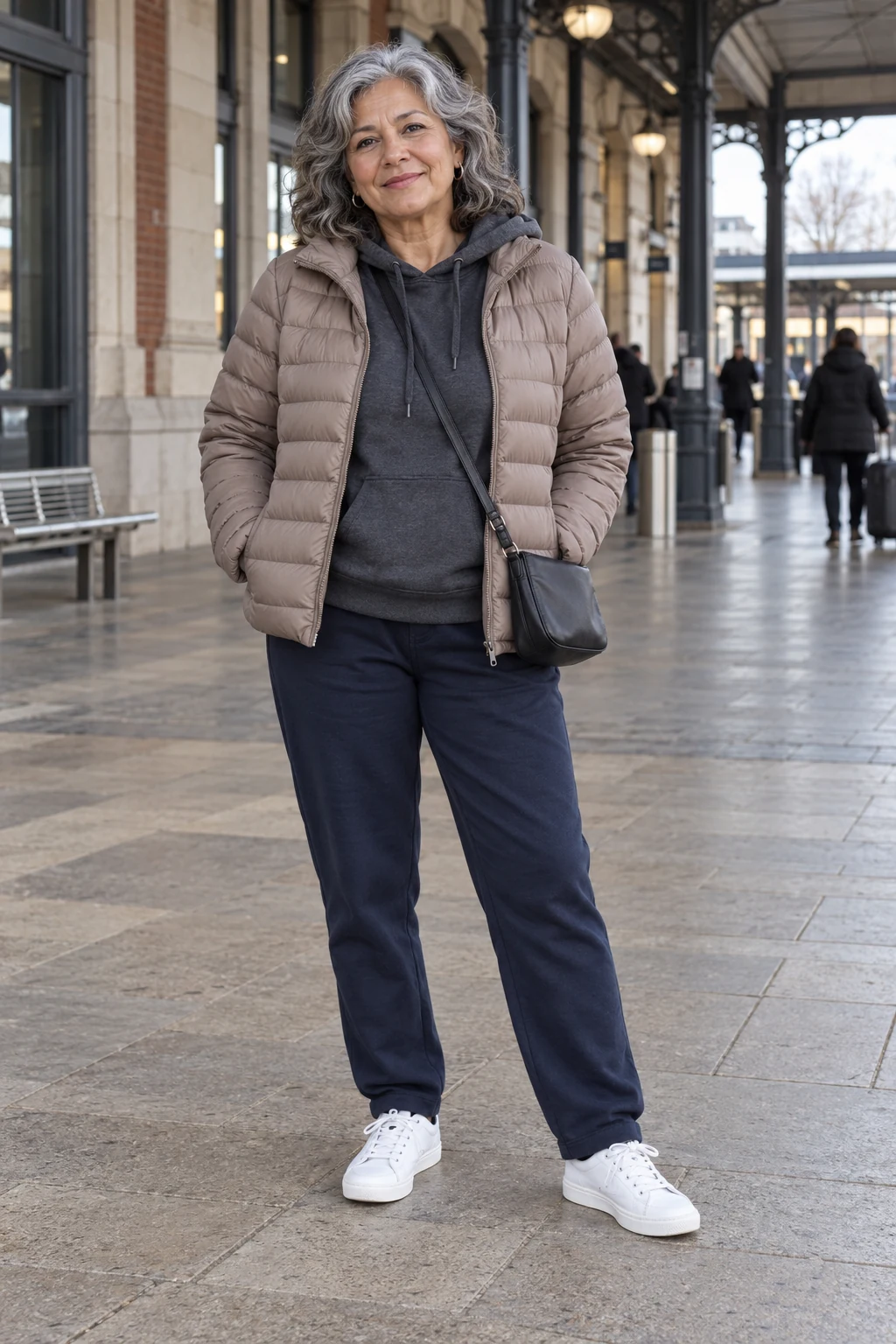
The hood is the important extra layer. Try it both inside and outside your own jacket collar, then turn your head and lift your shoulders. Choose the arrangement that does not push fabric awkwardly against the back of the neck.
- Check trouser fabric around the sneaker tongue after walking; shorten a hem that repeatedly gathers there.
- Choose footwear for the actual surface and weather. This outfit illustration does not establish traction or water resistance.
A Shearling-Look Jacket With Corduroy
Texture does much of the work here. A cream pile jacket sits beside a dusty-blue knit, and the chocolate trousers introduce fine corduroy ribs rather than another pattern. Black lace-up boots and a brown satchel keep the finish grounded.
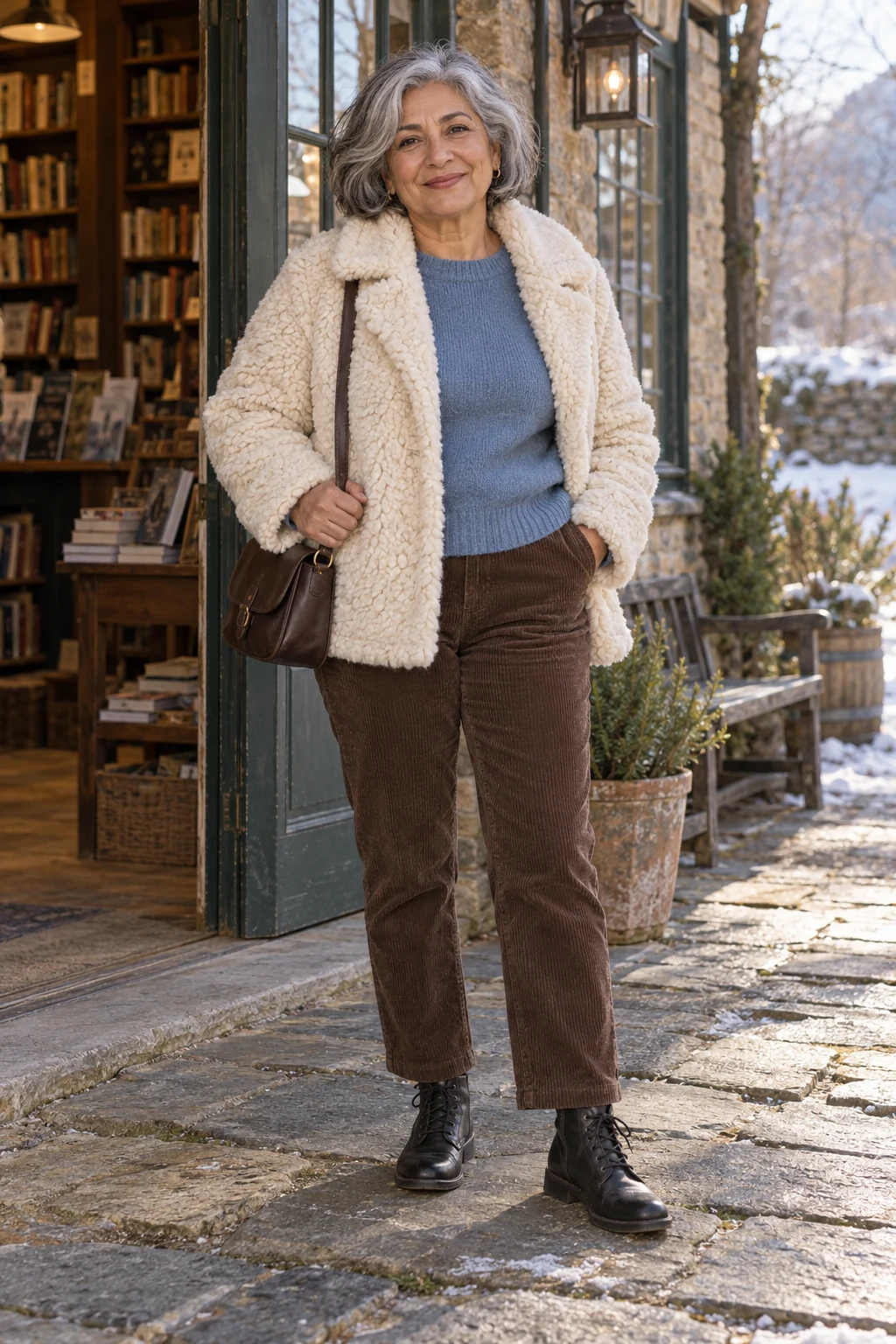
The jacket already has a substantial-looking surface. Try a smoother inner knit before assuming that another thick sweater is needed. The actual weather and garment construction still determine what layers you require.
Check the jacket sleeves with your elbows bent. A top that fits alone can feel crowded once the outer cuffs sit over it.
Finally, compare the trouser opening with the boot shaft. The cropped hem here leaves the boot visible without several rolled folds of corduroy collecting above it.
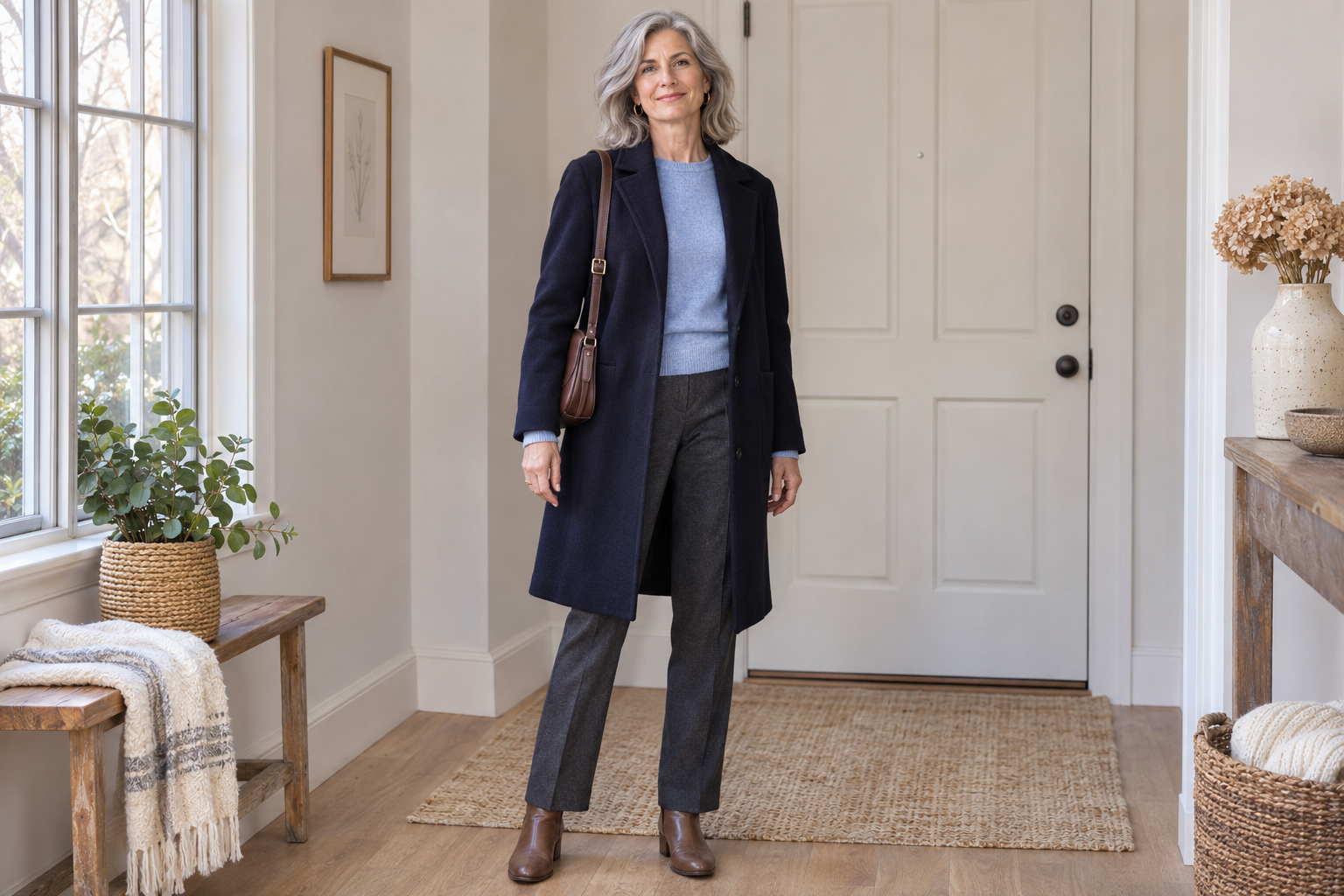
A Grey Coat With Dark Separates
A dark base changes the reading of a long pale coat. Black knitwear and wide trousers sit beneath grey lapels, while the silver shoulder bag adds a small lighter detail. There is no need to repeat a belt or scarf simply because other winter looks use them.
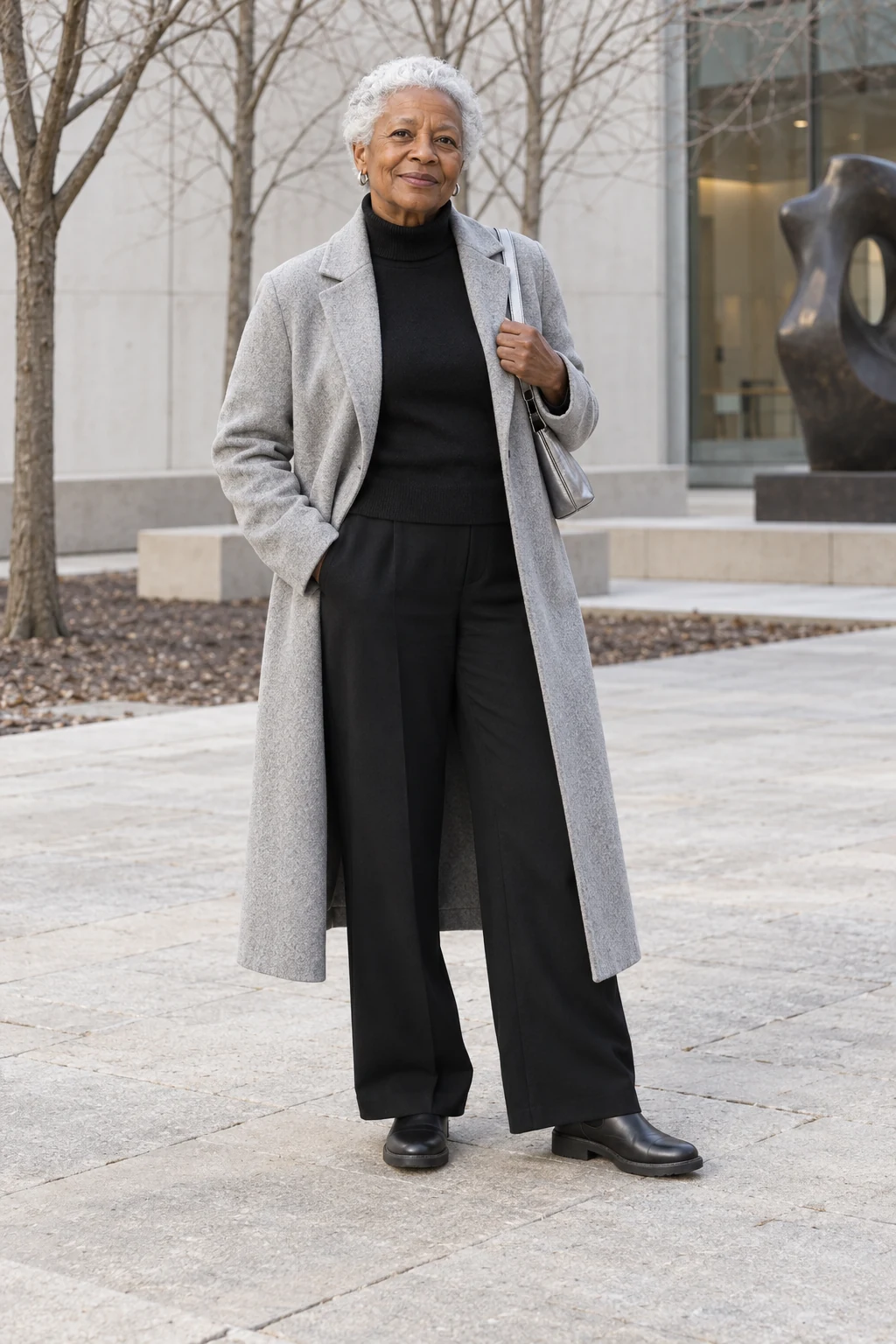
Full-length trousers make the boot check important. Stand in your actual pair and see where fabric meets the heel and upper. A hem fitted for another shoe may catch or drag even when the trousers otherwise feel right.
Keep the neckline simple if the roll neck already supplies the coverage you want. Test the coat’s upper-arm room with that knit underneath, and compare movement before changing the coat length.
Compare Skirts, Textures and a Different Amount of Coverage
Layering decisions change when the base is a skirt, a collared shirt or a sleeveless knit rather than jeans and one sweater. For trouser combinations, the petite wide-leg pants guide gives more hem and width comparisons. Judge the opening with the footwear you plan to wear, and leave enough room for your own normal stride.
An Olive Parka With Cream Cords
An olive parka changes the feel of cream trousers from tailored to informal. The striped knit gives the open front some pattern, and tan lace-up boots echo the crossbody. A navy scarf repeats the stripes without another contrasting color.

Pay attention to the neckline before fastening the parka. The scarf, hood and knit collar occupy the same small area. Loosen or rearrange one piece if turning your head moves the whole stack.
Check the bag against the coat pockets too. A crossbody can sit directly over a pocket opening or drawcord, and that can be inconvenient when reaching for keys. Move the strap length or bag position before deciding the parka itself is the problem.
A Red Peacoat With a Navy Skirt
A red peacoat gives the navy skirt a clear partner without adding a printed scarf. Ivory knitwear breaks up the deeper colors, and the burgundy handbag echoes the boots rather than matching the red coat exactly. The shorter outer layer leaves the skirt’s shape visible.

In the finished illustration, the boots reach the calf and sit below the skirt hem. Compare that gap with your own tights and boots; neither a continuous dark line nor a visible break is compulsory for a petite outfit.
Walk and sit before settling on the skirt length. Notice whether fabric catches at the boot shaft, then check the coat with its front closed. Keep the layers that allow the movement and coverage you prefer.
A Herringbone Blazer Over a Fine Cardigan
Herringbone supplies the pattern, so the other pieces can stay plain. A chocolate button cardigan sits over an ivory collared shirt, with burgundy trousers and brown ankle boots adding depth below. The small brown handbag repeats the footwear.
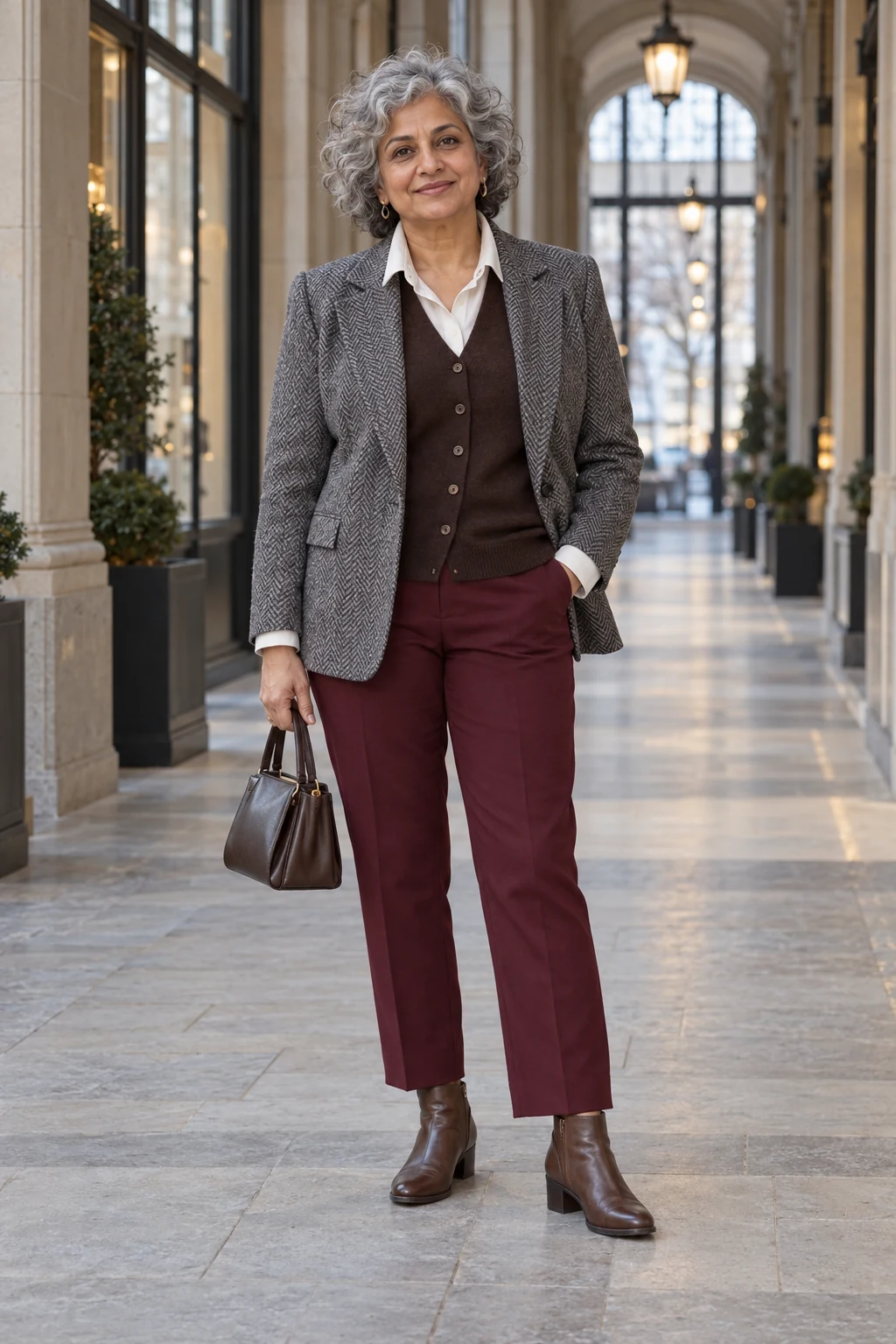
This is a useful indoor layering example. Three upper garments need to be tried together, even when each feels light on its own.
Bend your elbows and reach forward before judging the blazer shoulders. Notice whether the shirt cuff bunches under the cardigan or the collar shifts when you move.
If the sleeves feel crowded, compare a sleeveless knit in place of the cardigan. Keep the shirt and trousers, then assess how much that single change alters the fit.
Try the Sleeve-Stack Check
Put on the exact shirt, knit and coat together. Bend both elbows, reach forward and remove the outer layer once. Notice whether shirt cuffs fold back, sweater sleeves bunch or a collar shifts. Repeat after changing only one piece so you can tell which adjustment helped.
- At the wrist: separate a rolled shirt cuff from a thick knit cuff.
- At the upper arm: compare a sleeveless knit with a fully sleeved one.
- At the neck: arrange scarf, hood and collar before tightening anything.
A Long Quilted Vest With Grey Separates
A sleeveless outer layer changes the arm movement rather than simply shortening a coat. Navy quilting frames grey knitwear and matching trousers, while grey boots keep the base quiet. The long vest creates coverage through the body without adding another full sleeve over the sweater.

Treat it as an option for the conditions, not an automatic replacement for a coat. Consider the journey outside as well as the sheltered destination shown, and compare the actual garment’s specifications.
- Check the vest armholes over your knit so the edges do not pull when reaching.
- Try sitting with the front open and closed before judging the longer hem or crossbody position.
A Plum Coat Over a Pleated Skirt
Plum outerwear gives navy pleats a different setting from a short jacket. A pale-grey knit keeps the upper base simple, and black boots and a small handbag finish the outfit without another texture competing with the skirt. The open coat leaves the pleat movement visible.
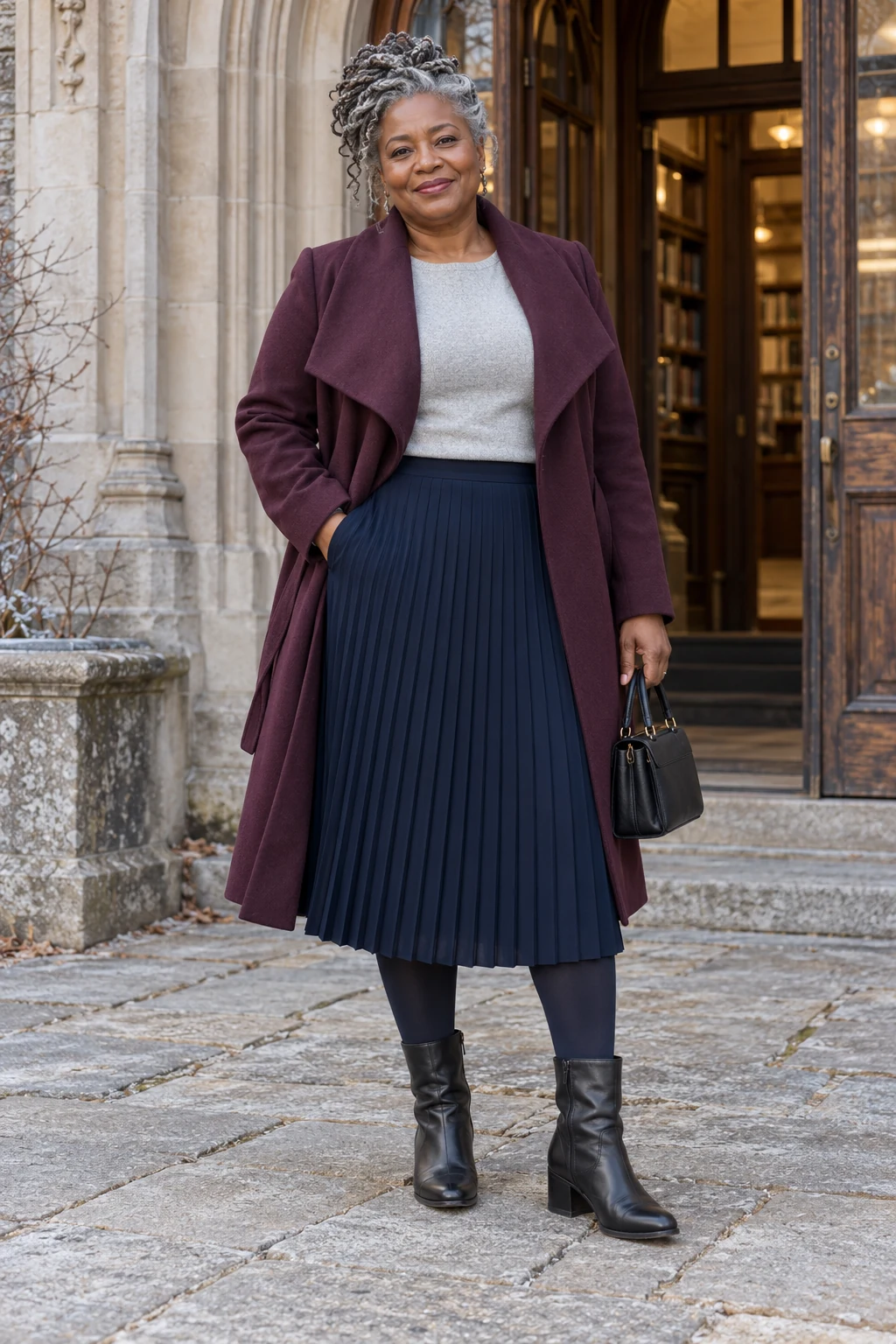
Check the waistband and pleats after sitting. A coat belt can press several layers into the same area, so compare the front open before assuming the skirt needs a different size. Smooth the knit once and notice whether it stays in place.
Walk in the actual boots too. The illustrated calf shaft leaves tights visible below the skirt, but another shaft height changes where fabric may meet. Choose the gap and coverage that suit your own clothes.
A Denim Layer Beneath a Roomier Coat
Denim becomes a middle layer rather than the outside jacket in this combination. A camel coat sits over the open blue front, with an ivory mock neck visible between the collars. Black jeans and brown boots keep the lower half simpler than the three upper textures.

Bring that denim jacket when assessing a coat’s fit. Its seams and sleeves take up different space from a fine cardigan, even when both look similar in thickness on a hanger. Reach forward with all three pieces on.
If the stack feels crowded, remove the denim layer and compare the result before changing the coat. Keep the mock neck and trousers, then decide whether the extra jacket adds something useful to your day.
A Charcoal Coat With a Pale Skirt
Pale skirt fabric makes a different winter base from dark trousers. A charcoal collarless coat frames dusty rose above cream, and taupe boots soften the transition beneath the hem. The grey shoulder bag keeps the accessory choice quiet.

Check the skirt and boot overlap while walking. The illustrated hem falls over the upper shaft, but your own skirt may catch, ride up or move differently. Test the combination rather than selecting a boot height from the photograph alone.
Light fabric also deserves a daylight check for coverage and lining. Keep the knit untucked if that feels better at the waist, then compare its hem with the coat opening. One change is enough to make a useful assessment.
Make the Underlayers Useful When the Coat Comes Off
Time indoors can be a large part of a winter outing. The final outfits keep a complete combination beneath the outer layer, with different options for a skirt, dress, shirt or textured trouser. Choose coverage and room to move according to your own preference, then reassess the outside layer for the weather.
A Peacoat With a Shirt and Sweater Vest
A cream V-neck vest exposes just enough blue shirt to separate three upper layers. Navy peacoat and dark wide-leg jeans keep the larger shapes quiet, while brown boots and satchel repeat one accessory colour. Familiar pieces. More options.

A sleeveless middle layer is worth comparing when two sets of long sleeves bunch beneath a coat. Try the shirt and vest together first, then add your outer layer and bend both elbows. Check whether cuffs fold or shoulders pull.
Full-length jeans nearly meet the boot fronts here. Test your own hem while walking and sitting; fabric should not drag. Removing the peacoat leaves a complete shirt-and-vest outfit for time indoors.
A Black Puffer With Burgundy Trousers
Burgundy trousers bring colour without another patterned layer. Their softly glossy surface contrasts with vertical sweater ribs and the black coat’s quilting. An ivory crewneck keeps the face-framing area simple, leaving the trousers as the strongest change from everyday dark denim.

Leather-look describes appearance, not confirmed fibre content. Check the actual label before choosing cleaning products, and try sitting down to assess waistband pressure and creasing. A smooth-looking finish alone tells you little about comfort.
- Compare the trouser opening with your boot shaft so fabric does not catch.
- Keep sweater cuffs arranged inside the coat sleeves before adding gloves.
- Choose footwear for actual ground conditions; illustrated soles do not establish grip.
A Collarless Coat With a Green Knit Dress
No lapels to arrange. A taupe collarless coat makes room for a narrow checked scarf beside the green dress neckline. The scarf hangs in two unequal lengths, adding a small pattern without covering most of the dress front.

Start by checking necklines together before choosing a scarf. A dress collar that feels comfortable alone can behave differently beneath an outer layer. Leave the scarf loose for a comparison, then adjust to your preferred coverage rather than adding bulk automatically.
Black tights continue into calf-height boots with visible block heels. Because the dress stops above the boot tops, check that gap while sitting as well as standing. A small structured handbag keeps the accessory shapes contained.
A Cream Coat With Checked Ankle Pants
A pale coat gives small checked trousers a clear frame. Teal adds one stronger colour near the face, while burgundy boots and handbag repeat a deeper accent below. The checks are visible without becoming the only feature you notice.

Look closely at where the trouser hems meet the boots. Here, straight openings sit close to the shafts rather than gathering over them. Try a few steps in your own combination before deciding whether shortening is useful; boot height changes the result.
Coat cuffs finish near the hands, with a little teal knit showing. Compare sleeve lengths over your actual sweater, then reach forward. Once indoors, removing the coat leaves a complete knit-and-trouser combination with the same colour accents.
Let the Day Decide How Many Layers You Need
A short walk to a heated building and several hours outdoors can require different clothing. Consider the forecast, wind, rain, duration and how active you expect to be before choosing the outer layer. The illustrated outfits offer styling comparisons; actual garment specifications and your experience determine whether a combination suits the conditions.
REI’s layering guide explains the different jobs of base, middle and outer layers and the value of adjusting them as conditions change. Use that distinction to identify what a garment needs to do, then check the product’s real information. A wool-look surface or quilted appearance alone does not establish insulation or weather protection.
Check Care Before Combining Different Fabrics
A coat, shirt and knit can need different cleaning routines. Read the actual labels rather than assuming that pieces worn together can be washed together. The FTC’s apparel-labeling information explains the role of garment fiber and care information; synthetic outfit illustrations cannot tell you a real item’s composition.
Change One Layer Before Replacing an Outfit
If an otherwise useful combination feels crowded, try a smoother sleeve, one fewer tuck or a different scarf arrangement. An alteration may be worth comparing when coat sleeves or trouser hems consistently get in the way. Our wardrobe-repurposing guide offers ideas for giving familiar clothes another role. Start with the adjustment that solves your particular problem, and keep the pieces that still serve your day.

Alia Hashim
I'm Alia Hashim — a passionate blogger and founder of Modern Lady Magazine. I started this platform to create a space where women could find inspiration, empowerment, and real-life solutions for style, beauty, wellness, and beyond. Through Modern Lady Magazine, I aim to celebrate the modern woman — confident, creative, and full of dreams — while sharing ideas that help nurture both inner strength and outer beauty. Every story, every tip, every idea here is crafted to inspire you to embrace your journey and live life beautifully, one step at a time.
View author profile →

4 Comments