Choose winter outfit colors from clothes you own by picking one garment you want to wear, setting a few possible partners beside it and trying the complete outfit in the same light. Keep the combination you enjoy with the coat on and off. You do not need a new matching bag, a seasonal color label or a rule about which colors women over 50 should wear.
A useful palette begins with real clothes. The navy pants that fit well, a favorite green sweater or a patterned scarf can give the outfit a starting point. This approach helps you make a decision from the closet you have, rather than build a shopping list around an imagined missing shade.
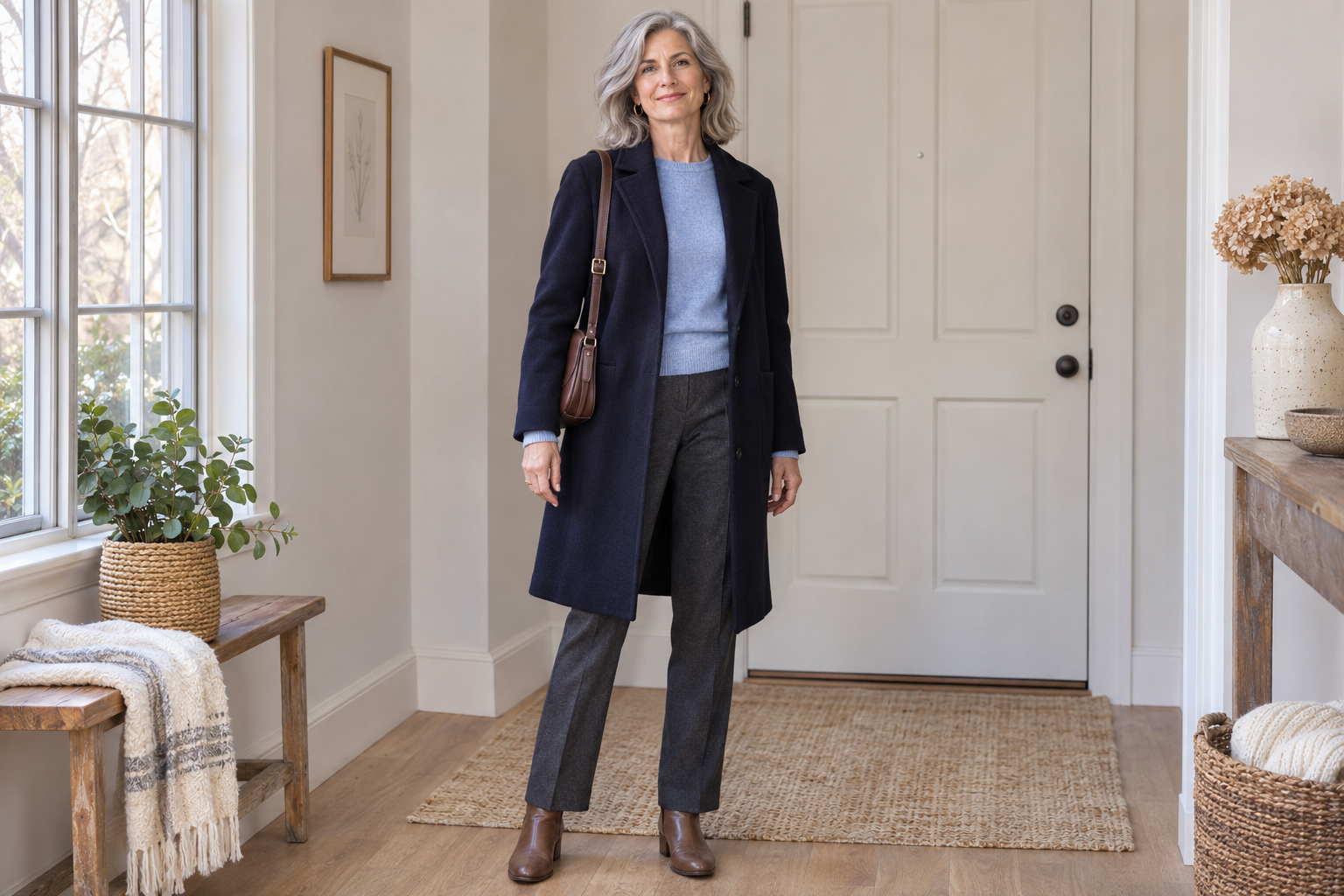
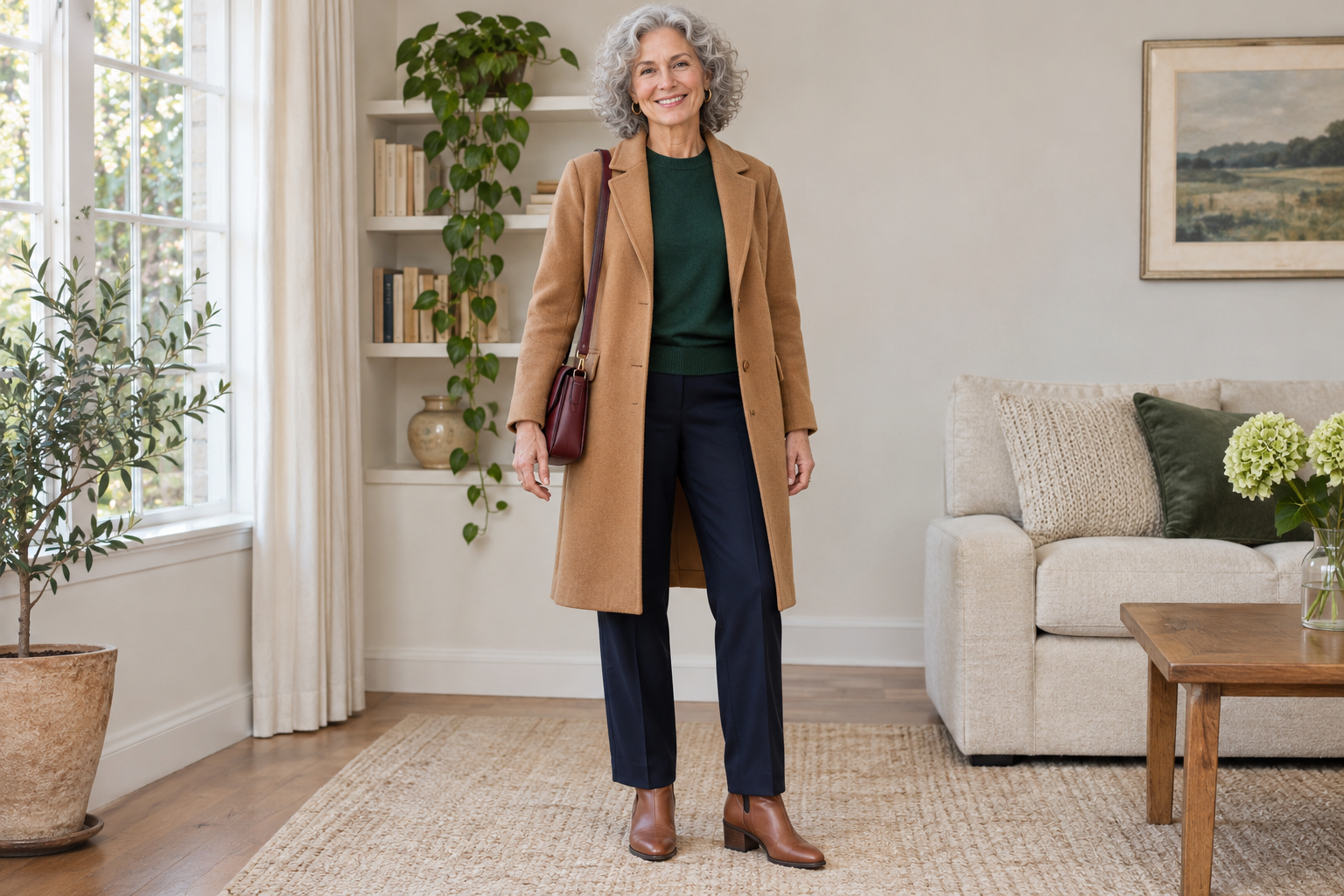
The photographs are AI-generated illustrations of color combinations. They are not personal color assessments, product recommendations or promises that a color will change how old, tall or slim someone appears.
Let one garment make the first decision
Choose the piece you have the strongest reason to wear. That might be your main coat for the forecast, the pants you like for a long lunch or a sweater you have been waiting to use. Set it where you can see its color clearly.
Call it the anchor for this outfit. The word simply means that you will hold that garment steady while comparing the other pieces. It does not have to be neutral, expensive or the largest item.

The camel coat in this arrangement sits beside green knitwear, navy pants and a burgundy scarf. The boots add another brown tone. These are possible partners, not a requirement to include every color. You could leave the scarf out or replace the sweater with a favorite piece already in your closet.
Compare actual garments, not color names
Pull out two possible tops rather than searching every shelf. Set each beside the anchor garment in the same place and light. Look at the combination from a little distance, then try it on if both options seem promising.
“Cream,” “navy” and “burgundy” cover many different garments. Two pieces with the same name may look different side by side. They do not have to match exactly, but the difference is easier to judge when the real clothes are together.
If you like a combination by the window, check it in your usual indoor light too. The practical question is whether you still enjoy wearing the pieces together. A phone photo can help you remember your choice, but use the clothes themselves to make the decision rather than chasing an exact screen color.
A manageable choice
Compare two tops
Two real options are enough to make the first color decision.
- Keep the anchor: Leave the coat and bottoms in place.
- Try each top: Look at both options in the same light.
- Choose your preference: Notice whether you want a lighter neckline, more color or less pattern.
Choose how much difference you want to see
You may want the outfit to feel quiet, or you may enjoy one clearly contrasting piece. Decide that before adding accessories. Otherwise, it is easy to keep adding colors while trying to solve a preference you have not named.
For optional background, Adobe’s color wheel explanation describes neighboring hues as analogous and opposite hues as complementary. Those relationships can suggest combinations to try. They do not determine which clothes suit your body, your age or your plans.
A simpler closet-based comparison works too. Put a top close in color to the pants beside one that is clearly different. Try both with the same coat. You may prefer a dark base under a lighter coat, or you may like a brighter top at the neckline. Neither choice needs a technical label.
| What you want today | A comparison to try |
|---|---|
| Less visual contrast | Try two existing pieces whose colors look close together to you. |
| One noticeable color | Keep the familiar base and add one favorite top or scarf. |
| A way to use a patterned piece | Pick one visible color from the print and compare it with a plain garment. |
| Fewer decisions in the morning | Save the exact garments from a combination you already enjoy. |
Borrow a starting point from a print
A scarf, blouse or skirt you already like can suggest several possible partners. Lay the print beside a plain garment that picks up one of its colors. Then try another color from the same print if you want a different emphasis.

Here, rust knitwear and navy pants pick up colors visible in the scarf. The cream cardigan offers another possibility. The print makes it easier to find a starting point, but you do not need to repeat every shade it contains.
Try the scarf with the rest of the outfit before deciding it belongs. If you prefer the plain sweater and pants alone, keep that version. Owning a coordinating accessory does not oblige you to wear it every time.
Look at the outfit after removing the coat
Outerwear can hide much of a combination. Take it off and assess the clothes you will spend the indoor part of the day wearing. Check whether the color you most wanted to use is still present.

In this illustration, the scarf is a separate accent over the green sweater. You could remove it indoors and still have the green-and-navy base. That is a useful choice to notice before leaving: does the outfit need the accessory for your preference, or is it simply an option?
For more visual starting points, our winter outfit ideas show different coat and underlayer combinations. Borrow a color relationship if it helps, then translate it into clothes you actually own.
Bring the shoes and bag into the final try-on
Add your intended shoes before choosing another item just for its color. The shoes still need to work for the route, weather and activity. A color preference does not establish grip, warmth or comfort.
Put the bag where you normally carry it. If you like the combination, the bag and boots do not need to be identical shades. In the cover illustration, a burgundy bag sits beside a camel coat while the boots are brown. That is one styling option, not a rule that brown shoes require a contrasting bag.
If the result feels busier than you wanted, remove an optional accessory and look again. If you want more color, compare a piece you already have. Avoid declaring that the outfit is incomplete merely because a matching item is absent.
Keep a palette note you can actually use
Write the garment names, not just a list of colors. “Green sweater, navy pants and camel coat” gets you closer to a repeatable outfit than “earth tones.” Add the shoes and any optional accessory, then note which version you preferred.
An illustrated starting palette
Repeat a combination you enjoy
These colors come from the illustrations, not a required shopping list.
- Main pieces: Camel coat, green sweater and navy pants.
- Optional accent: A burgundy scarf or bag adds a separate color.
- Keep your version: Save the actual garments you prefer; exact matching is optional.
When a similar plan comes up, start with that saved outfit. Check that the clothes still suit the day’s practical needs, and change the color choices only if you feel like it.

Alia Hashim
I'm Alia Hashim — a passionate blogger and founder of Modern Lady Magazine. I started this platform to create a space where women could find inspiration, empowerment, and real-life solutions for style, beauty, wellness, and beyond. Through Modern Lady Magazine, I aim to celebrate the modern woman — confident, creative, and full of dreams — while sharing ideas that help nurture both inner strength and outer beauty. Every story, every tip, every idea here is crafted to inspire you to embrace your journey and live life beautifully, one step at a time.
View author profile →