
Choose a winter bag that fits actual daily essentials by packing the items you really carry, closing it normally, and trying it over your winter coat. Check whether you can retrieve the things you use often without unpacking the rest. Exterior dimensions and the label “medium” are only a starting point; the opening, compartments and strap can change how useful the space feels.
For women over 50, that decision is personal. A small crossbody, shoulder bag or roomy tote can each make sense. Start with the day’s contents and journey, rather than a rule about which bag size suits your age or height.
The AI-generated images illustrate packing and carrying situations. They are not product photographs, capacity measurements or evidence of a wear test.
Set out the contents for an ordinary winter day
Empty your current bag onto a table. Separate what you used recently from what has stayed there out of habit. Then add the items the next outing actually requires. Your list might include a phone, keys, wallet, glasses case and gloves; someone else’s may include equipment or supplies that need their own protected space.
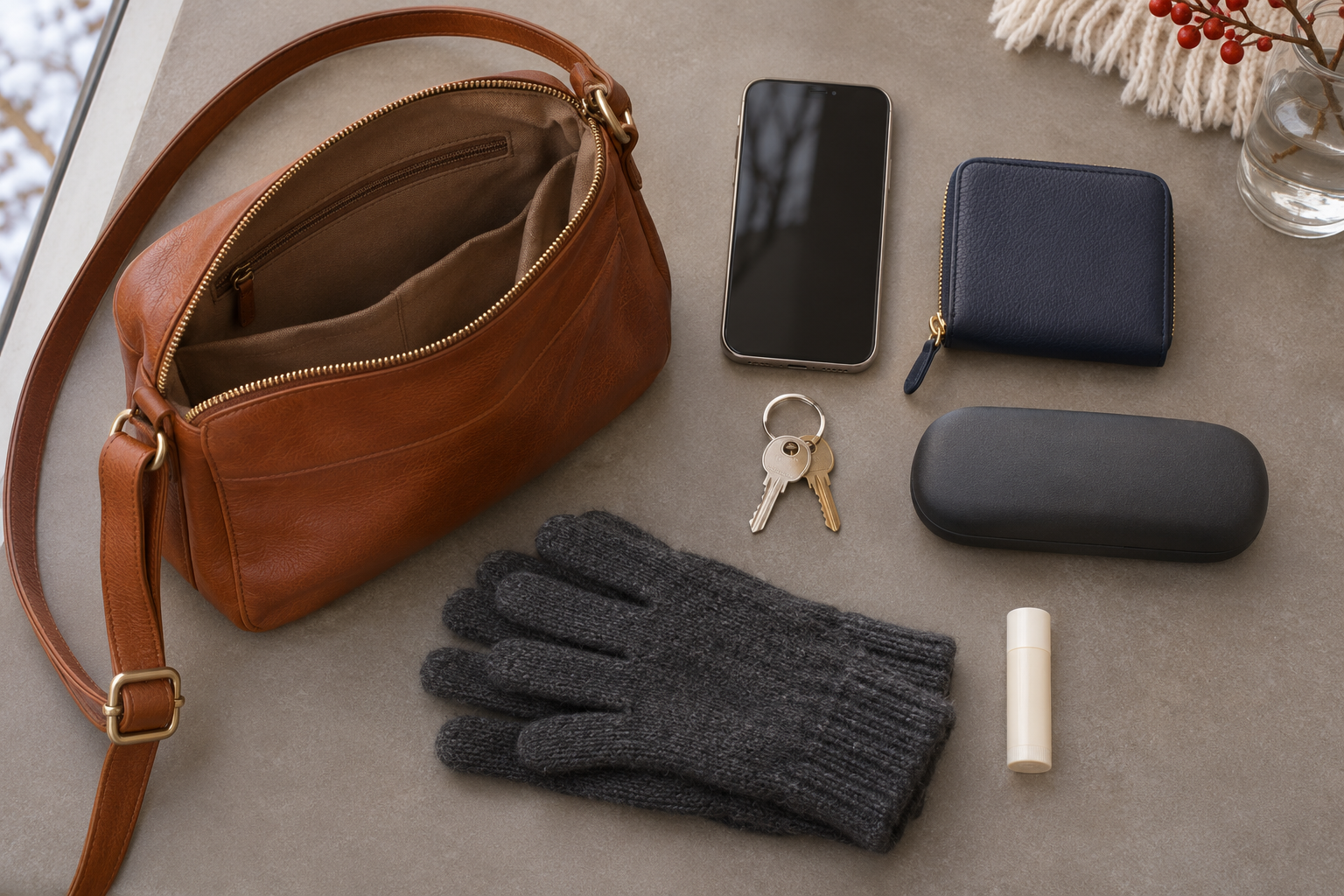
The illustration places a glasses case and gloves beside the familiar phone-and-wallet pair. Those less flexible objects are useful to include in a real packing check. A case cannot necessarily tuck into the remaining corner just because several smaller items can.
Keep occasional extras separate while you assess the daily load. If you bring a bottle only on a particular journey, decide whether you want one bag for both situations or a smaller daily bag plus a separate carry option. Neither choice is automatically better. It should reflect what you are willing to carry and keep track of.
Check the opening before judging the interior
Put your largest awkward item through the opening first. The widest part of the bag may sit below a narrow zipper or flap. If a rigid case only goes in at a precise angle, notice whether you would be happy repeating that movement away from home.
When shopping, compare the seller’s measurements with the actual item in its normal case. Check which measurement describes the opening and which describes the exterior body. Ask if that information is missing; do not subtract a guessed lining thickness and treat the result as a verified internal dimension.
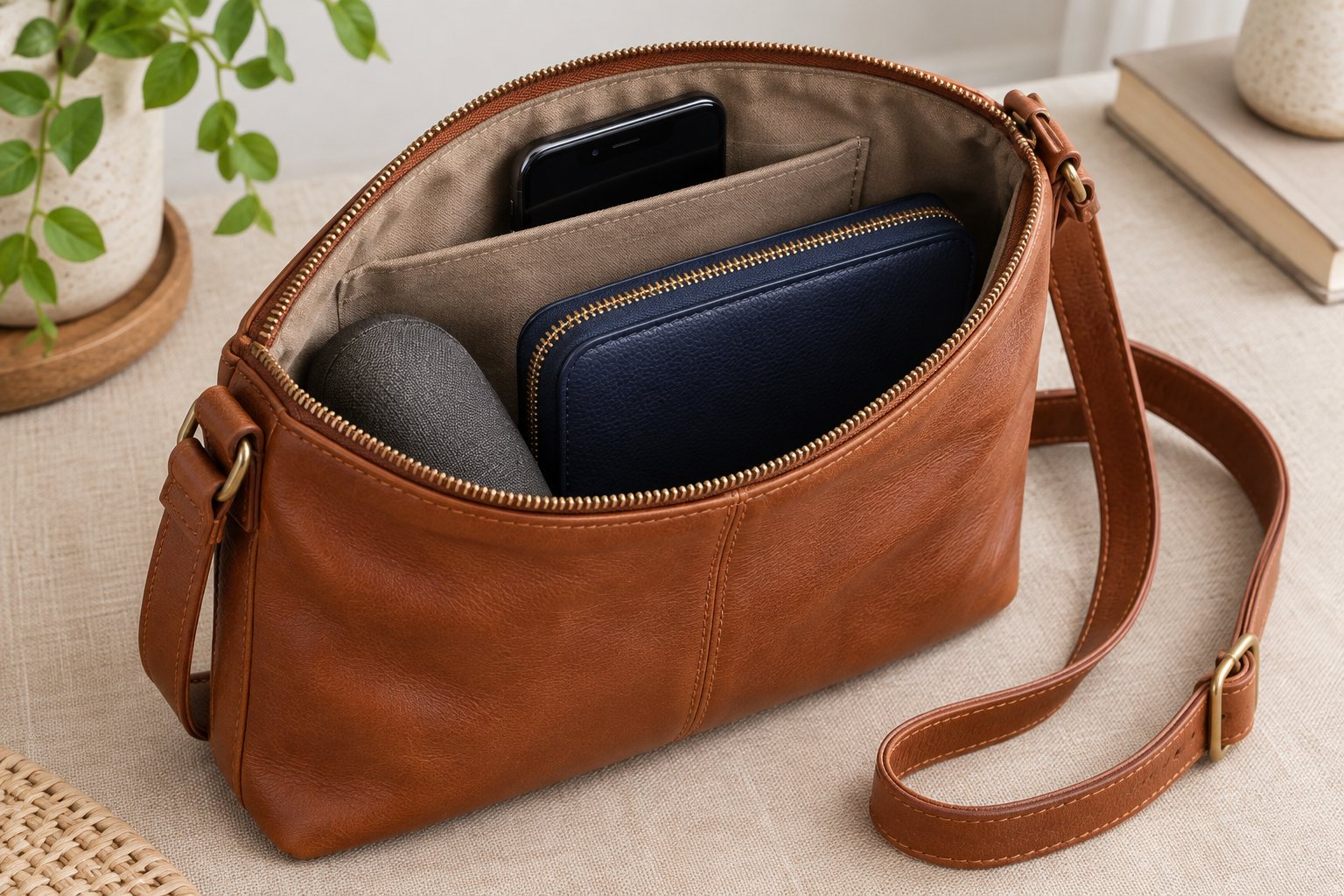
Here, a phone sits in an inner slip pocket beside a wallet and case. That arrangement makes the access question easy to see, but it does not establish how much the illustrated bag holds. In a real bag, check whether the pocket accepts your phone with its case on and whether adjacent objects obstruct your hand.
Pack the whole daily load before closing the bag. The zipper or flap should close in its intended way without forcing, folding a rigid item or trapping loose fabric. If it only closes when the contents are arranged perfectly, try retrieving and replacing one item. That is a more revealing check than a carefully staged first packing.
Give frequently used items a place you can reach
Think through the journey in order. Perhaps you need keys at the door, a transit card at the station and glasses when you sit down. Give those items locations that work with the rest of the contents. More pockets are useful only if you can identify and reach the right one.
A pouch can keep small objects together, but include the pouch itself in the trial. It takes space and may add another fastening. If you prefer a simple open compartment, try a consistent arrangement rather than assuming you need to buy an organizer.
Consider how you close the bag between uses too. A convenient outer pocket may suit one item, while another belongs behind the main closure. Choose the arrangement for your setting and preferences; no pocket or closure shown in a photograph establishes theft protection.
Try the loaded bag over the coat you use
A strap that works over a shirt may sit differently over a winter coat. Put on your intended outer layer, load the bag and adjust it using the actual strap hardware. Check that you can reach the opening and that the strap does not interfere with the collar or the movement you need.
For a shorter frame, available adjustment matters more than a fixed recommendation about where every bag should end. Try the bag where you can use it naturally. A crossbody strap can change the way a coat hangs; a shoulder strap may need a different length to clear a substantial sleeve. Notice the particular interaction rather than judging the silhouette alone.
If the clothes already feel crowded before you add the bag, our winter layering examples can help you consider another clothing combination. A bag strap will not solve an underlying sleeve or neckline issue.
Repeat access while seated

The seated illustration shows a navy bag over a plum coat with a phone held above its opening. Use it as a prompt to try your own routine: sit in a suitable chair, place the bag where you normally keep it and retrieve what you need. The picture cannot tell you whether a strap feels comfortable or the closure is easy for your hands.
Stand again and walk around a suitable indoor space. Notice whether the bag stays in the position you prefer, catches the coat fastening or needs repeated adjustment. Compare another carrying arrangement if necessary. There is no universal loaded weight or strap position that this guide can prescribe for every reader.
Keep the decision specific
Use the difficulty you noticed to choose the next comparison. Changing everything at once makes it harder to tell which detail helped.
- If a case will not pass through the opening, compare openings rather than simply buying a taller bag.
- If the phone is buried, try another pocket or arrangement before adding more storage.
- If the loaded strap conflicts with the coat, compare the actual adjustment range over that coat.
Save the combination that worked
A useful note names the bag, the coat, the essential contents and any unresolved item. “Navy crossbody with plum coat; phone in inner pocket; glasses case fits; umbrella carried separately” gives you something repeatable. “Good winter bag” leaves those decisions to make again.
Before buying, read the exact product’s care instructions, return terms and any claims you rely on. The FTC’s online shopping guidance recommends reading the full description and checking return conditions, including deadlines and return costs. Appearance alone does not establish water resistance, durability or the strength of a strap. Our guide to using size information also explains why a label is less useful than the relevant measurements and an actual fit check.
Pack the bag once more as you would on the way out. If it holds the required items, closes normally and lets you use them in your coat, you have a practical candidate for that day.

Alia Hashim
I'm Alia Hashim — a passionate blogger and founder of Modern Lady Magazine. I started this platform to create a space where women could find inspiration, empowerment, and real-life solutions for style, beauty, wellness, and beyond. Through Modern Lady Magazine, I aim to celebrate the modern woman — confident, creative, and full of dreams — while sharing ideas that help nurture both inner strength and outer beauty. Every story, every tip, every idea here is crafted to inspire you to embrace your journey and live life beautifully, one step at a time.
View author profile →