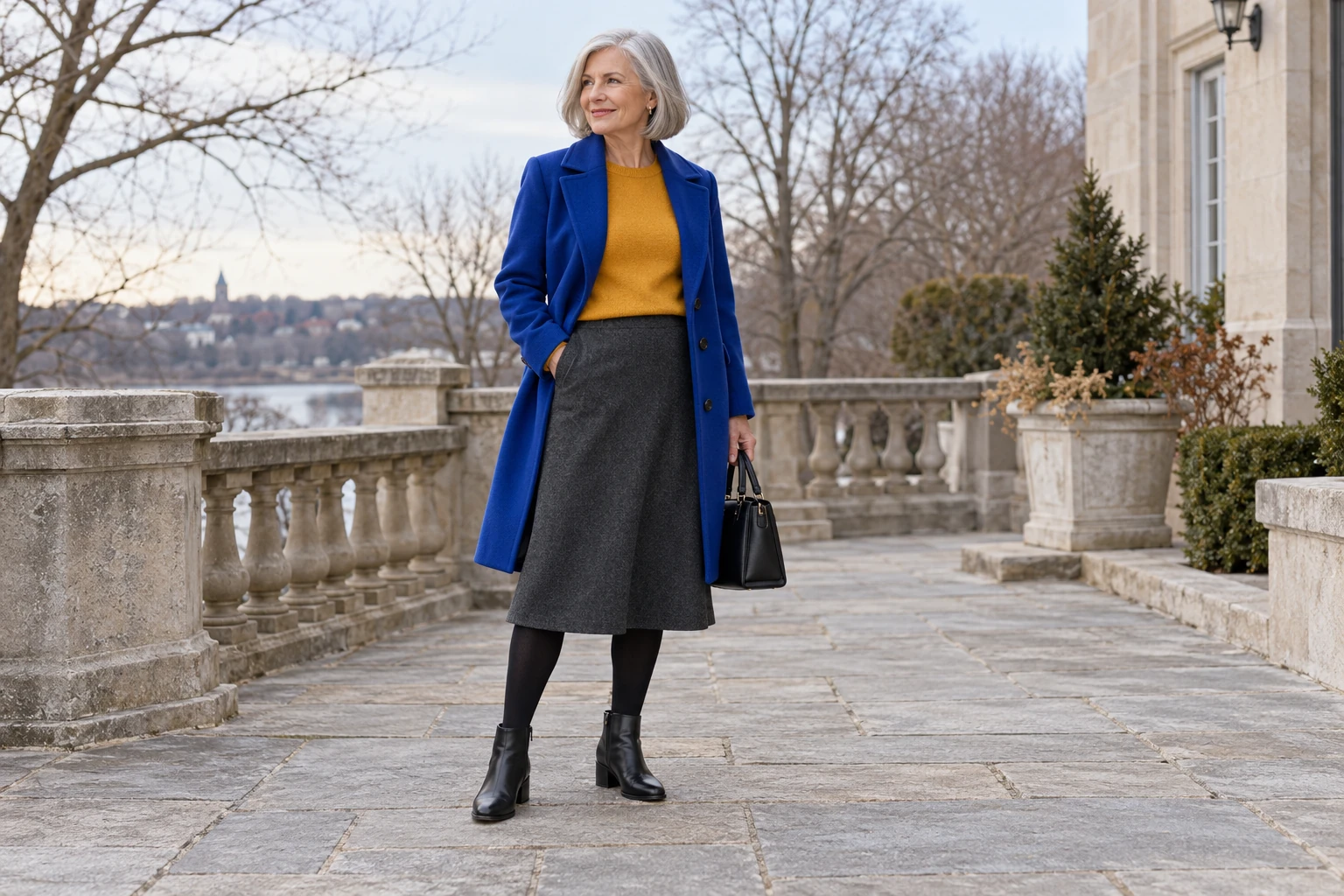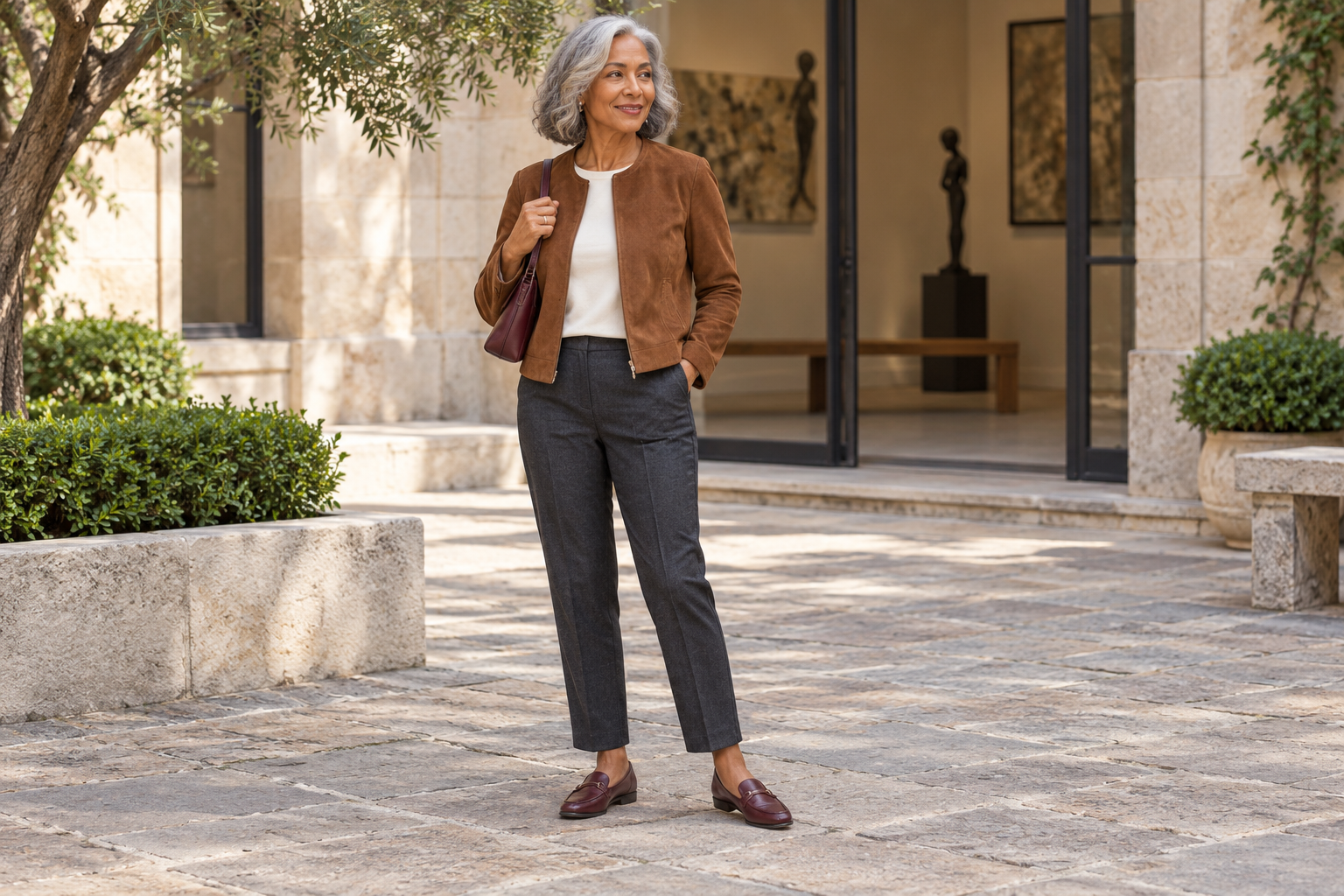
For suede look jacket outfits, start with the jacket’s shape: a cropped zip layer, an open blazer and a relaxed overshirt won’t sit the same way over a dress or pair of jeans. These fourteen combinations show those differences with familiar bottoms, simple underlayers and everyday shoes.
“Suede-look” describes the illustrated surface here. The images don’t establish whether a real jacket is animal suede, a synthetic alternative or another fabric. Choose the shape and color you like, then use the actual product and care information when deciding whether it suits your closet.
Fit the sleeves together. Try the outer layer over the top you expect to use. A jacket that works over a camisole may need a different cut over a long-sleeve dress or substantial sweater, even when its front still hangs open.
Choose a jacket shape for the outfit underneath
The combinations below use different outer edges, necklines and bottom shapes. Look at where the jacket ends and how much of the base outfit remains visible. A short edge is one option; a longer open layer can be useful too. Compare the garment relationship before adding accessories to solve a fit question.
Tan Cropped Jacket With Dark Jeans
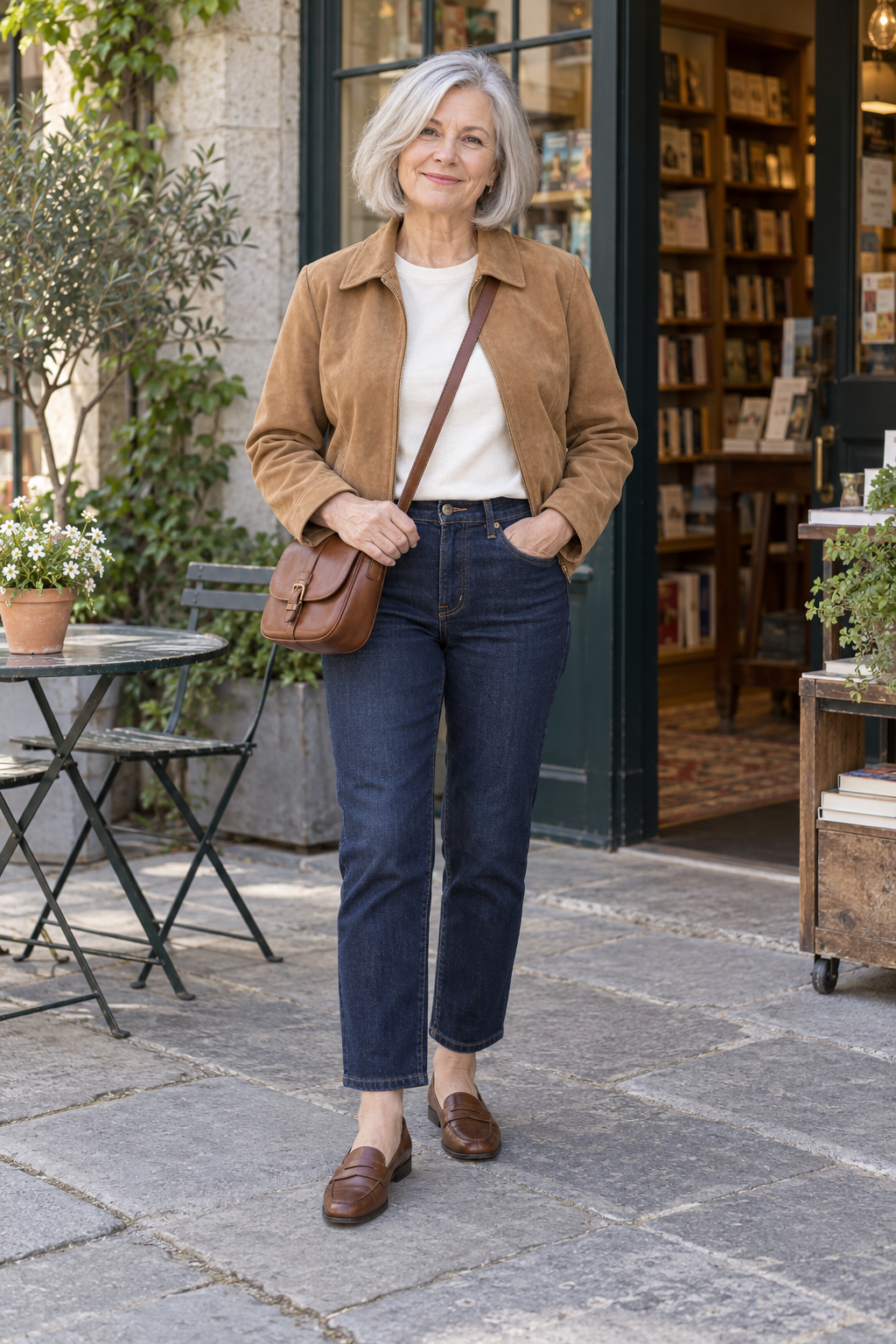
A short tan jacket makes familiar dark jeans and an ivory tee feel more textured for a bookstore visit. Brown loafers and a crossbody repeat one accessory color, leaving the jacket’s soft-looking surface as the main detail. Its front edge sits close to the waistband rather than extending down the thigh.
Compare that edge with your own jeans before assuming you need a deeper tuck. A short tee or shallow tuck can leave less fabric inside the waistband. If you prefer the tee loose, check its visible lower edge against the jacket and choose the relationship you enjoy.
The picture shows a suede-like surface, not verified leather. Use your actual item’s material and care information when deciding how to clean or store it.
Chocolate Blazer With Cream Pants
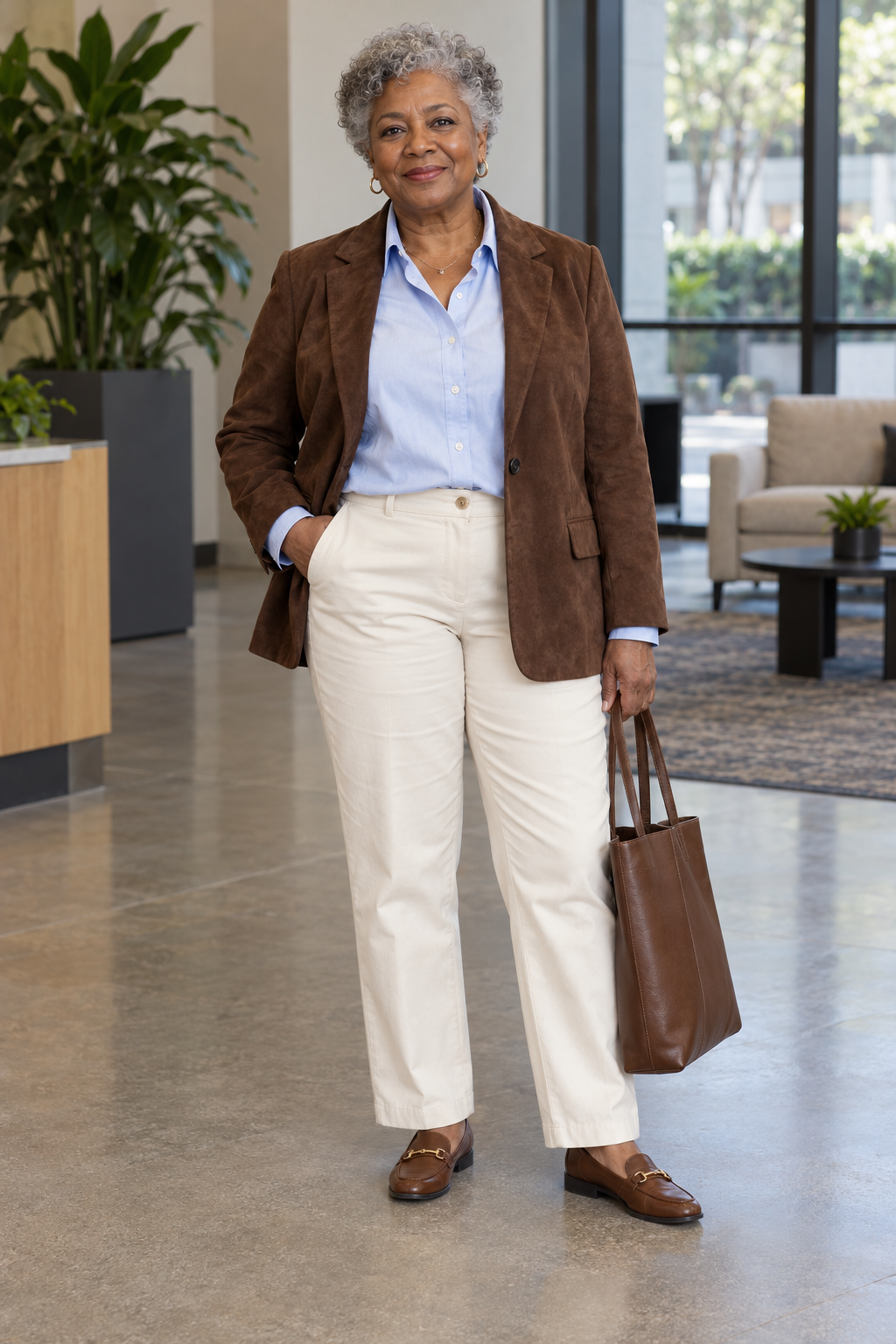
Chocolate and cream make this blazer combination easy to assess at an informal office. A pale blue shirt lightens the center, with brown loafers and a tote beneath the longer jacket. The lapels and hip-length front give a different shape from the cropped casual layers in the guide.
Reach forward while wearing your own shirt inside the blazer. Two long sleeves need room at the elbow and underarm, even if the open front looks smooth. If the layers restrict movement, compare another sleeve cut or a finer shirt before concentrating only on the blazer length.
Try the blazer fastened as well if you plan to wear it that way. An attractive open front cannot establish how the closure fits over the same underlayer.
Olive Overshirt With a Black Midi

An olive overshirt brings a relaxed outer shape to a flowing black midi skirt. The ivory tee leaves a plain center, while black ankle boots and a shoulder bag keep the lower palette quiet for a gallery visit. The shirt’s longer edge overlaps more of the skirt than a waist-length jacket would.
Check that overlap from the side as well as the front. A loose overshirt may hang freely over one skirt and catch against another at the seat. Walk and turn in your own pair of garments before deciding whether the outer layer should be shorter.
Keep the boots you like walking in during this comparison. The skirt and overshirt relationship is easier to judge when you aren’t changing the shoes at the same time.
Camel Collarless Jacket Over a Navy Dress
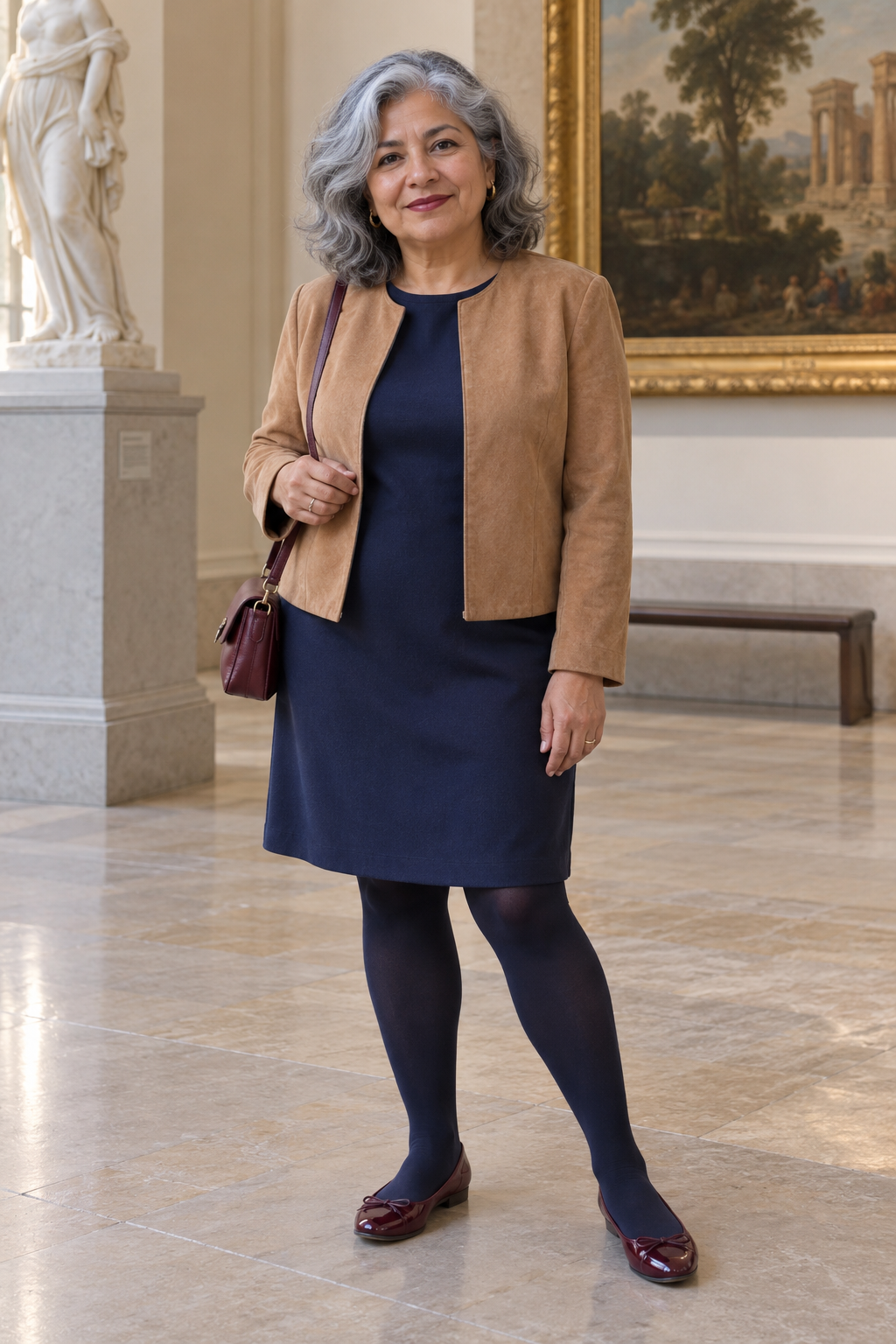
A collarless camel jacket leaves a navy shift dress as one clear center for a daytime event. Navy tights continue the dress color, with burgundy ballet flats and a small matching bag for a restrained accent. The short outer layer introduces texture without another collar at the neckline.
Try the dress’s actual sleeves inside the jacket. A fitted-looking outer sleeve may need a finer dress sleeve beneath it than you expected, and a sleeveless try-on won’t reveal that. Bend your elbows and reach across your body before deciding the combination gives enough room.
The dress length and jacket length are separate choices. If you enjoy the dress hem, compare another outer cut before treating alterations to the dress as the first solution.
Burgundy Jacket With Gray Denim
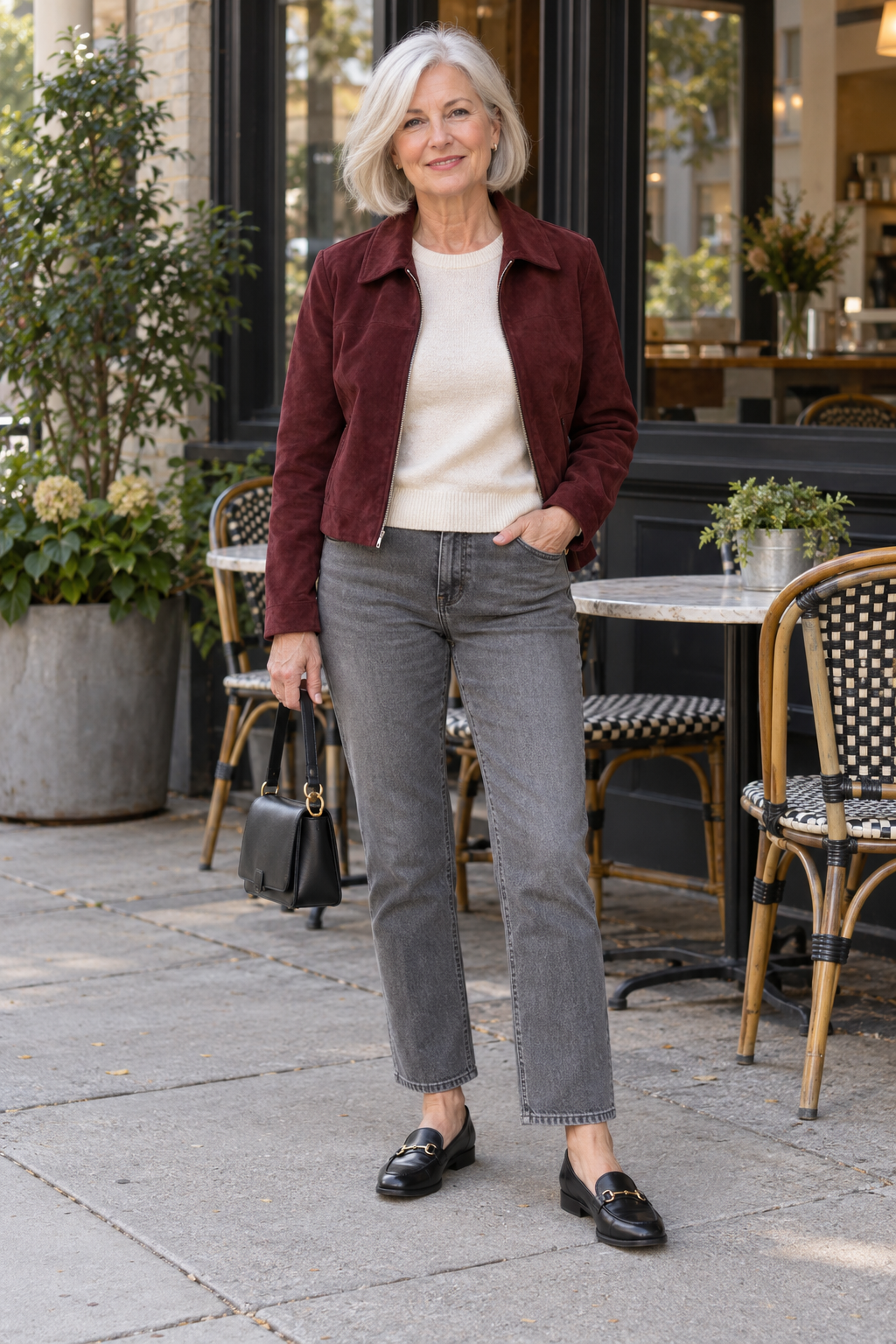
Burgundy gives gray jeans a rich outer-layer color for a neighborhood coffee stop. A cream crewneck keeps the center light, while black loafers and a small bag repeat one dark accent. The jacket’s zip front has a plainer edge than the tailored lapels elsewhere in this guide.
Close your own zipper over the knit before judging the fit. You may like the open look shown but still need the option to fasten the jacket. Check the chest, hem and collar together; pulling a snug zip upward doesn’t make the underlying layers fit more comfortably.
The compact knit stays loose here. If its ribbed edge catches beneath your jacket, compare another sweater length instead of continually pushing the hem back into position.
Sand Overshirt With Navy Tailoring
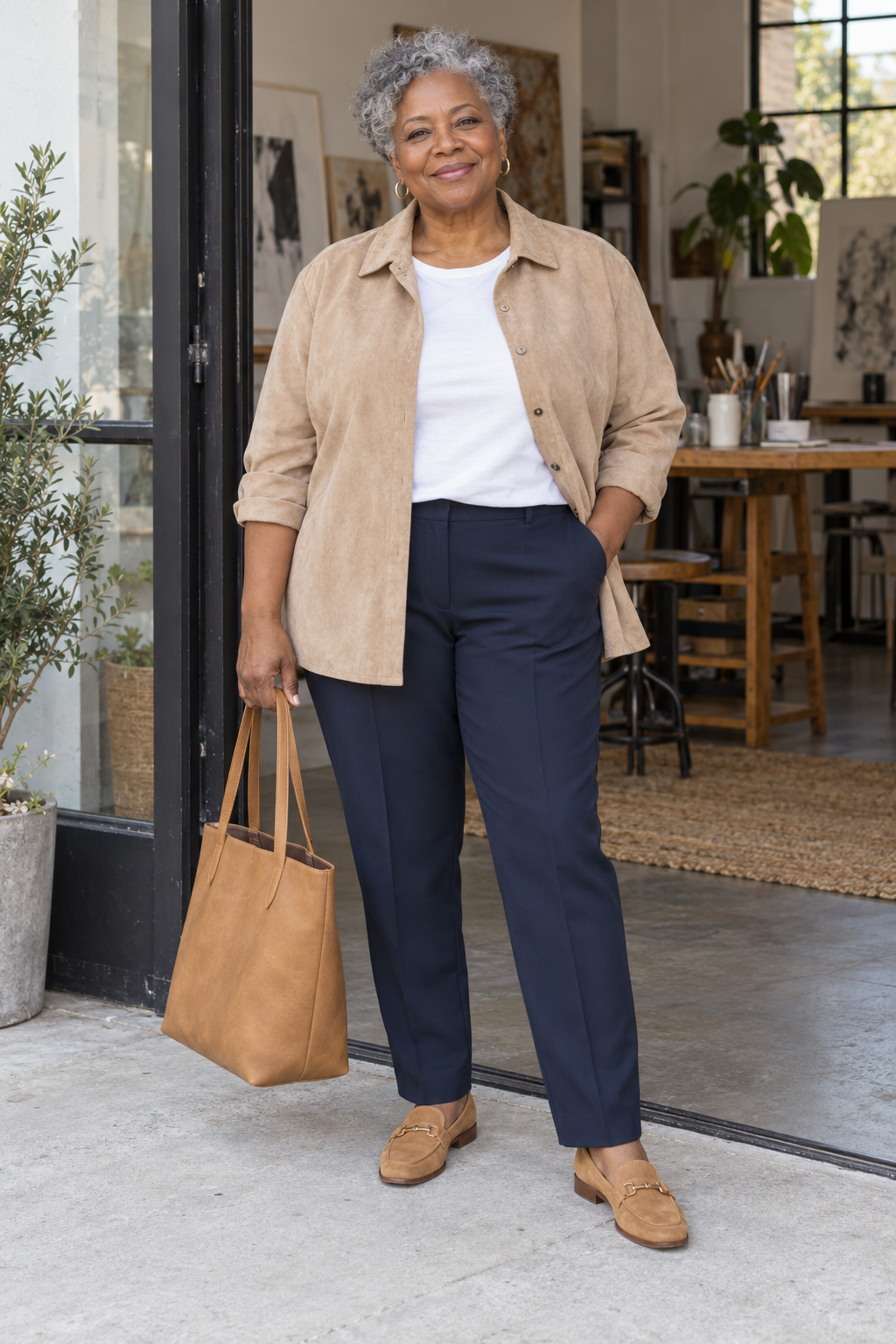
A sand-colored overshirt softens navy tailoring for a studio day. The white tee, tan loafers and tote make the combination approachable, while the longer open front gives more coverage than a cropped jacket. The pants narrow toward the ankle, contrasting with the overshirt’s relaxed body.
Look at the shoulder width when comparing sizes. Sizing up only to gain length can change the sleeve and shoulder relationship as well. If the hem and shoulders need different adjustments, another cut may be a more useful comparison than simply choosing the largest size.
Try the pockets with the things you expect to carry. A relaxed front can hang differently once you put weight into it, so assess the jacket in use as well as in a mirror.
Dark Brown Jacket and a Floral Skirt
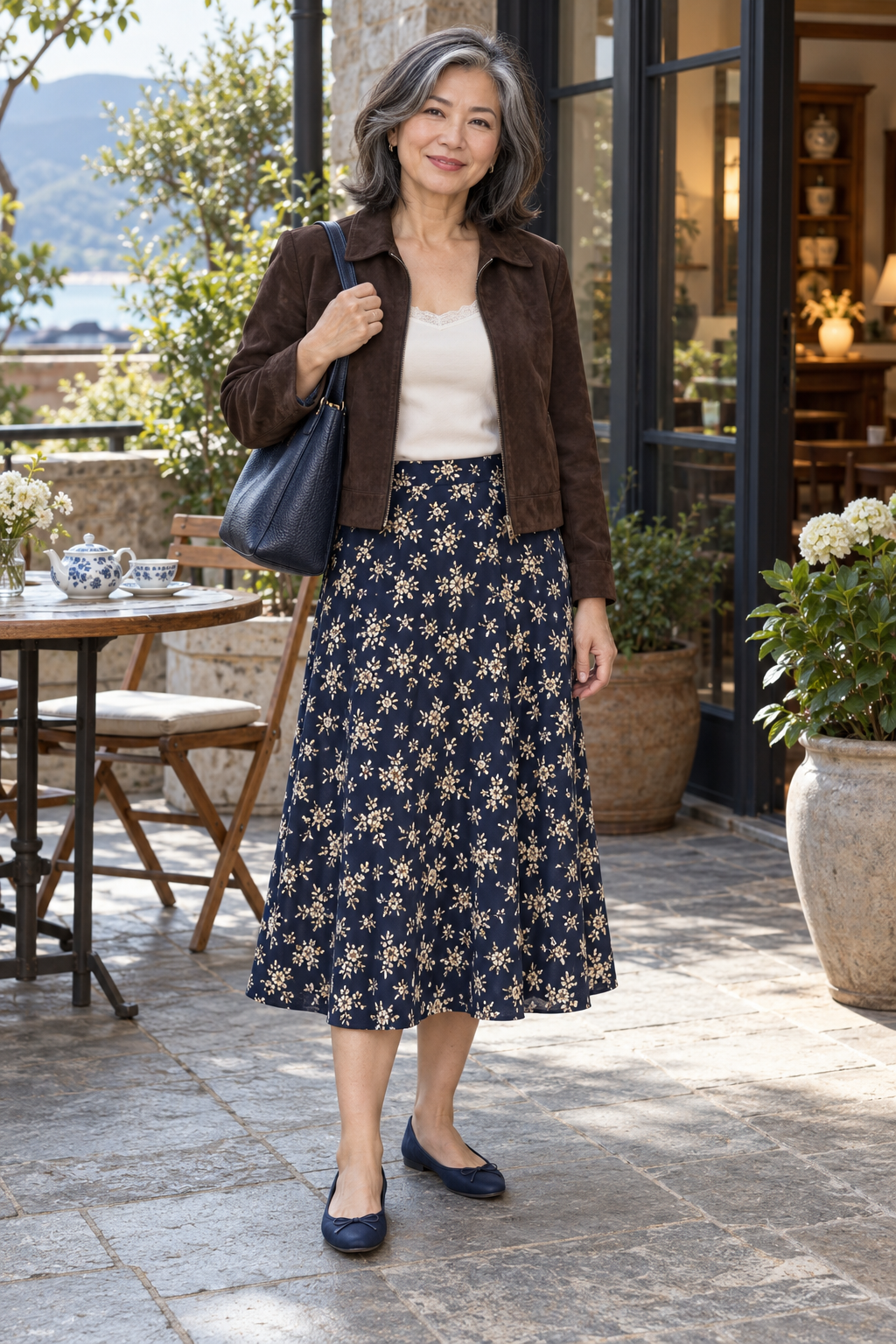
A dark brown jacket gives a small floral skirt a quiet outer frame for tea. The ivory camisole keeps the middle plain, while navy ballet flats and a bag repeat the skirt’s background color. The short jacket leaves most of the A-line shape visible below its lower edge.
Let the skirt supply the print while you decide whether you like the layer. Another patterned accessory is possible, but it adds a separate choice before you have settled the basic combination. Start simply, then add a scarf only if you want the additional detail.
Check the camisole’s coverage with the jacket off as well. If you expect to remove the outer layer indoors, the base outfit should still meet your own comfort and coverage preferences.
Navy Suede-Look Blazer With Black Pants
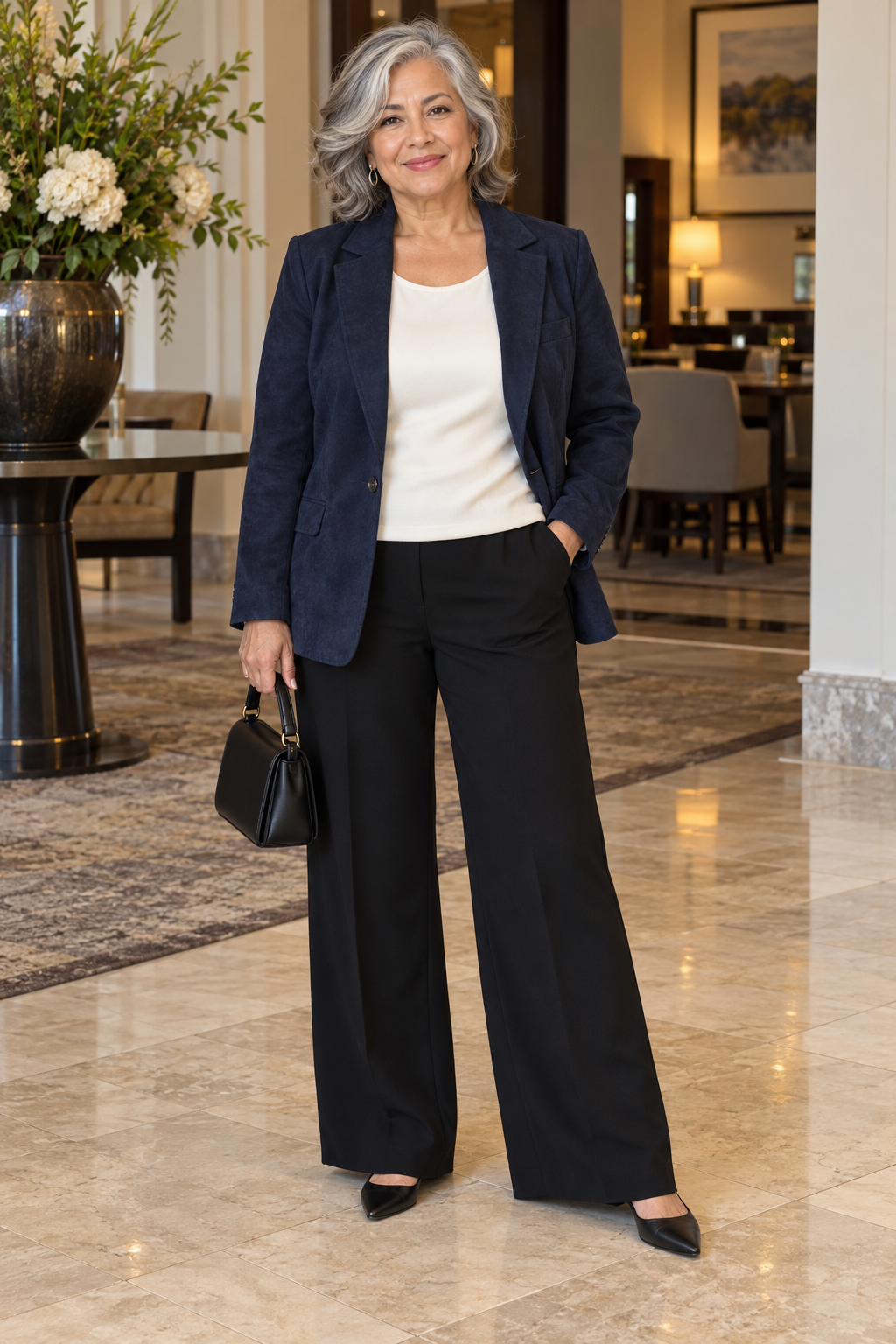
A navy suede-look blazer makes a quiet evening layer over an ivory shell and black wide-leg pants. Pointed black flats and a small bag keep the accessories simple. The jacket’s matte surface gives the dark palette some variation without introducing a print or a bright accent.
Check the pant hem in the actual flats before deciding this is an easy shoe swap. Full-length wide legs can fall differently over a thin sole than over a block heel. Walk at your normal pace and make sure the fabric clears the ground rather than judging only the standing shape.
Leave the shell plain while comparing the blazer length. A different neckline or necklace is another decision you can make after the jacket and pant relationship feels settled.
Tan Jacket Over a Gray Knit Dress

A tan short jacket breaks up the long charcoal shape of a knit midi dress. Black ankle boots and a crossbody repeat one accessory color for a gallery cafe. The jacket ends well above the dress hem, leaving the knitted surface visible through most of the outfit.
Check the back of your own combination after sitting. A textured jacket can catch against a knit dress even when its open front looks smooth. Compare the surfaces together and see whether either garment needs repeated straightening before deciding the jacket length is the problem.
If they catch, another lining or outer cut may be worth trying. You don’t have to choose a tighter dress simply to make a particular jacket slide over it.
Forest Jacket With Cream Denim
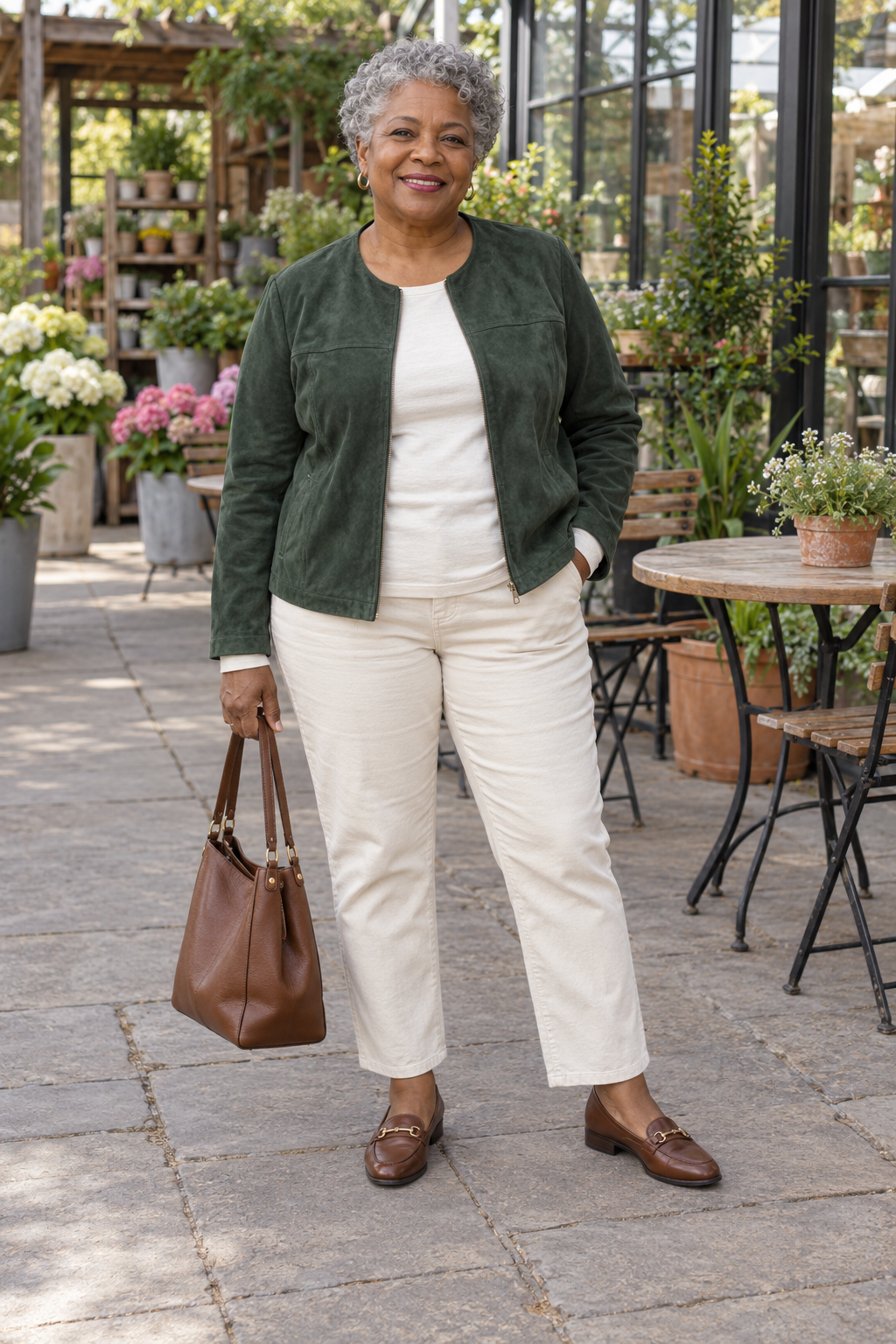
Forest green gives cream denim a deeper outer-layer color for a garden-center cafe. An ivory tee keeps the center light, with brown loafers and a roomy bag repeating one warm accent. The short collarless jacket has a plain neckline, so its color and surface supply most of the detail.
Try this with the tee you actually expect to use. A long sleeve can change the room needed inside the jacket compared with a sleeveless try-on. Bend your arms and test the closure before deciding that a smooth open front means the whole combination fits.
Compare the cream jeans from the side as well. Their fit through the seat is separate from the jacket’s shorter edge; changing one garment’s length won’t automatically solve the other’s fit.
Chocolate Overshirt With Blue Jeans

A chocolate overshirt gives a pale blue sweater and straight jeans a relaxed weekend layer. Cream sneakers keep the market-day footwear light, with a brown tote for carrying purchases. The blue knit hem remains visible inside the longer open overshirt instead of being tucked deeply into the jeans.
Check the sweater sleeves at the underarm when you put the outer layer on. A relaxed overshirt may still feel crowded over a roomy knit. Try a finer sweater if you like the jacket’s existing shoulder shape rather than automatically sizing the outer garment up.
Turn the cuffs back only if that feels comfortable. The visible cuff detail is optional; you can leave the sleeves down without changing the basic color combination.
Camel Blazer With a Burgundy Skirt

A camel blazer and burgundy pleats make an afternoon-theater combination with tan loafers. The white tee supplies a plain center, while a small tan bag repeats the shoes. The blazer reaches over the skirt’s upper section, offering a longer alternative to the cropped jacket with a floral skirt earlier.
Compare the blazer edge with the pleats while walking. You may prefer the longer frame, or like another jacket that ends nearer the waistband. Neither choice follows automatically from height; it depends on how these particular garments hang together and the outline you want.
Keep the tee uncomplicated during that comparison. A scarf can add interest later, but it won’t tell you whether you prefer a different jacket hem over the moving skirt.
Slate Jacket With Black Jeans

A slate jacket keeps an ivory-and-navy stripe visible above black jeans for a bookshop stop. Burgundy loafers and a crossbody add one small color accent, while the short zip front leaves the tee’s lower edge in view. The gray surface makes this distinct from the warmer brown layers elsewhere.
Before adding a scarf, compare the jacket open and closed. The collar, zipper and striped neckline can meet differently when fastened, and another layer at the neck may feel unnecessary. Choose the version that gives you the room and coverage you actually want.
The tee is loose here. Try a shallow tuck only if you prefer it; a short jacket doesn’t require every underlayer to disappear completely inside the jean waistband.
Rust Collarless Layer With Navy Pants

Rust brings warm color to navy pants and a cream V-neck for an informal evening. A short collarless layer leaves the sweater neckline visible, with cognac ankle boots and a matching bag beneath it. The boots have a block heel, which is part of this specific hem relationship.
Look at where your own sweater neckline meets the open jacket. If the edges feel crowded, compare another base neckline before adding jewelry to fill the space. A simple V, crewneck or shell can each change the effect without replacing the jacket itself.
Check the pants in the boots you plan to wear. If you switch to thinner flats later, reassess the length rather than expecting the same ground clearance from two different shoe heights.
Judge the cut before deciding the texture is difficult
If a jacket feels awkward, identify the part that needs attention. A crowded elbow, a hem that catches on a skirt and a collar that feels too high are different problems. Another cut may suit you better even when you keep the same color and suede-like surface.
Try removing the jacket as well. If you plan to take it off indoors, choose an underlayer that gives you the coverage and fit you want on its own. A camisole, tee and long-sleeve knit offer different options; none is the automatic answer for every occasion.
Use the closure you need. Open-front styling leaves more of the base visible, but it doesn’t prove that a zip or button front fits comfortably. Fasten the jacket during a try-on if that option matters to your plans.
Read the actual material and care information
A soft nap can look similar across different materials. Don’t choose a cleaner, washing cycle or treatment solely from an outfit photo. The FTC’s clothing care guidance explains why instructions belong to the individual garment. Read your own label and ask a suitable professional when the instructions are unclear.
For a fit-label question before buying, see our explanation of petite proportions and short lengths. If the jeans under your jacket need a length comparison, this jeans inseam guide helps separate that decision from the jacket hem.
Choose one combination close to pieces you already own, then compare the jacket open and closed over the intended base. That small try-on gives you more useful information than buying several accessories before you know whether the outer shape works.
Images are original AI-generated editorial illustrations. They do not verify material composition, weather performance or personal wear testing.

Alia Hashim
I'm Alia Hashim — a passionate blogger and founder of Modern Lady Magazine. I started this platform to create a space where women could find inspiration, empowerment, and real-life solutions for style, beauty, wellness, and beyond. Through Modern Lady Magazine, I aim to celebrate the modern woman — confident, creative, and full of dreams — while sharing ideas that help nurture both inner strength and outer beauty. Every story, every tip, every idea here is crafted to inspire you to embrace your journey and live life beautifully, one step at a time.
View author profile →