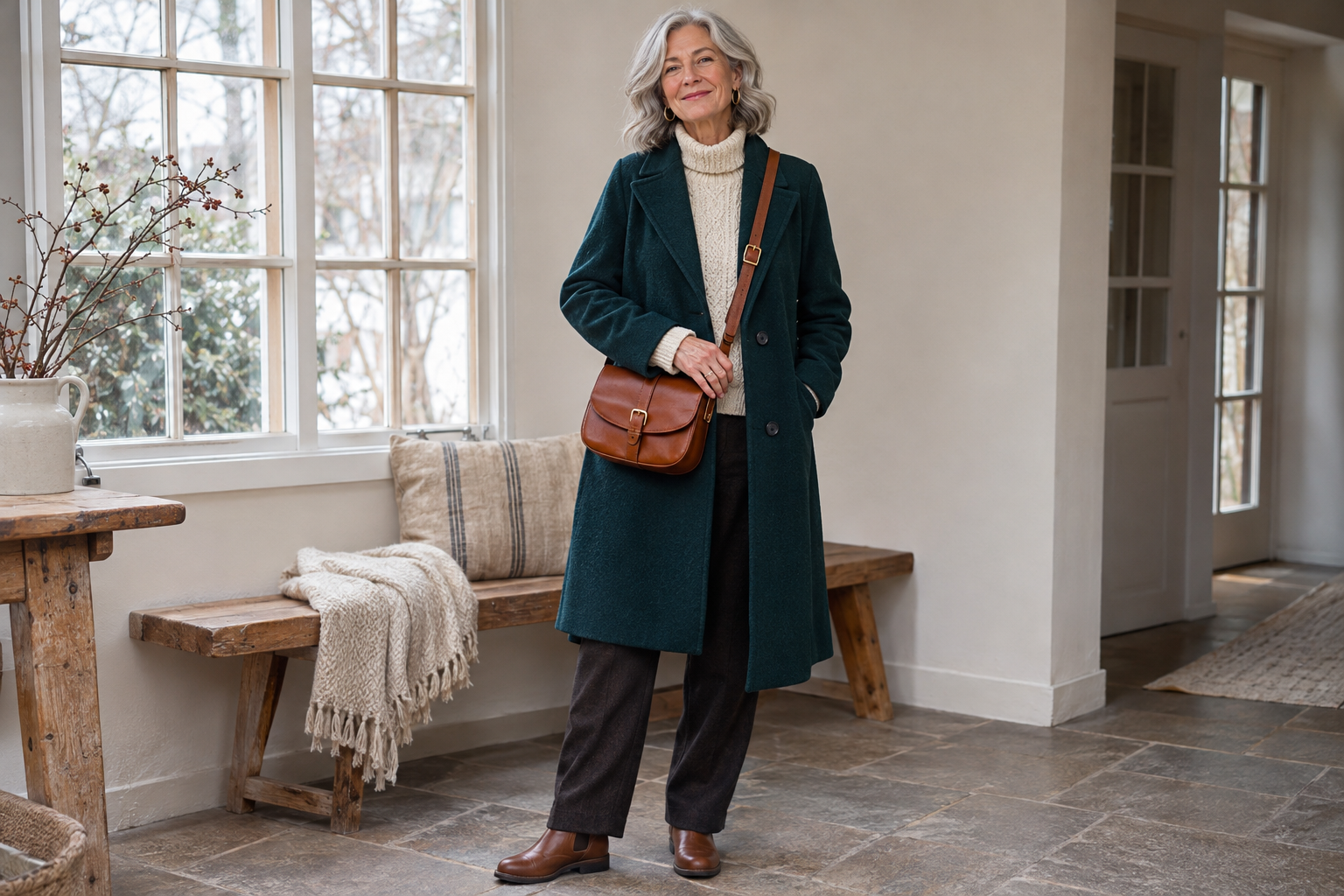
Record local conditions before selecting product features by writing down where you will go, when you will be outside, how you will travel and what the forecast says for that period. Then connect each requirement to a feature you can verify. “I wait outdoors after dark” is a more useful starting point than “I need a winter coat.”
This guide is for women over 50 making practical wardrobe decisions for their own routines. Age does not determine a temperature preference or a single suitable coat. Your actual journey, layers and preferences give you a better brief.
The AI-generated photographs illustrate planning situations and visible clothing details. They do not depict current weather at your location or establish the performance of any garment.
Name the outing before opening product listings
Start with an ordinary trip you expect to repeat. Write its destination, departure and return times, and travel method. Separate the walk to transportation from the ride and the final walk to the door. A mostly indoor afternoon may still include an exposed wait at either end.
You do not need a detailed diary. A short note can reveal which part of the day the clothing must accommodate. If you are planning for an unusual event, use that event’s journey rather than assuming your usual errands provide the right comparison.
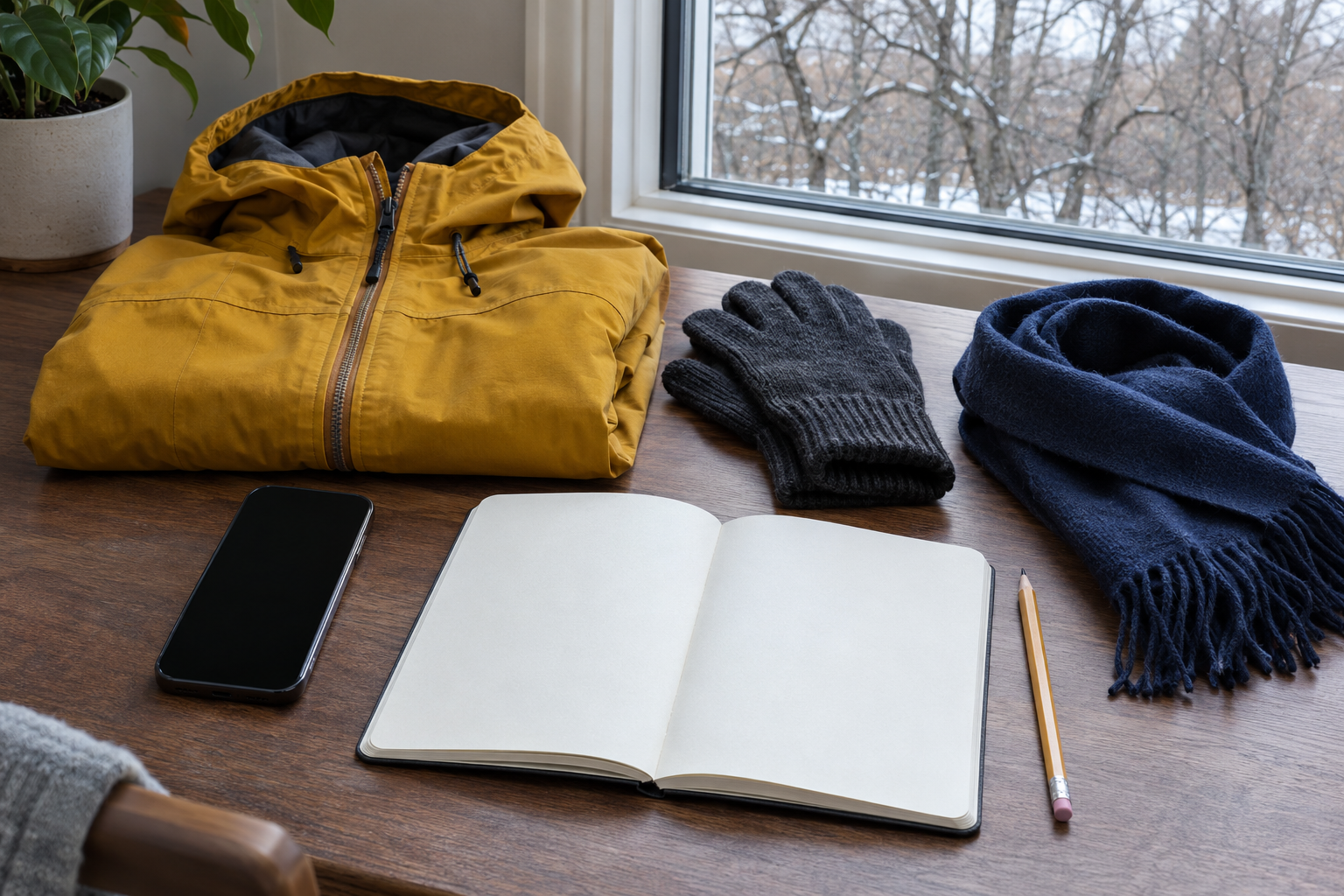
The desk illustration places a jacket, gloves and scarf beside a blank notebook. Treat those garments as possible items to assess after the brief is clear. Their appearance does not show whether they provide the protection your route requires.
Use the forecast for the place and hours that matter
Check your local weather service for the destination and the period you will be outside. Note the temperature, expected precipitation and wind information that apply to the outing, plus any relevant official alerts. Record when you checked. Revisit the forecast before departure rather than treating an earlier note as a fixed promise.
Keep the reported figures separate from your own descriptions. “Wind forecast at the destination” and “the stop usually feels exposed” are different pieces of information. Both may matter, but the second is not a measurement and should not become one in your shopping notes.
The National Weather Service explains that wind chill describes heat loss from exposed skin under cold and windy conditions. It is not a temperature rating for a particular coat. Do not use a weather index as proof that a garment will keep every wearer comfortable.
If an official advisory changes the outing, revise the plan before looking for a clothing workaround. A product feature is not a substitute for following local guidance.
Separate walking from waiting
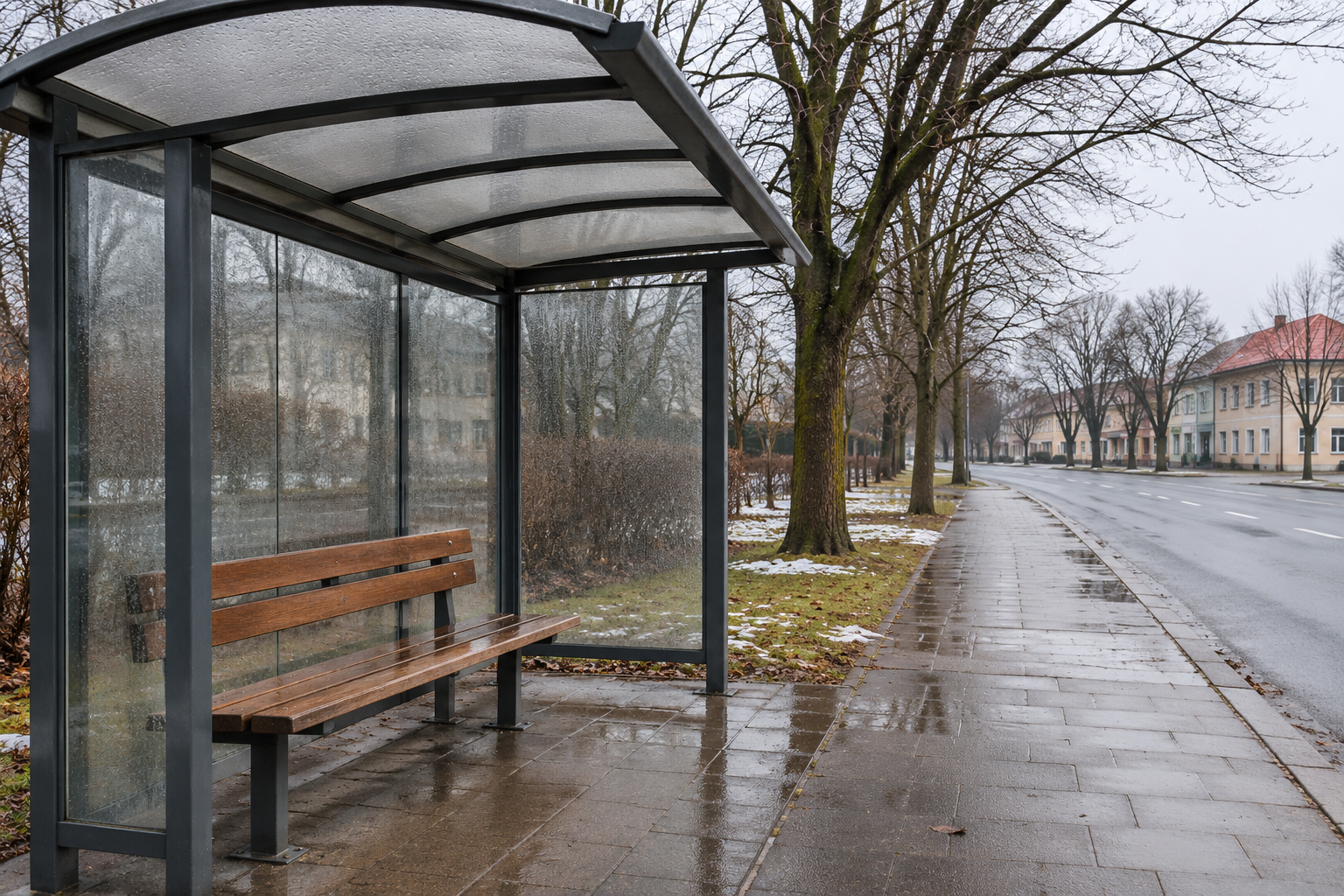
The shelter illustration makes that distinction visible: the bench has a roof, while the path continues outside it. It does not tell you whether a real stop will be sheltered from the direction of the wind or whether the ground is safe to cross. Use current local information and what you know about your actual route.
Write down approximate walking and waiting periods separately. A brisk walk, a seated ride and a stationary wait ask different things of your outfit. Also note whether the return journey could take longer or happen after the temperature changes. Keep these as planning estimates, not a claim to predict exactly how you will feel.
REI’s layering guide explains that clothing layers have different functions and that activity and changing conditions affect how they are used. Apply that principle to your real journey without turning hiking examples into a universal city-wear formula.
Turn one condition into one question about the garment
Once the outing is clear, write the feature question you need answered. If precipitation is expected, look for the exact item’s stated weather protection and relevant construction information. Do not infer waterproofing from a smooth surface or a hood in a photograph.
If you plan to adjust layers during the day, examine how the actual closures work and where you can put a removed layer. If a hood matters, try it with the neckline and other pieces you intend to wear. A useful feature has to work as part of your outfit, not merely appear on a list.

The yellow jacket has a visible hood and front zipper; the navy coat has a different neckline and fastening. Those are observable design differences. Neither image proves which item handles rain, blocks wind or provides sufficient insulation. Read the specific product information and test the features you can assess directly.
A condition, a question, a next step
Keep the connection visible in your note so an attractive extra does not quietly become a requirement.
- Expected rain: What weather-protection claim does the exact item make? Read its specifications and limitations.
- Indoor stops: Which layer can you remove, and where will it go? Try the change with your actual bag.
- Repeated outdoor waits: What combination have you used for comparable conditions, and what needs changing? Keep that observation specific to you.
Check your own garments before adding a purchase
Lay out the pieces you already own that might meet the brief. Put the intended underlayers beneath the outer garment, fasten it and check the movements the outing needs. A feature that is hard to reach through several cuffs may be less useful than the listing makes it sound.
Compare the clothing as a combination. If you need more room beneath the coat, changing the knit or sleeve shape may be worth trying before choosing another size. Our winter outfit examples show different layer arrangements, while the size-chart guide helps distinguish a body measurement from a garment dimension when shopping becomes necessary.
Keep appearance and performance separate in the record. You may prefer the look of one coat while needing another item for a particular forecast. That is a practical distinction, not a reason to force every winter activity into one outfit.
Keep the note short enough to use again
A fictional example: “Library trip Tuesday afternoon; walk to bus, possible wait, heated destination; check forecast before leaving; try removable knit under existing outerwear; confirm where the removed layer fits.” This is a planning example, not a local forecast or a recommendation for a particular temperature.
After the outing, add the observation that would change your next choice. Perhaps the layer was awkward to carry, the hood adjustment was difficult or a cuff needed repeated attention. Avoid turning one experience into a universal material verdict. You have learned something about a specific combination on a specific day.
Save the date and the unresolved question. Next time, update the forecast and journey first, then decide whether the same combination still fits the plan.

Alia Hashim
I'm Alia Hashim — a passionate blogger and founder of Modern Lady Magazine. I started this platform to create a space where women could find inspiration, empowerment, and real-life solutions for style, beauty, wellness, and beyond. Through Modern Lady Magazine, I aim to celebrate the modern woman — confident, creative, and full of dreams — while sharing ideas that help nurture both inner strength and outer beauty. Every story, every tip, every idea here is crafted to inspire you to embrace your journey and live life beautifully, one step at a time.
View author profile →