A sweater fits usefully when you can move comfortably in it, the neckline stays where you want it, the sleeves work for your day and the hem doesn’t need constant pulling into place. Check those things over your usual underlayer. Don’t judge every sweater by whether its shoulder seam sits at your shoulder point: a dropped shoulder is designed to extend beyond it.
For a shorter frame, or a wardrobe that has changed after 50, start with the fit problem you actually notice. You may need another sleeve length, body shape or neckline rather than simply a smaller size.
Identify the shoulder shape before judging the seam
A conventional set-in sleeve, a dropped shoulder and a raglan sleeve are different constructions. Their seam lines don’t tell the same story. Look at the product description or garment itself before deciding that a seam below your shoulder automatically means the sweater is too large.

The pale-blue illustration shows a conventional shoulder with a visible sleeve seam near the outer shoulder. It gives you a point to look at, but it is not a measurement diagram or proof that a particular sweater size will fit you.
Read the intended shape first. Use this comparison to choose what to check, then judge the actual sweater on your body. A deliberately relaxed style doesn’t have to imitate a close-fitting one to be useful.
| Construction | What you may see | What to check |
|---|---|---|
| Set-in sleeve | A sleeve joined around an armhole near the shoulder. | Whether the shoulder and upper sleeve sit comfortably without pulling when you reach. |
| Dropped shoulder | The body extends farther across the shoulder before joining the sleeve. | Whether the relaxed width, armhole and sleeve length work together for the intended shape. |
| Raglan sleeve | A diagonal sleeve line extending toward the neckline. | Neckline position, underarm room and movement, rather than a conventional shoulder-point seam. |
The Berroco fit guide uses different shoulder-measurement approaches for set-in and dropped-shoulder styles. It is knitting guidance, not a universal ready-to-wear size chart, but it reinforces the useful distinction: identify the construction before applying a measurement rule.
Use the underlayer you will actually wear
A sweater that feels comfortable over a thin tee can feel different over a shirt. Try it with a similar base layer to the one you intend to use. If you are shopping without that layer, keep the uncertainty in mind rather than assuming stretch will solve every tight spot.
Check the neckline first with your shoulders relaxed. Turn your head, look down and sit. Decide whether the opening, collar or ribbing feels comfortable without repeated adjustment. This is about your preference and movement, not choosing one supposedly correct neckline for your age.
Next, bring your arms forward as if picking up a bag. Notice where the fabric catches: the shirt sleeve underneath, the sweater armhole, the upper back or the cuff. That gives you a specific comparison to make with another cut.
A relaxed shoulder still needs a movement check
The rust sweater illustration has a visibly dropped shoulder and a roomier upper sleeve. That low seam belongs to its relaxed shape; it isn’t automatically a mistake to fix by sizing down.

Compare the whole relationship between the shoulder, armhole and sleeve length. If sizing down moves the seam where you expected but makes the body or upper sleeve uncomfortable, you may be comparing the wrong construction for the result you want.
Put your hands out of your pockets and let the sweater settle, too. A hand in a pocket or a front tuck changes the way a hem hangs. Use a natural stance before deciding whether you like the body length and width.
Check sleeves by what your hands need to do
Try a simple task: hold a cup, use your phone or write a short note. Decide whether the cuffs stay clear enough for you. Some people enjoy a longer sleeve; others prefer the wrist uncovered. The useful question is whether your sleeves work without constant folding or pushing.
If you usually turn back a cuff, check it that way during the try-on. A thick folded cuff gives a different feeling from a thin one, and both should be judged with the rest of the sleeve. Don’t assume shortening the sleeve alone will fix an armhole that also feels wrong.
When layering sleeveless knits, the same approach applies to the shirt or tee underneath. Compare its sleeve width and cuff separately rather than treating every layer as one size problem.
Choose the hem while standing and sitting
Let the sweater hang naturally over the pants or skirt you plan to wear. Sit, stand and take a few steps. A ribbed band may rest differently from a loose straight hem, so decide whether you like where it settles instead of repeatedly stretching it lower for the mirror.
If you want a tuck, try the amount you would actually wear. A small front tuck can feel different from putting the entire hem inside a waistband. If that crowded feeling comes from the pants rather than the sweater, our guide to petite and short pants can help you separate the two fit decisions.
A quick try-on card: Relax your shoulders, turn your head, reach forward, use your hands, sit and stand. Then check the hem from the front and side. Record the one thing you would change: collar opening, upper sleeve room, cuff length or body length.
Compare another sweater for that specific issue. If the first one feels good everywhere except the sleeves, don’t automatically trade away a comfortable body fit just to choose the smaller label.
Use a familiar sweater as a reference
Lay a sweater you already like on a flat surface without stretching it. Note the body length, sleeve arrangement and width, and compare a similar construction. If a retailer provides garment measurements, check how they were taken before comparing the numbers.
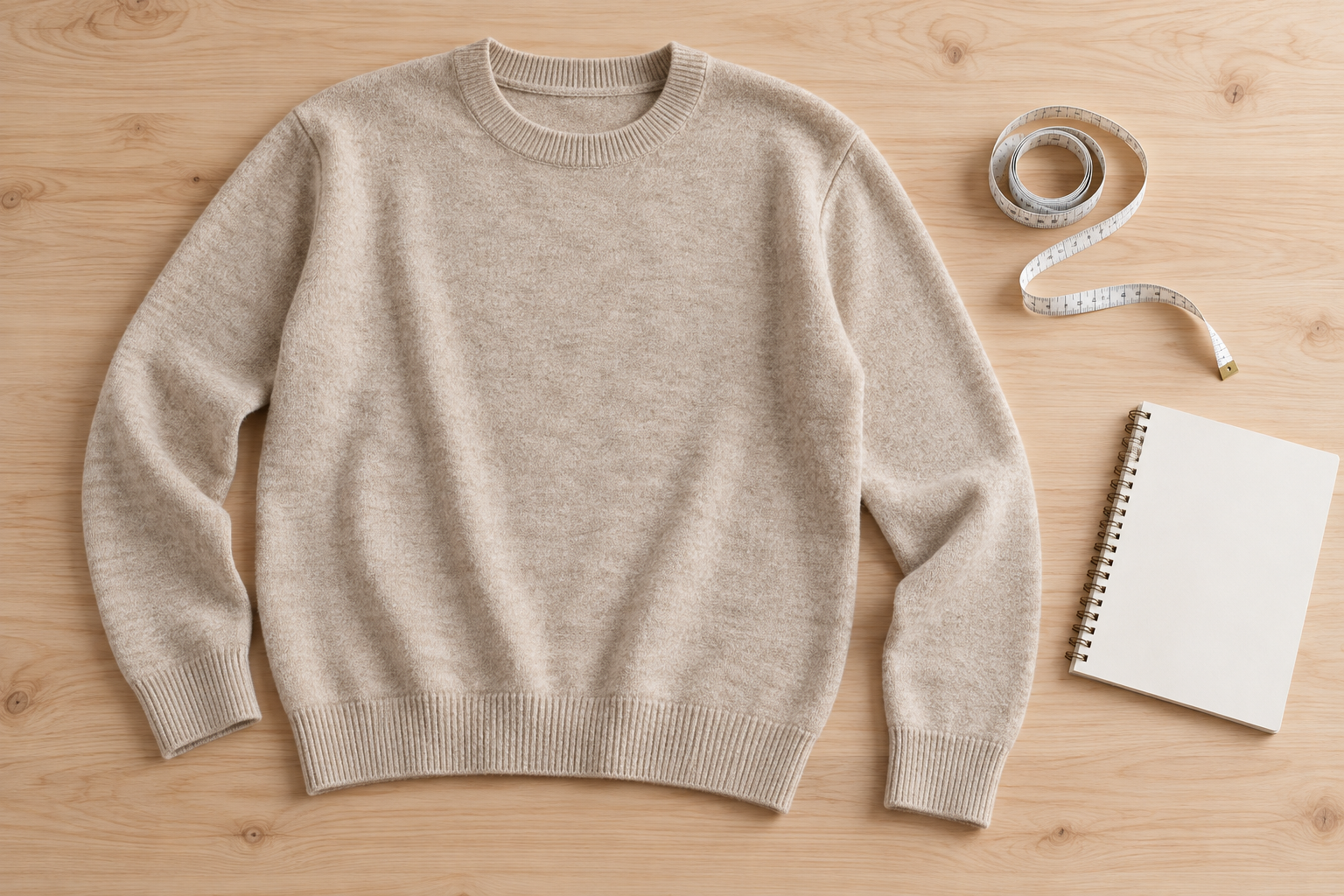
The oatmeal flat-lay image shows the whole sweater, with a tape beside it rather than positioned as a numerical measurement. Use your own garment and tape for a real comparison. A generated picture cannot supply a reliable measurement.
Berroco also discusses ease—the difference between body and garment measurements—and using a familiar garment to understand your preferred fit. Keep that concept separate from a fixed rule about how many inches everyone needs; fabric, construction and your preferences all matter.
Know when to compare another cut
If the neckline, shoulders and sleeves all feel wrong, another size may change several things at once. Try a different cut as well as a different size. For inspiration after choosing the fit, our everyday outfit ideas show ways to use knits with familiar pants and shoes.
If you like the sweater except for a sleeve or hem detail, ask a professional who works with knitwear about the actual garment. Don’t assume it can be shortened like a plain woven shirt, and don’t cut or wash a returnable item before checking the seller’s terms.
Finally, don’t buy a fit you dislike on the assumption that washing will shrink or stretch it into place. Follow the actual care label. The FTC’s garment care guidance explains why those instructions belong to the individual item; an illustration can’t establish its fiber content or cleaning limits.
Images are original AI-generated editorial illustrations, not measured garments or evidence of a personal wear test.

Alia Hashim
I'm Alia Hashim — a passionate blogger and founder of Modern Lady Magazine. I started this platform to create a space where women could find inspiration, empowerment, and real-life solutions for style, beauty, wellness, and beyond. Through Modern Lady Magazine, I aim to celebrate the modern woman — confident, creative, and full of dreams — while sharing ideas that help nurture both inner strength and outer beauty. Every story, every tip, every idea here is crafted to inspire you to embrace your journey and live life beautifully, one step at a time.
View author profile →