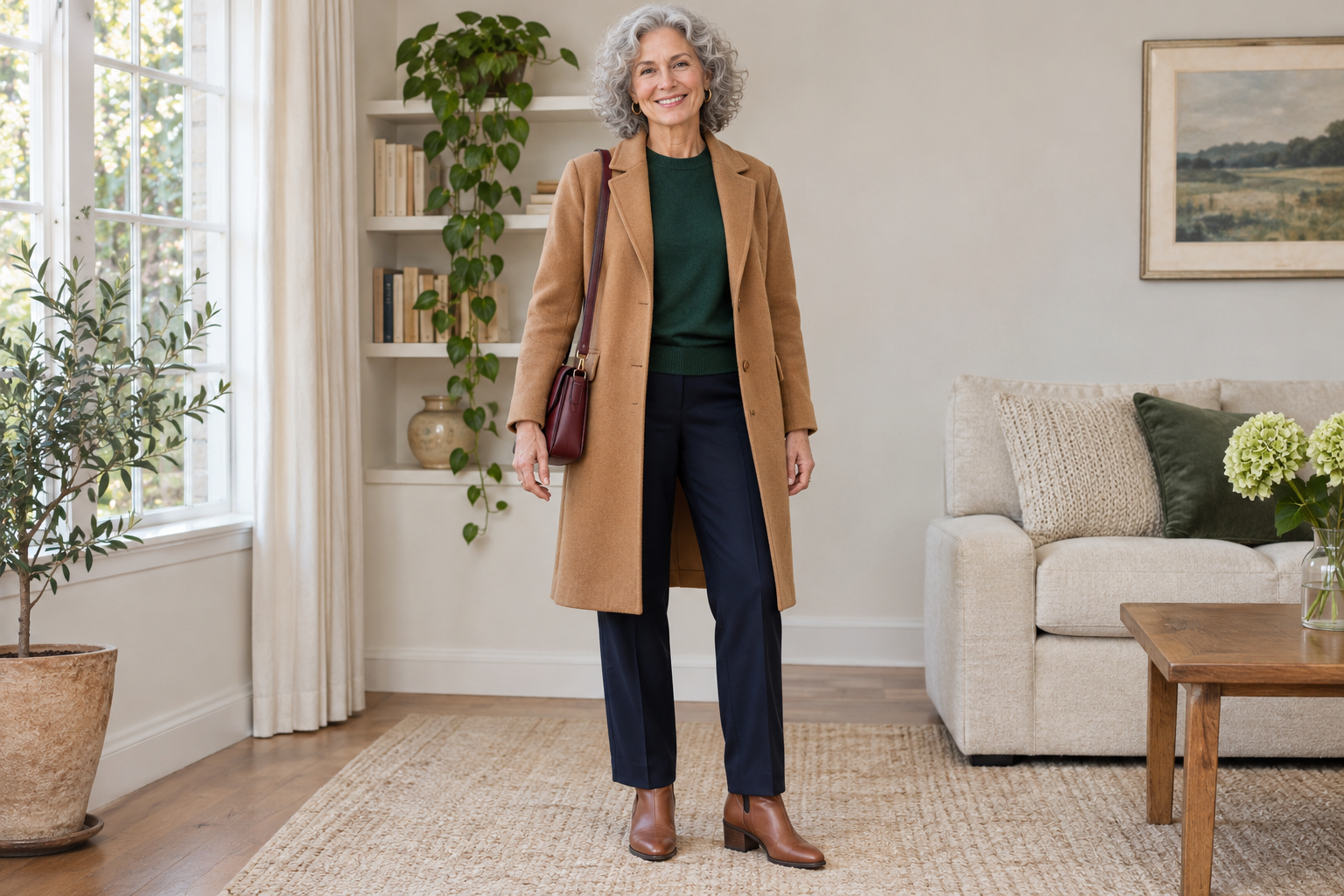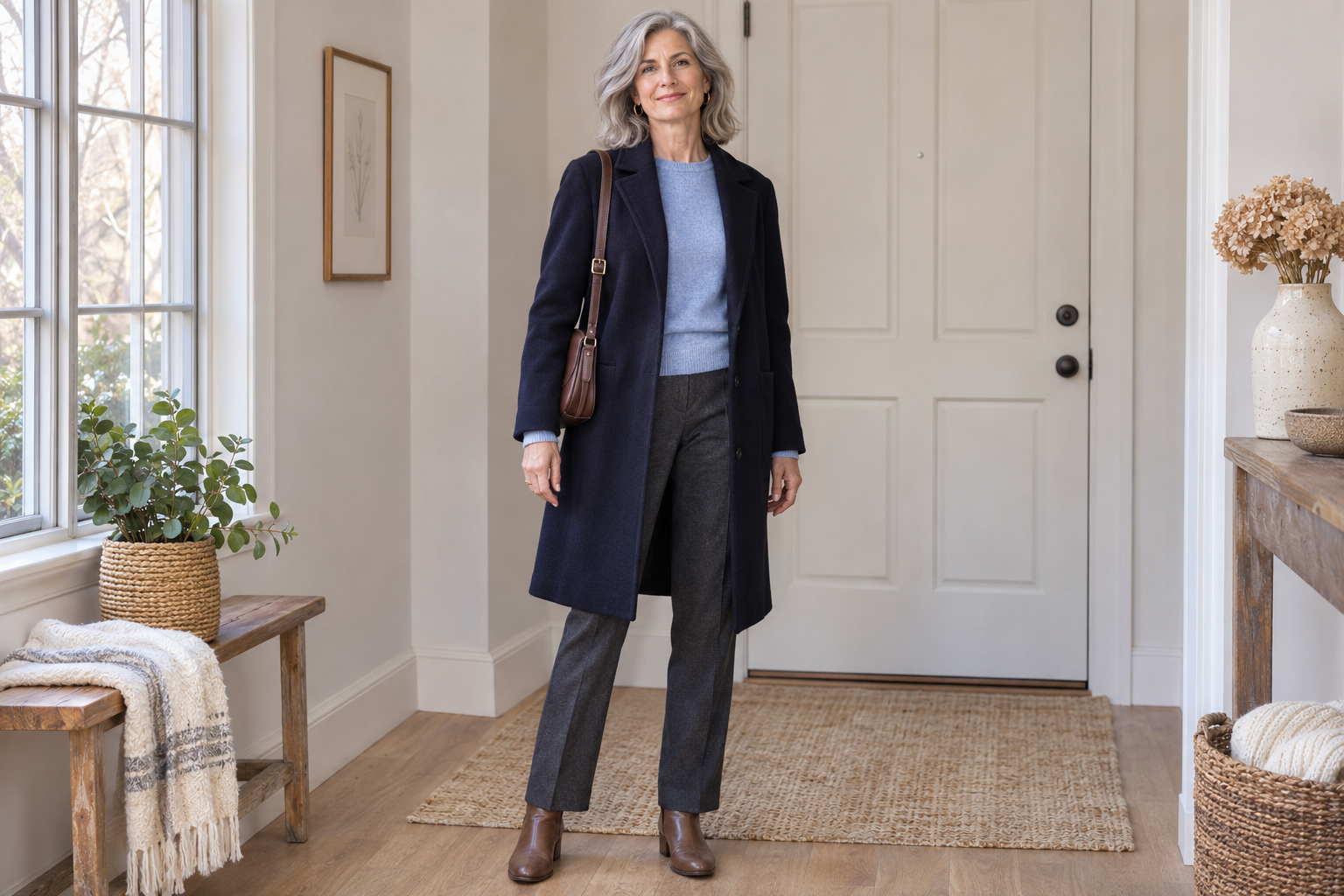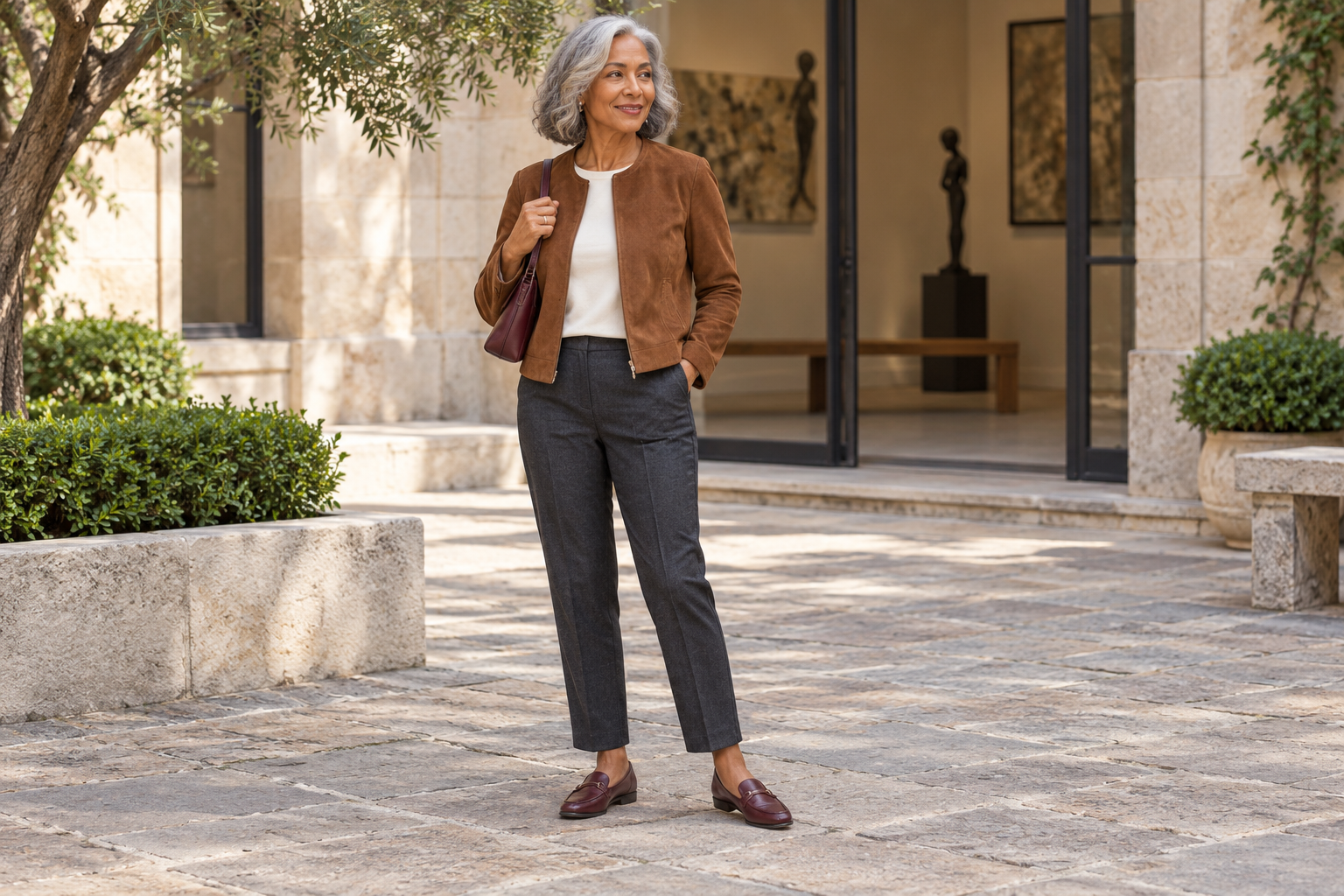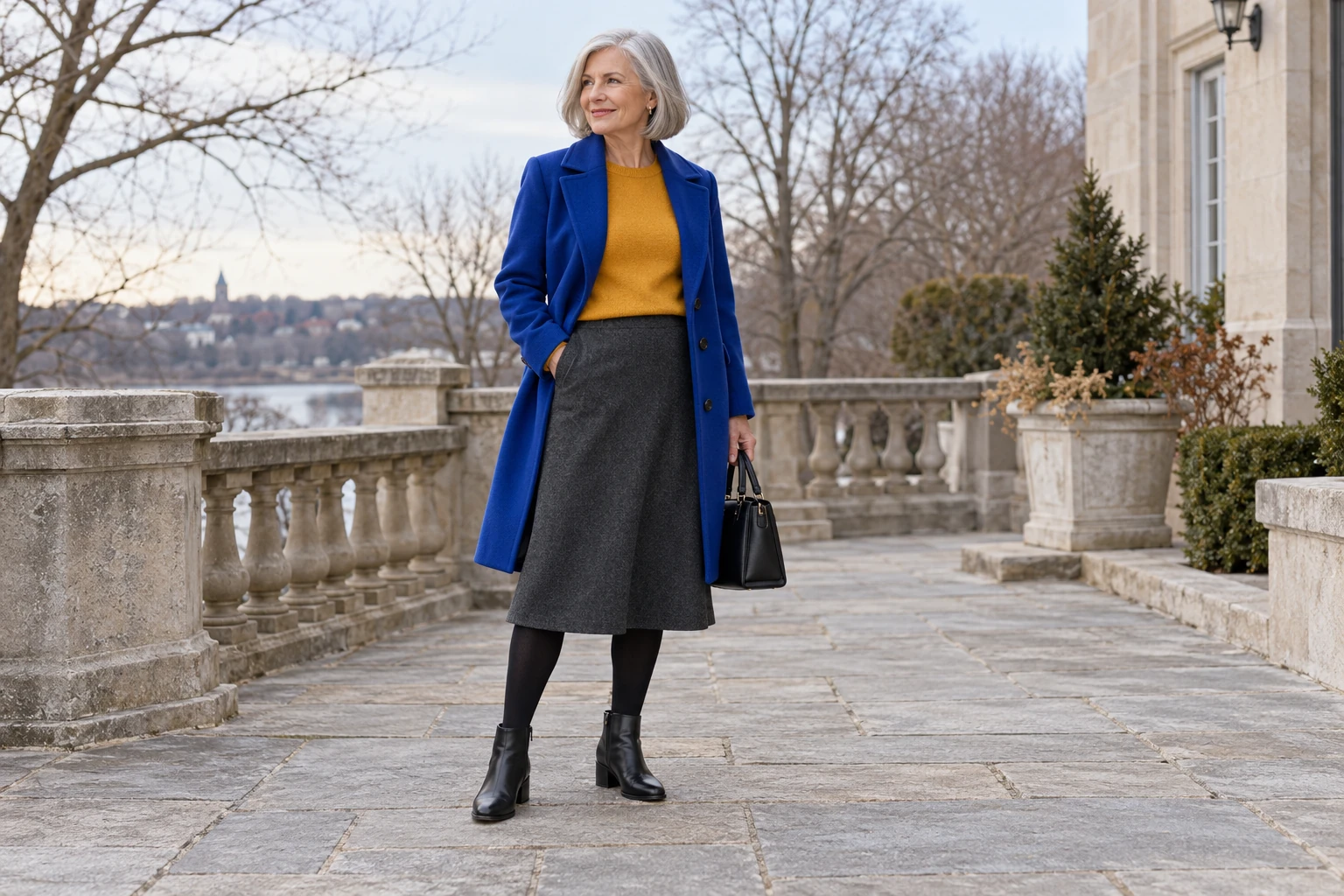
Wear corduroy pants with a smooth tee, a fine-knit sweater or a shirt you already like, then choose the outer layer and shoes for your day. A shorter jacket can define the top of the pants; a longer open cardigan can work just as well when you prefer more coverage. These 17 outfits show different ways to make that decision.
The styling is designed around shorter frames and everyday wardrobes after 50, with flats and low heels throughout. Treat the photos as illustrations of outfit ideas rather than tested garments. Use your own waist, hip and leg proportions to choose the fit.
Choose the pants and the day before adding layers
Start with a pair whose waist and seat feel comfortable, then check the hem with the shoes you intend to wear. Straight, tapered and wide legs can all work; they simply fall differently around the shoe. Next, decide whether you need an indoor knit, a light jacket or a coat. You don’t need to add all three to make textured pants feel finished.
A quick way to choose: For a casual indoor afternoon, compare a crewneck or striped tee. For an appointment, try a shirt or lightly structured jacket. For an evening meal, a wrap knit or satin-look blouse changes the finish. Pick the option that suits your plans and the temperature, then adjust one fit detail at a time.
Chestnut Cords With an Ivory Crewneck
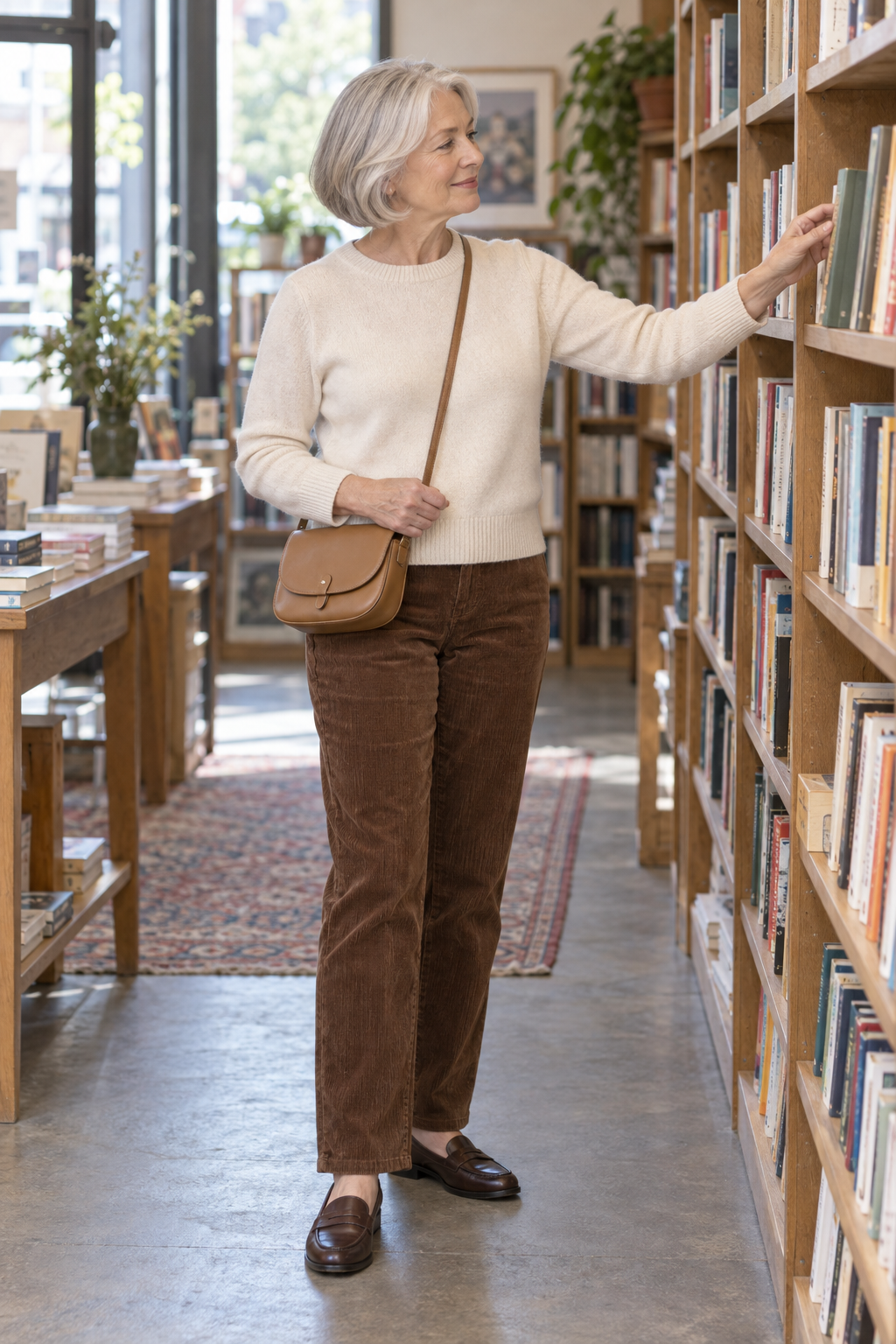
A bookshop afternoon doesn’t call for another layer just because the pants have texture. Here, chestnut cords sit beneath an ivory crewneck, with the sweater ending near the front pockets. Brown loafers keep the finish simple, and the tan crossbody leaves both hands free for browsing.
The useful detail is the sweater length. It rests above most of the hip instead of covering the entire rise. Try a similar knit untucked first; you may not need to force extra fabric inside the waistband.
Check the bag strap while reaching forward. If it pulls the neckline or catches the sweater hem, adjust the strap before changing the outfit.
Olive Cords Under a Short Denim Jacket
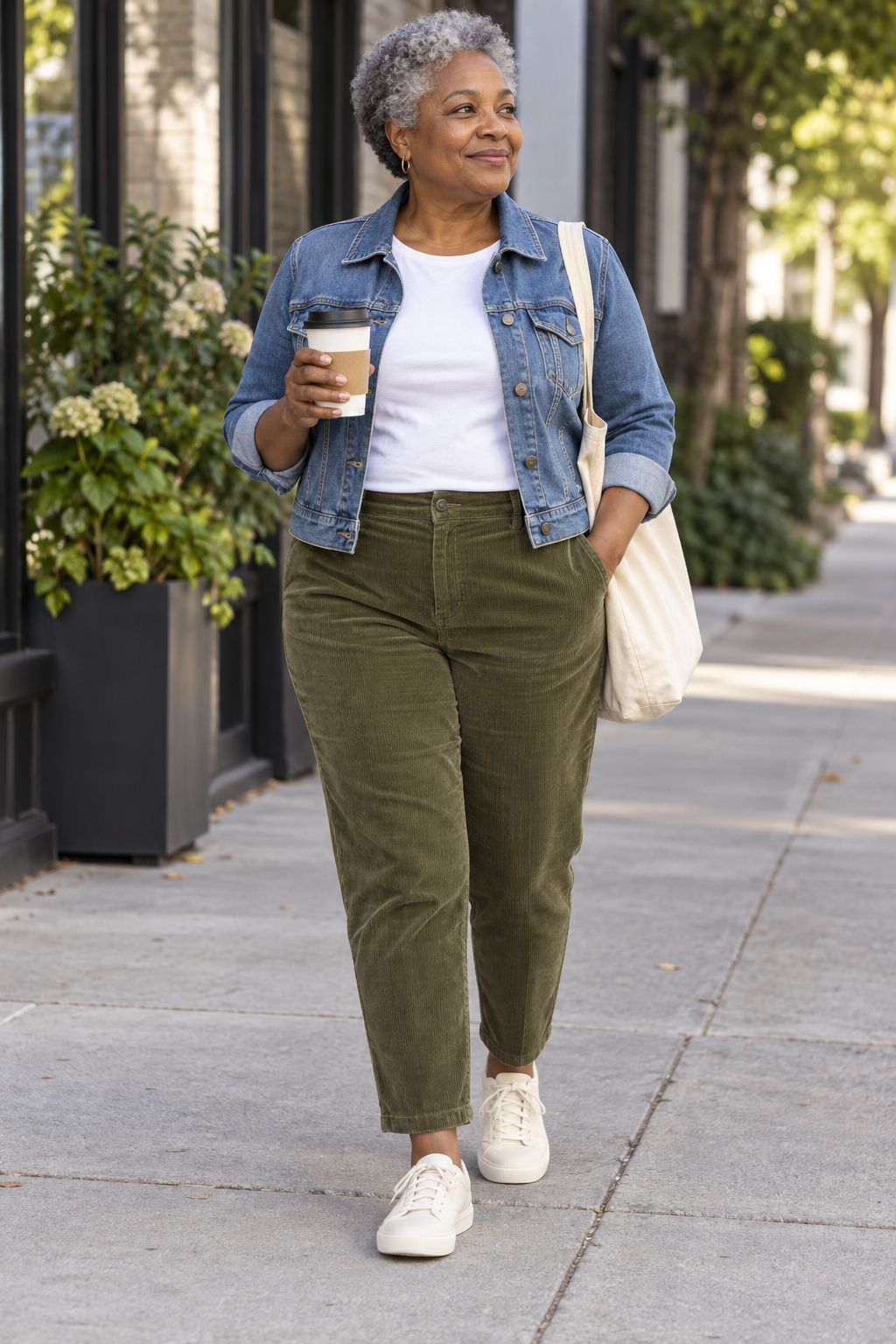
An olive-and-denim combination gives corduroy a different job from the first look: casual outerwear rather than soft knitwear. The short blue jacket frames a white tee, while cream sneakers and a canvas tote suit a coffee stop followed by a few nearby errands.
Notice where the jacket ends. Its edge is close to the waistband, leaving the tapered pants visible from the hip down. That creates a clear division between the two textured fabrics without requiring a tight-fitting tee.
Try the jacket with your arms forward as if holding a cup. If the shoulders restrict that movement, compare the jacket fit instead of simply rolling the sleeves higher.
Burgundy Cords With a Pale Blue Shirt

For an office with a relaxed dress code, burgundy cords can take the place of dark jeans. The pale blue shirt lightens the upper half, and black loafers connect to the plain shoulder bag. There’s no need to add a blazer if the room and occasion don’t require one.
The shirt has a small front tuck rather than a tightly packed waistband. It reveals the top of the pants while leaving room through the sides. Copy that small adjustment only if it feels comfortable on your own pair.
Pay attention to sleeve length when typing or writing. A neat cuff should clear your hands without making you keep pushing the shirt up.
Navy Cords and a Rust Cardigan

Rust and navy make a useful lunch combination when you want color without a patterned top. In the finished image, the cardigan is worn open over an ivory layer, rather than buttoned as a standalone sweater. Tan low-heeled boots bring a lighter finish to the dark corduroy.
Keep that open front if it gives you the movement you prefer. The cardigan ends near the upper hip, so it doesn’t create a second long hem over the pants. Buttoning it would be another option, provided the front lies comfortably.
Before sitting down for a meal, check whether the knit catches on the waistband or pockets. A different cardigan length may solve that better than pulling it into place repeatedly.
Cream Wide-Leg Cords With a Dark Turtleneck

Cream wide-leg cords needn’t be saved for dressier shoes. This gallery outfit pairs them with flat black ankle boots and a charcoal turtleneck. The close, smooth top lets the wider trouser shape stand out, while the small dark bag repeats the footwear color.
Use the visible front hem as a starting point, then inspect your own pair from behind. The rear edge should clear the floor with the actual boots you plan to wear. A wider opening changes how the fabric falls around the shoe.
If a fitted turtleneck isn’t your preference, compare a lightly skimming knit with the same quiet neckline. The useful contrast is smooth fabric against corduroy, not a requirement to wear a tight top.
Chocolate Cords With a Striped Tee
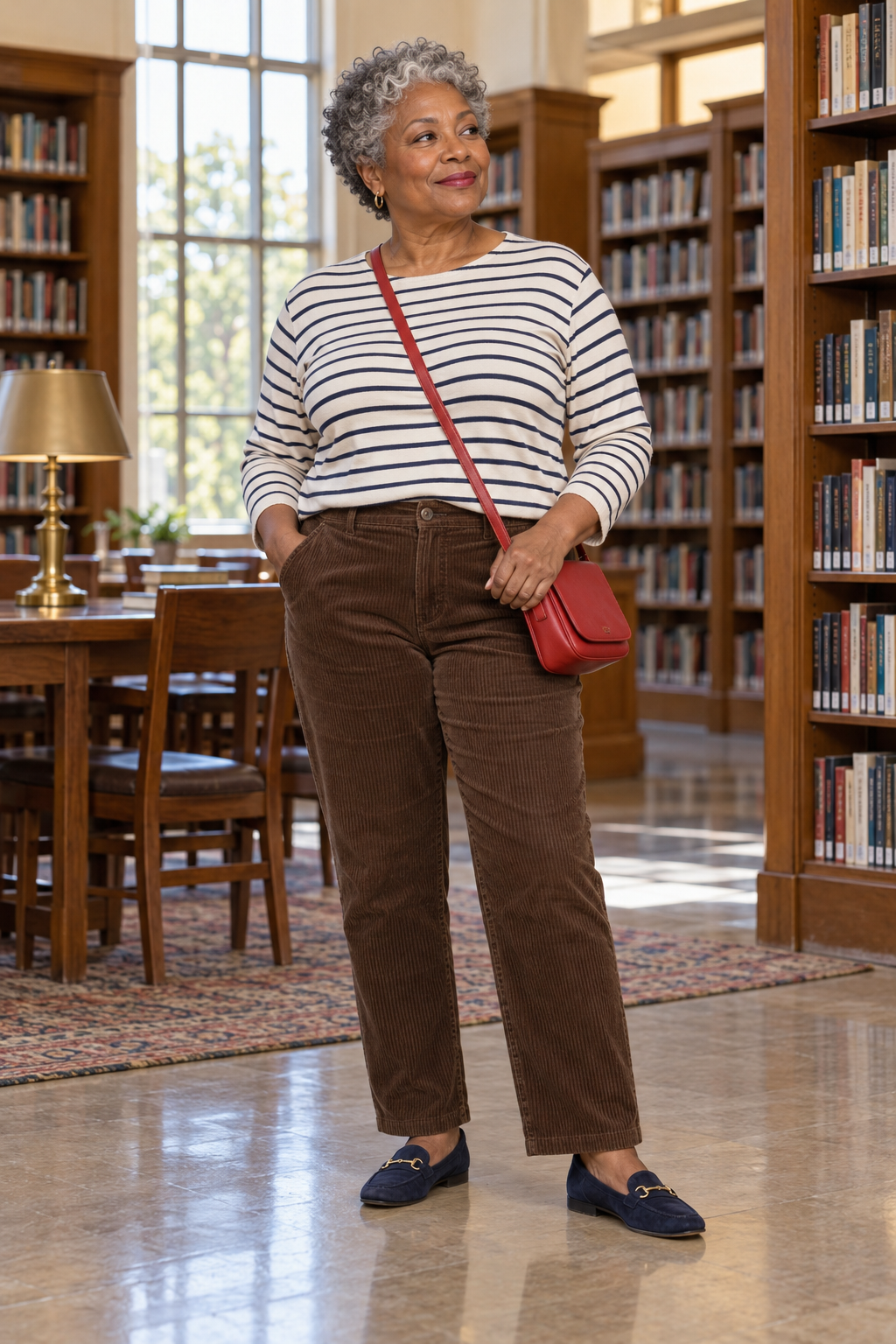
The striped tee makes chocolate cords feel easy enough for a library visit. Navy loafers echo the dark lines in the top, and the red crossbody supplies a single brighter accent. This is a practical way to use a familiar casual shirt with textured pants.
The tee is lightly tucked at the front in the illustration. Try it both tucked and loose, because a waistband that feels fine standing can become crowded when you sit. You don’t have to keep the exact styling adjustment to keep the color combination.
Let the bag be the stronger accent if you want a quiet outfit. Adding a patterned scarf as well would create another point of attention; choose it only if that is the effect you enjoy.
Camel Cords With a Soft Gray Blazer
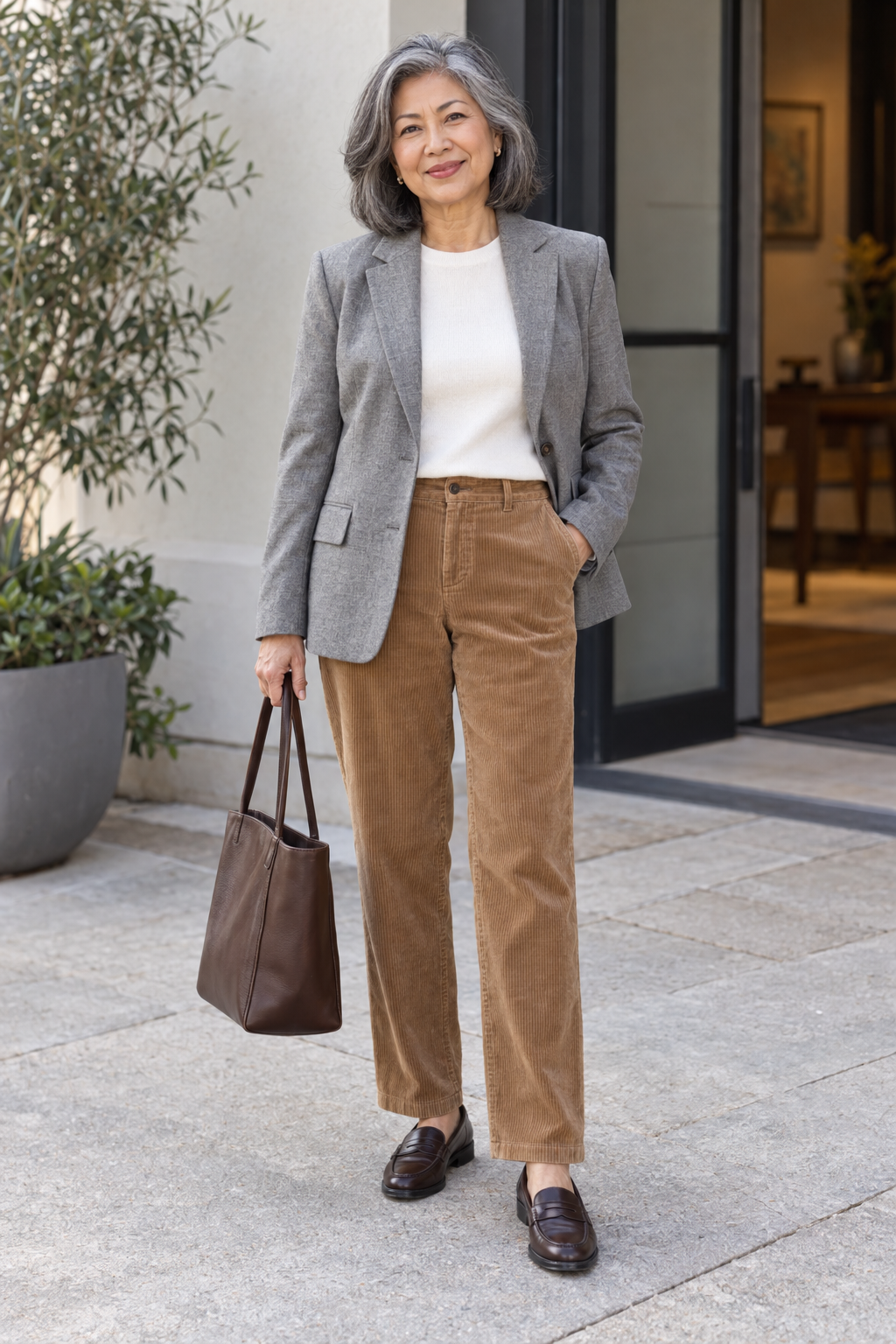
Camel cords and a gray blazer offer a middle ground between a suit and weekend denim. The white shell keeps the center light, while brown loafers and a roomy tote make the outfit useful for an informal appointment. The blazer is lightly shaped rather than pulled tightly closed.
Start with its shoulders and upper back when comparing your own jacket. Shortening sleeves can help a sleeve-length problem, but it won’t move a shoulder seam or correct a body that hangs too low. The open front should stay comfortable when you reach.
After that, judge the pant hem with the loafers. These cords end near the shoe uppers, giving a different finish from an intentionally cropped pair without needing a heel.
Black Cords With a Plum Wrap Sweater
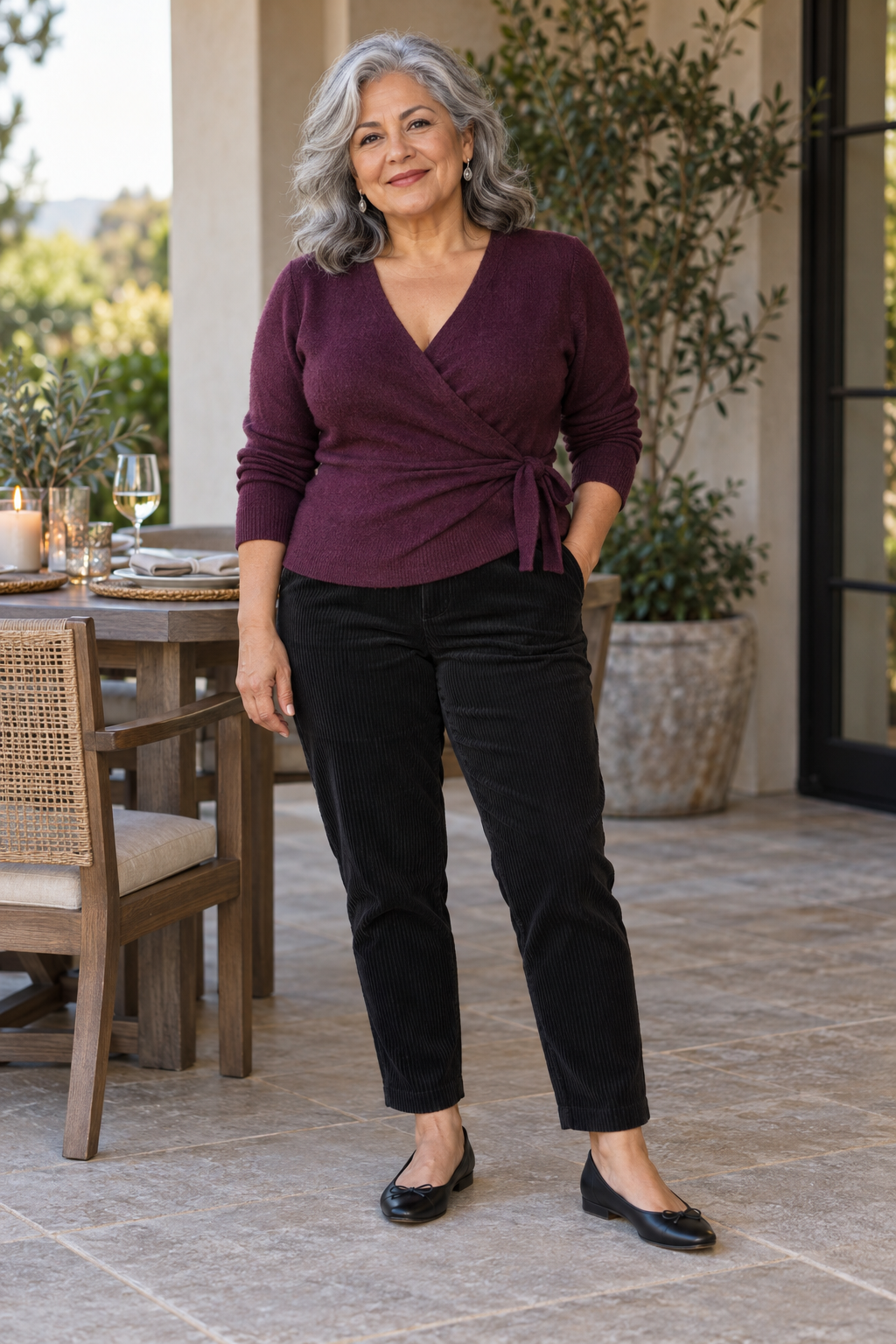
A plum wrap sweater gives black cords a useful early-dinner direction without adding a separate jacket. The diagonal front and side tie are the main details; simple black flats keep the rest of the look quiet. Small silver earrings would be enough if you want jewelry.
The tie sits at the side rather than forming a bulky knot at the center front. Adjust it for your own seated comfort. A wrap shape should not require you to pull it tighter every time you move or to accept a neckline you keep rearranging.
This is worth trying when your black pants already fit well. Change the top and shoe finish before assuming an evening outfit needs an entirely new pair of pants.
Moss Cords With an Oatmeal Sweater Vest
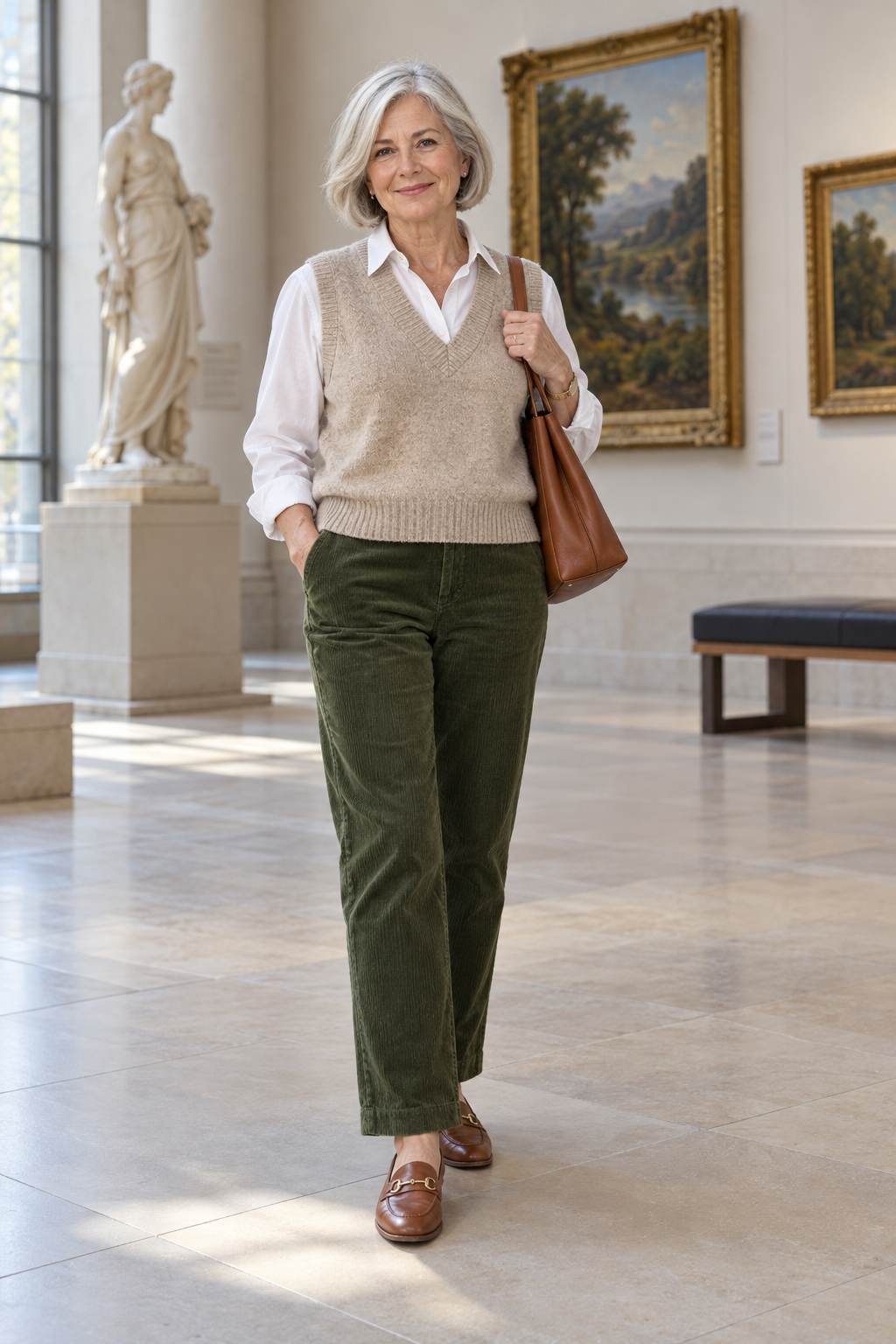
A sweater vest can make a white shirt useful on a cool museum morning without putting another full sleeve over it. The oatmeal V-neck sits above moss-green cords, while cognac loafers and a matching shoulder bag keep the lower half warm in color.
Here the shirt is tucked and the vest ends near the waistband. If you prefer the shirt untucked, test how much fabric extends below the vest. A narrow visible edge will give a different result from a long shirt tail covering most of the hips.
Check the armholes with the shirt sleeves underneath. Bunched fabric there can make a short vest feel restrictive even when its body width is generous enough.
Warm Gray Cords With a Coral Knit

Coral changes the mood of gray cords without needing a complicated layer. The sweater, gray crossbody and plain white sneakers make a straightforward errand outfit, with the pant hems stopping above the shoe uppers. It’s a useful option when you want one noticeable color.
Look at how the knit rests at the waistband instead of stretching tightly over it. Try a similar length before adding a tuck; a relaxed sweater may sit neatly without extra adjustment. The tapered legs keep the shoe area visible.
For your own errands, check the bag at the height you actually wear it. A strap that feels comfortable standing should also let you reach into the bag without pulling the sweater sideways.
Dark Brown Cords Beneath a Short Trench

A shorter trench gives dark brown cords a light outer layer for a mild-weather walk. In the illustration it is open over a cream tee, with a navy tote and brown loafers. The coat creates a clear frame rather than covering the outfit with another heavy texture.
Its hem ends around the upper thigh, which is longer than the denim jacket earlier in the guide. That difference is intentional: you don’t need every outer layer to stop at the waistband. Compare the coat from the side as well as the front.
If the sleeves or shoulders feel too long, tightening a belt won’t move those seams. Try the coat over your chosen top before deciding which alteration, if any, would help.
Ink Cords With a Collarless Knit Jacket

For a matinee, an edged knit jacket can make a white tee and navy cords feel more deliberate. The cream body and dark trim define the jacket shape, while navy loafers repeat the pants. The finished image also includes a compact dark handbag, keeping the palette close.
The jacket stops near the waistband, unlike the short trench in the previous look. Its open front leaves the plain tee visible, so the edging does the decorative work without requiring a scarf or necklace.
Try the layers with your elbows bent. The tee sleeves need room under the jacket armholes, and the jacket shouldn’t pull across your back when you reach forward to pick up a bag.
Terracotta Cords With a Denim Shirt

Terracotta cords work well as the colorful half of a market outfit. The soft blue denim shirt, tan boots and roomy tan bag leave the warm pants as the main contrast. A light front tuck shows the waistband without making the shirt look sharply tailored.
That tuck is optional. If your waistband becomes crowded when you sit, compare a shallower tuck or leave the shirt out and check its length. The practical aim is an easy shirt front, not matching the image’s styling at the expense of movement.
Notice the boots under the hem rather than a large ankle gap. Test your own pair with the boots you intend to wear; a different shaft or toe shape can change where the pant leg rests.
Charcoal Cords With a Long Open Cardigan

A longer open cardigan is another option with corduroy, even on a shorter frame. The sage knit ends around the thigh, extending farther than the compact jackets earlier in this guide. The ivory tee and charcoal cords remain visible through the open center.
The point is the relationship between the layers, not a fixed cardigan measurement. A quiet, close-colored base lets you compare a longer outer hem without also adding a busy shirt. Charcoal loafers keep the outfit suited to a relaxed cafe afternoon.
Look at the cardigan from the back before choosing. If the knit catches across the seat or the pockets pull outward, compare another shape instead of assuming a shorter hem is the only solution.
Forest Cords With a Cream Quarter-Zip

A cream quarter-zip gives forest cords a different neckline from a crewneck or button-front shirt. Here it is partly open, with brown loafers and a compact shoulder bag. The outfit suits an easy family visit where you want a knit layer without a separate jacket.
Pay attention to the collar when trying your own version. It should sit comfortably with your shoulders relaxed, not only when you stand very straight for a mirror. Adjust the opening to your preference instead of assuming it must be zipped to a particular height.
The trouser hem leaves the loafers visible. If you prefer socks or a fuller-length finish, test those together before choosing an alteration; the photographed ankle gap is a styling option, not a rule.
Toffee Cords and a Navy Peacoat

For a cooler lunch outing, a navy peacoat adds structure above toffee cords and an oatmeal sweater. The brown boots and shoulder bag stay close to the pants in color. The coat is open in the image, letting the lighter knit remain visible at the center.
Try that outer layer over the sweater you actually plan to wear. A coat that fits over a tee may feel different through the upper sleeves once a knit is underneath. You shouldn’t have to choose a much longer coat body just to get enough arm room.
Look at the pant hem over the boots from both sides. The fabric should fall as you intend without catching on the boot opening every time you take a step.
Midnight Cords With a Satin-Look Blouse
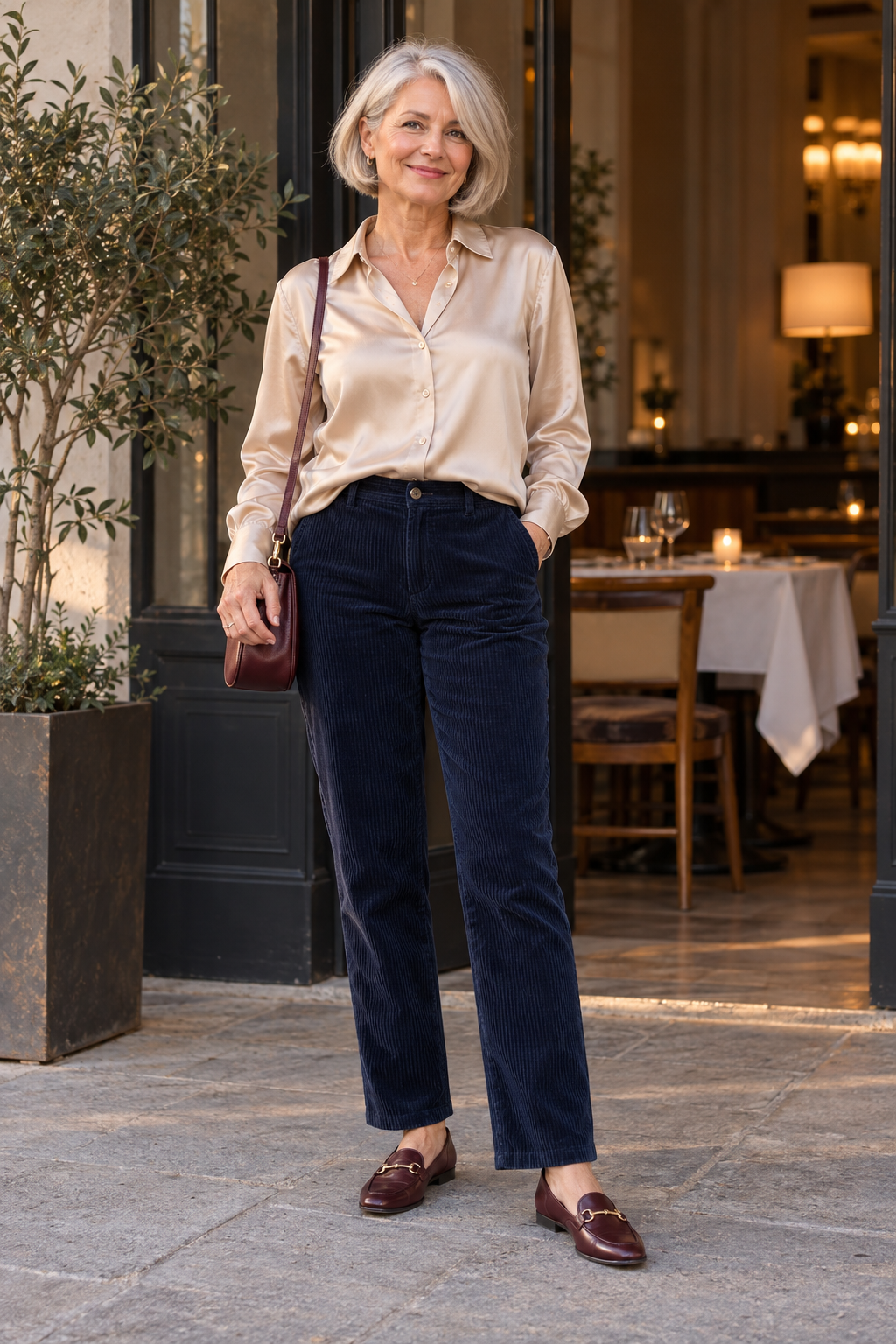
A champagne satin-look blouse changes navy cords into an evening combination without replacing the familiar straight-leg shape. Burgundy loafers repeat the small bag, while the blouse supplies the visible sheen. The rest of the outfit stays restrained for a casual meal.
The front is lightly tucked, leaving the top of the pants clear. With a slippery blouse fabric, check how that tuck behaves after sitting and standing. A shallower tuck or a different blouse length may be easier than repeatedly pulling more fabric into the waistband.
Keep care expectations separate from the illustration. The image shows a satin-like finish but cannot establish fiber content or washing instructions. Check the actual blouse and pants labels before choosing a cleaning method.
Make the combination work with the pants you own
Choose one outfit that uses shoes and a top already in your closet. Compare the top length, sleeve position and hem with your own pair before buying another layer. If short and petite options have you guessing, our comparison of petite and short pants explains why a shorter inseam may not solve a rise or seat issue.
For the final length decision, use the same garment-first approach in our inseam and hem guide. It’s a way to compare where your own pants end, not a promise that jeans and corduroy in the same size will fit identically.
Keep a useful outfit note: Write down the pant cut, the shoes and the layer you chose, plus the one change that would help next time. That might be a shorter shirt, a different jacket sleeve or a hem adjustment. Keep the combinations that feel practical for your day rather than treating every photo as a shopping list.
Follow the actual care label
Don’t infer fiber content, stretch or cleaning instructions from the illustrations. The FTC’s care-label guidance explains that garment care instructions belong on the item; use the directions on your own pants and layers instead of assuming every corduroy garment should be washed or pressed the same way.
When comparing a new cut, check the brand’s own garment information too. Lands’ End’s petite fit guide gives one example of how rise and proportions can change. Those details vary by brand and style, so a label or a photograph can’t replace your own fit check.
All images are original AI-generated editorial illustrations. No personal wear test or product endorsement is implied.

Alia Hashim
I'm Alia Hashim — a passionate blogger and founder of Modern Lady Magazine. I started this platform to create a space where women could find inspiration, empowerment, and real-life solutions for style, beauty, wellness, and beyond. Through Modern Lady Magazine, I aim to celebrate the modern woman — confident, creative, and full of dreams — while sharing ideas that help nurture both inner strength and outer beauty. Every story, every tip, every idea here is crafted to inspire you to embrace your journey and live life beautifully, one step at a time.
View author profile →