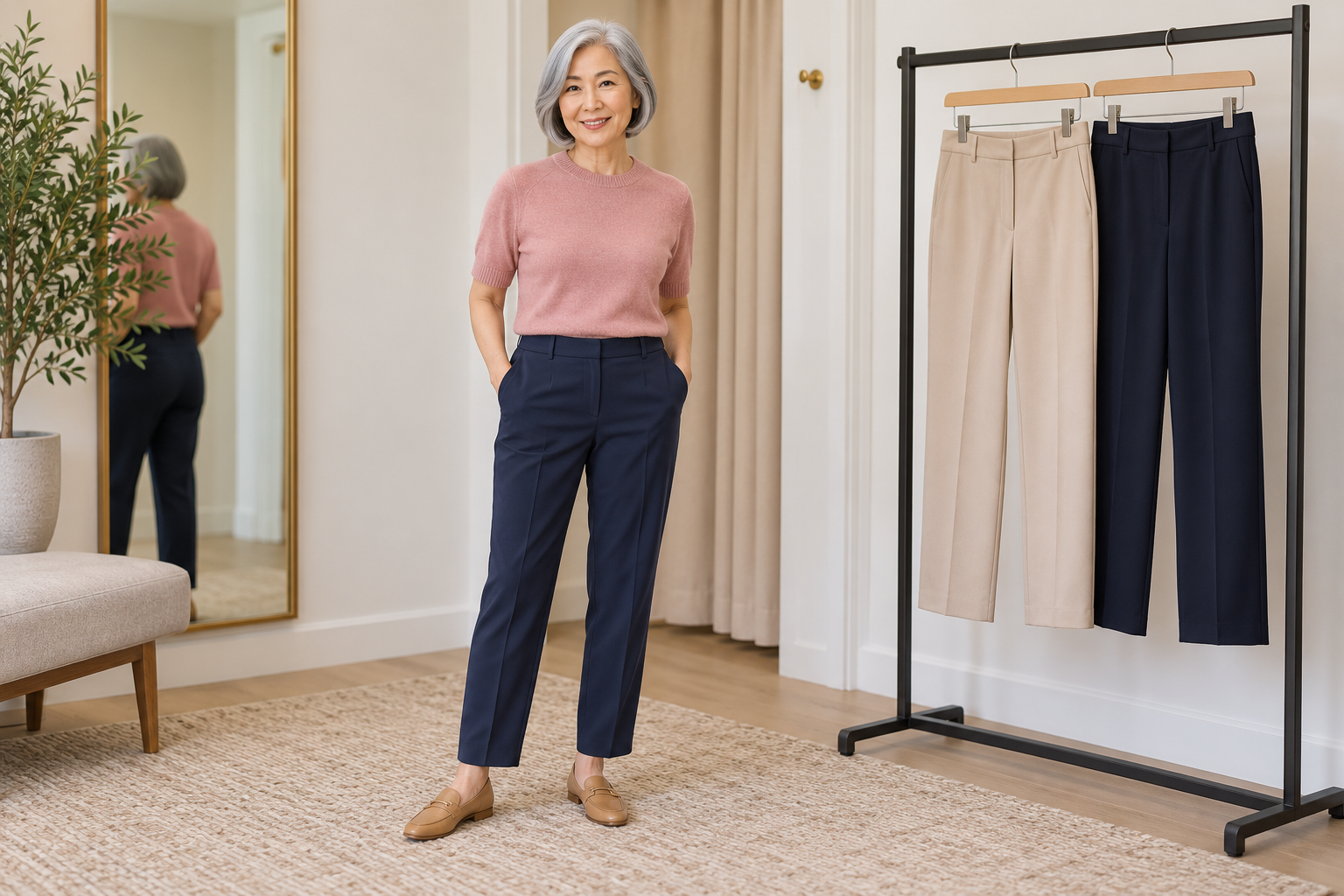
Choose ankle boot shaft height with pants and skirts by trying the boot opening beside the hems you actually wear. The useful height is the one that gives you the appearance, coverage and movement you prefer. Being shorter doesn’t create one compulsory shaft measurement, and buying a higher heel won’t necessarily change an opening you dislike.
Start with a familiar pair of boots, one pair of pants and one skirt. Compare where the openings sit, whether the fabric catches and how the boots feel when you walk. Then use product measurements to narrow your search. That order keeps an unfamiliar number from making the decision before you have considered the whole outfit.
Separate the three measurements on a boot listing
The shaft is the upper part surrounding your ankle or leg. Its height tells you something different from the opening’s circumference or the heel beneath your foot. Those details can change independently: two boots can have similar shaft heights but different openings, while another pair can have a higher heel without offering the closer opening you wanted.

In this close-up, the top edges show the openings and the block heels are separate structures below them. The side zipper is another detail to inspect on an actual product. The picture explains what to look at; it doesn’t supply reliable dimensions, verified material content or a fit test.
| Listing detail | What it helps you compare | What it doesn’t decide |
|---|---|---|
| Shaft height | How far the upper rises, using that seller’s measurement method | The exact position on your leg or how the edge feels |
| Opening or shaft circumference | The room around the upper, at the stated measuring point | Whether the footbed and toe area fit |
| Heel height | The height beneath the rear of the foot | Whether a pant leg will clear the boot opening |
Macy’s boot fitting guide distinguishes these measurements and notes that measurements may vary by shoe size. Read the listing for the specific style and size rather than treating a category name such as ankle boot or bootie as a precise specification.
Use a familiar boot as your comparison
A pair you already own gives a useful reference, even if you don’t want to buy an identical style. Put it on and identify what you like: perhaps the opening sits comfortably beneath straight jeans, or perhaps it leaves more space above the ankle than you want with a skirt. Write that observation before measuring anything.
Then check how the retailer defines its measurements. Timberland’s measurement guidance includes comparing a familiar boot and explains shaft, opening and heel separately. Follow the specific seller’s method when comparing a listing; numbers taken from different starting points aren’t automatically interchangeable.
For a home comparison, keep the boot upright and avoid pulling a soft upper into an artificially tall shape. Note where your tape starts and ends so you can repeat the comparison. This is a way to organize your own observations, not a substitute for a brand’s size guidance or an assurance that another boot will fit.
Make a useful reference note. Record the boot, shoe size, socks and the hem you tried with it. Add one sentence about what you want to change. “A closer opening beneath these pants” is more informative than “a better boot.”
Choose the hem relationship before choosing a number
There are three useful relationships to compare: a visible gap above the opening, a hem that meets near it, and fabric that covers the shaft. These are styling choices rather than a ranking. Your preferred option may change with the garment, conditions and amount of coverage you want.
A visible gap makes the boot’s top edge easy to see. A closer meeting can reduce the exposed area, but the two edges may catch when you move. A covered shaft hides more of the boot, yet the pant leg needs enough room to fall over it freely. Test the arrangement instead of assuming that a smooth standing photograph proves it works.
Keep the rest of the outfit simple for this comparison. If you change the jacket, skirt, socks and boots together, you may like the result without knowing which change helped. Begin with one hem and compare the openings of two boot pairs if you have them. If you own only one pair, try that pair with two different bottoms.
Read the cropped-pants example from the hem downward
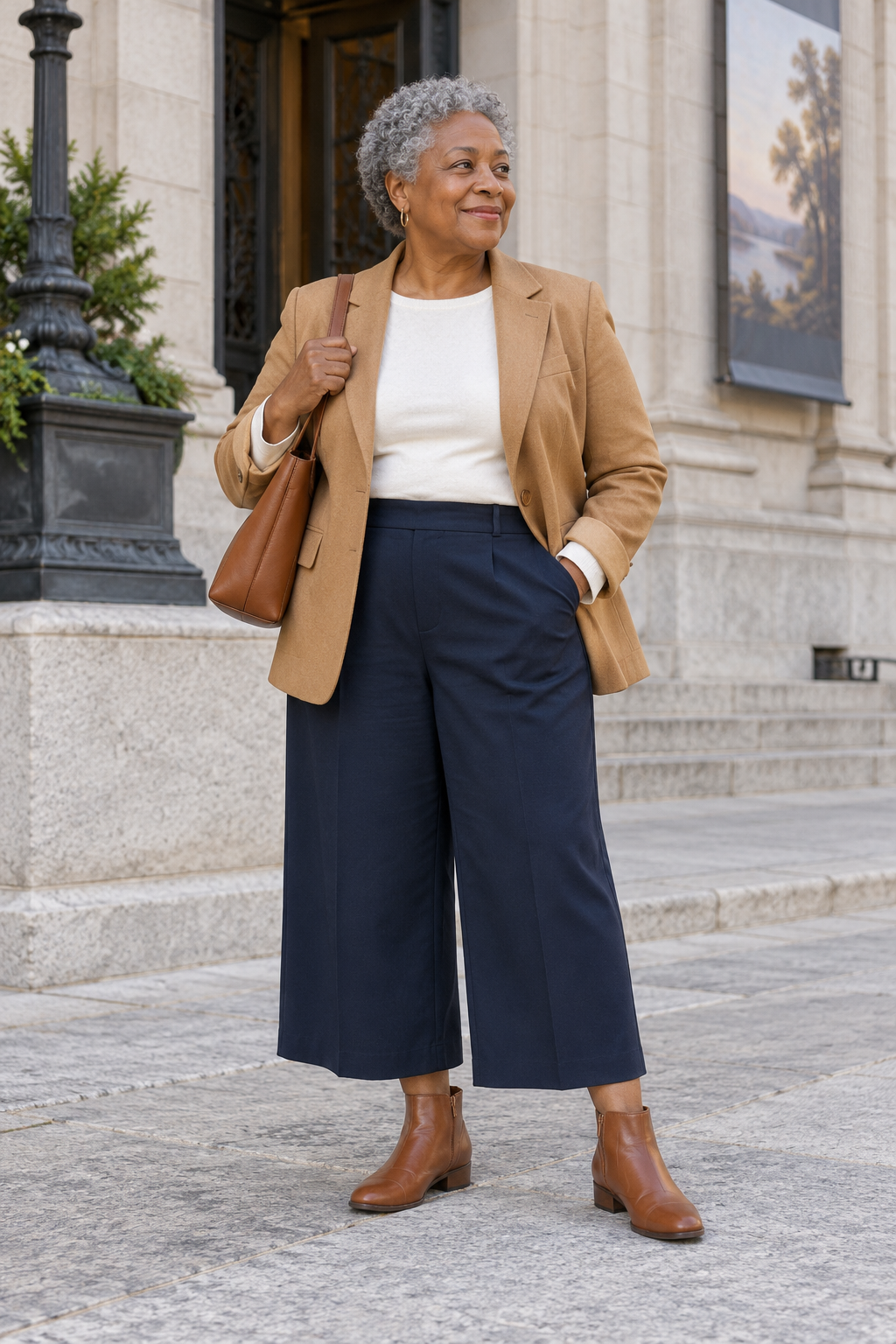
The navy culottes end above cognac ankle boots, leaving the top of each boot visible. That separation makes this a useful example of an exposed opening. The broad pant leg also shows why shaft height isn’t the only consideration: leg width and the location of the hem help determine how much of the boot remains in view.
For your own cropped pair, stand normally and notice the gap without lifting the waistband. Then take several ordinary steps and sit once. See whether the pant edge moves onto the boot, stays clear or catches as you stand again. A gap you enjoy at rest may look different in motion, and that difference may be perfectly acceptable to you.
If the hem catches, compare another boot opening before concluding the pants need an alteration. A narrower upper may behave differently under the same leg width. Equally, another pant cut may work with boots you already like. Identify the interaction first so you aren’t replacing an otherwise useful garment based on a single mirror view.
Don’t pull the pants higher merely to reproduce the illustrated gap. That can change how the rise and seat fit. If the upper part of the pants works, keep its natural position and assess length separately. Our guide to comparing a jeans inseam explains a related length decision without relying on a model’s height.
A skirt gives the opening a different role

The brown-check midi hangs above black ankle boots, with the lower leg and the boot’s top edge visible. Unlike a pant leg, the skirt doesn’t need to slide separately over each shaft. Its movement creates a different comparison, so a boot you dislike under narrow jeans may still be one you enjoy with a skirt.
Look at the skirt while standing and during a normal stride. You may prefer more separation, a closer meeting or added coverage with tights. None requires a rule about the exact amount of visible ankle a shorter woman must show. Decide whether you like the outline and whether the real garments let you move comfortably.
Keep skirt length fixed while trying another boot if possible. That shows what changing the opening actually does. If you also switch from a straight skirt to an A-line, the change in fullness can be large enough to confuse the comparison. You can explore both shapes later, after identifying which boot detail you wanted to change.
The photo doesn’t establish the boot’s measured height, the wearer’s measurements or how the edge feels on her leg. Use it to see an arrangement, then judge your actual pair. Treat a recommendation to match the picture exactly with caution when it ignores your own garment construction and coverage preferences.
Test a covered shaft with the complete pant leg
When full-length pants cover the upper, pay attention to the fabric’s path over the boot. Walk, turn and look from the side. The hem should fall in the way you want without repeatedly lodging on the shaft or disappearing beneath a shoe. A broad leg can still catch, so width alone isn’t proof of a successful pairing.
If you want a closer boot opening under pants, compare the upper’s shape as well as its height. A taller, relatively close upper and a shorter, wider one create different surfaces for the fabric to pass over. The label “ankle boot” doesn’t settle that distinction. Product side and front views can help you shortlist, but a try-on supplies the practical answer.
Heel and sole height enter the pant-length decision too. A hem chosen for one shoe may fall closer to the ground in another. That doesn’t make either shoe wrong; it means this particular pair of pants may be most useful with a particular height. Check before buying an additional boot on the assumption that every pair will be interchangeable.
Keep opening preference separate from discomfort
You might dislike how a boot’s top edge looks while finding the pair comfortable, or enjoy its shape while finding the opening unpleasant against your ankle. Those are different observations. Styling can address the first; adding an accessory doesn’t resolve the second. Don’t label a boot a success merely because its photograph looks the way you wanted.
Use the socks or tights you expect to wear, close the boot normally and take a few steps on a suitable indoor surface. Notice pressure at the opening, crowding inside and any slipping that makes you adjust the boot repeatedly. These observations can guide a different style or size comparison, without making a promise that one change will fix every problem.
Don’t force a zipper or choose an uncomfortable foot size solely to obtain a closer shaft. The foot and upper need to work together. If you have persistent pain or a specific foot-care need, seek appropriate individual advice instead of treating an outfit guide as a fit diagnosis. The goal here is a practical clothing comparison, not a medical assessment.
Ask better questions when shopping online
Read the product details before relying on the model image. Look for the reference shoe size, measurement method, opening information and closure. If the listing omits a detail central to your decision, ask the seller. A short, specific question about the style is more likely to help than guessing a dimension from a photographed ankle.
- Which shoe size was used for the listed shaft measurement?
- Where does the measurement start, and is the heel listed separately?
- Is the opening measurement a circumference, and where is it taken?
- Does the style have a zipper, elastic panel, laces or a pull-on opening?
Save the answers with the product link and your familiar-pair note. This makes two options easier to compare without repeatedly rereading similar descriptions. It also helps reveal a missing answer: two boots may sound nearly identical in promotional copy while providing quite different detail about the opening you are trying to assess.
Check the return conditions before ordering for a home comparison. Keep the boots and packaging in the condition the seller requires while deciding, and avoid making alterations or applying treatments during the try-on. A useful shortlist includes the ability to assess fit under those terms, not simply a color that matches your coat.
Pick one next comparison. If your current boot feels fine but catches under pants, compare opening shapes. If it feels unpleasant at the edge, investigate fit first. If you simply want another visual effect, keep the hem fixed and compare heights.
Questions worth settling before you buy
These final questions help separate a personal preference from a supposedly compulsory styling rule. Use the answers alongside your own try-on notes. They can narrow the next comparison, but they cannot establish the dimensions or fit of a product that has not been checked.
Do shorter women need a low shaft?
Height alone doesn’t identify where an opening will land or which look you will prefer. Your leg proportions, garment hems and the boot’s shape all contribute. Start with the real combination rather than rejecting a style because it exceeds an arbitrary number in an outfit rule.
Should the boot and hem always meet?
No single meeting point is required. A visible gap, a close meeting and a covered shaft each create a different effect. Choose deliberately and test movement. If two edges catch, consider their widths and shapes as well as their distance apart before assuming either garment needs to be shorter.
Can tights change the comparison?
They can change the visible relationship between skirt, leg and boot, and they are also part of the layers inside the shoe. Try the tights you intend to use instead of evaluating only bare legs in a mirror. You can prefer the added coverage without needing a different skirt or a higher heel.
Does a petite clothing label determine boot fit?
A clothing proportion range doesn’t establish a footwear size or shaft measurement. Our explanation of petite and short clothing labels addresses that garment distinction. Assess footwear from its own size information and your try-on, rather than transferring a clothing label into a boot specification.
Finish with the combination you will use most. Put on that hem, the intended socks and a familiar pair, then write one detail you want to keep and one you want to compare. That gives the next shopping decision a clear purpose without buying several almost-right pairs.
Images are original AI-generated editorial illustrations, including selected images reused from our editorial library. They are not measured products, personal wear tests or fit guarantees.

Alia Hashim
I'm Alia Hashim — a passionate blogger and founder of Modern Lady Magazine. I started this platform to create a space where women could find inspiration, empowerment, and real-life solutions for style, beauty, wellness, and beyond. Through Modern Lady Magazine, I aim to celebrate the modern woman — confident, creative, and full of dreams — while sharing ideas that help nurture both inner strength and outer beauty. Every story, every tip, every idea here is crafted to inspire you to embrace your journey and live life beautifully, one step at a time.
View author profile →