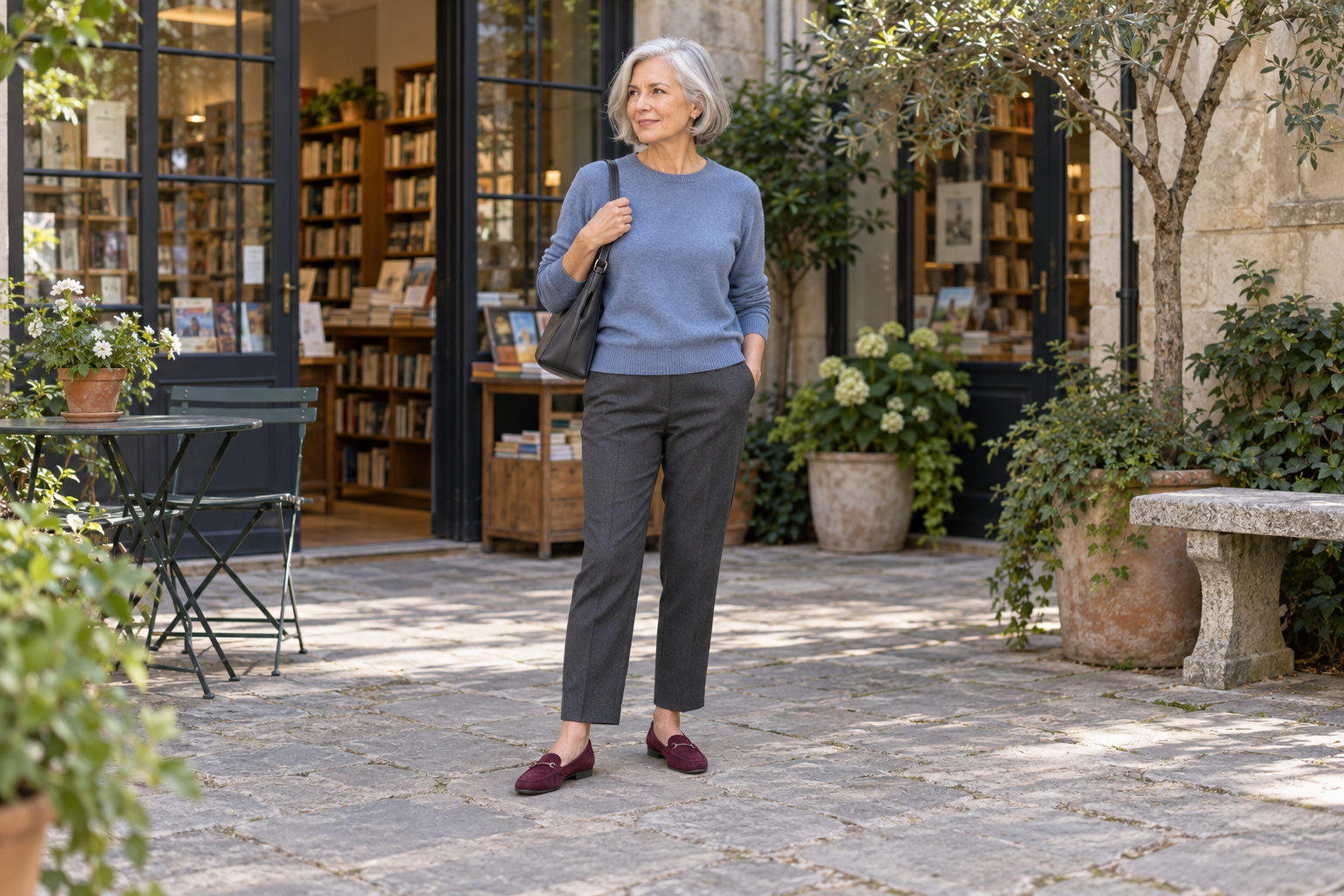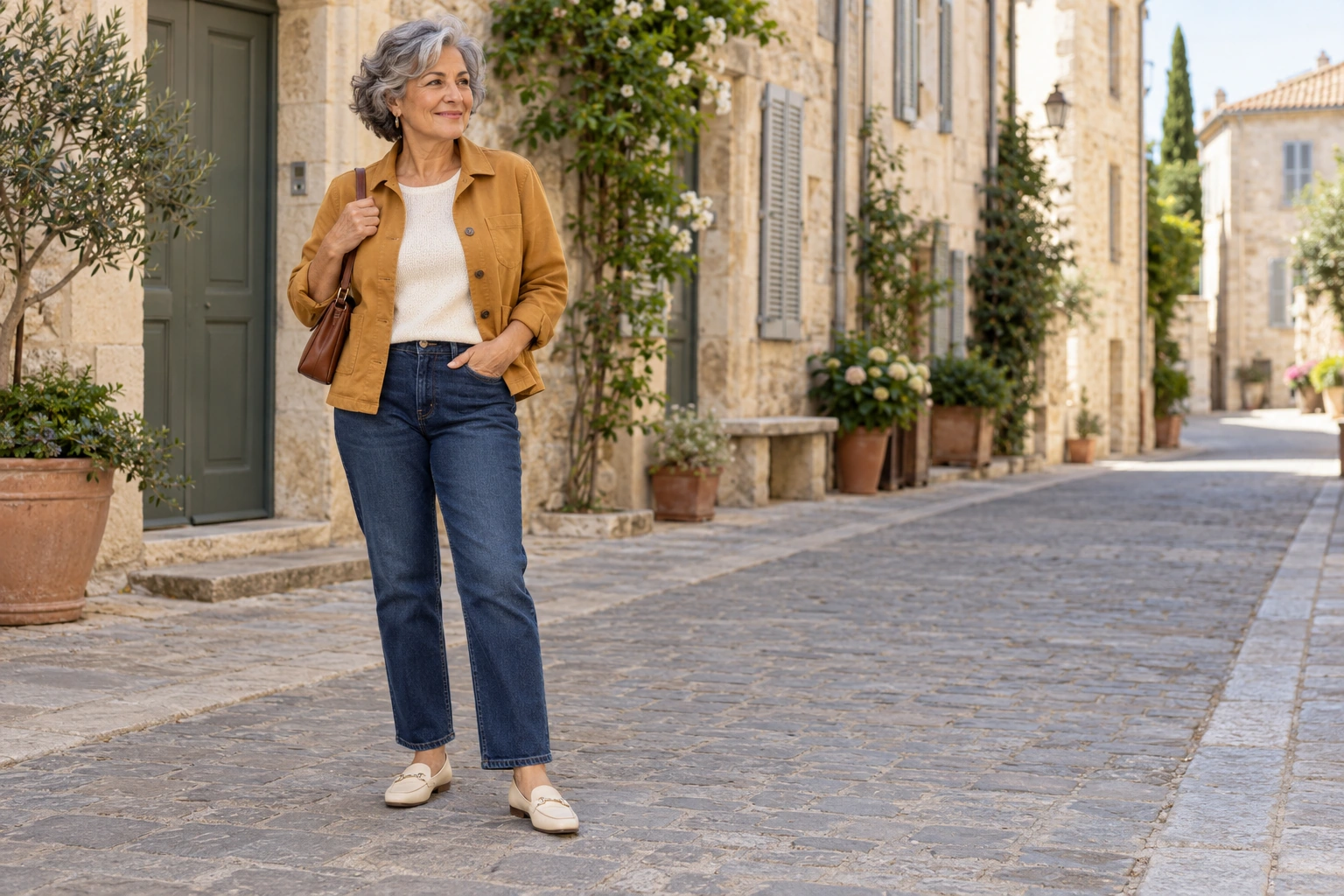
To layer a sweater vest comfortably, start with the shirt or tee underneath and check the collar, armholes and hem together. A fine base can work under a close knit; a roomier shirt may need a more open vest shape. These 14 outfits compare those choices with jeans, pants, skirts and dresses.
The examples focus on shorter frames and wardrobes after 50 without treating age or height as a dress code. Use the photos to compare shapes, then choose the neckline, coverage and movement you prefer in your own clothes.
Choose the underlayer before the vest
Put on the base layer you intend to wear, then try the vest over it. Check the shoulders with your arms down and while reaching forward. Look at where the shirt or tee ends below the knit, too. A layer that works on its own can bunch at the armhole or collar once another garment sits over it.
Start at the point that bothers you: If the neckline feels crowded, compare collar shapes. If fabric gathers under the arm, compare sleeve width and vest openings. If the waist feels packed, try a different tuck or hem length. You can change one contact point without replacing the whole outfit.
Oatmeal V-Neck Over a White Shirt

A white shirt and dark jeans give an oatmeal vest a familiar starting point for a bookshop visit. The V-neck leaves the collar visible, and cognac loafers repeat the small shoulder bag. In the image, a narrow edge of shirt extends below the knit rather than disappearing into a perfect tuck.
Use that as a length comparison, not a rule about tucking. Try the shirt both ways and look at the side view. The short vest should not pull the shirt upward at the back when you reach for a book.
Check where the collar points sit inside the V. A collar that keeps catching under the knit may need a softer shirt or a different neckline opening.
Navy Vest With a Striped Long-Sleeve Tee

The navy crewneck vest turns striped sleeves into the main pattern in this coffee outfit. Cream straight pants lighten the bottom half, navy loafers connect to the vest, and a red crossbody supplies one clear accent. The base layer looks like an easy long-sleeve tee rather than a stiff shirt.
That difference matters at the armhole. Smooth jersey can sit differently from a folded shirt cuff or a wide sleeve. Put the vest on with your arms relaxed and check whether the fabric underneath stays where you want it.
If the neckline feels crowded, try a lower crewneck tee before sizing the whole vest up. Change the contact point that bothers you instead of making every part of the outfit looser.
Camel Vest and a Denim Shirt

A pale denim shirt makes this camel vest useful for a market outing. Olive pants and brown boots keep the lower half casual, while the tan tote provides room for the day’s essentials. The finished image includes turned-up pant cuffs and small patch pockets, adding casual detail to the shirt-and-knit combination.
The vest is short enough to leave the top of the pants visible. Before copying the cuff, check the hem with your own boots. The rolled fabric should be a choice you like, not a way to hide a fit problem above it.
For the shirt, compare the sleeve and vest shoulder together. You need room to lift the tote without the underlayer pulling across the upper back.
Charcoal Vest Above a Black Shirt Dress
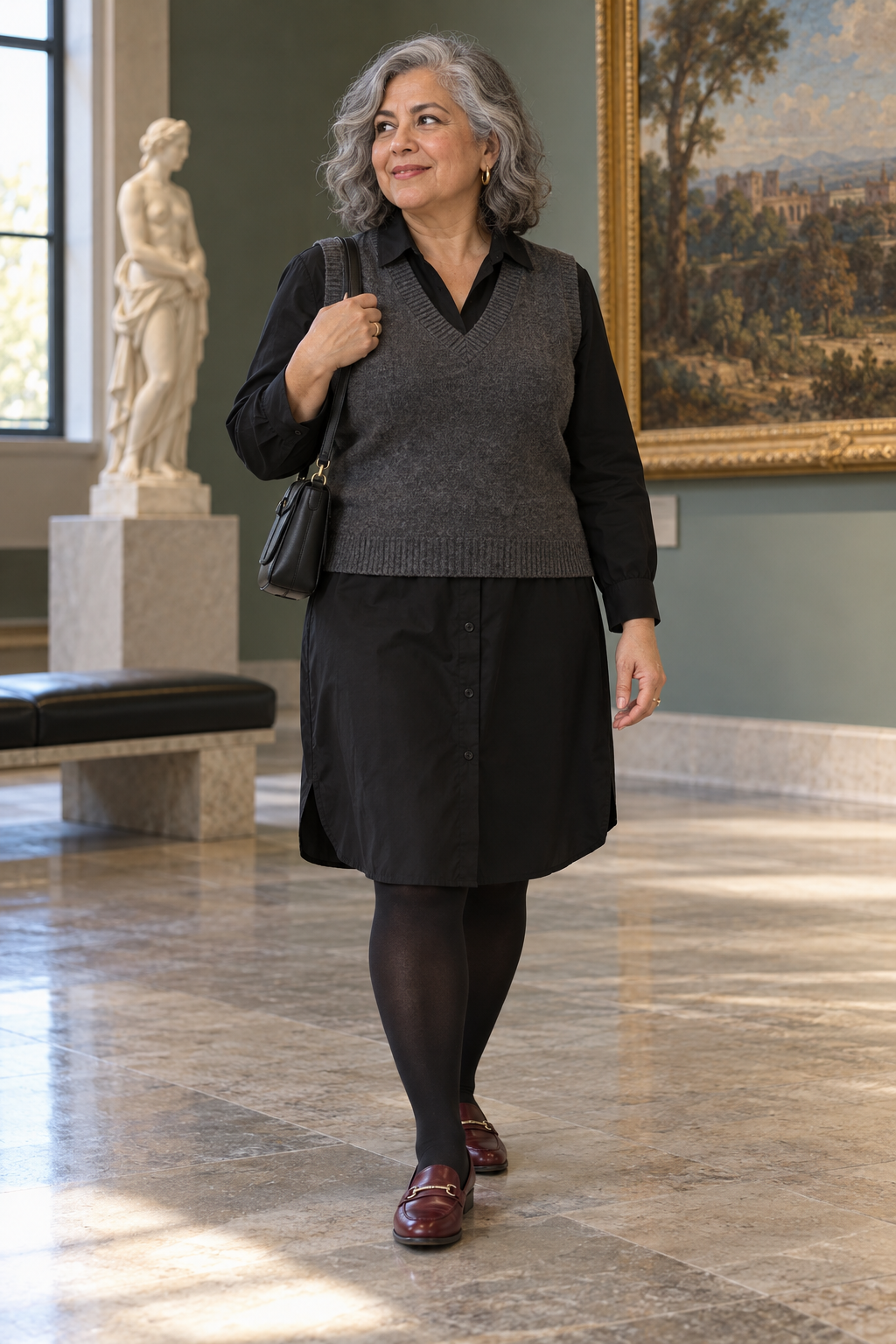
A charcoal vest can change a black shirt dress without covering its sleeves or lower shape. Burgundy loafers give this museum outfit a quiet color difference, and black tights keep the dress-and-shoe transition simple. The knee-length hem remains clearly visible below the knit.
Watch the point where the vest ends. If its ribbing grips the dress too tightly, the fabric below may catch instead of falling freely. A slightly roomier vest or a different hem position can be more useful than choosing a larger dress.
Sit and stand once before deciding. A neat standing photograph won’t tell you whether the knit drags the dress upward when you move or makes the waist feel crowded.
Burgundy Vest With a Cream Turtleneck
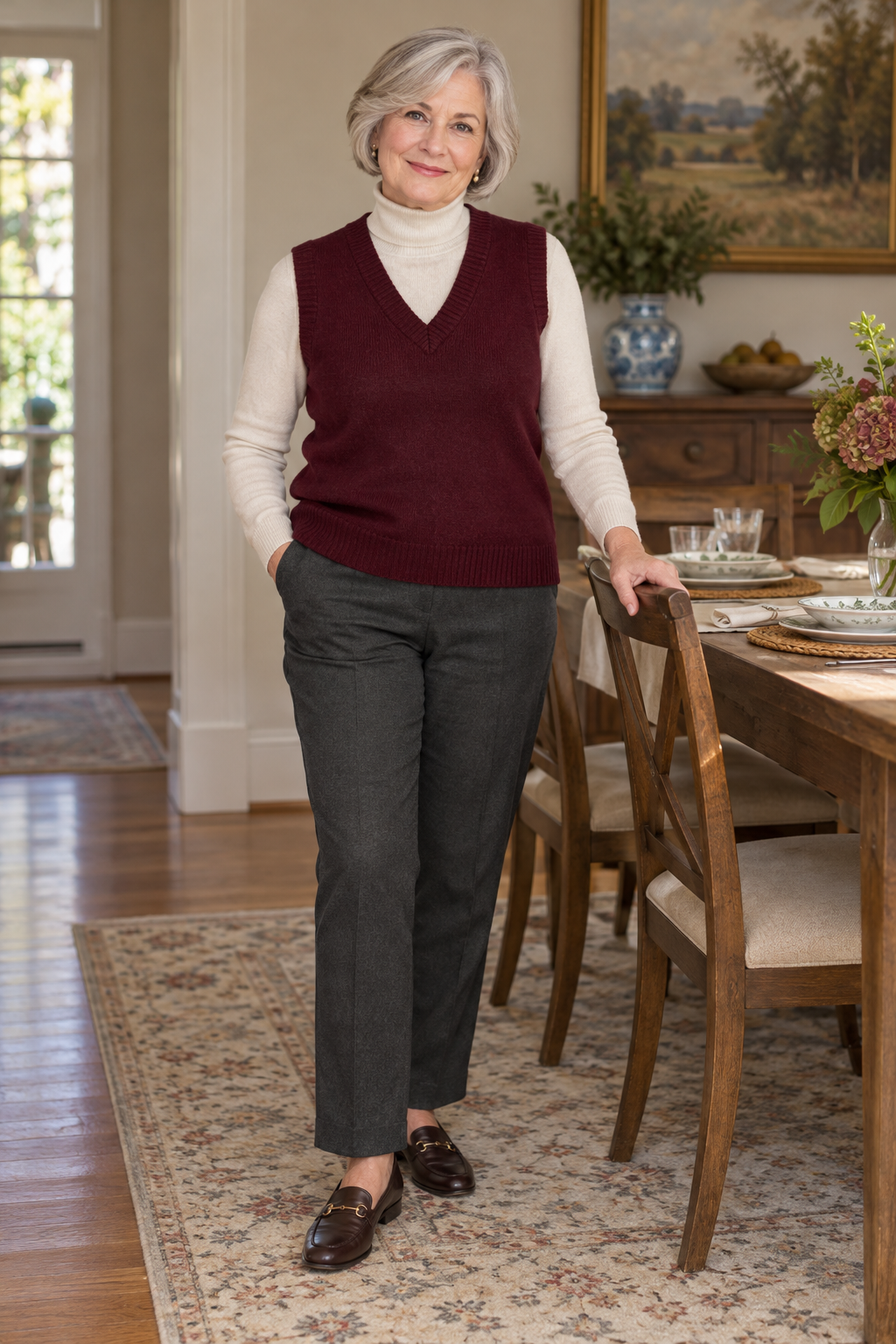
For an indoor family lunch, burgundy and cream give two knit layers a clear contrast. The vest has a V-neck, while the fine turtleneck underneath covers the neck and arms. Charcoal pants and brown loafers leave the upper half as the main point of interest.
Start with a thin base layer if you want to try this combination. Two heavy knits can feel very different under the arm than the fine layers illustrated here. Judge the actual fabric thickness rather than assuming all sleeveless sweaters have the same room.
Turn your head and bring your arms forward. The turtleneck should remain comfortable without the vest shoulder pushing it against your neck, especially when you settle into a dining chair.
Cream Cable Vest and Blue Jeans
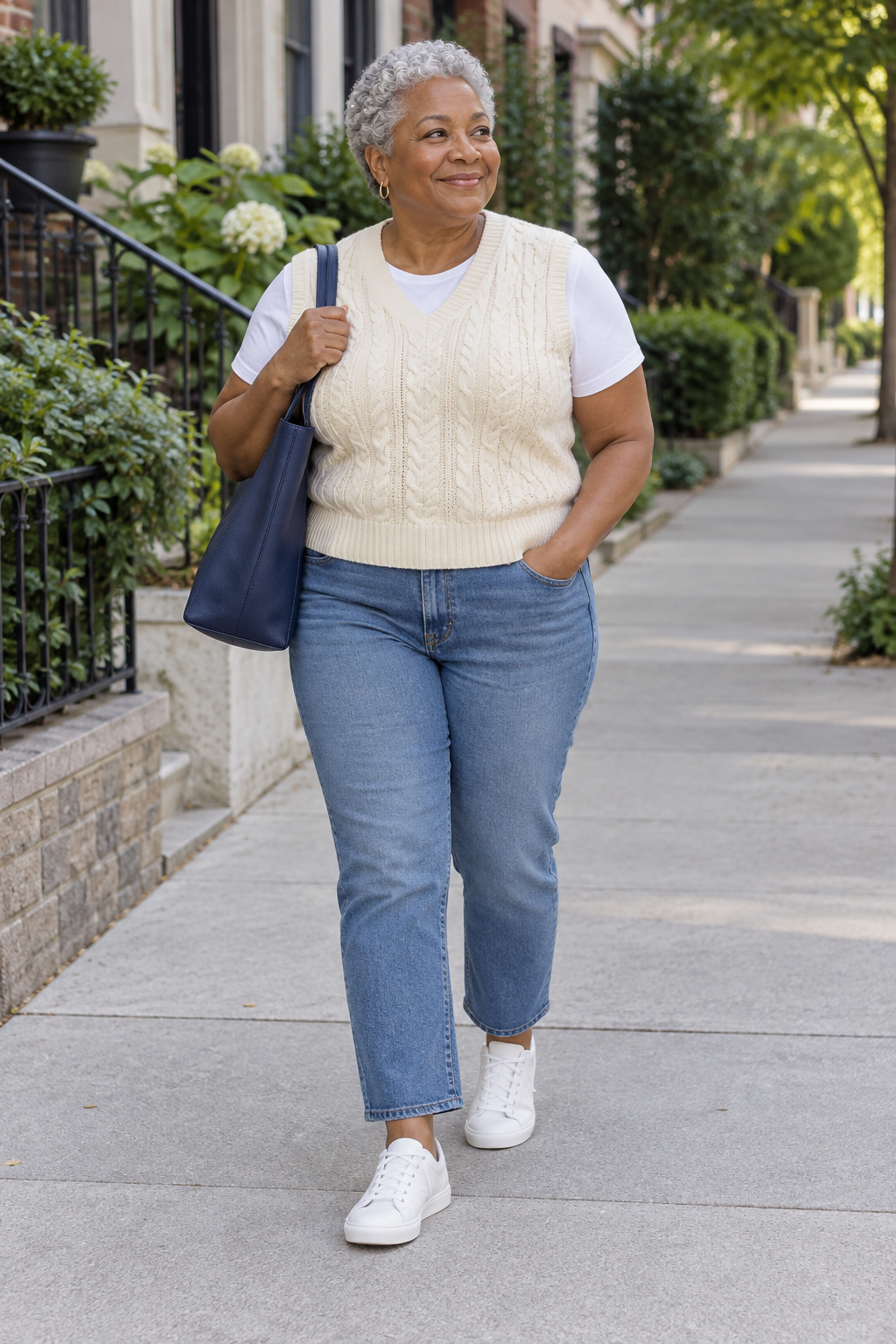
A cable-knit vest offers texture even when the outfit underneath is a plain tee and jeans. Here, cream knit sits over a white short-sleeve tee, with straight ankle jeans, white sneakers and a navy tote. It is an easy combination to compare with your usual errand clothes.
Notice how much of the tee sleeve shows outside the vest. The two edges should look intentional to you and allow your arm to move freely. If the vest shoulder lands directly on a bulky sleeve seam, another tee shape may sit more comfortably.
Keep the jeans-and-sneaker length you already enjoy. Adding a vest does not mean you need to change every proportion or buy a new pair of pants to complete the outfit.
Forest Vest With a Small-Print Blouse

Small-print blouse sleeves give this forest vest a different finish from the striped tee earlier in the guide. The plain green front keeps the pattern concentrated around the collar and arms, with navy pants and tan loafers below. The result suits an informal office without requiring a full jacket.
In the image, the blouse sleeves are turned back below the elbow. You could leave a longer sleeve down, provided its cuff clears your hands and the fabric doesn’t gather at the vest opening. Compare the versions while doing the work you expect to do.
If you add jewelry, check it beside the printed collar first. You may prefer the blouse pattern to supply the detail rather than filling the neckline with another competing element.
Open Gray Vest Over a White Tee
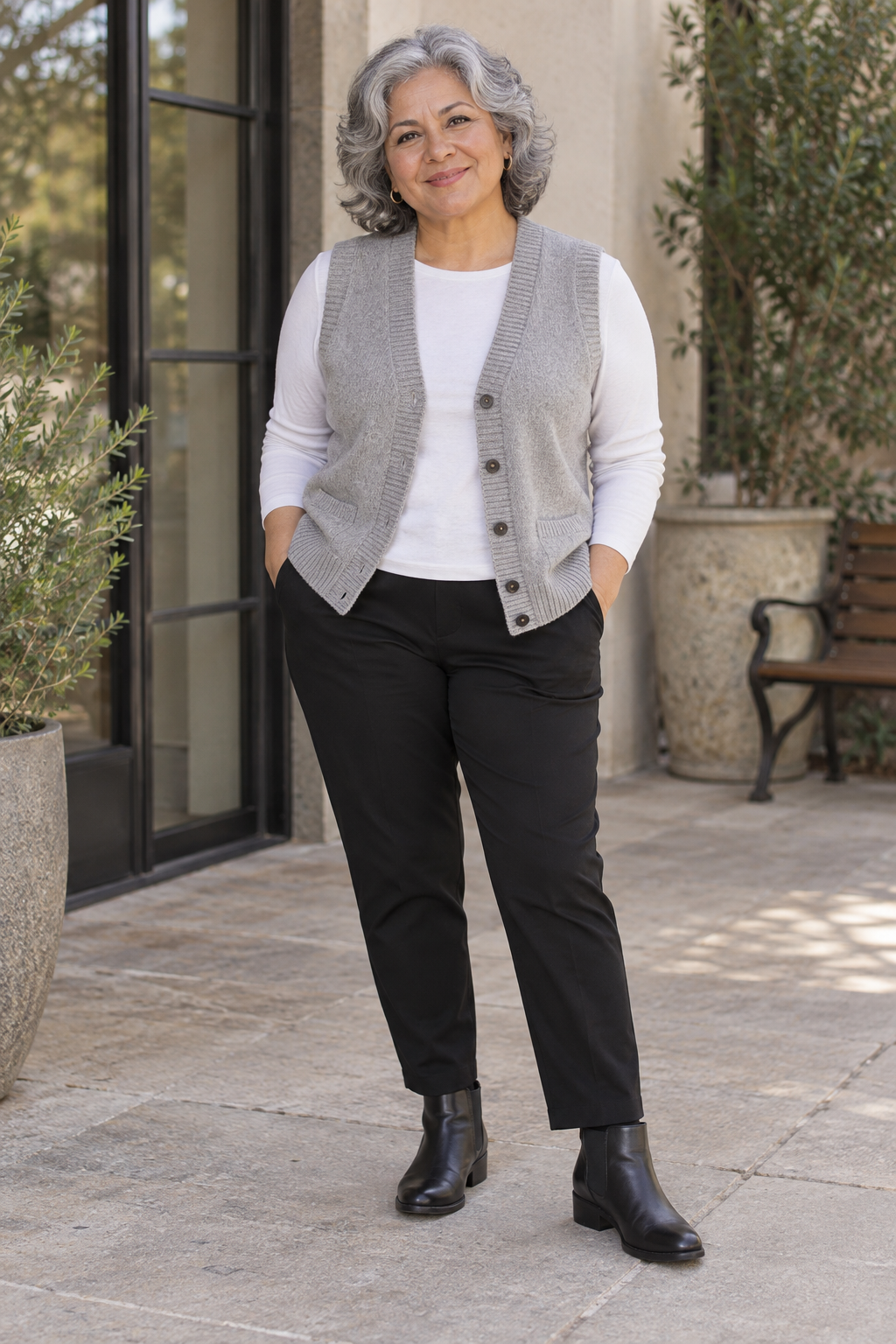
An open gray knit vest gives a plain tee another shape without adding a full cardigan sleeve. The white long-sleeve base stays visible between the two front edges, with black tapered pants and ankle boots below. This is a useful comparison when a buttoned vest feels crowded at the waist.
Leave the closure as a choice rather than a requirement. Check that the front edges hang where you want them with your hands out of your pockets, too. A pose can make an open vest appear more settled than it feels in ordinary movement.
If the tee catches at the lower buttons or pocket edges, try a smoother base layer or another hem length before pulling the knit tighter across the front.
Rust Vest With a Pleated Midi Skirt

A rust vest and navy pleated skirt make the lower half move differently from the pants outfits. The cream blouse supplies a collar and soft sleeves, and burgundy loafers leave the ankle area open. A small navy shoulder bag repeats the skirt without adding another strong color.
The vest ends close to the skirt waistband in the image. That lets the pleats fall below it instead of being trapped under a long ribbed band. Compare that contact point on your own skirt while standing and after sitting.
You can keep the same colors with a different skirt length. Check the hem with your chosen shoes rather than assuming the photographed mid-calf finish will land at the same place on every frame.
Black Vest and a Pale Blue Shirt

The black vest and pale blue shirt create a lightly tailored outfit without a blazer. Charcoal wide-leg pants and low-heeled ankle boots suit an office meeting, while the plain crewneck leaves the shirt collar as the lighter detail near the face. The cuffs are narrow and unobtrusive.
Wide pants don’t require a tight vest. Try a knit that sits comfortably over the shirt, then judge where its hem meets the waistband. If the shirt gathers heavily underneath, adjust that layer instead of assuming the whole outfit needs to be smaller.
Reach forward as if taking a notebook from a table. That movement checks whether the shirt sleeves stay smooth under the vest, particularly through the back and upper armholes.
Soft Blue Vest Over a White Turtleneck

Soft blue brings a light color to a white turtleneck and dark jeans for a library afternoon. The gray crossbody and flat loafers remain quiet, so the V-neck and inner collar are easy to see. This gives you a second fine-knit layering option without repeating the burgundy palette.
The two necklines should work together when you sit, not only in a standing mirror view. If the white collar bunches or folds awkwardly under the V, try a thinner base or compare the vest opening before changing the jeans.
Watch the bag strap across the knit as well. Its resting position can change how the front hangs, and a small strap adjustment may be more useful than repeatedly smoothing the vest down.
Navy Longline Vest With a Plain Shirt

A longline navy vest makes a different proportion choice from the compact knits earlier in the guide. It is open over a white shirt and dark slim-straight jeans, with tan loafers below. The plain shirt front stays visible between the knit edges rather than being covered by a closed panel.
Look at the back and side before deciding whether the longer shape works for you. The knit should hang as you like over the seat; pockets and a ribbed hem can affect that even when the front looks simple.
This is a useful option if you prefer more coverage. You don’t need to shorten every outer layer on a small frame, but you should be able to move without the knit catching behind you.
Cream Vest With an Olive Shirt Dress
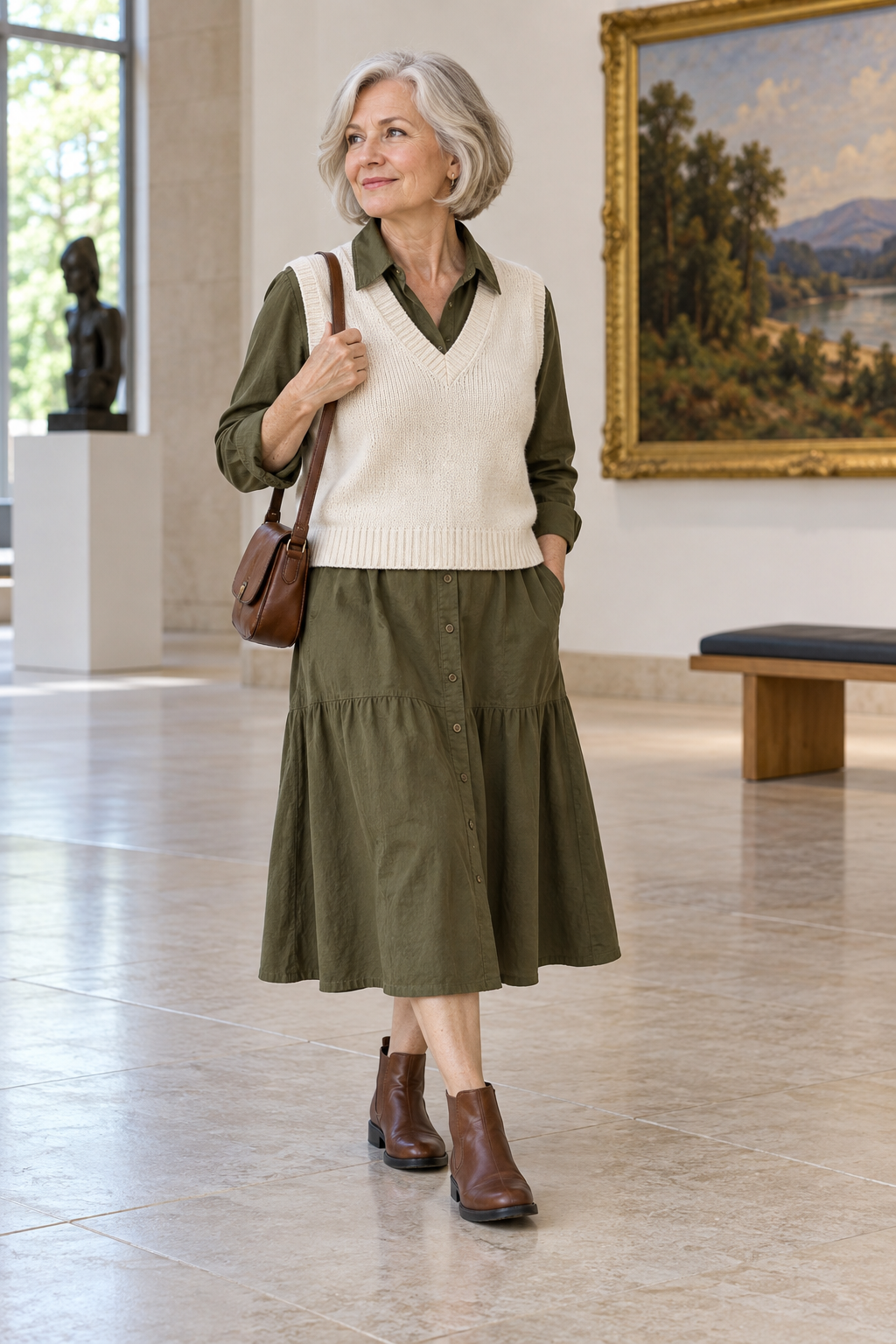
A cream vest lifts the top of an olive shirt dress without covering its sleeves. The finished dress has a gently flared, tiered lower section, with brown boots and a small brown shoulder bag. The vest gives the upper half a light contrast while leaving the dress shape visible.
Check where the vest ends relative to any dress seam or gathered section. If both meet awkwardly at the same point, compare a slightly different vest length before deciding the dress itself is wrong. The knit doesn’t need to grip the dress tightly to stay useful.
Walk and turn with your actual boots. The skirt should move as you intend around the shafts, and the vest should remain comfortable when your arms move independently.
Plum Vest With a White Blouse and Dark Jeans

A button-front plum vest gives dark jeans an early-dinner finish with a white blouse underneath. Burgundy loafers and a matching small bag keep the accessories close in color. The knit is buttoned through most of the front, leaving the blouse collar visible inside its V.
Look at the button band at both the bust and waist. If it pulls or twists, compare the vest fit over the blouse rather than treating the closure as something you must force into place. You may prefer to leave a button open or try a different shape.
Check the blouse cuffs as you settle at a table. They should clear your hands comfortably without making you roll more sleeve fabric into the armhole under the knit.
Compare the layers in ordinary movement
Try the outfit sitting, reaching and carrying your usual bag. Watch what needs readjusting: a collar, cuff, shirt tail or vest front. That tells you more than a still pose about the part you might change. You can find other simple combinations in our everyday outfit guide without treating every new layer as a shopping requirement.
A useful try-on note: Record the base layer, vest neckline and hem position, then the one change you would make. For example, “softer collar under the V” or “less fabric at the waist.” That gives you a practical comparison when trying another piece instead of relying on a size label alone.
Brands can change garment proportions in different ways. Lands’ End’s petite buying guide gives one brand-specific example of shorter sleeves and body lengths. When choosing an underlayer, check its actual fit rather than assuming a short sleeve or body measurement will be identical across brands.
Keep fit and care separate from the illustration
The generated images show visible outfit combinations, not measured knit thickness, fiber content or tested comfort. Follow each item’s care label, especially when pairing two different fabrics. The FTC explains the purpose of garment care instructions; a photograph cannot tell you whether a vest and blouse can safely be washed together.
For pants-based outfits, settle the upper layers first and then check your hem with the shoes you’ll wear. Our jeans inseam guide explains that final comparison. Keep the combination that suits your day rather than forcing a photographed tuck or cuff that feels uncomfortable.
All images are original AI-generated editorial illustrations. No personal wear test, product endorsement or human review is claimed.

Alia Hashim
I'm Alia Hashim — a passionate blogger and founder of Modern Lady Magazine. I started this platform to create a space where women could find inspiration, empowerment, and real-life solutions for style, beauty, wellness, and beyond. Through Modern Lady Magazine, I aim to celebrate the modern woman — confident, creative, and full of dreams — while sharing ideas that help nurture both inner strength and outer beauty. Every story, every tip, every idea here is crafted to inspire you to embrace your journey and live life beautifully, one step at a time.
View author profile →