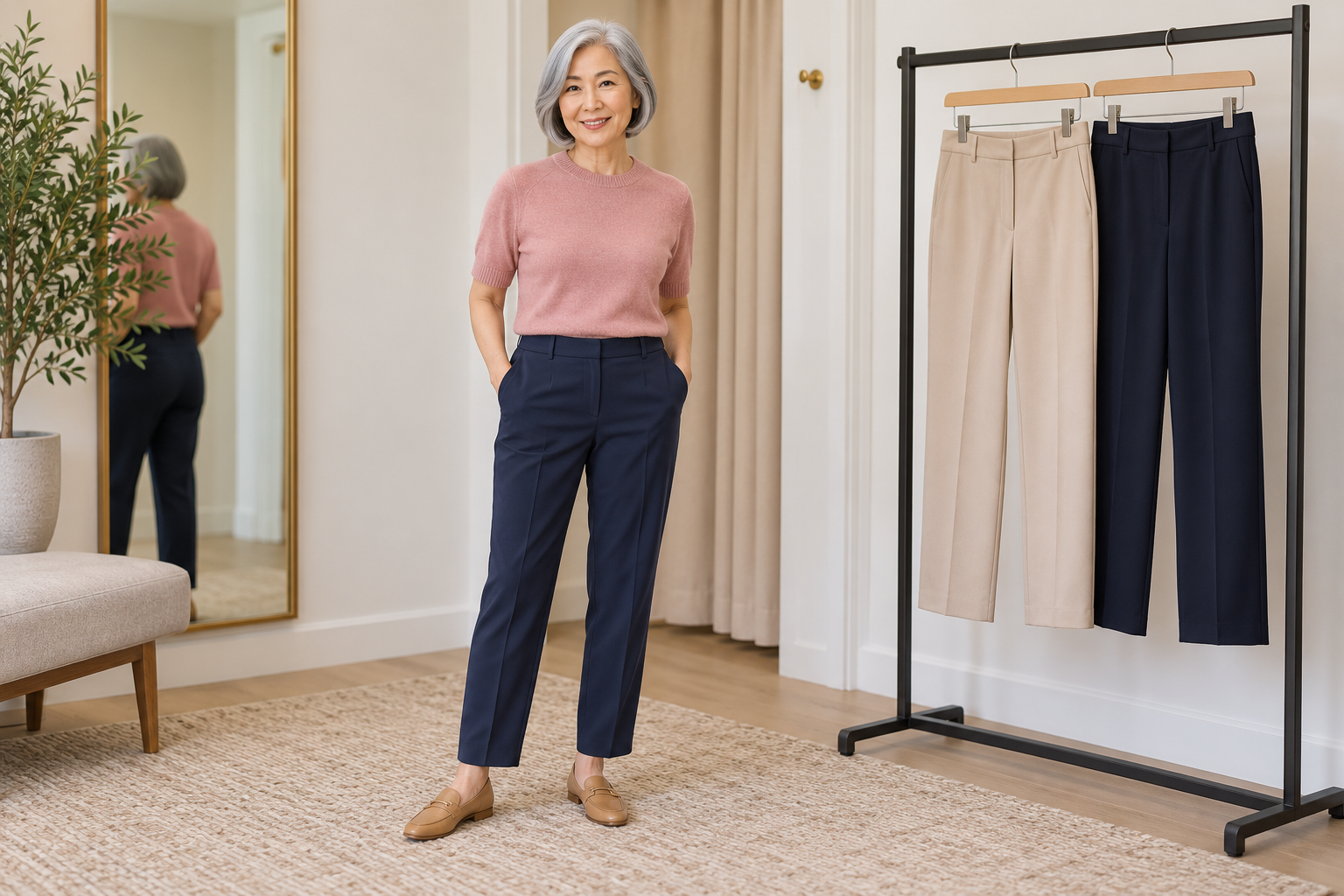
Clothing alterations are worth considering when a specific change would make a garment useful to you, the work is feasible on that garment, and the quoted result matters enough to justify the cost and time. Start with the wearing problem and an assessment, rather than assuming every nearly-right piece should be altered.
The useful comparison includes exchanging the item, wearing it differently, requesting a repair or leaving it alone. A low purchase price does not automatically rule out attention, and a high original price does not automatically justify more spending. This guide helps you prepare a clear decision before authorizing work.
Describe what happens when you wear it
Write one observable problem before naming a technical solution. “The pants catch under my shoe when I turn” is more useful than “make these petite.” “I keep pushing the sleeves away from my hands” identifies an action you want to reduce. The professional can then assess the possible methods.
Separate a functional problem from a style preference. You may want an easier fastening, a different hem position or simply a silhouette you enjoy more. Each can be a legitimate reason to ask about work, but they are different goals. Saying which one matters keeps the conversation focused.
Try the garment in the setting you expect to use it: seated at a desk, walking in your intended shoes or reaching forward over a light underlayer. Note what you repeatedly adjust. A photograph or mirror pose may help describe appearance, but it cannot replace those observations about your own clothes.
A one-change brief: “I want to keep this garment because ____. The problem I notice is ____. I will wear it with ____. The result I want is ____.” Fill those gaps before asking for a quote. You can describe the outcome without deciding which seam should be changed.
Compare the available routes before committing
If the item is a recent purchase, read its actual return or exchange terms while those options are still open. Ask the seller about any uncertainty before authorizing alteration. Do not assume work can be undone or that an altered item will still meet the retailer’s conditions.
For something you already own, compare the alteration with one realistic alternative. That could be a different underlayer, a different shoe pairing, a repair to a fastening or another garment already in your closet. The comparison should address the same problem rather than create a completely different outfit you do not need.
| Situation | Useful next step | Question to resolve |
|---|---|---|
| A new item is wrong in several places | Compare another size or cut while exchange is available | Would another version remove several problems at once? |
| A liked garment has one unwanted length | Request an assessment with the intended shoes or layers | What finish and placement are feasible? |
| The fit works but a fastening is damaged | Ask about repair as a separate job | Would repair restore the garment you already like? |
| The style no longer suits your life | Clarify whether you want the garment at all | Would a successful change actually lead you to wear it? |
A route is useful only if it solves the problem you named. Changing the shoe solely to rescue a pant length is not a good solution if you do not want to wear that shoe. Equally, permanent work may be unnecessary if a familiar alternative already gives the result you prefer.
Decide what you want to preserve
List the features you like before the fitting: a pocket, a printed border, the shape of a cuff, a particular hem finish or the room through the seat. Tell the person assessing the garment which details matter. Otherwise, you and the professional may be imagining different versions of a successful result.
Look at the garment as something you expect to keep using, not merely an unfinished project. If it is already waiting for a special occasion that never happens, ask whether a better fit would change that. Give a concrete example of when you would reach for it after the proposed work.
Condition belongs in the assessment too. Point out wear, damage or earlier changes you know about rather than asking the professional to solve a length question in isolation. You do not have to diagnose the fabric yourself; the aim is to make the whole item available for an informed discussion.
For a sentimental piece, say whether preserving the original appearance matters more than making it an everyday garment. Those priorities may lead to different choices. There is room to value a piece for its history while deciding that an irreversible redesign is not the result you want.
Bring the intended shoes to a hem discussion
A pants hem decision needs a clear wearing context. Choose the shoes you most expect to use, put them on with the pants and show what happens while walking. If you regularly switch between very different sole or heel heights, explain that before agreeing on one permanent length.

The full-length denim in this image falls over part of the white sneakers. It illustrates why a shoe belongs in the conversation; it does not prove the jeans need shortening or establish a measurement to copy. Your preferred coverage and the behavior of your actual hem are the relevant questions.
Our jeans inseam guide can help separate ankle-length and full-length preferences before a fitting. Use it to describe your goal, then let the professional assess the garment. A liked length in one jean shape is not automatically the right instruction for another.
Discuss the finish as well as the placement. Nordstrom’s denim service page, for example, distinguishes several hem finishes. Ask which finish is included in your own quote and what will remain visible; do not assume a request to shorten jeans specifies every detail.
Let construction questions remain construction questions
Some decisions cannot be settled from the outside. A photograph may show a seam, fastening or lining without showing what is available behind it. Ask the professional what can be assessed at the fitting, whether further inspection is needed and what uncertainty would remain before work starts.
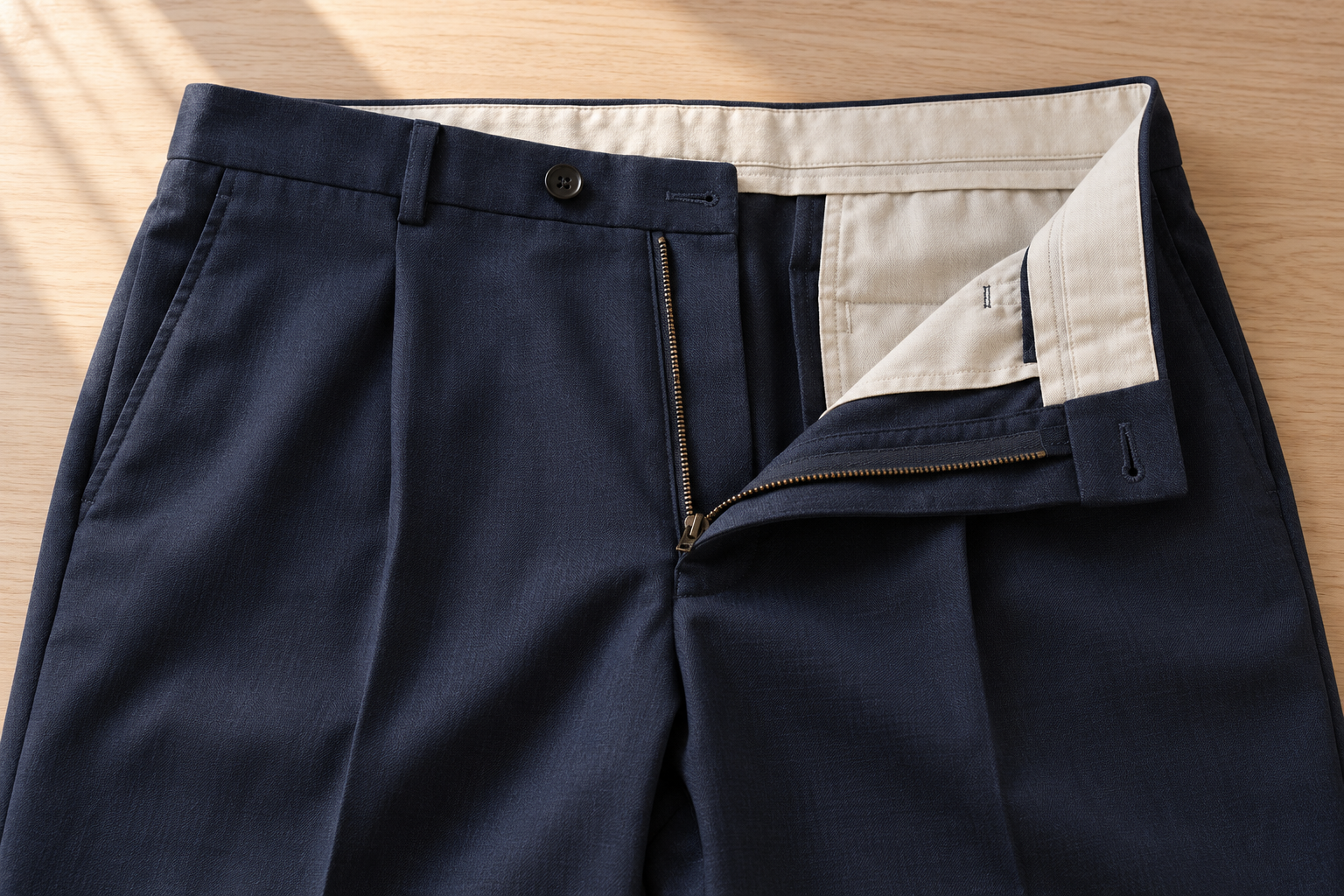
The navy pants show a waistband facing and inside finishing. Those visible layers make a useful consultation topic, but the image is not proof of spare fabric or a particular enlargement method. The same restraint applies to your own garment until its construction has been properly assessed.
AD Stitch’s professional guidance explains that seam allowance and construction constrain changes, and recommends the intended footwear and undergarments at fittings. Use that as a reason to bring the actual item and wearing context, rather than as a promise that a named change is possible.
If the proposed work changes several areas, ask how they relate. A request that sounds like one adjustment to you may involve more than one part of the garment. Let the professional explain the scope in ordinary language, then decide whether that scope still matches the outcome you wanted.
Ask what the visible details will look like afterward
A cuff, pocket or decorative edge can be part of why you like the piece. Ask whether it will move, be rebuilt, remain as it is or change appearance. If preserving it is essential, say so before agreeing to a method that assumes it can be simplified.
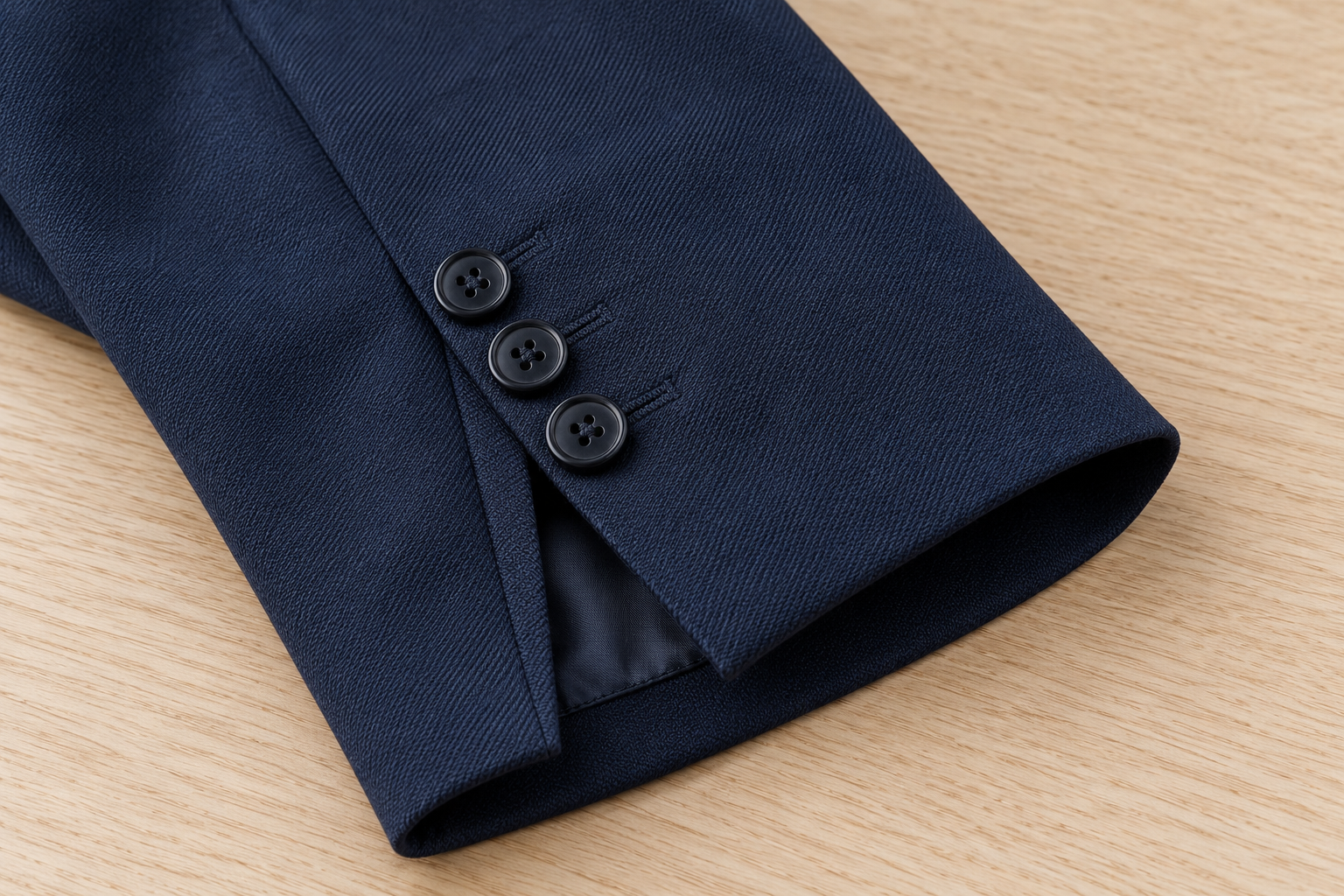
The navy cuff has buttons, stitched details and a visible lining edge. It does not establish whether the buttonholes function or how that particular sleeve could be shortened. Use the image to frame a question about the finished appearance, not to diagnose the method or predict the bill.
For your own garment, ask to see the proposed placement during the fitting and discuss the details you want kept. A verbal description such as “shorter but otherwise identical” may hide assumptions. Make the important points explicit, including any visible change you would prefer to avoid.
If you are comfortable with a changed finish, that is also useful information. The aim is an agreed result, not automatically preserving every original feature. Ask what the alternatives would look like and let your priorities guide the choice once the actual possibilities are clear.
Request a quote for the whole agreed job
Ask what the quote includes, what is optional and what would require another decision. If you are discussing several changes, request the items separately as well as the total. That lets you distinguish the change that solves the original problem from extras you may not need.
Include the practical commitment in your comparison: appointments, travel, collection and the date you need the garment. Ask when it can be ready and whether another fitting is expected. A result that would be useful next month may not solve a need for this week’s event.
Questions before authorizing work: What exactly will change? Which finish is included? What visible differences should I expect? Is any part irreversible? What is the total quote, and when would you contact me before doing additional work? When and how will we check the result?
A percentage of the original purchase price cannot answer those questions for you. Compare the quoted job with the alternative you would actually choose today. An inexpensive frequently worn piece and a costly garment you never want to wear can deserve very different decisions without either price being the whole explanation.
Before booking, ask whether the assessment or fitting itself has a charge and whether it is included if you proceed. Keep a copy of the agreed scope and collection details. If your priorities change after the fitting, contact the shop before work begins rather than assuming a revised instruction has been received.
Use a realistic wardrobe comparison
Imagine an ordinary occasion after the work is complete. Name the top, shoes and layer you would wear with the garment. If you can build a combination from clothes you already enjoy, that is a clearer use case than hoping a repaired hem will somehow create an entirely new personal style.
For example, suppose a pair of pants works through the waist and seat in your own try-on, and the only issue you notice is the length with your usual loafers. That gives you a focused assessment request. It still needs a construction check and quote; it is not automatic approval to cut.
Compare that with a jacket you dislike at the neck, across the back and in its overall style. Before requesting several changes, try another cut if that option is available. You may discover that your goal is a different garment, rather than a more elaborate version of the one in front of you.
These are decision examples, not diagnoses. A professional assessment can reveal possibilities or limits you did not anticipate. Use the examples to make your priorities clear, and let the actual garment and quoted scope determine the next step.
Check the result in the way you plan to wear it
At collection, try the garment with the shoes and layers agreed at the fitting whenever possible. Recreate the movement that exposed the original problem: walking, sitting or reaching. Look at the finish and details you discussed, then raise any question before treating the job as complete.
If something differs from your understanding, describe the observation specifically and ask about the shop’s process for addressing it. A clear brief and written quote give both sides a shared reference. Do not make a second permanent change at home while you are still resolving what the first job included.
Keep a short record of the completed work and the wearing context. Note which shoes or underlayers were used and whether there are instructions about care. That information is helpful if you later ask about another alteration or compare a similar garment from your wardrobe.
Choose a useful next step, even if it is no work
A worthwhile decision can end in an alteration, an exchange, a repair or choosing to leave the garment alone. The point is to match the work to a result you want and can realistically use. A consultation should clarify that decision rather than create pressure to authorize every possible change.
Follow the actual care label rather than assuming a pictured surface identifies the material. The FTC’s care-label guidance provides the relevant background. If a proposed process raises a care question, bring the label and ask the professional before proceeding.
Images are AI-generated editorial illustrations, including two selected originals from our existing library. They support the questions in this guide and do not show tested alterations, customer fittings or evidence that a specific garment can be changed by a particular amount.

Alia Hashim
I'm Alia Hashim — a passionate blogger and founder of Modern Lady Magazine. I started this platform to create a space where women could find inspiration, empowerment, and real-life solutions for style, beauty, wellness, and beyond. Through Modern Lady Magazine, I aim to celebrate the modern woman — confident, creative, and full of dreams — while sharing ideas that help nurture both inner strength and outer beauty. Every story, every tip, every idea here is crafted to inspire you to embrace your journey and live life beautifully, one step at a time.
View author profile →