A dinner outfit has to work at a table, on the way there and when the jacket comes off. Start with the restaurant’s own guidance and the pieces you already enjoy wearing. These relaxed dinner date outfit ideas offer different levels of polish, from dark jeans to a softly tailored skirt, without treating one combination as the correct way to dress after 50.
Pick the image closest to your evening, then use its fitting question. You may need more room at the waist, less fabric around a chair or simply a blouse you stop thinking about once you sit down. The aim is a small, useful choice rather than a complete wardrobe replacement.
Choose the evening before the outfit
Check whether the booking is indoors or outside, whether you will walk from a station, and whether the restaurant specifies a dress code. Photographs of an attractive doorway do not answer those questions. A casual neighborhood meal and a formal reservation can call for different versions of the same colors.
Then choose one familiar starting piece: jeans that stay comfortable seated, a skirt that does not need constant smoothing, or a dress you can move in. Build around its actual fit. The everyday outfit examples offer more ways to compare proportions when you want a second reference.
A useful try-on: Sit in a dining chair, lean toward the table, reach for a glass and stand again. Notice any adjustment you repeat. Change that particular detail before adding accessories; a necklace will not solve a pulling neckline or a waistband that bothers you.
Dinner combinations with one useful decision each
The following outfits span skirts, dresses, denim and pants. Read the description beside the image rather than copying every item: each example identifies a practical comparison you can make with your own clothes, including where the pictured footwear or layer changes the result.
Chocolate Sheen With a Quiet Gray Knit

The chocolate skirt supplies the evening detail here; the gray crewneck and black flats let it stay the focus. This is a useful starting point when a dress feels too deliberate but you still want something different from your everyday pants.
The photograph shows a loose sweater edge, so there is no need to invent a tucked waist to recreate it.
Put your own sweater on over the skirt and sit at a dining chair. Watch whether its ribbed edge rests comfortably or gathers into a thick roll above your lap. Compare it loose first, then try a small tuck only if you prefer that result.
A skirt with a shiny surface may crease, cling or need different care from another similar-looking garment. Check your actual fabric and label. Keep the familiar black flats if they already suit the walk; the sheen does not require a heel.
A Plum Blouse With Dark Straight Jeans
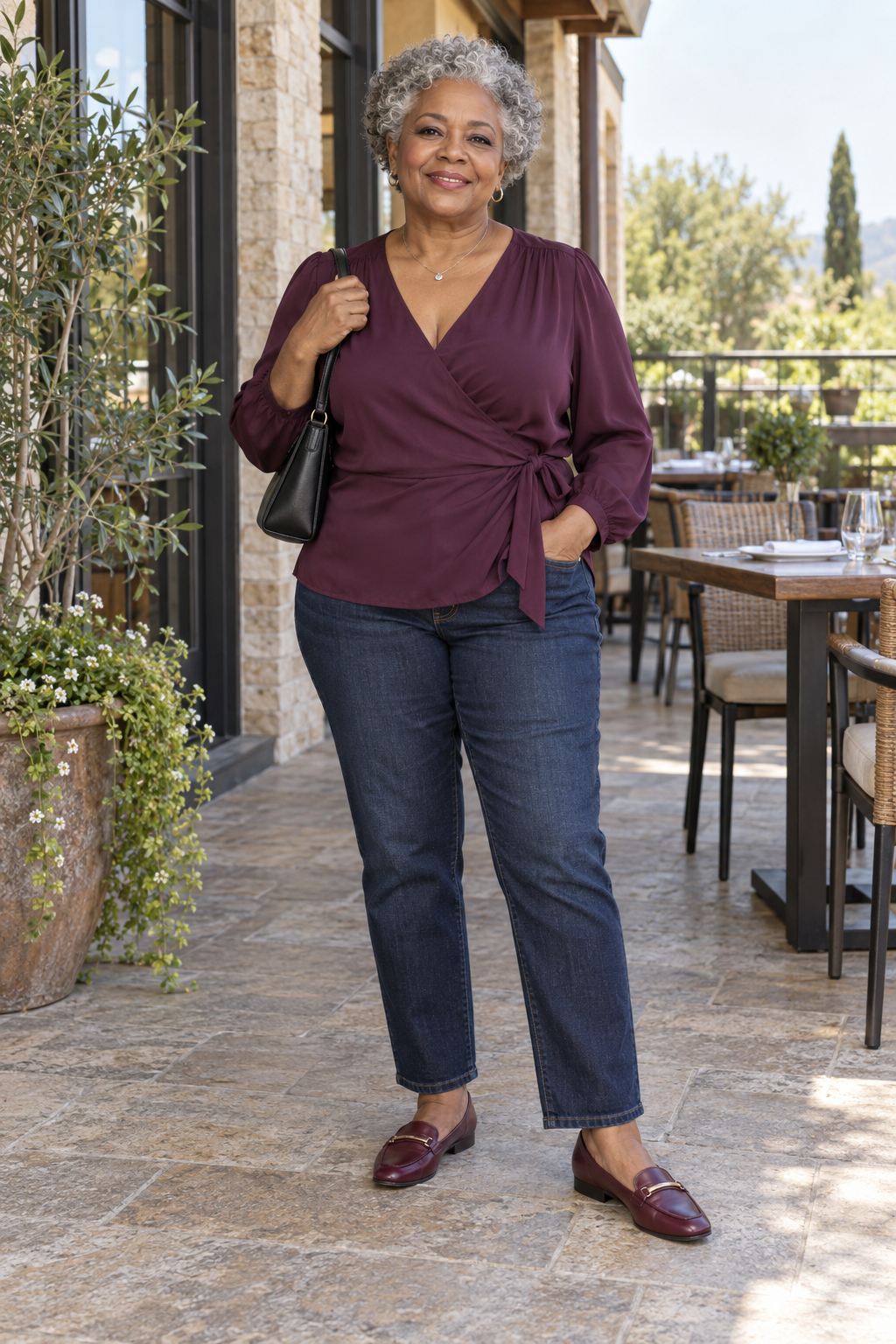
A plum wrap-look blouse gives dark straight jeans a clear change of mood without asking you to abandon denim. Burgundy loafers echo the depth of the top rather than matching it exactly. Use this combination for a restaurant where jeans fit the stated dress guidance; the photograph cannot establish a venue’s policy.
The useful fitting question is the neckline when you lean toward the table. Try that movement at home, then reach for a glass. A wrap shape that stays where you want it can be easier to enjoy than one you keep watching throughout the evening.
Keep the blouse loose over the waistband as shown if the side tie already provides enough shape. If your version opens more than you prefer, try a suitable underlayer or another blouse. There is no reason to accept unwanted exposure just to preserve this particular outfit formula.
Navy Wrap Skirt With a Cream Sweater
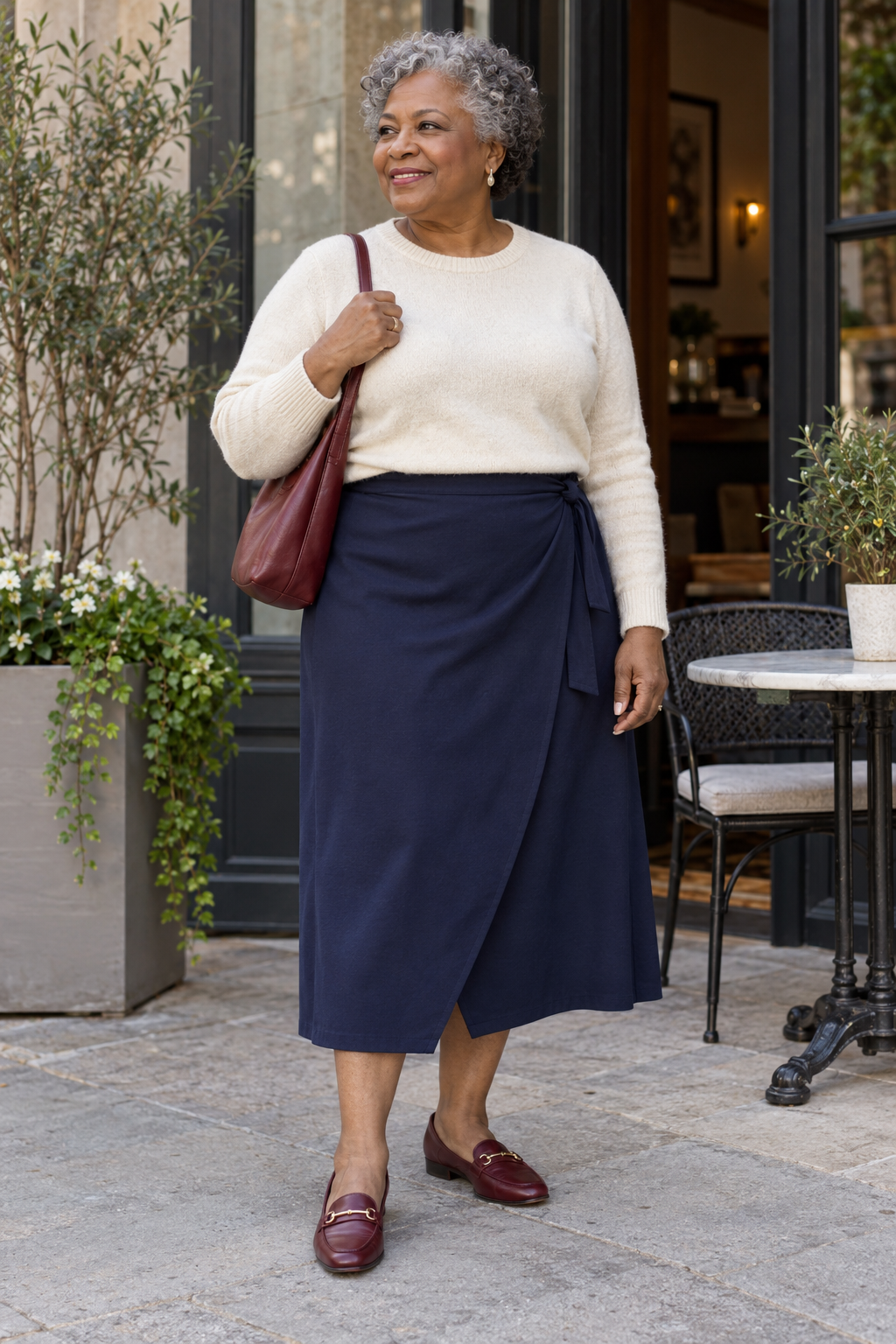
Cream knitwear makes the navy wrap skirt feel relaxed, while burgundy loafers and a shoulder bag provide the color detail. The tied skirt already gives the waist interest. You can leave additional belts and necklaces out of the first try-on and decide afterward whether you miss them.
A wrap skirt needs a seated check as well as a standing mirror view. Sit, cross and uncross your legs in your usual way, and notice where the overlap falls. Try walking up a step too. Your preferred amount of coverage matters more than reproducing the exact angle of the photograph.
If the overlap needs constant attention, a fixed wrap-look skirt or another navy midi may deliver the same color combination with less adjustment. Keep the sweater edge simple so it does not collect around the tie. The burgundy bag is a shoulder style here; choose its capacity around what you actually need to carry.
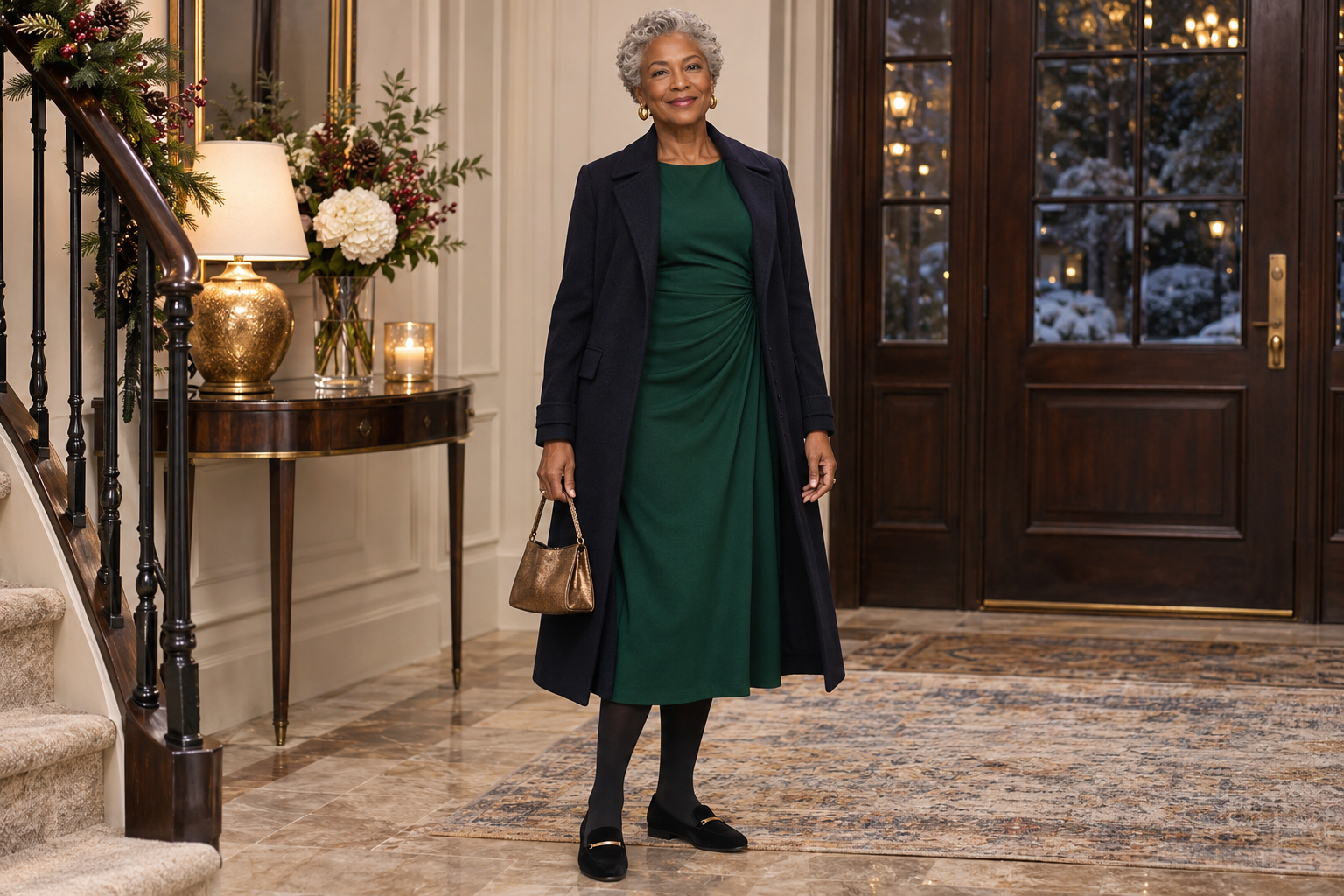
A Forest Dress With Mary Janes
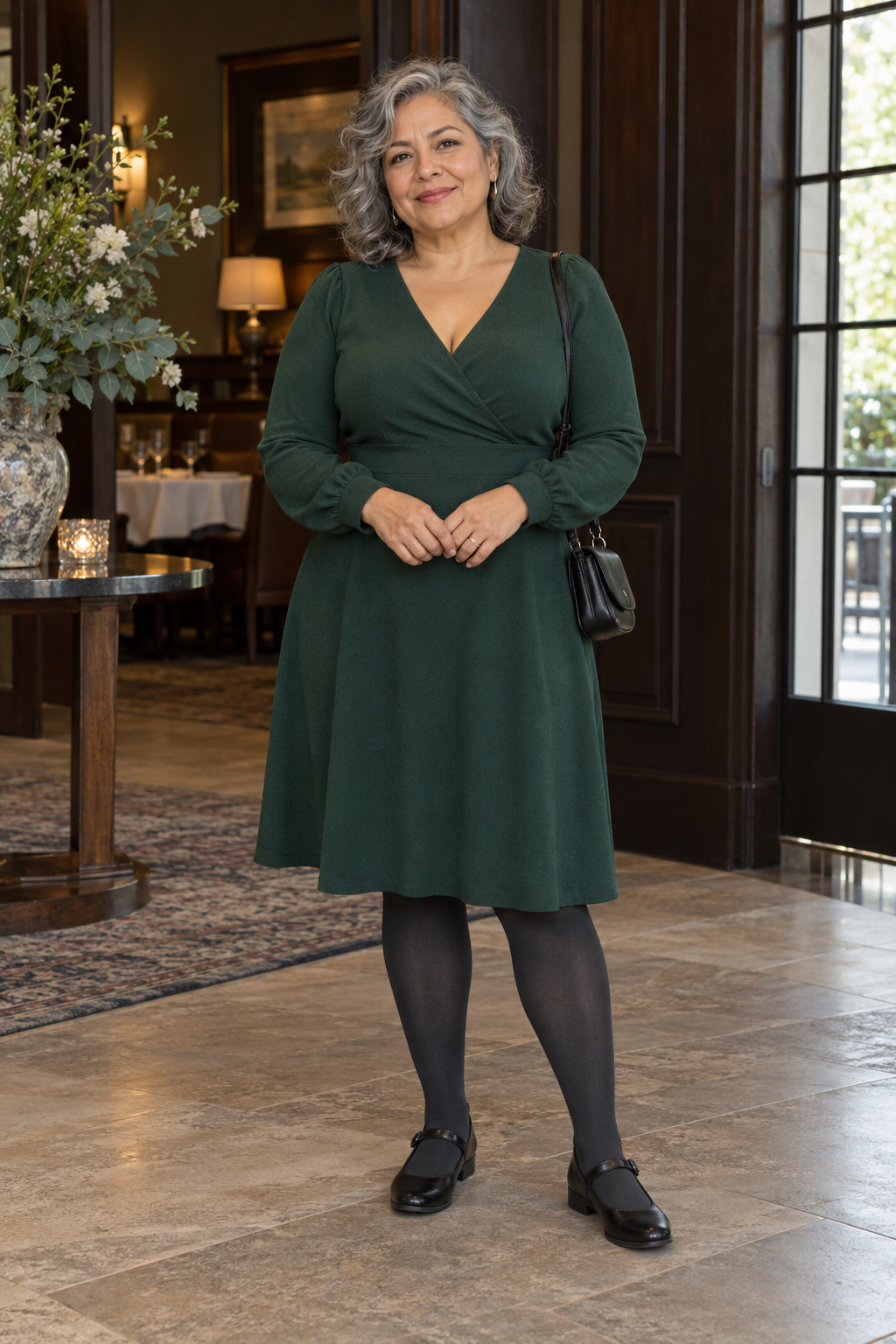
The forest dress keeps the outfit in one main color, with charcoal tights and black Mary Janes underneath. Its gently shaped waist gives definition without an extra belt. This option suits someone who would rather make one garment decision than coordinate a separate top and skirt before dinner.
Sit down before deciding whether the waist needs changing. Check the seam and the neckline together: a comfortable standing position does not tell you whether either will pull while you are at a table. Compare the dress with your usual underlayers, because those change how it rests.
The illustrated shoes are flat Mary Janes with a strap across the foot. A familiar pair can preserve that neat finish, but the photograph says nothing about cushioning or grip. If tights are part of your plan, try them with the shoes rather than judging fit barefoot. Add an outer layer only for the conditions you expect.
Cream Tailoring and a Burgundy Blouse
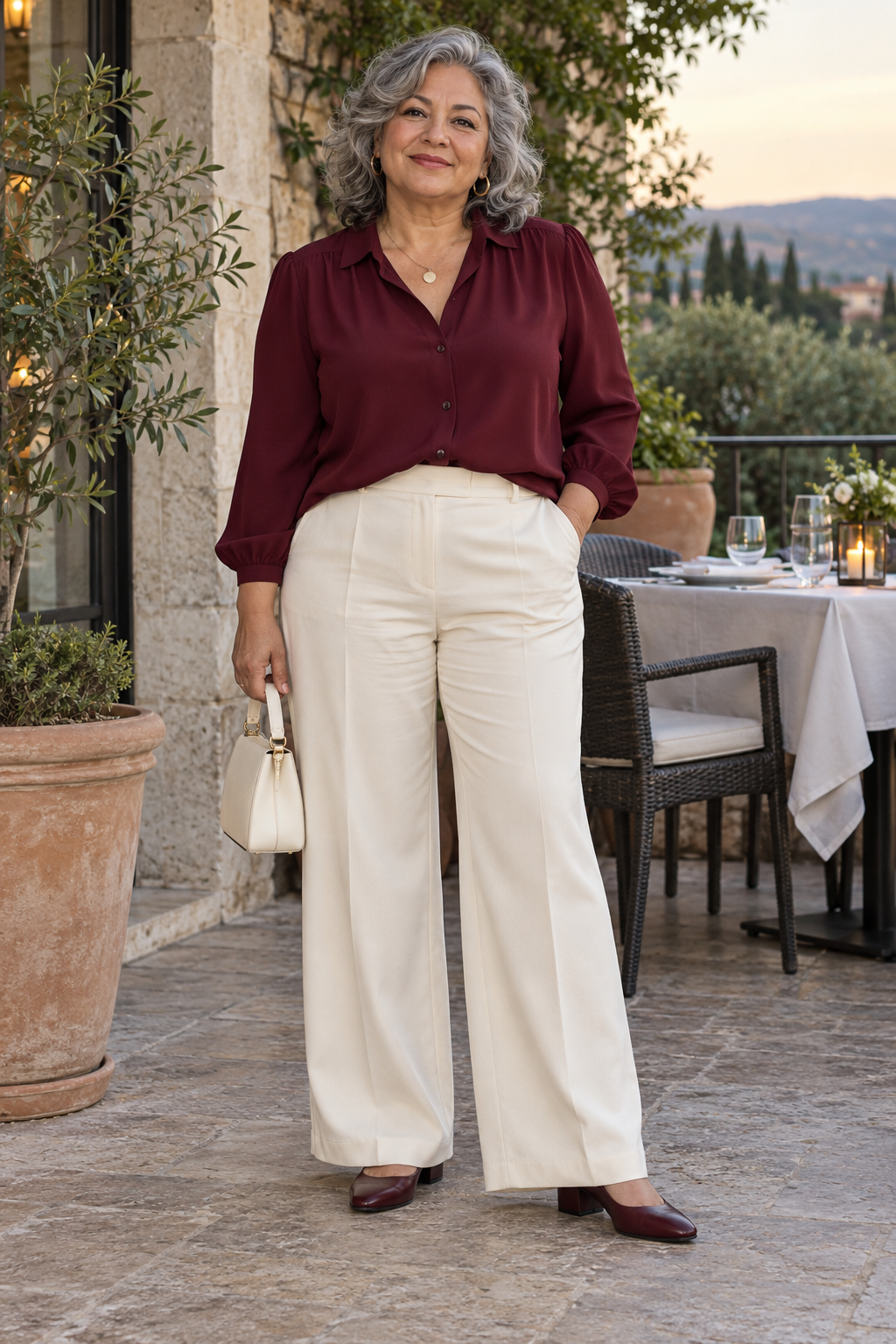
Cream wide-leg pants and a burgundy blouse offer more contrast than a dark outfit, without a complicated accessory scheme. The cream bag repeats the pants; the burgundy shoes repeat the blouse. Those repetitions are optional, but they explain why this particular combination feels connected even with two strongly different colors.
Notice the shoes: they have block heels. If you copy the pants with flats, check the hem again instead of assuming the pictured length will work. Walk forward and turn in your own footwear, watching whether the fabric catches beneath a heel or brushes the floor.
The lightly tucked blouse creates a visible waistband. Try that treatment seated before choosing it for a long meal. A looser tuck or a different blouse length may suit you better. For the cream fabric, check opacity in the light you will actually use rather than relying on this illustration as proof.
An Ivory Blouse Under a Short Camel Layer

An ivory blouse, navy ankle pants and tan loafers form a complete outfit before the short camel jacket is added. That is the point of this example. If the restaurant is warmer than the journey, removing the jacket should leave a combination you still want to wear.
Try the blouse by itself and look at the neckline, sleeve finish and transparency under indoor light. The narrow lace detail shown here provides interest without needing the jacket to frame it. Your own blouse may behave differently, especially where a bag strap or underlayer sits.
Then put the camel layer back on and reach forward as if settling at a table. A short jacket can bunch if the blouse underneath is much fuller. Compare the two hems rather than automatically tucking everything in. The tan shoulder bag is enough for the photograph; choose a different size if your evening essentials require it.
A Soft Blazer Over a Black Midi

A gray blazer gives the black satin-look midi a tailored upper half, while the ivory shell keeps the center light. Burgundy ballet flats and the small bag provide a quieter finish than adding another shiny piece. Start here if you already like a blazer but want a softer alternative to matching suit pants.
Think about the blazer after you arrive. If you expect to remove it, check the shell on its own and consider where the jacket can go without trailing on the floor. A large second bag is not an automatic solution; the venue and your own carrying preferences determine what is practical.
The pictured skirt falls below the knee with room to move. Try your version sitting and standing to see whether the waistband and blazer hem compete. If they do, compare a slightly shorter top underneath before changing the skirt. Keep the flats familiar so that the evening does not become a footwear experiment.
Rose Knit With Gray Denim

A dusty rose knit and gray jeans make a softer alternative to the dark-denim blouse combination above. Black ankle boots anchor the lower half, and the small crossbody keeps the hands free on the journey. The sweater is worn loose, so the outfit does not depend on a belt or a tucked front.
Here the useful comparison is at the boot opening. Walk in your own jeans and watch whether their hem rests above the shaft, drops over it or catches on its edge. Any of those proportions may appeal to you, but catching fabric is a reason to adjust the particular pairing.
Gray denim varies considerably in stiffness and stretch. Sit before choosing the rose sweater length, especially if the waistband rises or folds. If your own knit is longer, see whether you like the extra coverage rather than shortening it solely to match the image. Keep the color relationship and change the fit to your preference.
Burgundy Neckline With Gray Tailoring

Burgundy at the neck brings color close to the face, while a gray blazer and black wide-leg pants keep the rest quiet. This is a useful route if a higher neckline is already part of your style. There is no requirement to lower it for dinner or compensate with extra jewelry.
Try the turtleneck with whichever outer layer you will actually wear. If that layer fastens, close it and move your head normally. Several collars together can feel more crowded than each garment does alone; compare the combination before deciding that the knit itself is wrong.
The black loafers stay understated beneath the full-length pants. Check the actual hem over your pair because a photograph cannot establish clearance. The burgundy bag repeats the knit, but a black bag would keep the same main contrast. Choose between those versions according to what you already have and enjoy carrying.
Camel Knit and Chocolate Pants
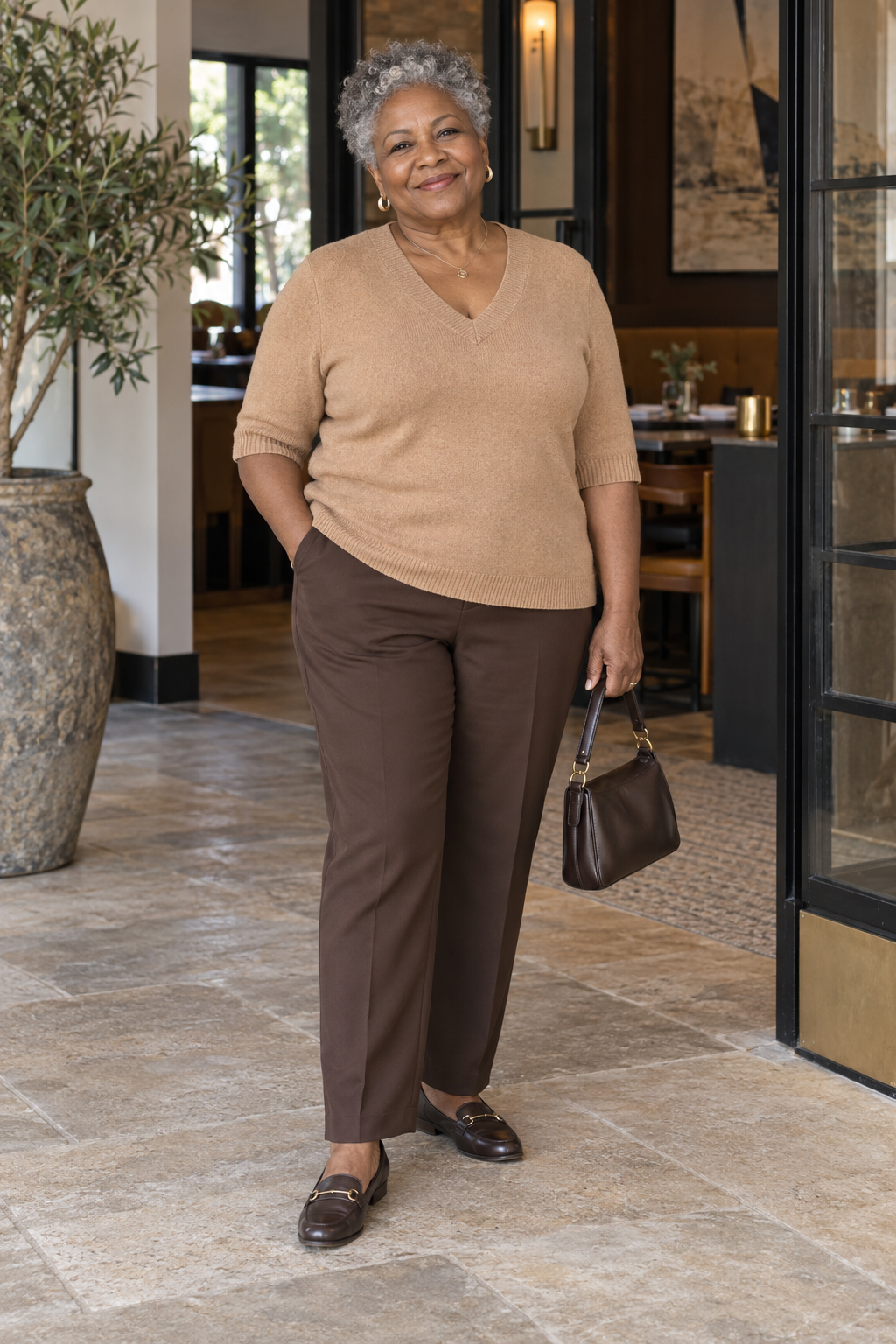
Camel and chocolate make a low-contrast outfit with enough difference to see the separate pieces. Elbow sleeves leave the wrist area uncomplicated at the table, and the dark brown loafers continue the quiet palette. This can be a useful option when you want tailoring without the extra layer of a jacket indoors.
Try the sweater untucked before deciding that the waist needs a belt or a front tuck. Look at its edge from the side, then sit down. A fine knit that rests smoothly may already provide the finish you want; adding a tuck can create a different shape rather than automatically improving it.
The pants are straight and full length here, not very wide or cropped. Compare that cut with your own pair while wearing the intended shoes. If you prefer more contrast, change one piece first, such as a darker bag, and judge the result before replacing the whole combination.
Champagne Shirt With Fluid Black Pants
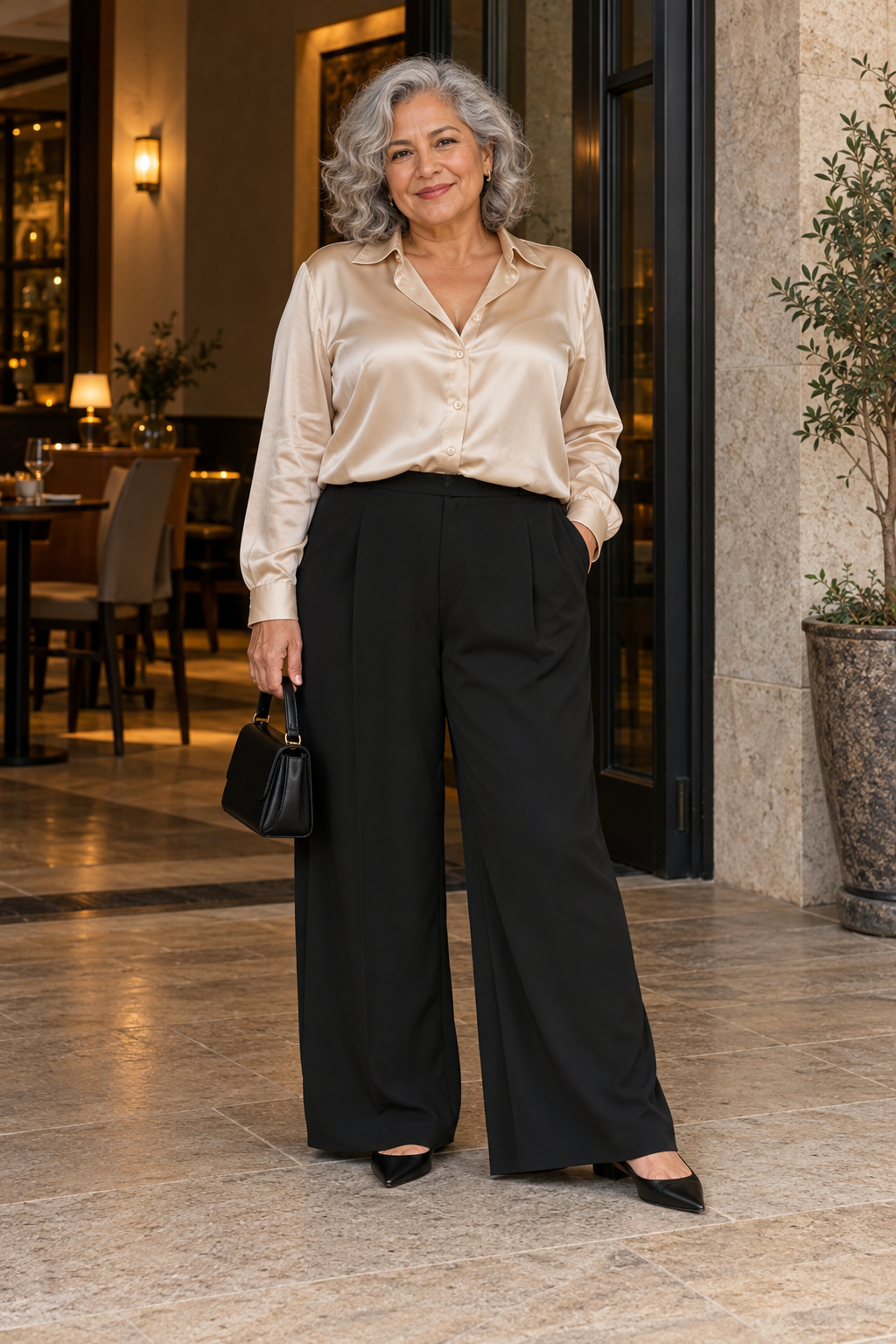
A champagne-colored shirt supplies the light and sheen in this outfit. Fluid black pants, pointed flats and a small black bag let that surface remain the main detail. The combination can feel dressed up without a dress, provided the shirt and pants suit your particular reservation.
Begin the try-on without a necklace. Look at the collar, buttons and reflection from the fabric, then decide whether another focal point would add something you want. The photograph illustrates surface contrast; it does not establish that the shirt is silk or that it will resist creasing during a meal.
Check the shirt’s front when you lean toward the table, especially if your own version has buttons. A light tuck should not create pulling that was absent when it hung loose. Test the pants with the flats shown in your own wardrobe, allowing for their actual sole and toe shape rather than assuming all pointed shoes fit alike.
Plum Pleats With a Plain Black Top
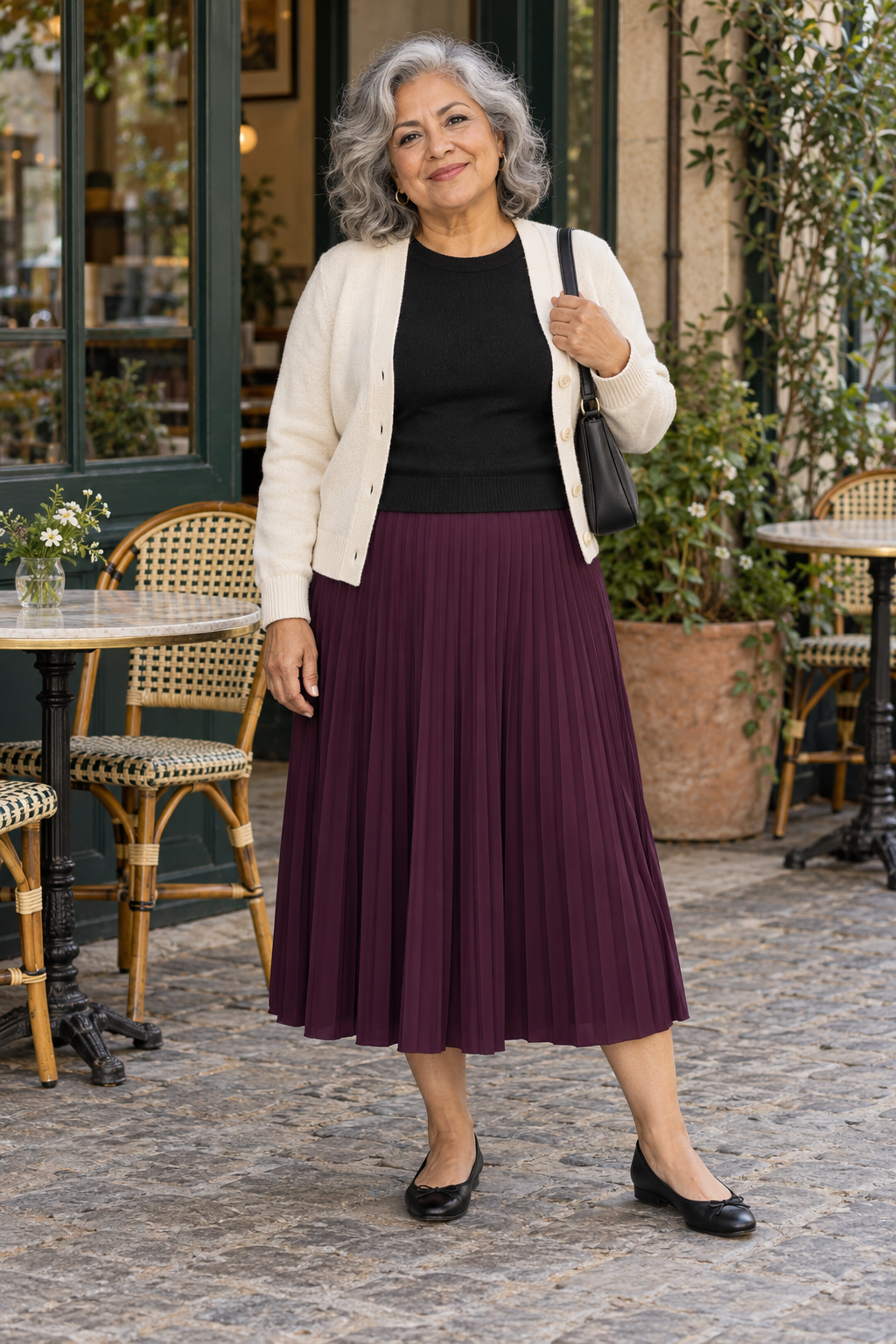
Plum pleats bring movement to a plain black top, with a short cream cardigan adding a separate light layer. The black flats and bag repeat the top so that the skirt stays prominent. This gives you a cardigan-based alternative to the blazers elsewhere in the article.
Compare the top’s edge against the pleats before and after sitting. If it gathers at the waistband, smooth it once and see whether it stays comfortable; repeated adjustments suggest trying a different length or a looser placement. A tuck is one option, but a shorter top may suit the same skirt without added bulk.
Wear the cardigan open first, as pictured, and check the black top on its own in case the room is warm. The cream layer is a color choice rather than evidence of warmth. Use the forecast, the venue and your own preferences to decide whether this is enough outer coverage for the journey.
A Navy Textured Blazer With Dark Pants
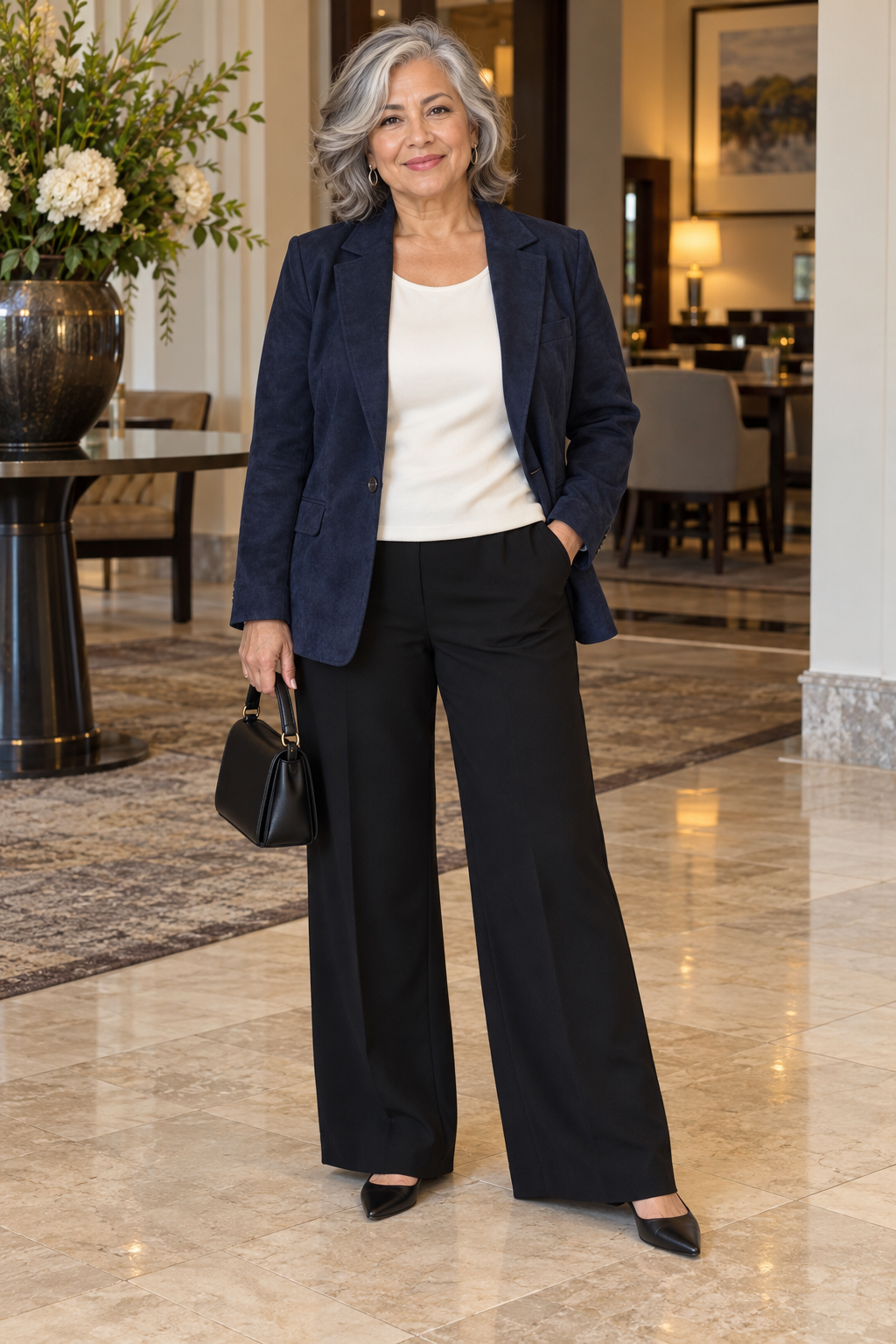
A navy blazer with a soft-nap surface changes the feel of ivory and black without adding a patterned accessory. The shell, wide pants and pointed flats keep the outline simple. This is a useful final option for someone who likes a jacket to provide most of the outfit’s detail.
Compare the cut before focusing on the texture. Try your shell underneath, reach forward and check whether the blazer fronts hang comfortably when open. A layer that pulls across the upper back will not become easier to wear just because its surface is attractive. Another navy jacket can preserve the color idea.
Treat the suede-like appearance as a visual description, not proof of material. Your actual jacket’s care label determines cleaning, and its fabric determines how it feels against the shell. Keep accessories sparse for the first comparison, then add what you personally enjoy rather than assuming a textured jacket requires a complete new set.
Make the final choice at a chair
Once you have two possibilities, compare them in the same shoes and underlayers. Sit long enough to notice the waist and neckline rather than checking only the standing silhouette. If one option needs repeated adjustments, that is useful information even when it looks lovely in the mirror.
A bag also changes an evening outfit in practical ways. Put your actual essentials inside it and try the strap over your outer layer. Check whether you can reach the fastening without removing everything. A pictured small bag is a styling suggestion, not a claim that it will hold your phone, glasses and other necessities.
If you are choosing between two looks: Keep the one that fits the reservation and asks less attention from you at the table. You can still choose a bright blouse, a shiny skirt or a bold accessory. Reduce the source of distraction rather than reducing your personal style.
Keep the part that feels like you
You do not need to change every element to make familiar clothes feel appropriate for dinner. The cream blouse you like may work with a different jacket; everyday jeans may suit a restaurant when paired with a top you enjoy. Let the venue set the practical boundaries and your preferences set the colors and detail.
For garments with sheen or a soft nap, follow the actual care label. Their appearance does not establish fiber content or cleaning requirements; the FTC’s care-label guidance explains why those instructions matter. These AI-generated editorial illustrations, including selected images from our existing library, show styling ideas rather than tested products or photographed restaurant recommendations.

Alia Hashim
I'm Alia Hashim — a passionate blogger and founder of Modern Lady Magazine. I started this platform to create a space where women could find inspiration, empowerment, and real-life solutions for style, beauty, wellness, and beyond. Through Modern Lady Magazine, I aim to celebrate the modern woman — confident, creative, and full of dreams — while sharing ideas that help nurture both inner strength and outer beauty. Every story, every tip, every idea here is crafted to inspire you to embrace your journey and live life beautifully, one step at a time.
View author profile →