Plan a winter occasion outfit without assuming high heels by choosing the footwear you want to wear first, then checking the hem, indoor outfit and outer layer around it. Confirm the event’s dress expectations and the journey to the door. A lower shoe does not require an apology or a particular skirt length; it requires clothes that work with the actual shoe and the occasion.
For women over 50, preferences can include flats, low heels, boots or another familiar option. This guide helps you assemble the combination you prefer without presenting age as a reason to wear or avoid a style.
The AI-generated images are styling illustrations, not product recommendations or wear tests. They cannot establish comfort, grip, weather protection or suitability for your feet.
Read the invitation and ask about what is unclear
Identify the stated dress code, the venue and the activities you expect. A dinner with mostly seated conversation raises different clothing questions from a reception with standing, dancing or an outdoor arrival. When the invitation leaves something important unclear, ask the host or organizer rather than treating every winter event as equally formal.
Emily Post’s attire guide distinguishes several levels of dress. Use it to understand the language on an invitation, then follow the specific event’s guidance. A photograph of a dressed-up outfit is not proof that it meets every formal dress code.
Write the practical details beside the dress information: the route from transportation, whether there is a coat check, and whether you intend to change shoes. These questions help you decide which outfit you can actually use.
Choose the shoe you intend to keep on

The still life shows black velvet loafers with small gold bars beside ankle boots with a block heel. Both can be considered when planning an outfit without a high heel. Their surfaces and heel shapes do not establish how either pair feels, how it fits or whether it suits a wet outdoor route.
Try the actual shoes with the socks or hosiery you expect to wear. Fasten them normally and assess them in a suitable indoor space. If a pair already feels wrong during the try-on, choose another option rather than planning the outfit around an imagined improvement later.
Keep the outdoor question separate. You may decide to travel in different footwear and change at the venue, provided that is practical. Work out where you will change and where the spare pair will go. Do not assume a small evening bag can hold it.
Check the hem with that exact pair
Put on the pants, skirt or dress with the chosen shoes before judging length. A pant hem that worked with a higher shoe may meet the floor differently with a flat. Look from the front and side, then walk naturally in a suitable space rather than holding the fabric up for the mirror.
If the hem catches, compare another garment or seek a suitable alteration. A temporary adjustment is only useful if it stays in place and works with the garment’s construction. You do not need to buy a heel just to preserve a pant length you no longer want to use.
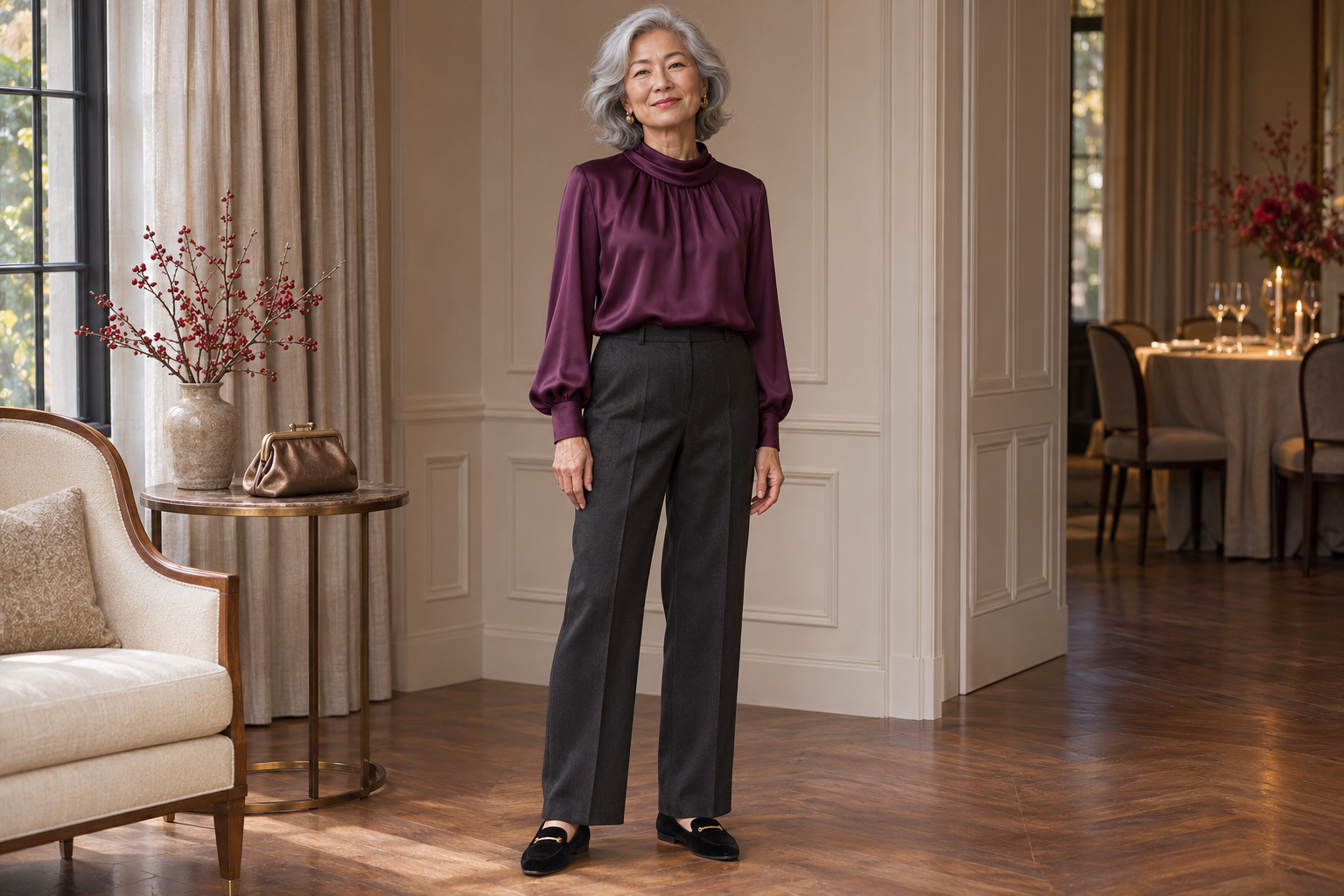
In this illustration, the pants end above the floor and leave the flat loafers visible. The satin blouse contributes a different surface from the tailored pants; it provides one way to give the outfit an occasion feel without changing the shoe height. Use the idea with your own pieces rather than copying an exact hem position from a generated image.
For a petite frame, start with the actual lengths and movement you prefer. There is no compulsory ankle gap or universal rule that a flat shoe needs a shorter skirt. Our measurement guide can help when you need to compare a garment length before ordering.
Decide where the dressed-up detail belongs
Choose a detail you enjoy: a fabric surface, an earring, a bag or a neckline. You can give that detail room by keeping the rest of the combination familiar. This is a styling option, not a rule that limits how much color, jewelry or decoration you may wear.
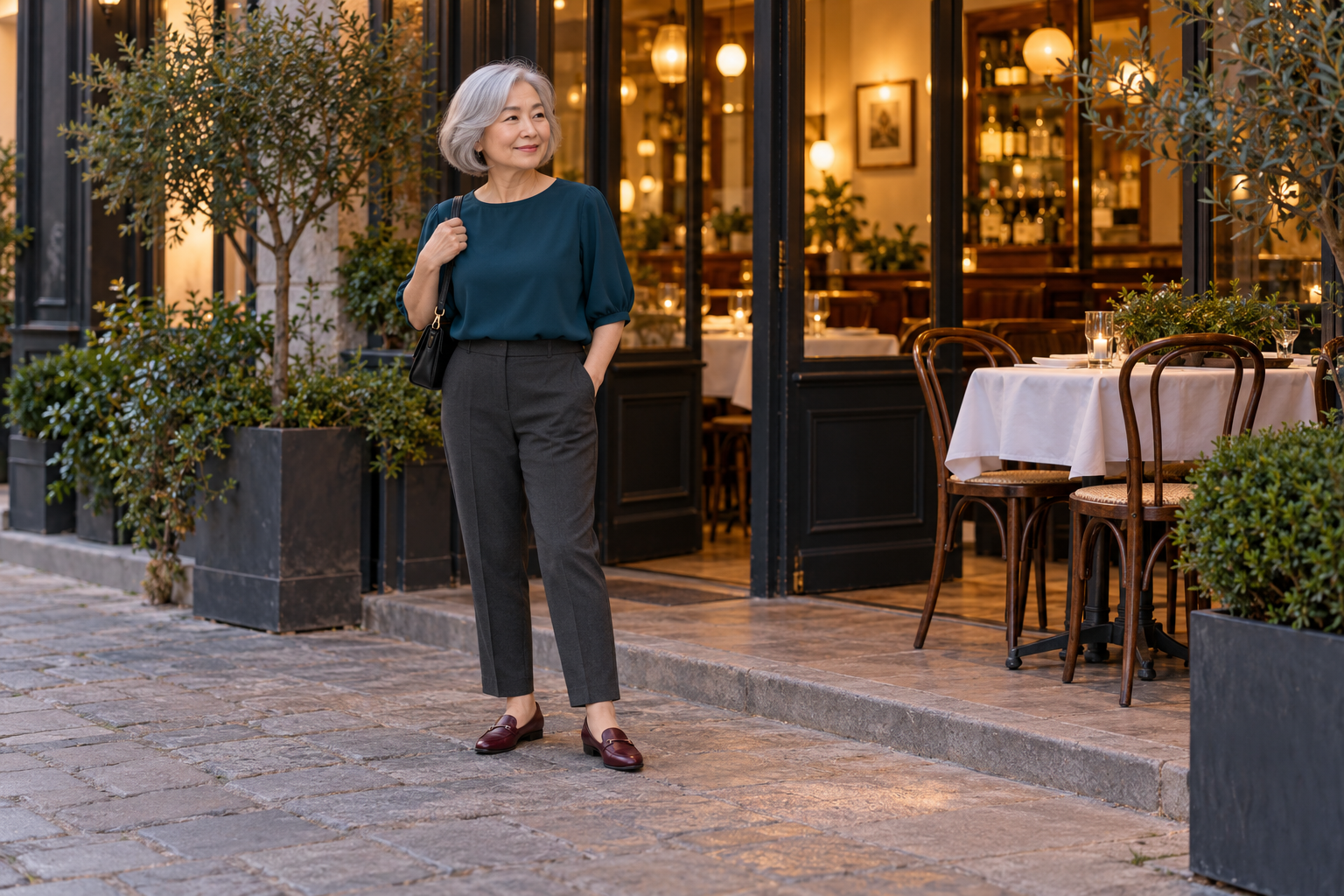
The plum blouse and bronze bag provide two different surfaces in the pant illustration. In the cover outfit, an emerald dress sits beneath an open navy coat, with a small bronze bag at the side. The flat black loafers remain part of the outfit rather than an afterthought to be hidden.
If the event calls for a different level of dress, change the relevant garment or accessory while keeping your footwear preference in the brief. “More formal” should lead to a specific question about the event, not automatically to a higher heel.
Try sitting in the complete indoor outfit

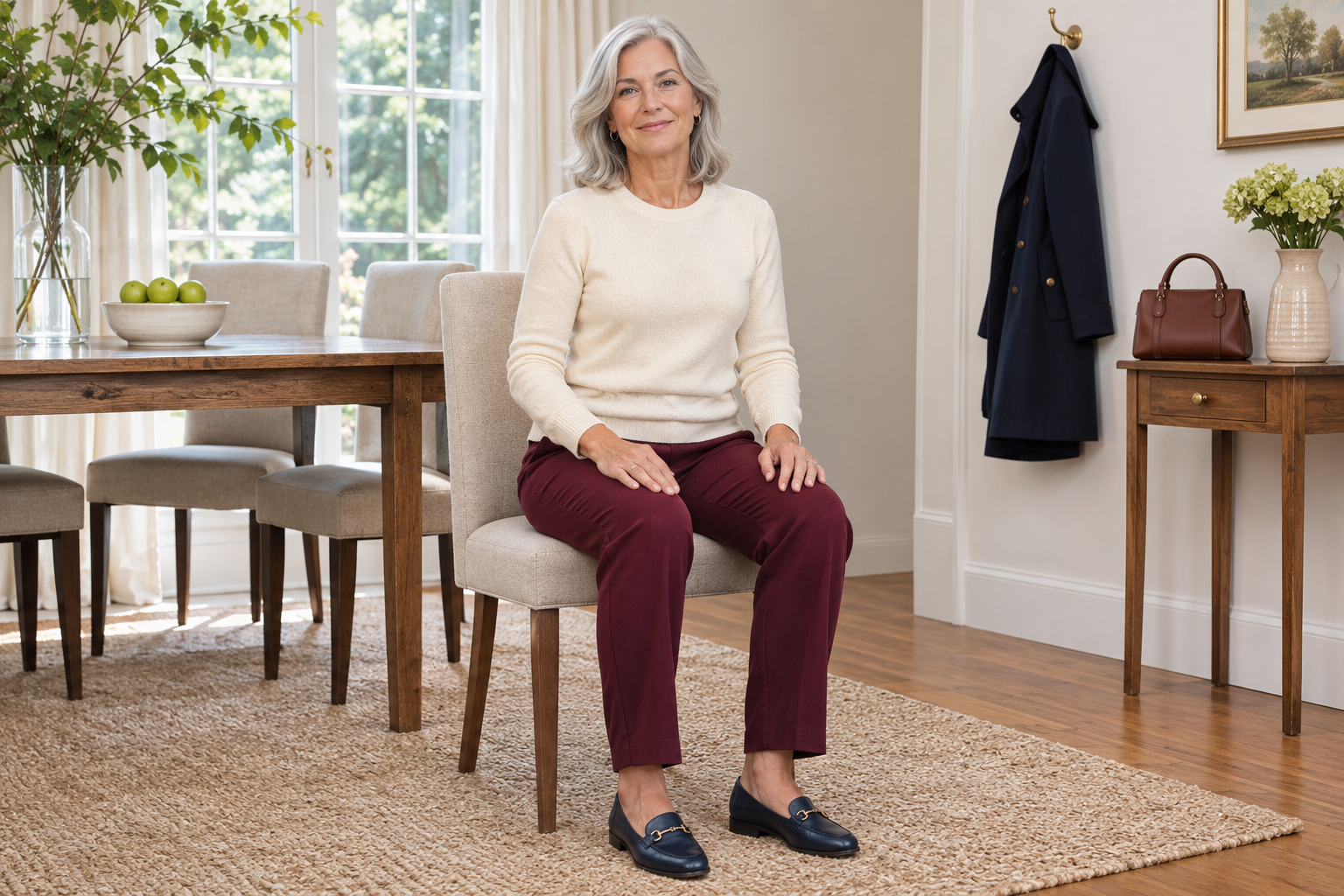
The seated image shows an emerald dress with opaque tights and block-heel ankle boots; the navy coat is off. It is a different illustration from the cover, with different footwear and a different wearer. It does not demonstrate how the cover outfit changes when seated.
Try your own combination in a chair appropriate to the event. Notice the waistband, the hem and any fabric you keep rearranging. Check whether a bag or sleeve detail gets in the way of the movements you expect. These observations are more useful than assuming the standing view tells the whole story.
If you want a removable indoor layer, include it now. Check the neckline and sleeves together, then remove it once to see whether the remaining outfit feels complete to you.
Check the journey and the occasion separately
An outfit can satisfy the invitation while still needing a different travel arrangement. Settle both parts before the day of the event.
- At the venue: Confirm dress expectations and try the actual indoor outfit with your chosen shoes.
- On the way: Review the forecast, route and footwear information. Plan a change only if you have somewhere to make it.
- At departure: Know where the coat, removed layer and any spare shoes will go.
Add the outer layer without changing the decision by accident
Put the intended coat over the finished outfit, fasten it and check sleeves and movement. If the coat conflicts with the blouse, try another layer combination. If a dress hem extends below the coat, decide whether you like the overlap and whether it works for the journey; matching the two lengths is not a universal requirement.
Review the actual forecast and garment information for weather needs. Dressy appearance does not establish warmth or rain protection. The winter layering gallery offers other outerwear arrangements if the first combination does not suit your plan.
Save the full outfit with the chosen footwear named, plus any travel change. That keeps the next try-on focused on the event rather than reopening the assumption that you need high heels.

Alia Hashim
I'm Alia Hashim — a passionate blogger and founder of Modern Lady Magazine. I started this platform to create a space where women could find inspiration, empowerment, and real-life solutions for style, beauty, wellness, and beyond. Through Modern Lady Magazine, I aim to celebrate the modern woman — confident, creative, and full of dreams — while sharing ideas that help nurture both inner strength and outer beauty. Every story, every tip, every idea here is crafted to inspire you to embrace your journey and live life beautifully, one step at a time.
View author profile →