When deciding what to wear to an art museum, begin with shoes you know, a base outfit you can sit and move in, and any layer you will want for the journey. Then consider how you will carry that layer indoors. These sixteen combinations offer dress, skirt, denim and tailored-pant options for different preferences.
The goal isn’t to dress like a particular kind of museum visitor. Choose pieces that let you enjoy the day without repeatedly adjusting sleeves, lifting a hem or managing more belongings than you want. A gallery photograph can show an outfit arrangement; it can’t establish that the garments or footwear have been wear-tested.
Plan the visit before the bag. Check the destination’s current visitor page for bag, storage and entry information. Pick the essentials you need to carry, then choose an appropriate bag, rather than assuming a roomy tote can be stored on arrival.
Outfit ideas for a day of looking and moving
Choose the starting point nearest your own plans. A seated talk, a walk between buildings and lunch afterward may ask different things of the same outfit. Notice the removable layers, neckline coverage, bag position and shoe relationship in each image, then adapt those details with pieces you already enjoy wearing.
A Short Navy Jacket for the Journey In

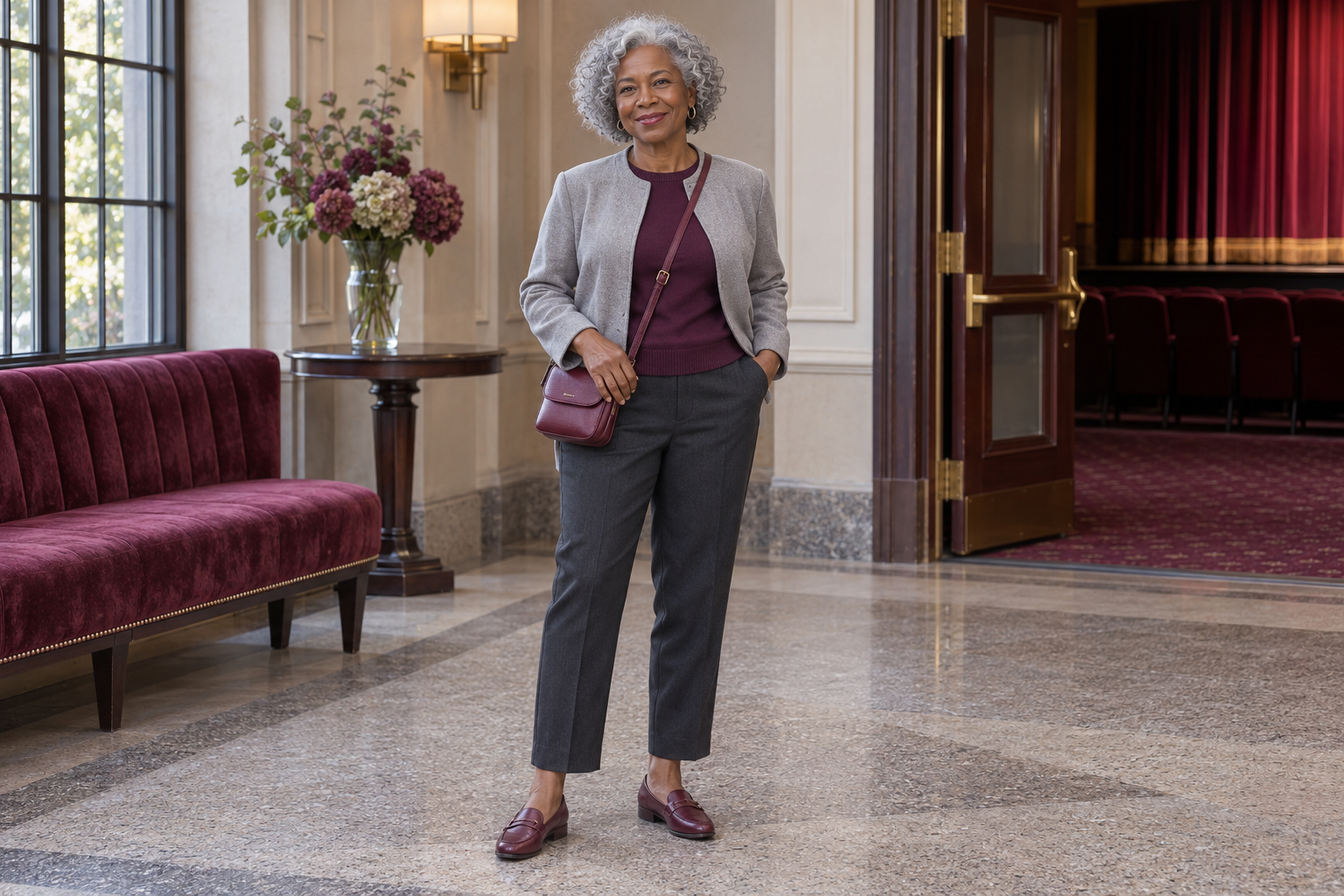
Begin a museum day with a base that feels complete when the jacket comes off. Here, an ivory tee and charcoal pants sit beneath a short navy collarless layer, with burgundy loafers and a small crossbody. The plain center makes it easy to remove the jacket without rearranging a scarf or several accessories.
Try carrying the removed jacket along with your bag before deciding what to bring. You may discover that a lighter layer is more useful than a heavier piece you don’t want to keep on. Check the venue’s storage information instead of assuming a coat check will solve that choice.
Choose familiar footwear for the day you have planned. A photograph shows the loafers’ shape, not how your own feet will feel during the visit.
A Moving Olive Skirt With Denim
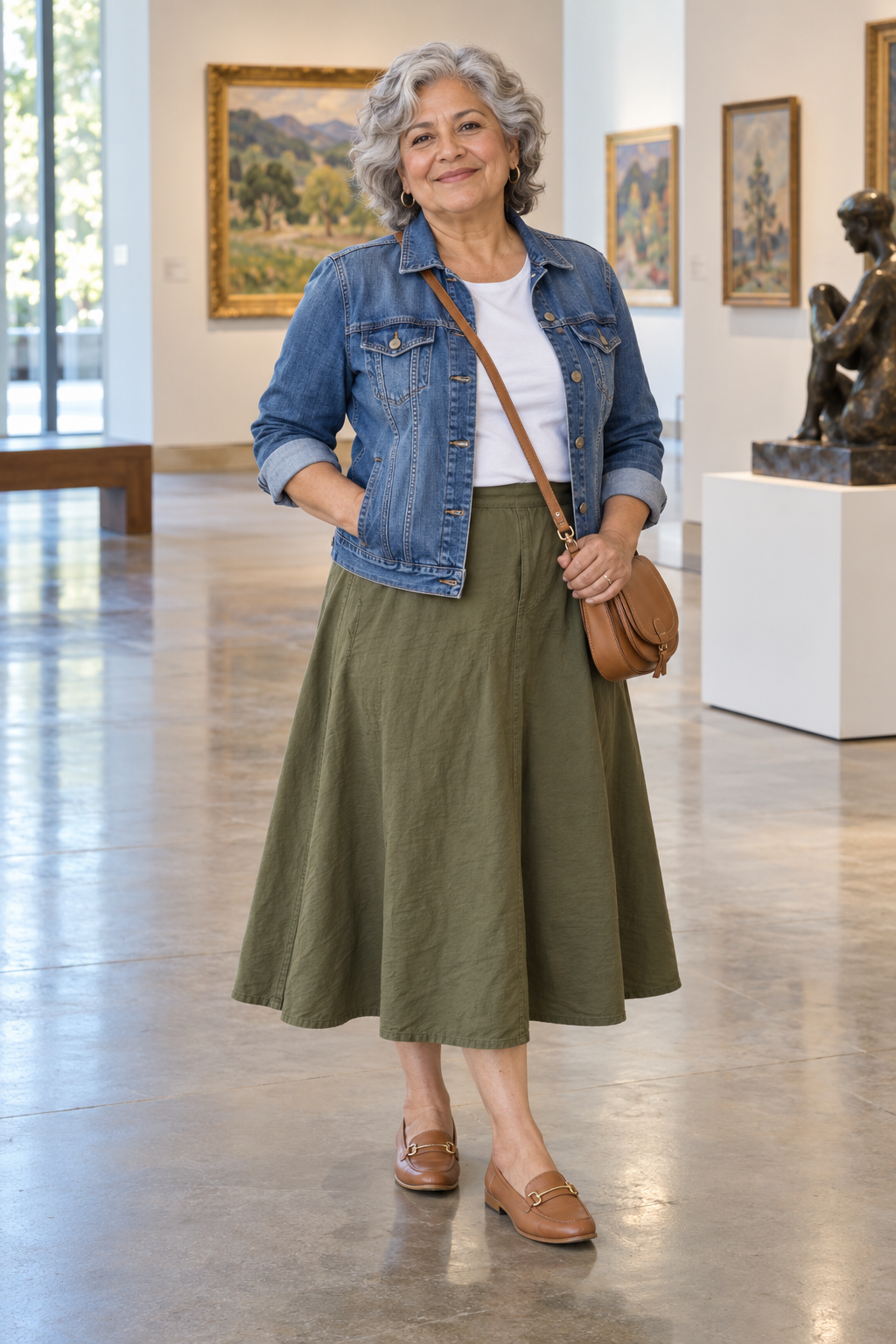
A moving olive skirt offers a different museum-day option from jeans, while a short denim jacket keeps the top familiar. The white tee works as a plain base and the tan crossbody leaves the hands available for ordinary tasks. Tan loafers repeat the bag’s color without adding another strong accent.
Try the strap over the jacket and then over the tee. Removing a layer can change where the bag sits, particularly if you had adjusted the strap around a thicker garment. Choose a position that lets you access what you need without repeatedly pulling the jacket back into place.
If you prefer more coverage than the tee provides on its own, choose another base before leaving. You shouldn’t have to keep the jacket on merely to make the outfit usable.
A Blue Shirt With Simple Black Pants
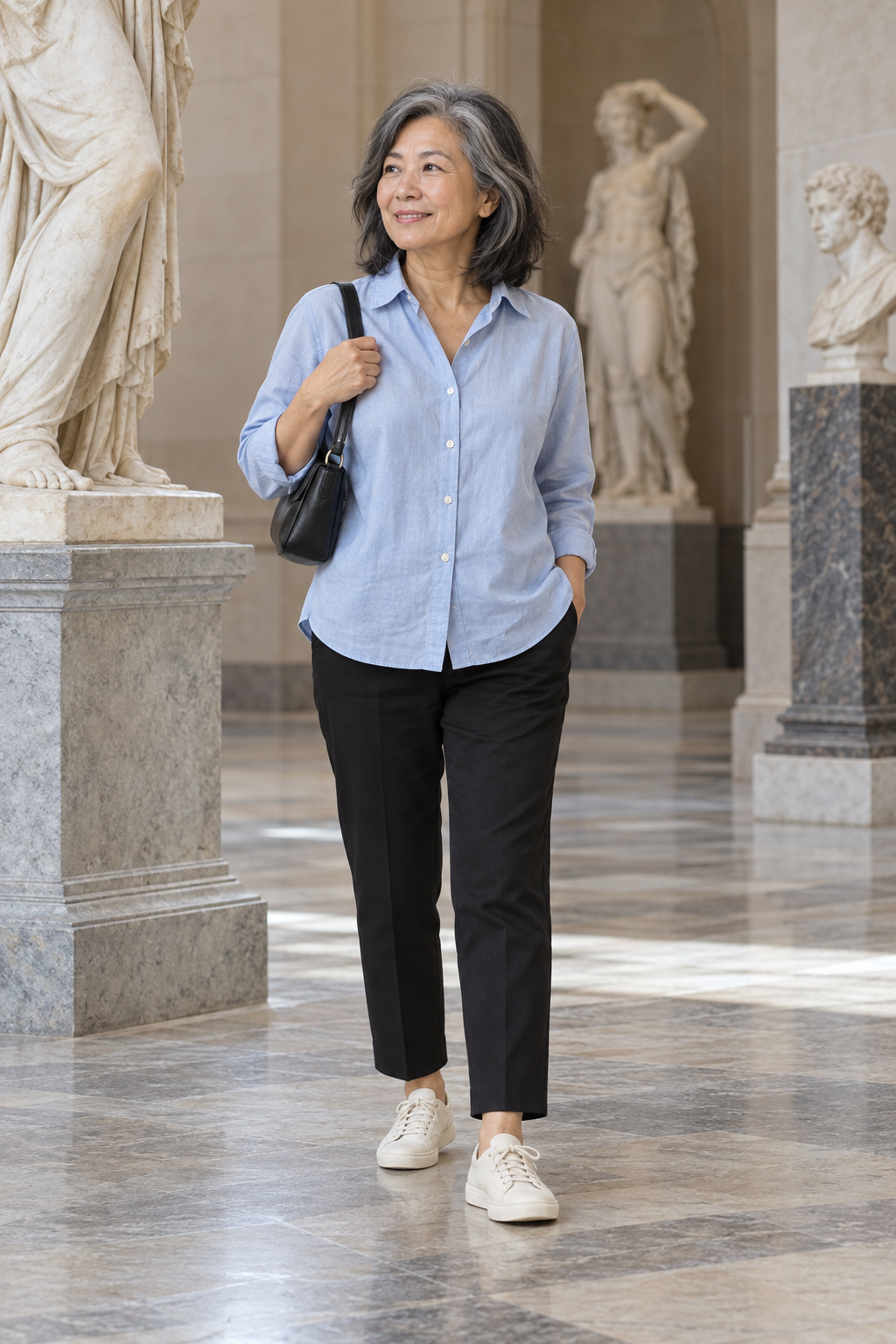
For a visit that includes a seated talk, a loose blue shirt and straight black pants provide a simple starting point. Cream sneakers keep the shoes casual, with a small black shoulder bag rather than several separate items to carry. The curved shirt hem stays outside the waistband.
Sit in your own version and see whether the shirt pulls across the front or gathers beneath you. A loose standing shape doesn’t establish the seated fit. You might prefer a shorter shirt, a shallow tuck or this longer edge; compare the actual garments rather than changing the pant rise to imitate the photo.
Keep the sleeves in the position you plan to use. Turned cuffs are optional, especially if you don’t want to readjust them during the visit.
A Vest Over Moss Corduroy
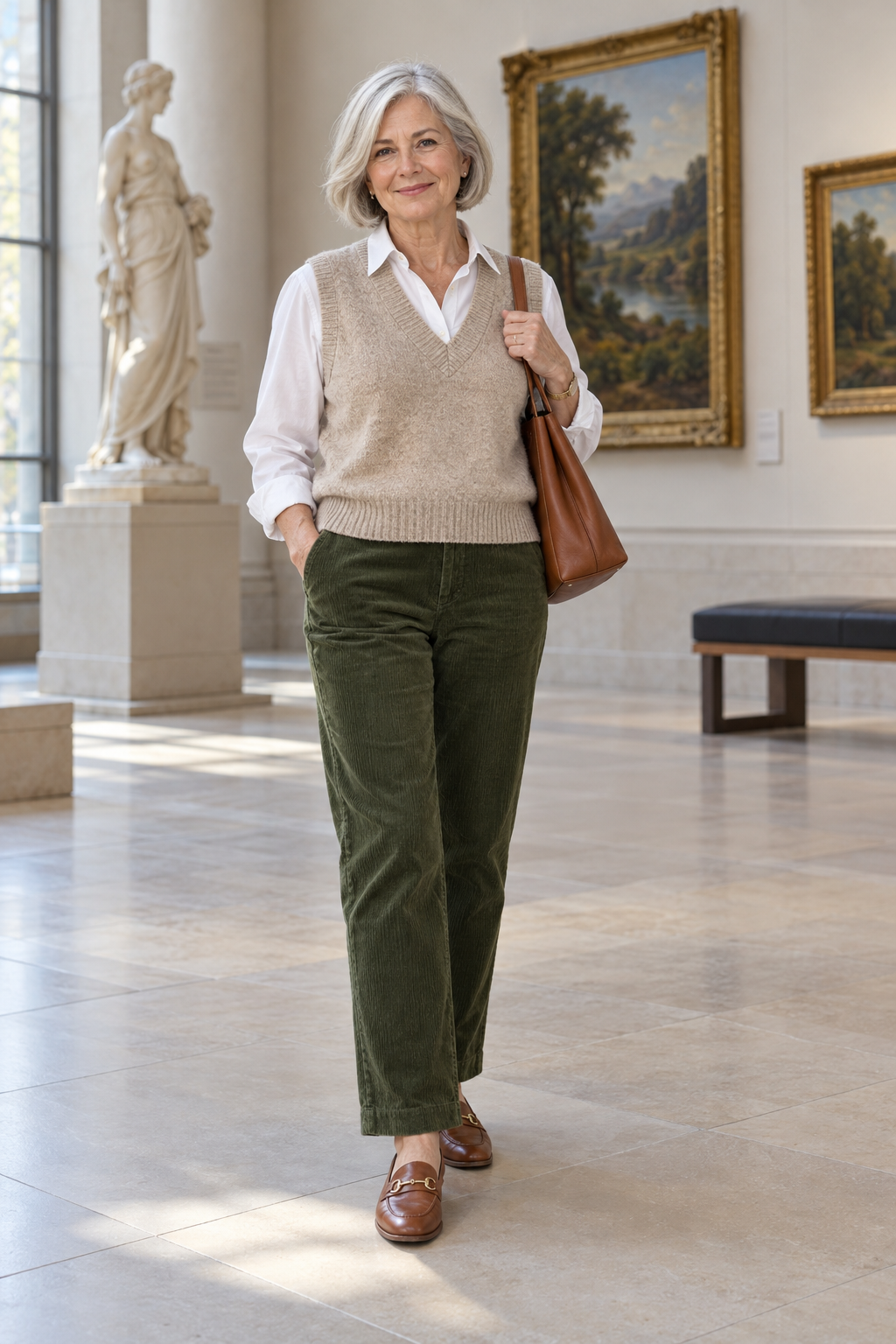
Moss corduroy and an oatmeal vest give this combination texture without a printed base. The white shirt supplies a collar and full sleeves, with cognac loafers beneath the straight pants. It is a useful option when you like separate layers that each have a clear role.
Before packing the vest into your plans, try the shirt alone. Check its coverage, fastening and fit so removing the knit remains an easy choice. If the shirt needs constant tucking without the vest, address that before relying on the outer layer to hold everything together.
The pictured shoulder bag is relatively roomy. Use a smaller carry if it better suits your needs, and check your destination’s bag rules rather than treating any illustrated tote as automatically permitted.
A Teal Shift Beneath a Cream Jacket
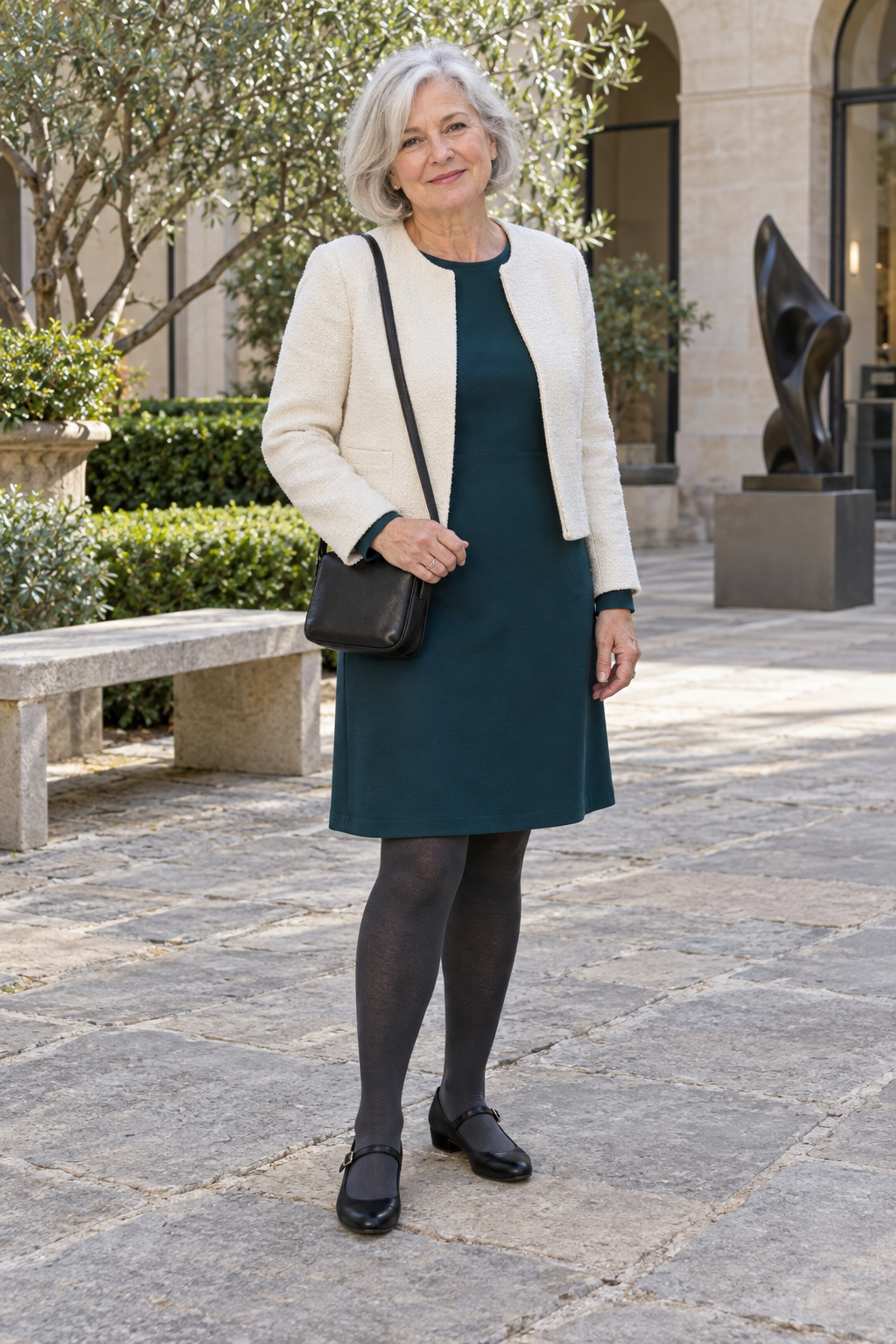
A deep teal shift offers a plain dress base beneath a cream collarless jacket. Charcoal tights and black Mary Janes leave the dress as the strongest color, with a small crossbody for the carry. The outfit can suit a museum visit followed by a daytime meal without requiring a shoe change.
That plan depends on your actual shoes and sleeves, not the photograph. Wear the dress inside the jacket and reach forward to check the two layers. If they feel crowded, compare another outer cut or a dress sleeve that sits more easily beneath it.
Try sitting in the dress as well. A knee-length hem and a straight shape should be judged in the positions you will use, rather than only in a standing mirror view.
Loose Ivory With Gray Denim

Gray denim and a loose ivory shirt make a casual gallery-day combination with cream sneakers. The broad jeans give a different outline from the straight pants elsewhere, while the curved shirt hem keeps the center relaxed. A gray tote repeats the quiet palette rather than adding another color decision.
Choose what goes inside that tote deliberately. A bag that starts manageable can become inconvenient once it contains an extra layer and purchases. Pack your real essentials, carry it around at home and check the venue’s current guidance before deciding whether this is the right size for the day.
The full-length denim also needs a walking check. If the fabric catches under your sneakers, settle the hem or choose another pair rather than planning to lift the jeans throughout the visit.
Terracotta Knit With a Plain Base

Terracotta knit adds a warm accent to an ivory tee and black pants without making the outfit elaborate. Cream sneakers and a small black crossbody keep the practical pieces simple. The cardigan is open, so the base remains visible and the knit can be removed as one separate layer.
Think through that removal with your bag on. You may prefer taking the strap off first, folding the knit and then replacing the bag, rather than pulling a sleeve around a trapped strap. A simple try-on can reveal whether the combination is convenient for you.
Use the cardigan for a layer you want to wear or carry, not as a guarantee about indoor temperature. The conditions during your particular visit may differ from what an editorial image suggests.
A Shirt Dress With a Quiet Vest

A black shirt dress gives a vest a different base from a button-down and pants. The charcoal V-neck adds a separate surface, while opaque tights, burgundy loafers and a small black bag keep the rest straightforward. This is an option for someone who prefers a dress on a museum day.
Check the dress fastening while seated and reaching, not only while standing. The vest can conceal part of the upper front in a photograph, so inspect the dress underneath it as a separate garment. If a button pulls, another size or cut may be more useful than keeping the knit over the problem.
Try the same movements with the bag on. You want the whole combination to work together without repeatedly smoothing the dress front.
A Taupe Dress and an Open Navy Cardigan

A taupe A-line dress and navy cardigan make a simple option for a visit followed by a cafe stop. Brown loafers and a shoulder bag keep the accessories quiet, with the open cardigan leaving the dress’s shaped waist visible. The knit can be removed without undoing the dress itself.
Before choosing the layer, assess the dress alone for the coverage and fit you want. The fact that a cardigan looks good over it shouldn’t make the base dependent on that outer piece. If you prefer more sleeve coverage, choose the dress or another base accordingly.
Use the shoes you know for the day rather than assuming loafers always feel the same. This photo illustrates a color and shape relationship, not a tested walking recommendation.
Navy Layers With a Textured Jacket
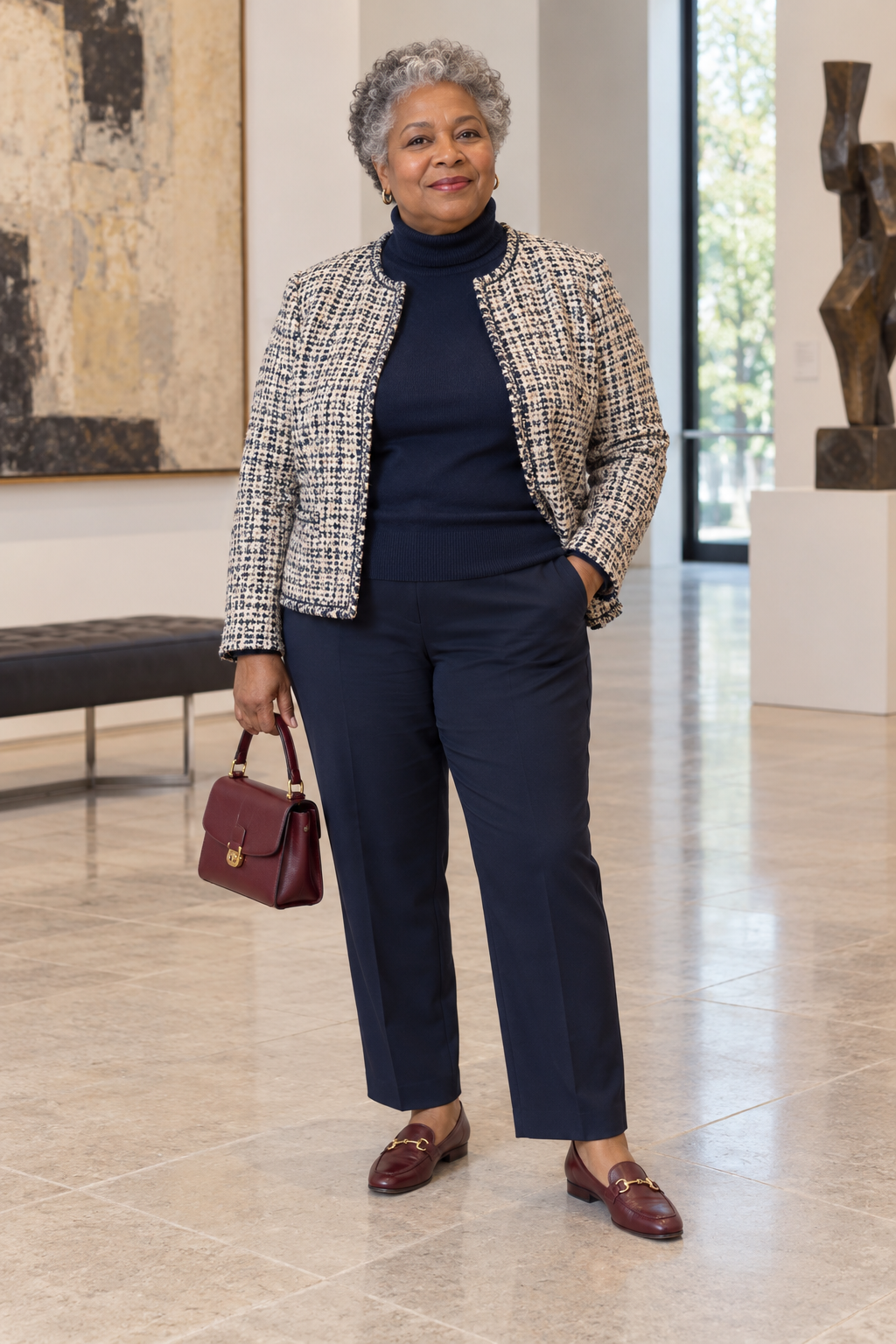
Navy knit and pants create a quiet center beneath a short cream-and-navy textured jacket. Burgundy loafers and a small matching bag add one accessory color. The collarless outer edge leaves the rolled neck visible, making the jacket the main removable detail for a gallery visit.
Try carrying the bag in the way you actually prefer. Here it is held by its handle; if you use a shoulder strap on your own bag, check that it doesn’t pull the short jacket to one side. A different carry position can change how an otherwise well-fitting layer hangs.
Decide whether the turtleneck feels right without the jacket too. If you plan to remove that outer layer, keep the base outfit comfortable and complete on its own.
Stripes Under a Camel Casual Jacket

Stripes, dark jeans and a camel casual jacket make a familiar starting point for a museum terrace and the galleries beyond. Black loafers and a small crossbody keep the carry uncomplicated. The jacket is short enough that its hem and the jean waistband remain easy to compare.
Reach forward with both long sleeves on before leaving. Pulling a jacket over a tee for a quick mirror check can miss gathering at the elbow or underarm. If the layers feel crowded, compare a finer tee or another jacket sleeve rather than trying to fix everything by rolling the cuffs.
The stripes are enough pattern if you prefer a quiet outfit. You can leave the neckline simple instead of adding a scarf you may then need to carry.
Rust Skirt With a Quiet Navy Knit

A rust midi skirt brings color to a navy turtleneck and loafers without a separate jacket. A small navy shoulder bag repeats the knit, leaving the skirt as the clear accent. This is a useful starting point when you want fewer pieces to take off and manage during the visit.
Test the skirt for the seated part of the day as well as the walk. Sit as you would for a gallery talk or a meal, then stand and take your normal stride. Notice the waistband, seat and lower shape together rather than judging comfort from the roomy-looking A-line hem alone.
If you need another layer for the journey, choose one you want to carry afterward. The outfit doesn’t establish what the temperature will be inside your particular destination.
Gray Wide Legs With a Plum Blouse
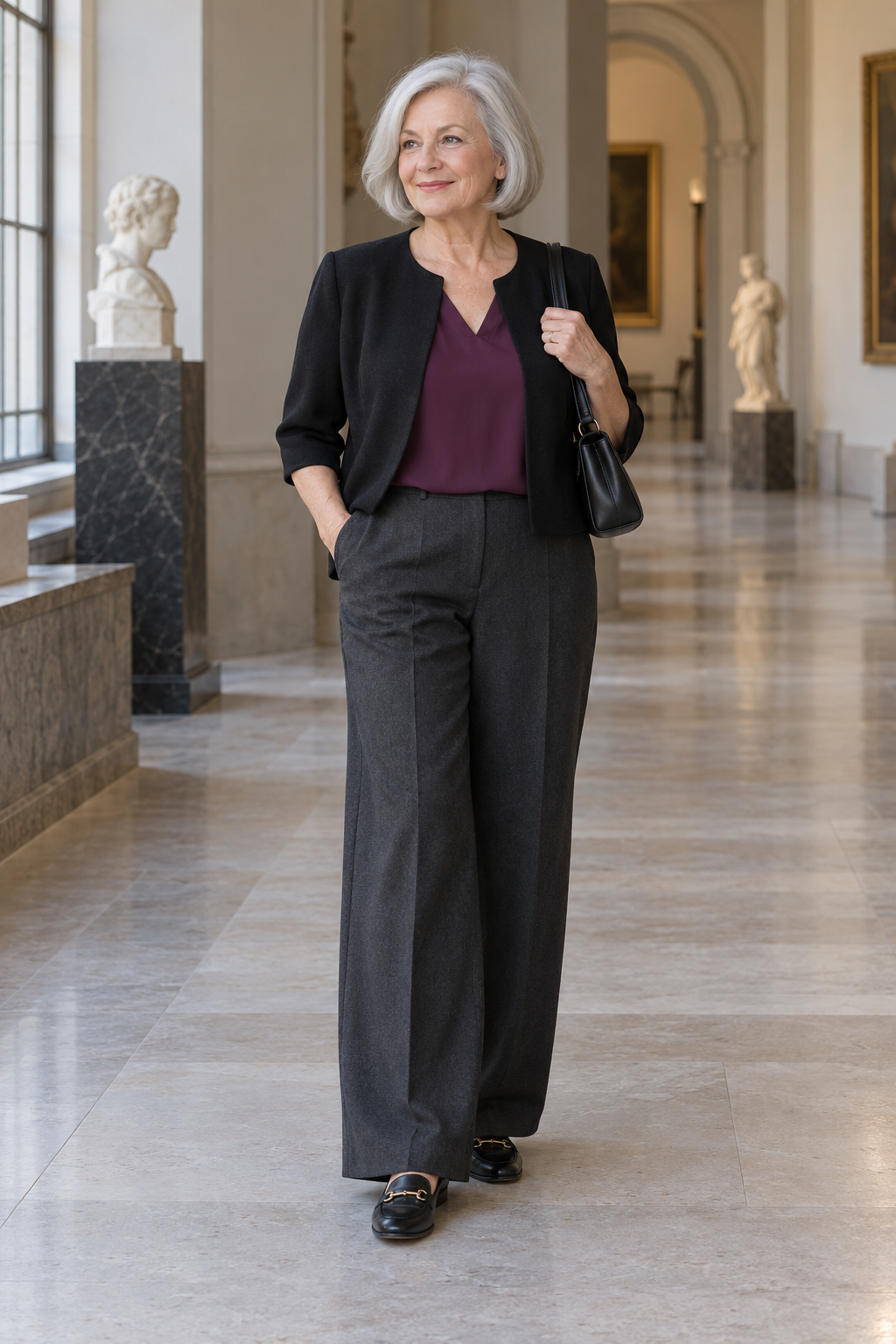
Charcoal wide legs and a plum blouse offer a tailored alternative for a museum day with plans afterward. A short black collarless layer leaves the blouse neckline visible, with black loafers and a small shoulder bag below it. The outfit uses one muted color accent rather than several separate details.
Check the full-length pants in the shoes intended for the journey. Walk and turn before deciding the hem works, particularly if the pants were previously worn with a different sole height. A wide leg needs to clear the ground in the real combination, not simply fall neatly in a photograph.
If you want a more casual version, compare another top while keeping the pants and shoes fixed. That shows the effect of the change without creating a completely different outfit.
Cream Cords and a Dark Neckline

Cream corduroy and a dark turtleneck keep this gallery combination to two main color areas. Black ankle boots and a small charcoal bag continue the darker details. The broad textured pants make the lower half more substantial than a narrow jean, without requiring a larger bag or additional accessories.
Look at where your own pant hem meets the boot before planning the day around them. A soft upper edge or a different shaft opening can catch the fabric when you walk. If that happens, compare the actual boot and leg shape together rather than assuming the color combination is the problem.
Choose any additional layer for your journey and the current conditions. Corduroy texture in an image doesn’t verify fiber, warmth or cleaning instructions; those belong to the real garment.
A Denim Shirt Dress for a Long Afternoon

A denim-look shirt dress keeps the museum outfit to one main garment, with charcoal tights and brown ankle boots beneath it. The narrow tie follows the dress’s own waist area, while a small brown crossbody supplies the carry. Rolled sleeves leave the cuffs clear of the hands in this illustration.
Tie your own belt for sitting as well as standing. A knot that looks tidy in a mirror may feel different during a meal or a talk, and you can choose how closely you want the dress shaped. Don’t use a tighter tie to compensate for a dress that feels wrong through the shoulders or chest.
Check the button front when you reach and sit. The outfit should let you enjoy the visit without relying on the bag to conceal a fastening that pulls.
A Polo Knit With Camel Pants
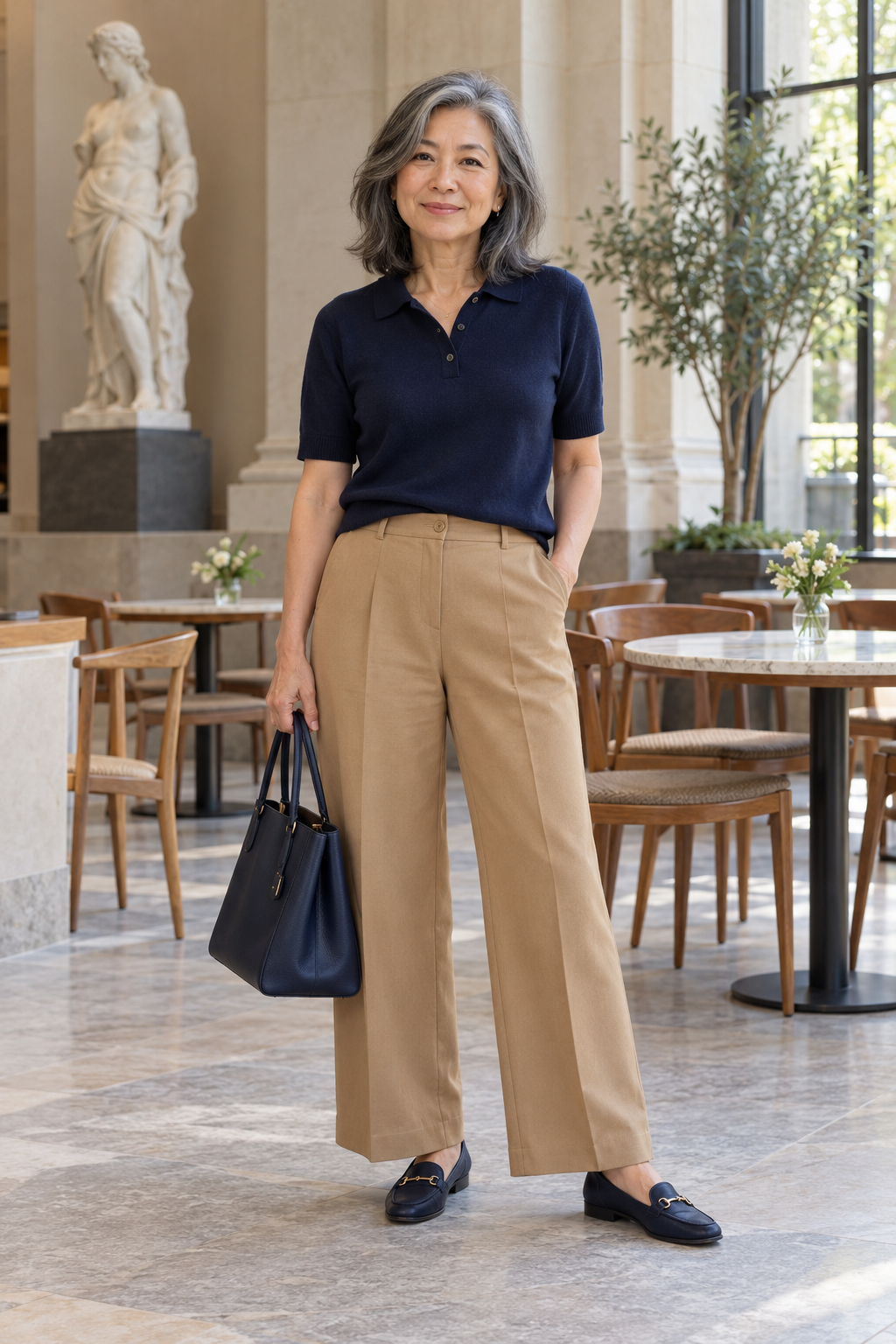
A short-sleeve navy polo knit and camel wide legs offer a simple base for a museum cafe and the galleries. Navy loafers repeat the top color, and a navy tote keeps the palette quiet. The polo’s collar adds a small detail without needing another neckline layer.
Assess this base before deciding whether to bring a jacket. You may want an outer layer for the journey or prefer another sleeve length, but make that choice from your plans and the conditions. The image doesn’t establish indoor temperature or prove that one level of coverage suits every visitor.
The tote is roomy, so pack and check it deliberately. If you need less space, a smaller bag can keep the same color relationship while changing what you carry for the day.
Check storage before adding another layer
Don’t plan around a coat check without confirming that your destination offers one. For example, the Smithsonian American Art Museum’s visitor guidelines currently state that it does not offer coat or bag storage. That is a specific venue’s policy, not a rule for every museum; check the current page for the place you will visit.
This can affect which jacket or bag is useful. A layer you like wearing may still be inconvenient to carry for the afternoon. Try handling it alongside your everyday essentials before deciding that another coat is worth bringing. The illustrated bags show styling choices, not assurances that any particular size meets your venue’s requirements.
Rehearse one ordinary transition. Remove the outer layer, put the bag back on and sit down as you would for a break. If several pieces need rearranging, simplify the combination before buying another accessory to make it feel finished.
Keep the shoes and base outfit familiar
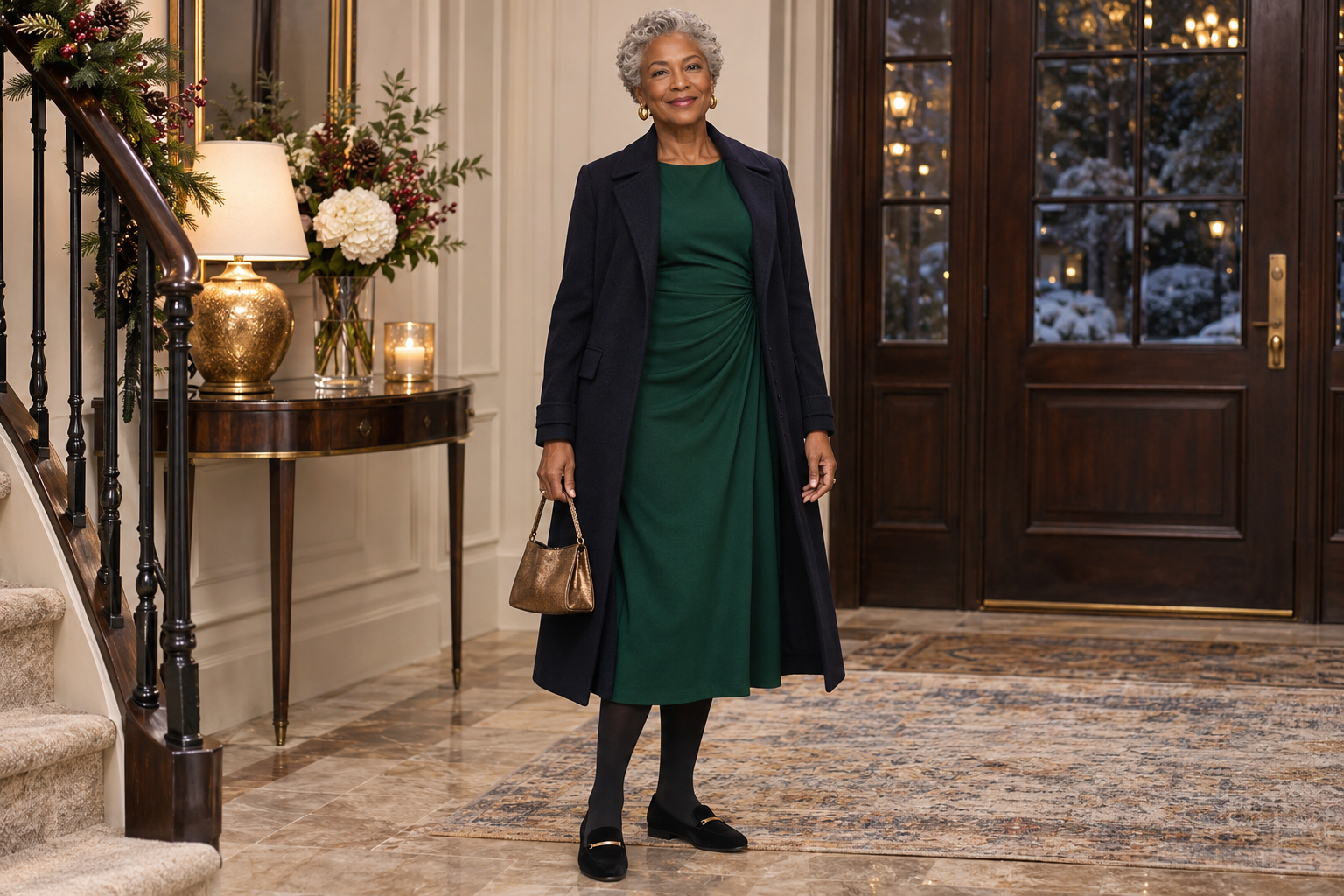
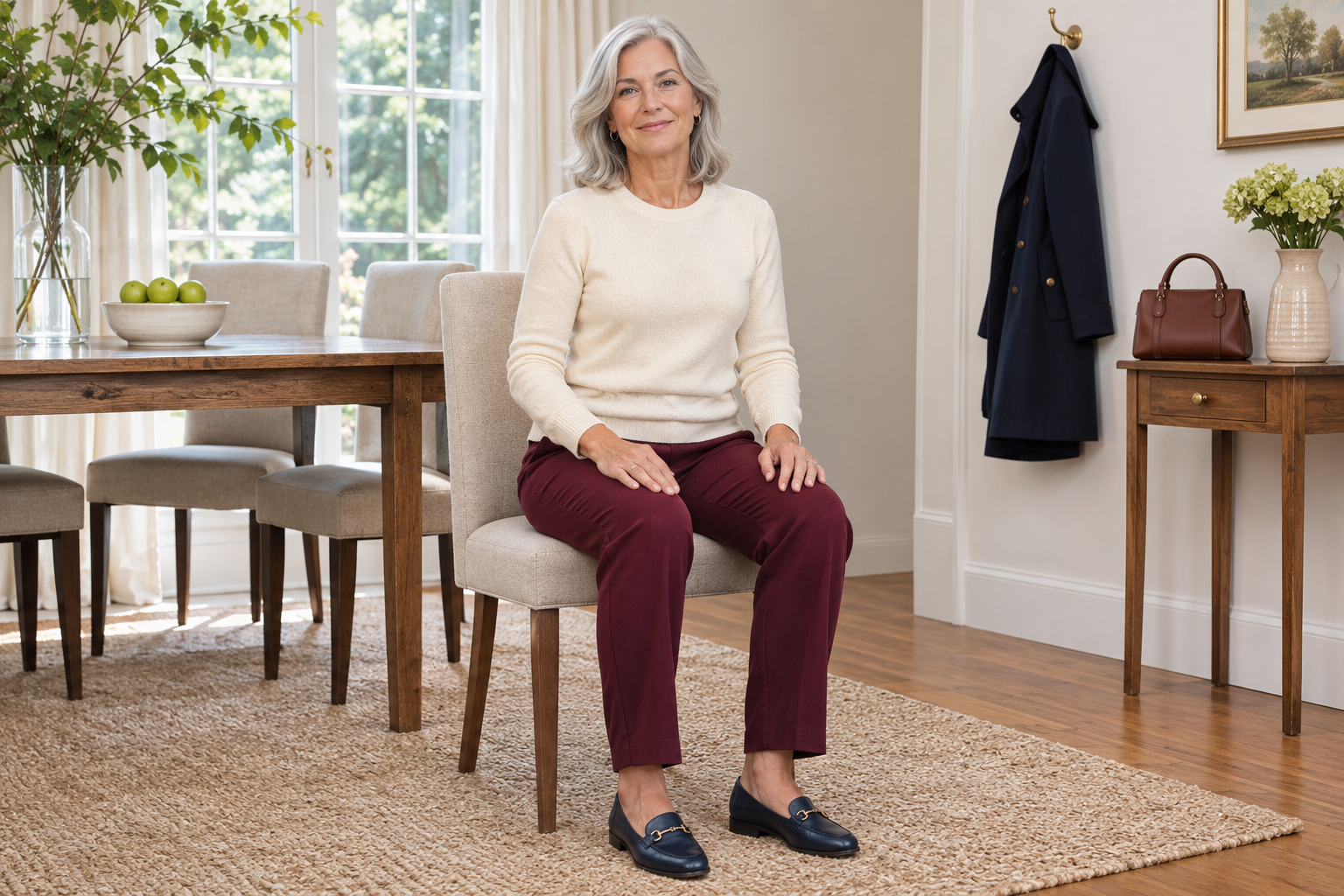
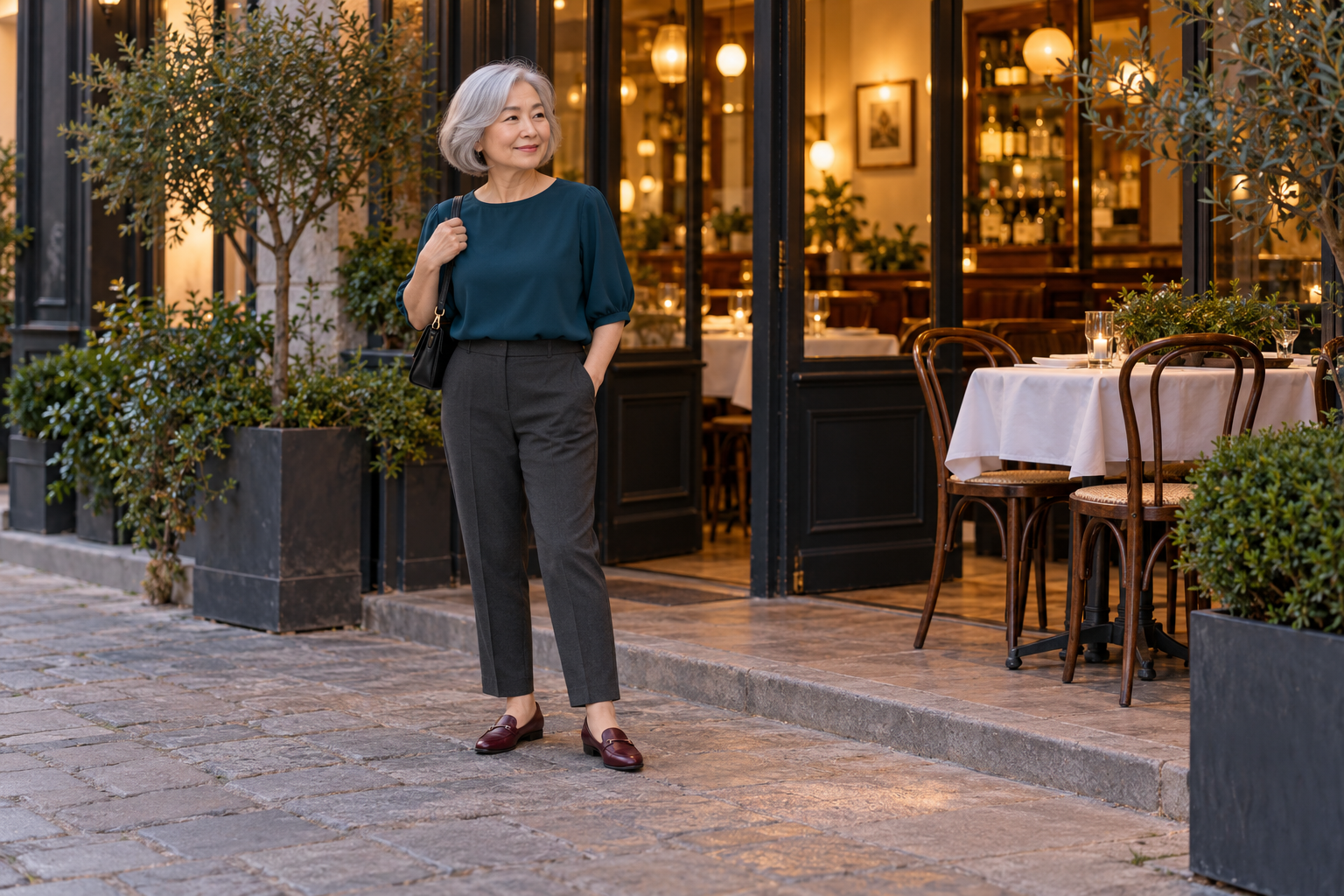
A museum day is a useful occasion to begin with footwear you already know rather than assuming a new pair will feel right because it looks suitable. Plan around your actual journey and preferences. The shoes pictured here offer visual options; their appearance cannot establish support, comfort or how far you can comfortably walk in another pair.
If the jeans need a length comparison before you settle the shoes, our jeans inseam guide separates that decision from the rest of the outfit. For a broader closet starting point, these everyday combinations show familiar pieces in different proportions.
Use the real garments’ care instructions rather than the textures in these illustrations to decide how to clean them. The FTC’s care-label guidance explains the role of item-specific instructions. Finish by choosing one outfit that works with the visit you have planned, including the parts of the day outside the gallery.
Images are original AI-generated editorial illustrations, including selected images reused from our editorial library with newly written explanations. They are not personal wear tests, measured garments or venue approvals.

Alia Hashim
I'm Alia Hashim — a passionate blogger and founder of Modern Lady Magazine. I started this platform to create a space where women could find inspiration, empowerment, and real-life solutions for style, beauty, wellness, and beyond. Through Modern Lady Magazine, I aim to celebrate the modern woman — confident, creative, and full of dreams — while sharing ideas that help nurture both inner strength and outer beauty. Every story, every tip, every idea here is crafted to inspire you to embrace your journey and live life beautifully, one step at a time.
View author profile →