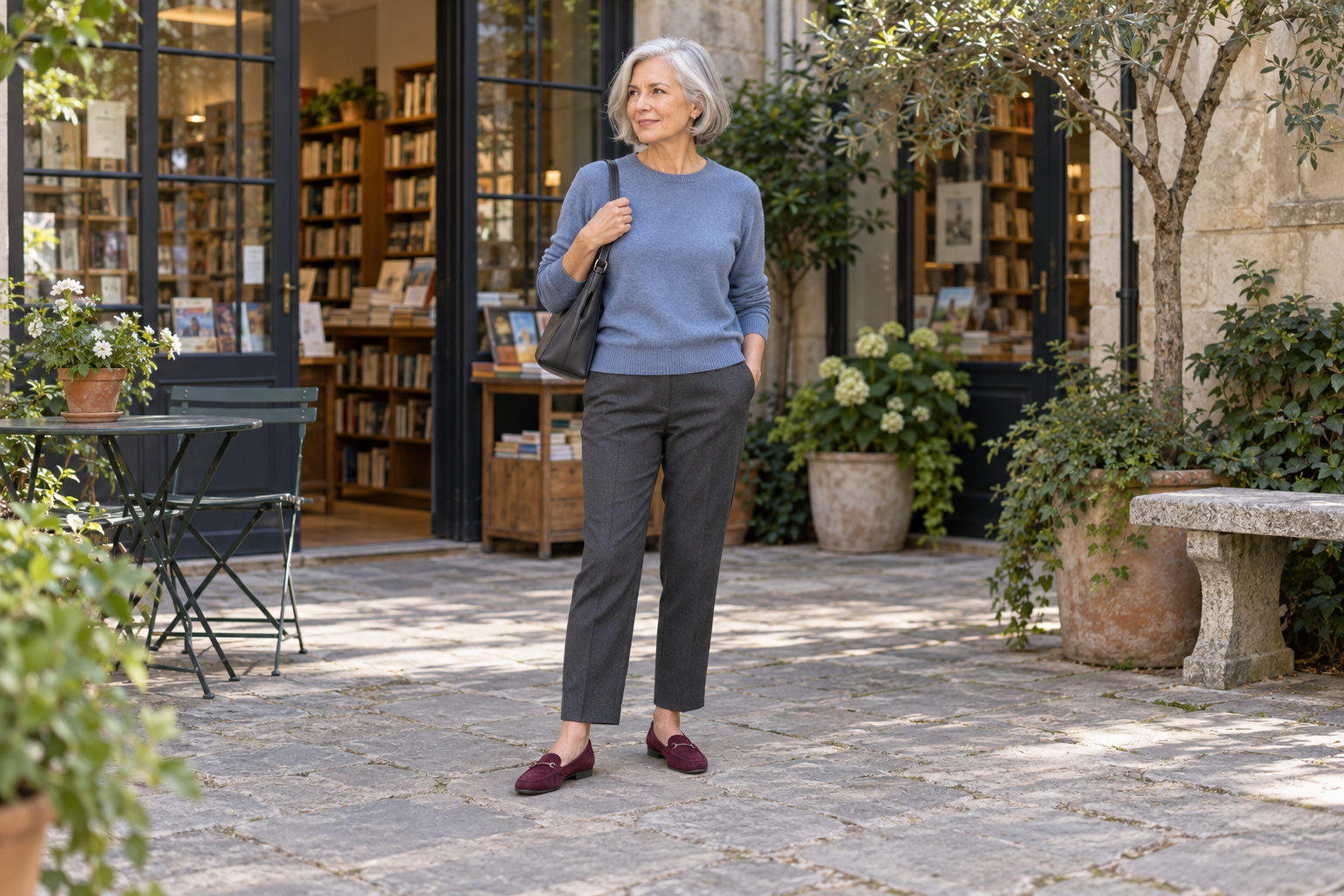
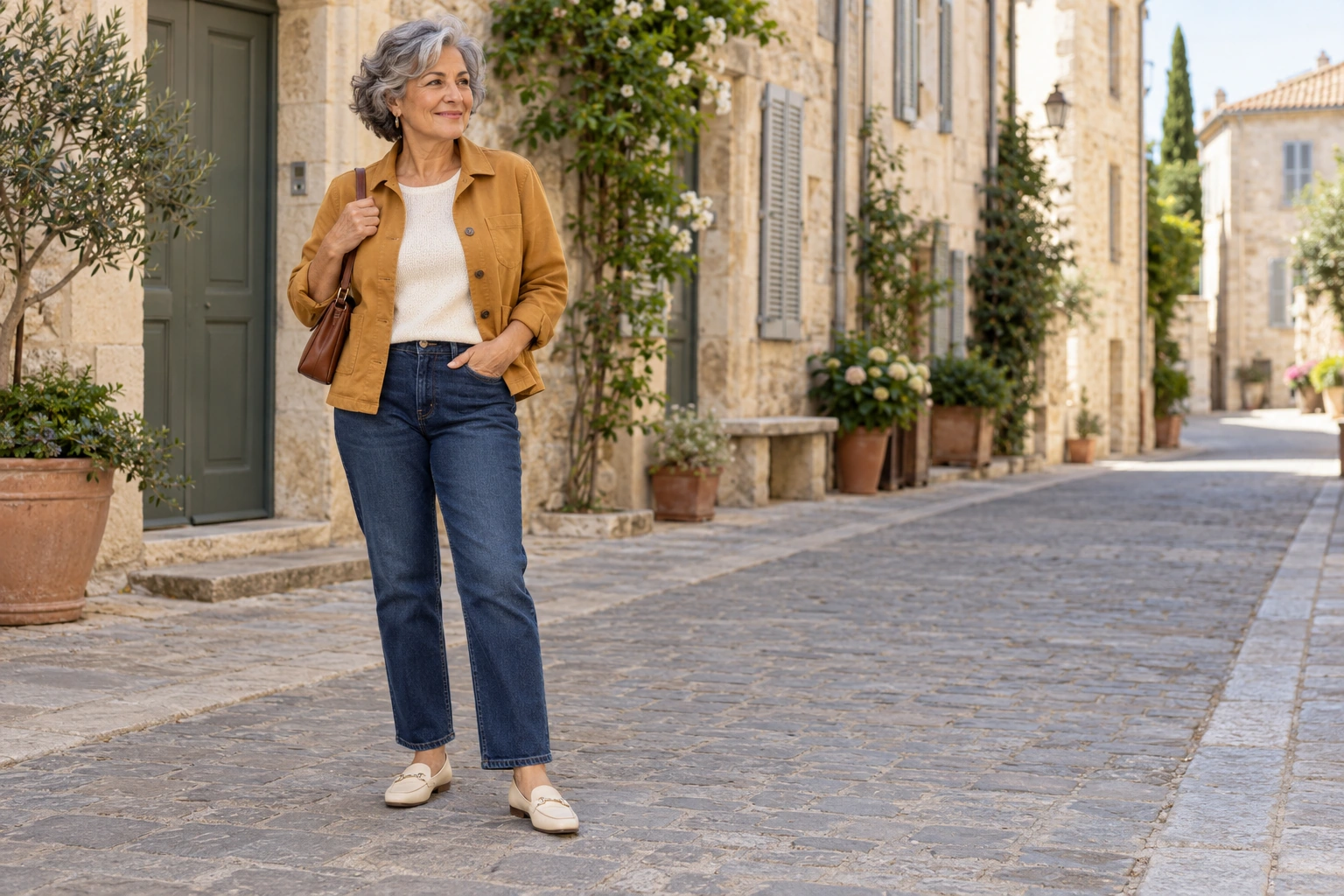
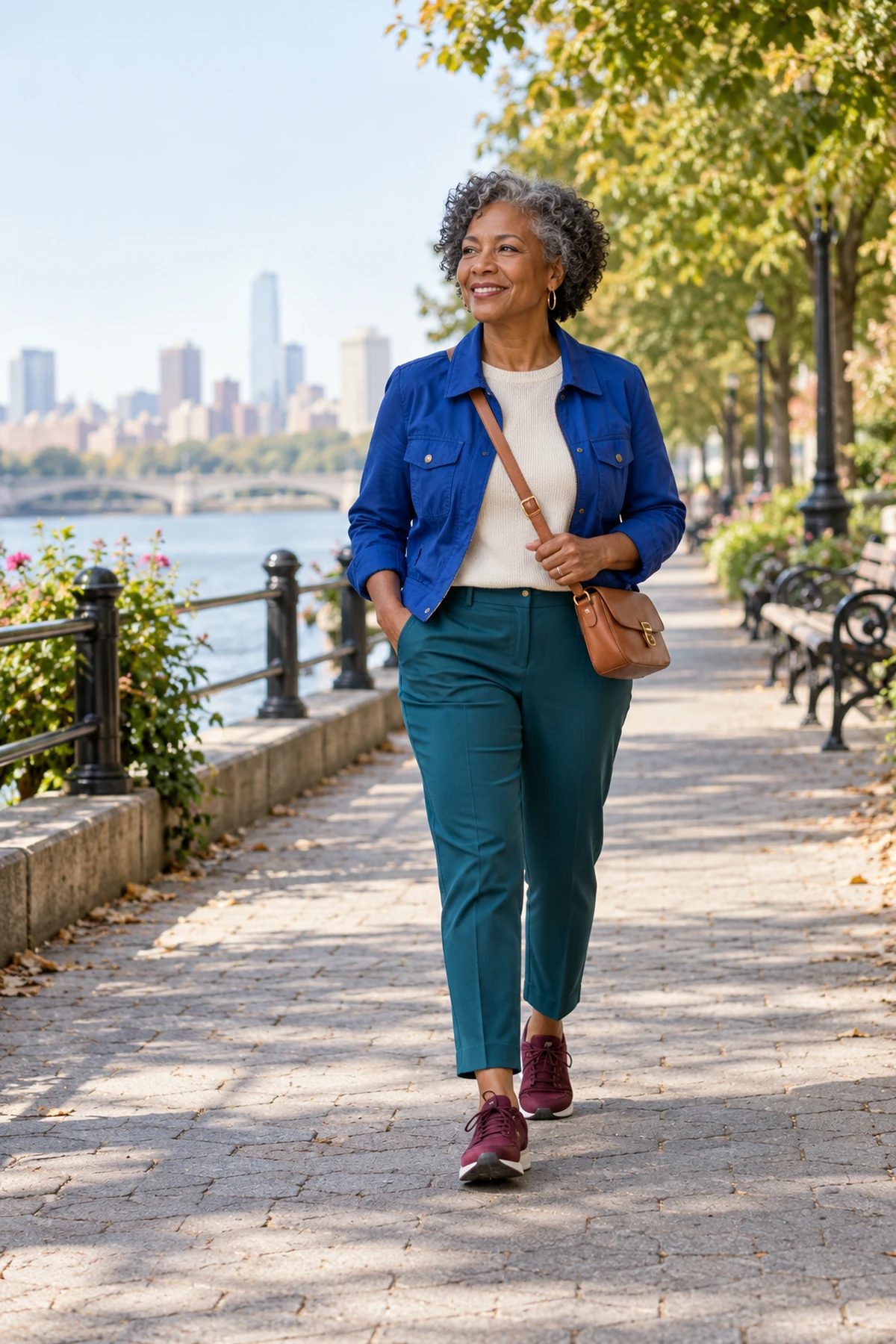
Sneaker outfit ideas for petite women over 50 can start with the clothes you already wear: straight jeans, a shirt dress, a skirt or tailored trousers. Put on your actual sneakers before judging hems and layers. A shoe change can alter where fabric falls, but it does not require replacing your whole wardrobe or following an age-based dress rule.
These 17 original illustrated looks explore everyday combinations beyond gymwear. They are styling examples, not evidence that a model tested a shoe. For an early trouser comparison, our petite wide-leg pants guide offers more ways to consider volume and hem placement. Choose coverage, fit and footwear according to your own day.
Choose the Outfit Before Adding More Pieces
Start with one decision that changes how the outfit behaves. The table helps you compare clothes already in your wardrobe, without treating one shoe shape or trouser length as compulsory for petite women.
| Starting Piece | Check With Sneakers On | Try Next |
|---|---|---|
| Full-length trousers | Does the hem drag or catch at the heel? | Compare a shorter hem before buying a taller sole. |
| Midi skirt or dress | Can you stride and sit with the coverage you want? | Adjust the opening or try another length. |
| Layered separates | Do the waistband and layer hem crowd one another? | Remove one tuck or choose a lighter base. |
Start With Familiar Clothes and a Different Shoe
Jeans and a blazer are one entry point, but dresses, pleats and a jumpsuit create different decisions. Compare the shape around the shoe as well as the color. A low collar may sit differently from a higher tongue, and a thicker trouser cuff can change the result even when the rest of the outfit stays the same.
A Navy Blazer With Straight Jeans
Navy tailoring gives familiar jeans a clearer destination than workout clothes. The open blazer frames an ivory tee, while a tan crossbody adds a warm note without another large layer. White low-top sneakers keep the finish simple beside straight blue denim.

Notice where the jeans stop: just above the shoes, with no thick roll competing with the laces. Your ideal hem may sit elsewhere. Compare it wearing your own sneakers rather than borrowing a trouser length chosen for heels.
Start with jeans you already like. Check blazer sleeves and shoulder movement, then try the tee tucked and untucked. Choose whichever version stays comfortable when you sit.
A Striped Shirt Dress With Navy Canvas Shoes
A shirt dress makes the sneaker decision pleasantly direct: one main garment, one pair of shoes. Here, narrow blue-and-white stripes meet navy canvas sneakers, with white laces echoing the lighter stripes. The tied waist introduces shape without another contrasting belt.
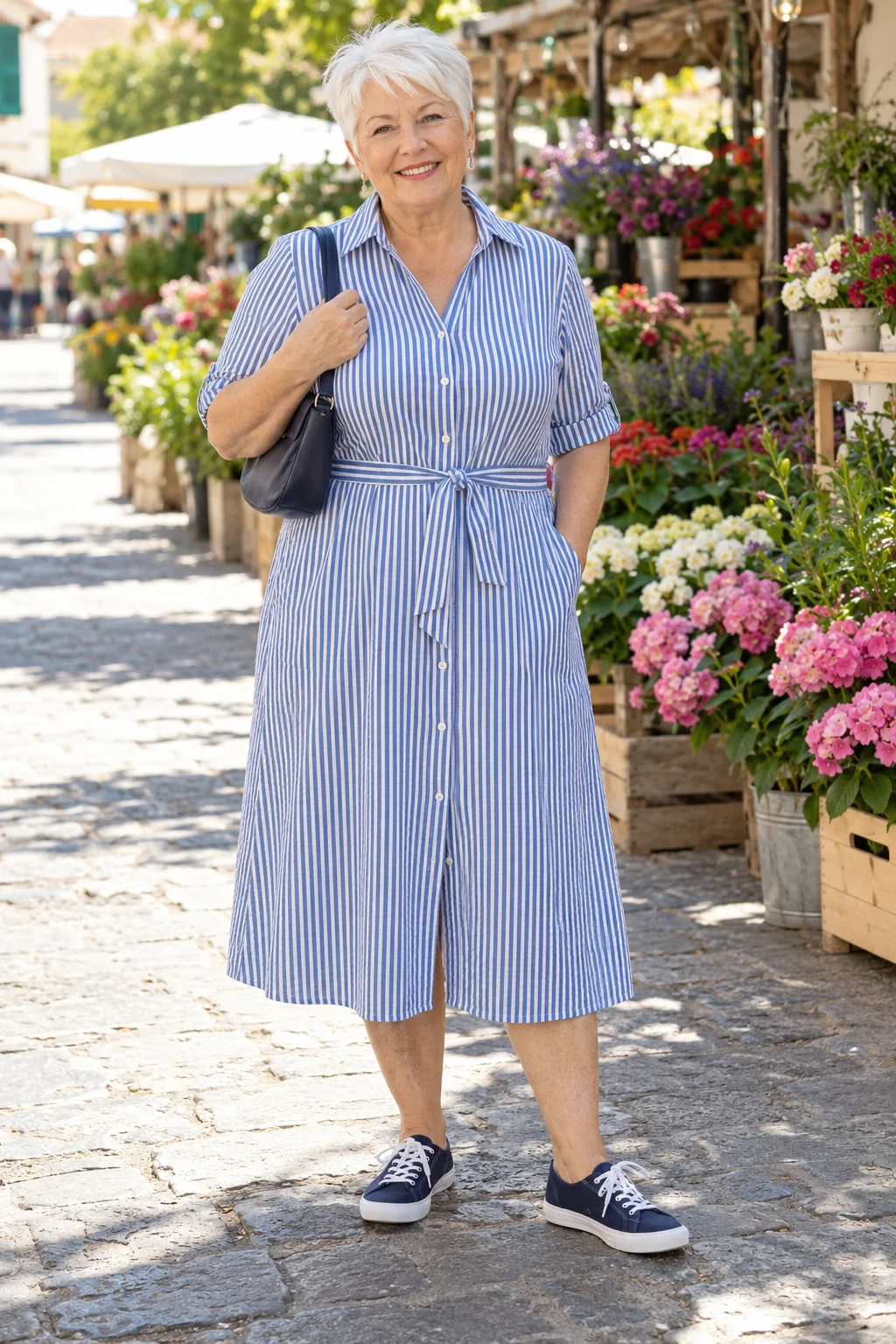
Keep the button-front opening in mind when you move. Sit, take an ordinary stride and reach forward to check whether the neckline and lower buttons stay where you want them. A longer hem is an option, not a requirement.
Rolled sleeves and a small navy bag finish the outfit quietly. If the waist tie feels restrictive, try a looser knot before deciding the entire dress needs replacing.
A Fine Knit Above a Pleated Skirt
Pleats introduce movement; burgundy sneakers introduce a definite color choice. The sage knit stays quiet beside an ivory midi skirt, and a matching burgundy handbag repeats the shoes without making every accessory identical. It is a useful alternative when a skirt outfit feels too formal for an ordinary outing.
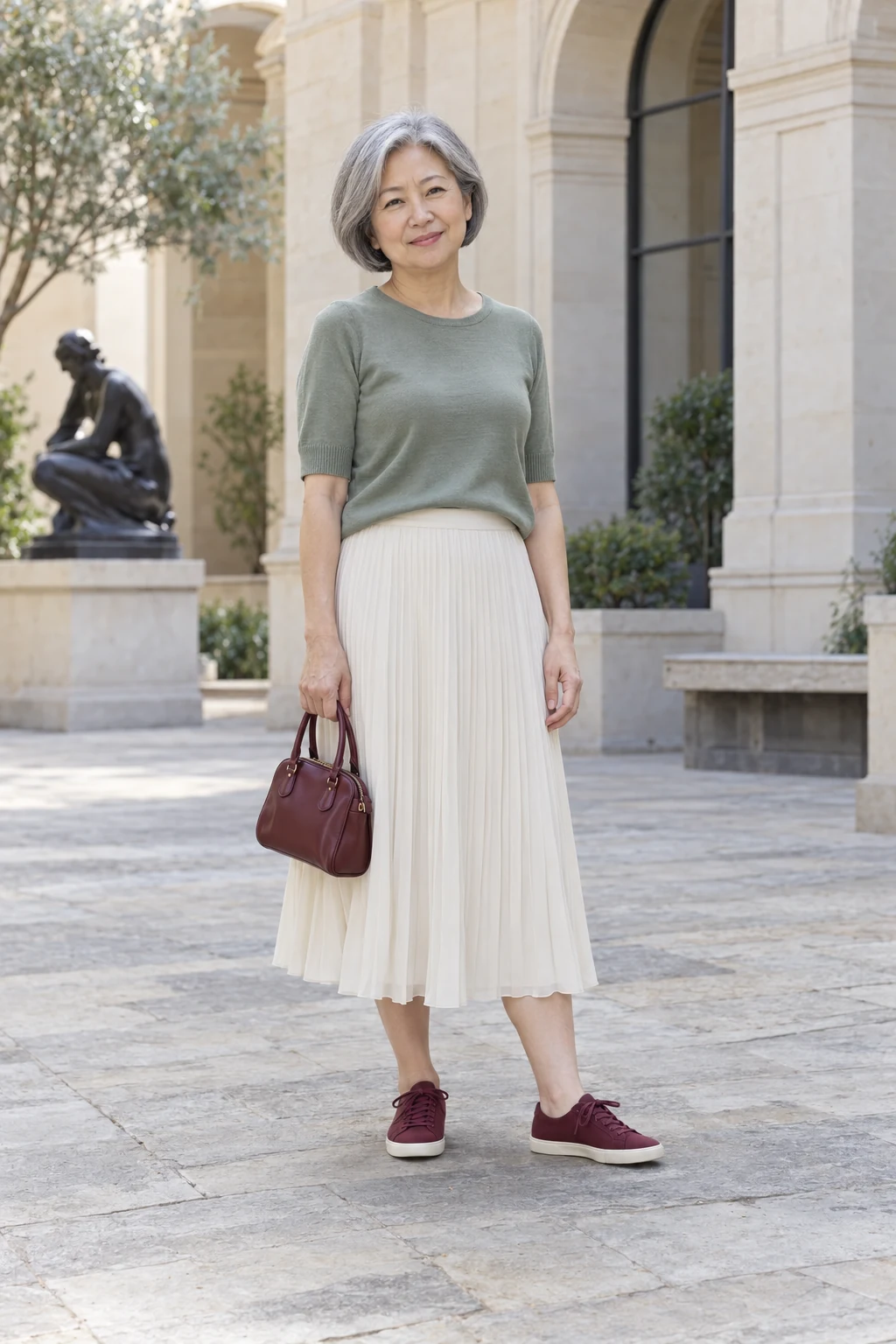
The slight front tuck shows the waistband without filling it with a thick fold of knit. Try the same skirt with your own low shoes before changing its length: pleat movement and walking room matter alongside the still photograph.
- Keep the tuck shallow if folded fabric bunches at the waist.
- Compare the shoe color with one accessory already in your wardrobe.
A Collarless Jacket With Charcoal Culottes
Charcoal culottes leave space around pale grey sneakers, making the trouser opening easy to see. A black base top and small crossbody connect the darker elements, while the oatmeal jacket adds texture without a bulky lapel. The result offers a quieter route into sneakers with tailored clothes.

Notice the open collarless front. It allows the black top to remain visible and makes removing the jacket straightforward. Compare a similar layer with your own waistband rather than assuming every petite jacket must stop at exactly the same point.
Keep one check simple: walk across the room and look at the cuffs afterward. If they catch on the shoes or twist, try a different hem width before adding another styling detail.
An Olive Jumpsuit With Cream Sneakers
An olive jumpsuit removes the need to coordinate separate tops and bottoms. Cream sneakers and a cream shoulder bag lighten the single-color base, while a fabric waist tie gives the outfit an adjustable finishing point. The button front keeps the styling straightforward.

Before copying the tie placement, check torso length: the distance through the body of a jumpsuit. Sit down, raise your arms and notice any pulling at the shoulders or crotch. Tightening a belt cannot correct a body section that is too short.
Try the sneakers before deciding where to hem the legs. Here, the ankle-length opening clears the shoes. Keep enough room to move, and choose a closure you can manage easily during an ordinary day.
A Coral Shirt With Tailored Knee Shorts
Coral brings the color; the rest of the outfit stays light and uncomplicated. A loose front tuck exposes the stone shorts waistband, while white sneakers repeat neither the shirt nor the woven bag exactly. There is no need to match every piece.
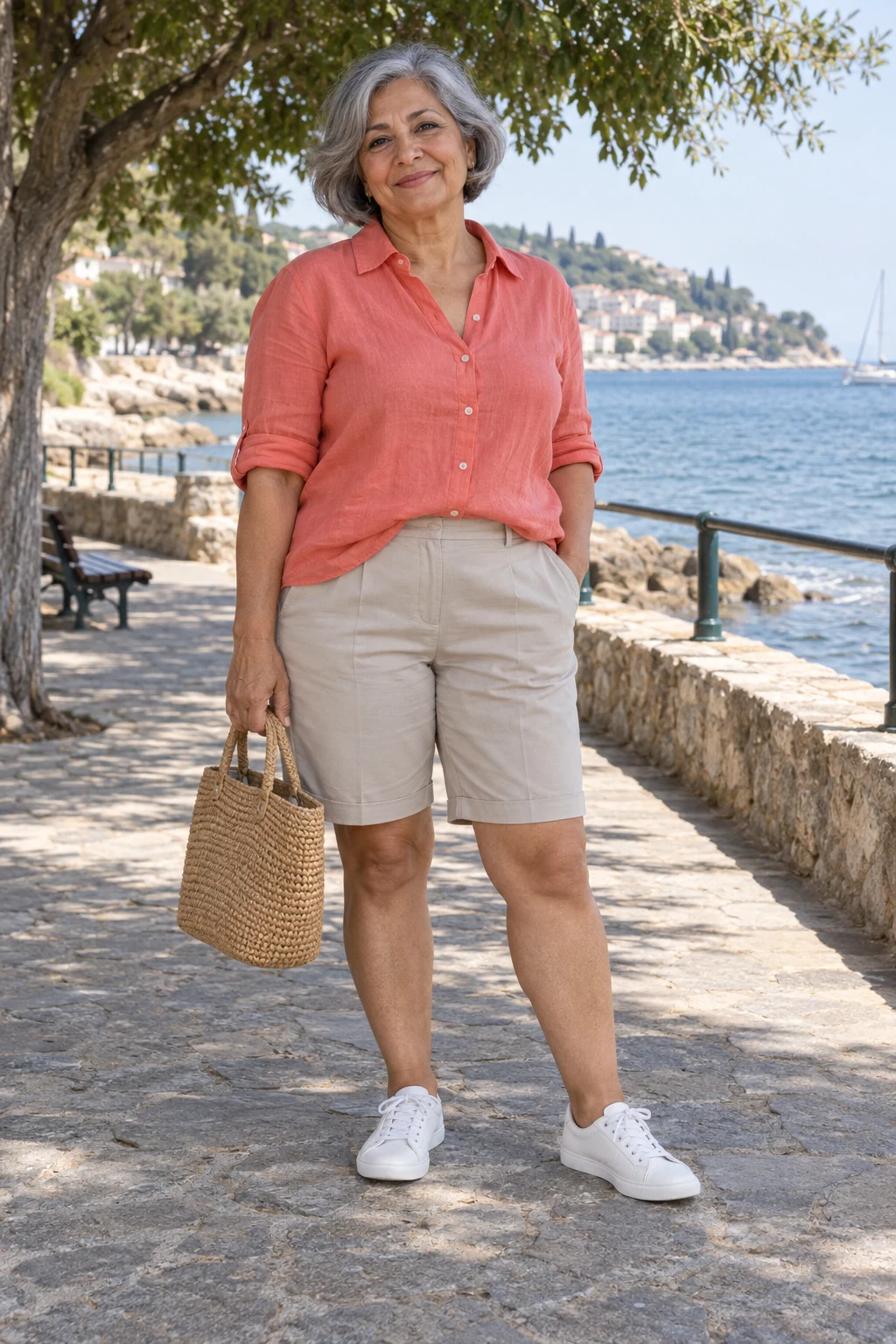
These tailored shorts finish above the knee in the illustration. Choose your own length by sitting, bending and walking, then checking the coverage you prefer. A longer Bermuda cut can keep the same shirt-and-sneaker idea.
Rolled sleeves leave the forearms clear, and the woven tote suits an informal outing. Keep the shirt untucked if that feels better, but compare the side view so its hem does not hide more of the shorts than you intend.
A Sleeveless Knit With Linen Trousers
Wide trousers do not require heels. Here, ivory fabric falls over taupe sneakers beneath a chocolate sleeveless knit, with a dark shoulder bag repeating the top. The contrast comes from color and texture rather than a pile of accessories.
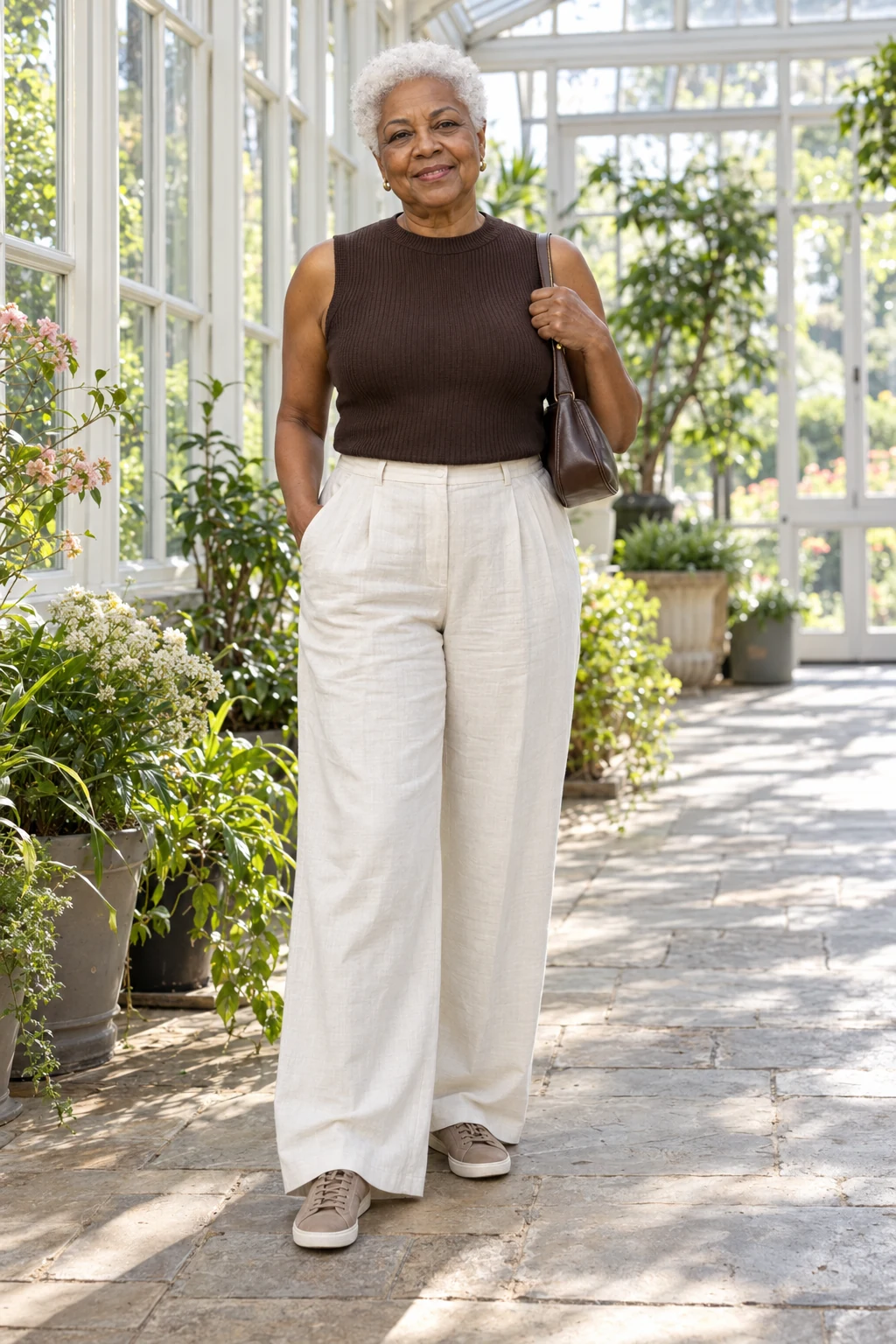
Full length needs a real fitting check. Wear the sneakers you intend to use and notice whether the hem brushes the ground or catches at the heel. The photograph illustrates the combination; it cannot determine the right inseam for your legs.
- Check white trousers in daylight before deciding on lining or underwear.
- Try the knit untucked if the waistband feels crowded, then compare the overall length.
Let Dresses, Skirts and Texture Change the Mood
A denim skirt, straight knit dress or open overshirt can make sneakers part of ordinary daywear. If you want more alternatives beyond the examples below, see our skirt outfit ideas. Choose a length and opening that let you move normally; no single hemline suits every petite body or outing.
A Chambray Shirt With a Denim Midi
Two blues. One clear accent. A light chambray shirt sits above a darker denim skirt, while a red crossbody gives the combination a focal point away from the white sneakers.
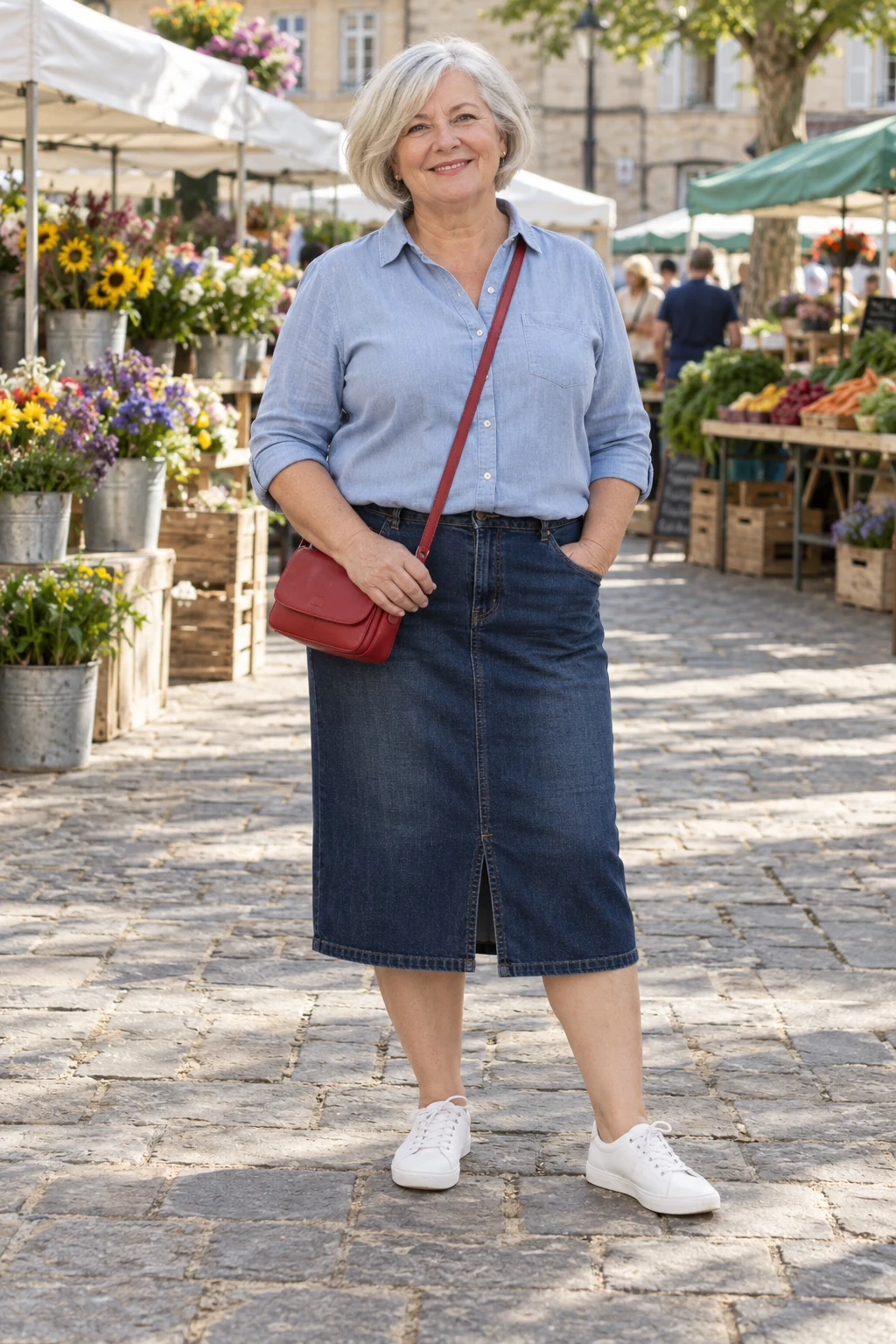
The skirt’s front slit is a useful detail to inspect rather than a decoration to copy automatically. Check how far it opens during a normal step and when you sit. Choose more overlap or another skirt shape if the coverage does not suit you.
A rolled shirt sleeve keeps the upper half relaxed, and the tuck makes the waistband visible. Leave the shirt out if you prefer, then compare its hem with the slit and skirt length before adding a belt.
A Plum Knit Dress With Silver Sneakers
Silver sneakers give a plain plum dress a different finish from sandals or ankle boots. The grey handbag echoes their lighter tone, while the dress remains one uninterrupted block of color. There is little else to arrange.

A straight knit follows the body more closely than a pleated skirt. Look at the side opening when you walk, then check whether the dress returns to position after sitting. Choose more ease if you find yourself repeatedly pulling it down.
Try the Full Outfit in Daylight
Assess the actual knit for opacity, not just its color on a screen. Wear your intended underwear and socks during the fitting check, so a last-minute change does not alter how the outfit feels.
A Checked Overshirt With Ecru Jeans
A small checked overshirt changes the mood of light jeans without asking the sneakers to become the main event. Rust and cream checks sit over an ivory tee; chocolate shoes and a brown crossbody repeat the warmer tones. The pieces remain easy to separate for other outfits.
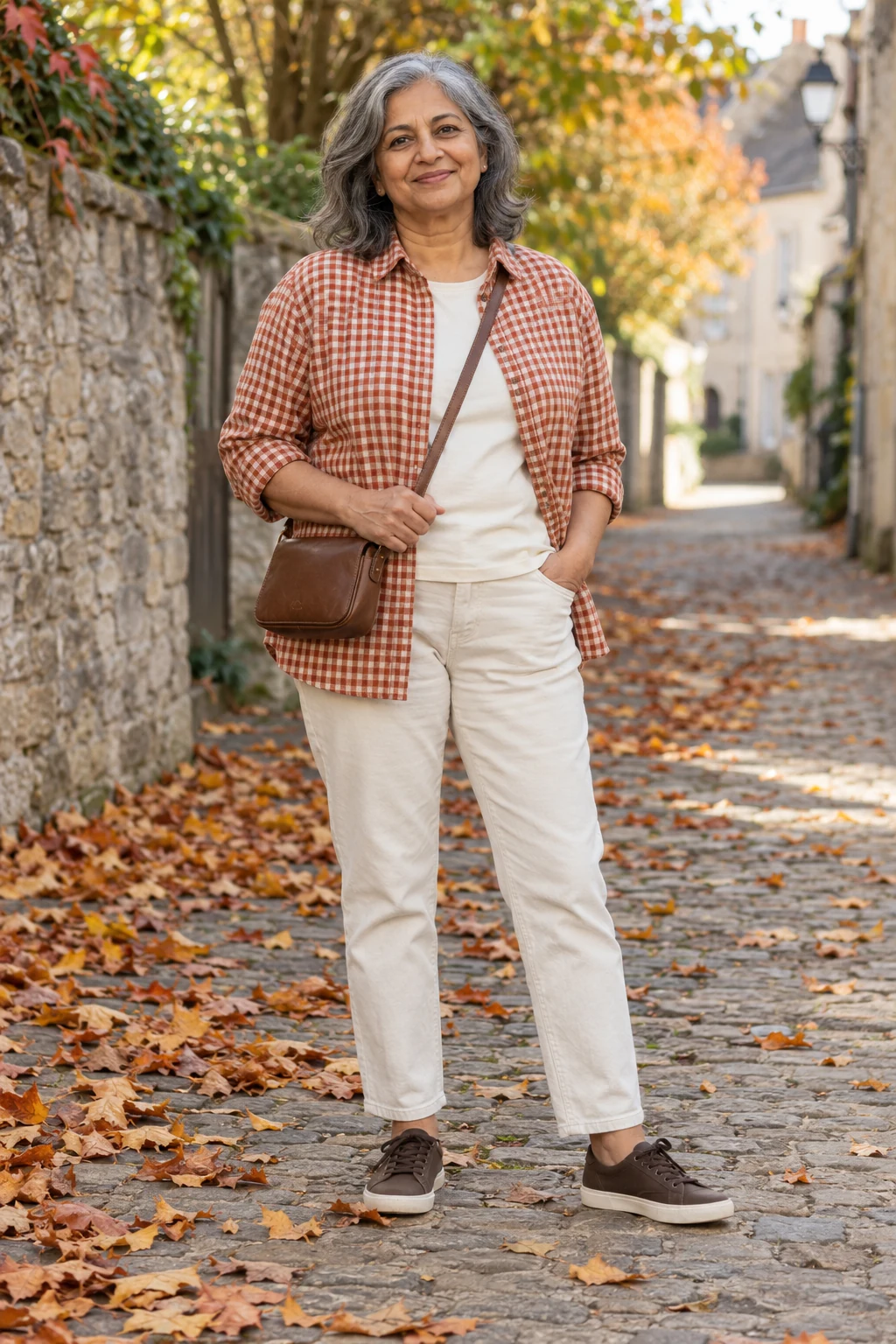
The long open front creates two visible layers rather than one heavy tucked bundle. Check the shirt across your back and shoulders with the tee underneath, then compare the hem from the side.
If the overshirt covers more of the jeans than you like, try a shorter version already in your wardrobe. Leave the shoe decision until the jeans are on: their opening should settle without catching on the laces.
A Utility Jacket With Tapered Chinos
Utility pockets and narrow stripes make this combination feel different from a blazer outfit. A sage jacket sits open over the tee, with navy chinos and a small navy crossbody keeping the base consistent. Cream sneakers introduce a lighter finish without another strong color.
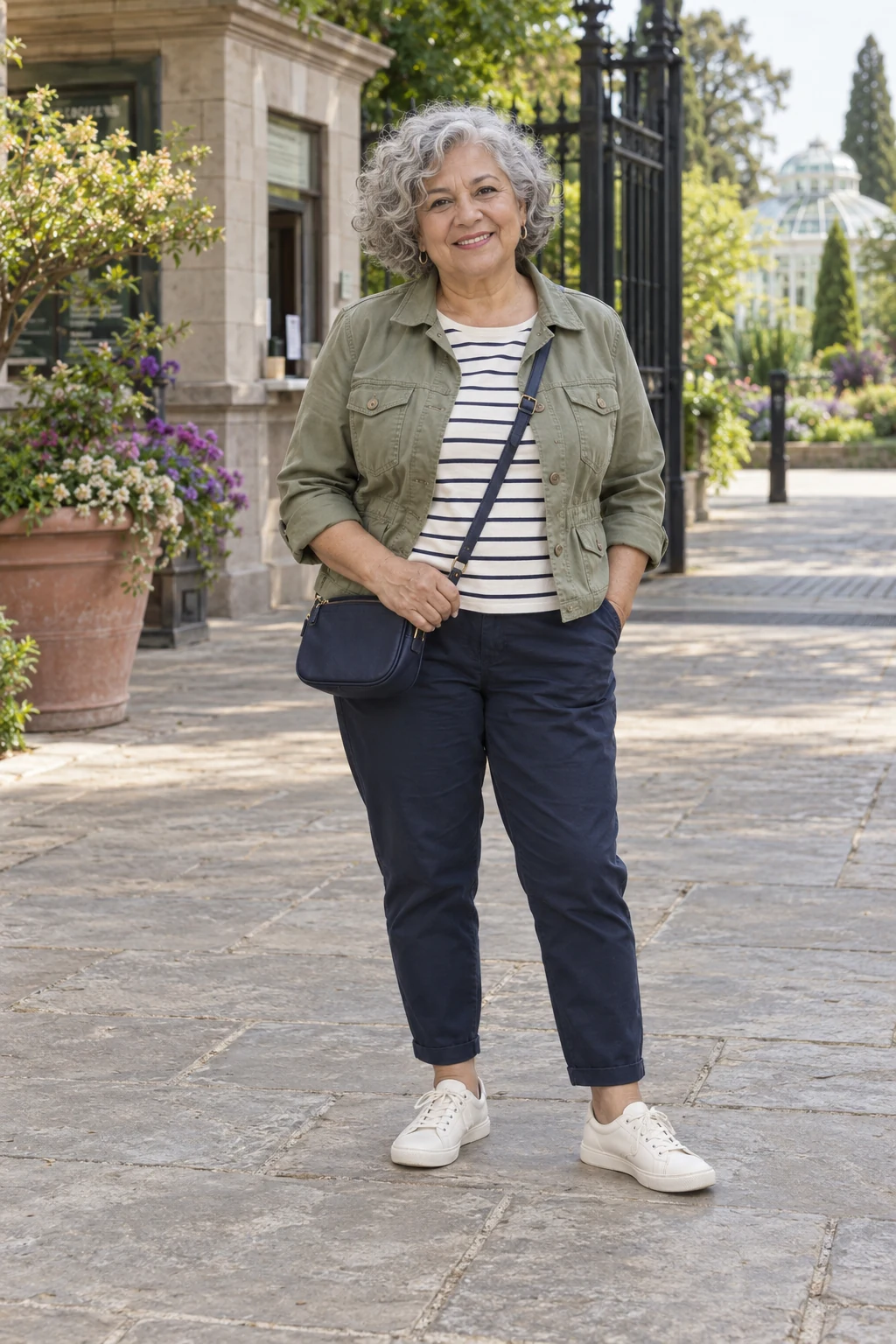
Notice the small trouser turn-up. A cuff changes both length and thickness, so compare one neat fold with the uncuffed version. Several bulky rolls may behave differently above your own sneaker collar.
- Move your arms with the striped top beneath the jacket to check shoulder room.
- Look at the chino hem after walking, not only while standing for a mirror check.
A Cord Pinafore Over a Light Knit
A corduroy pinafore offers another route when jeans feel repetitive. Chocolate fabric brings visible ribbed texture, while an ivory long-sleeve knit separates the darker straps from the face. Navy canvas-style sneakers keep the palette grounded.

The important fitting point is the layer beneath the straps. Try the pinafore over the top you will actually wear; a thicker sweater can change armhole space and the way the bodice sits.
Check strap length and button placement before judging the skirt hem. A shoulder adjustment can change more than the dress length alone.
A small tan satchel supplies contrast without another pattern. Keep the bag strap clear of the pinafore fastening so dressing and removing a layer remain straightforward.
A Denim Jacket With a Soft Satin Skirt
Matte denim and a softly reflective skirt make an effective contrast without relying on a dressier shoe. The ivory shell connects visually with white sneakers, while a navy shoulder bag sits quietly beside the blue jacket. Muted teal keeps the skirt distinct from both denim and the pale base.

Look at the waistband beneath the open jacket. It remains visible rather than sitting under several tucked layers. With your own clothes, check whether the shell pulls up when you lift your arms or sit.
Try the skirt in daylight and take a few normal steps. Its appearance cannot establish fiber content or lining, so assess the real fabric for coverage and consult its care label before choosing how to clean it.
A Cable Vest With Corduroy Trousers
Cable knit and corduroy bring two visible textures into the same outfit. Cream sits over pale blue at the top, with rust trousers and dark green sneakers adding deeper colors below. A brown handbag belongs to the warm side of the palette without copying the shoes.

Layering deserves attention here. The shirt hem remains visible below the vest, and the sleeves are rolled. Compare that arrangement with a tucked shirt if your own layers bunch at the waistband.
Check the vest armholes over the actual shirt before choosing a thicker base. Then assess the trouser hem with the green sneakers on. Neither a longer vest nor a visible shirt hem is automatically wrong for a petite frame; the useful test is how the combination moves.
A Quick Mirror-to-Movement Check
Use the finished outfit for a short test before deciding it works. Stand, sit, reach and take several normal steps. Watch the hem around the laces, the waistband under a tuck, and the way a jacket falls when you move. Change one detail, then repeat the same movements so the comparison stays useful.
- Hem: stays clear of the ground and does not catch at the heel.
- Layers: buttons and armholes allow your usual movement.
- Coverage: neckline, slits and shorts stay where you prefer them.
Finish With Coverage and Layers That Suit Your Plans
Shorts, a light coat and softly tailored separates show how different a sneaker outfit can feel without becoming sportswear. Decide what your day calls for rather than adding every possible accessory. A single useful layer and a bag you can manage may be enough.
A Navy Polo Knit With Bermuda Shorts
Navy and cream give these longer tailored shorts a different character from a tee-and-running-shoes combination. A collared polo knit sits lightly tucked at the waistband, and burgundy sneakers provide the one stronger accent. The navy bag keeps accessories uncomplicated.

Look at the shorts length while seated, not just while standing. The illustration finishes around the knee, but you can choose more or less coverage. A hem chosen for your plans is more useful than a rule about what women over fifty should wear.
Keep the tuck small enough to avoid pressure at the waist. If you prefer the polo outside, compare its hem with the shorts pockets and try a shorter top before changing the whole outfit.
A Light Trench With Slim Straight Pants
A light stone coat changes the scale of a simple knit-and-trouser outfit. Dusty blue remains visible down the open front, with charcoal trousers, black sneakers and a black crossbody keeping the lower half restrained. The pale coat is the main contrast.
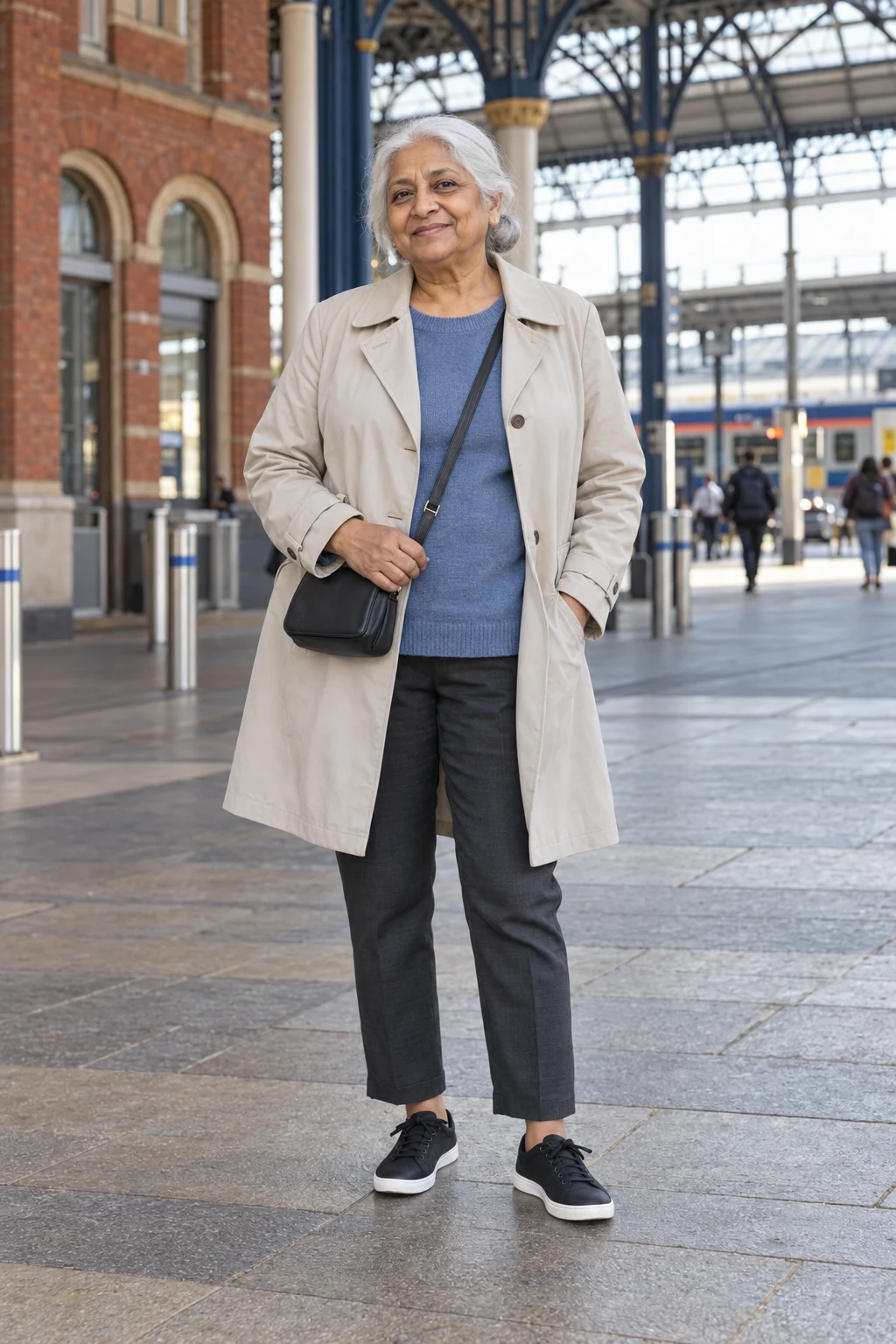
Longer layers deserve a moving check rather than an automatic rejection on a petite frame. Lift your arms, reach into the bag and make sure the sleeves do not cover more of your hands than you prefer.
Keep the coat easy to remove indoors. The shorter trouser hem leaves the sneaker tongue visible here; check your own pair for pooling or catching at the heel before deciding you need a different coat length.
A Tailored Vest With Matching Trousers
Soft tailoring gives white sneakers another job. The taupe vest and matching trousers form a coordinated base, while a plain white tee connects them to the shoes. Burgundy at the shoulder provides contrast without introducing a second pattern or another layer.
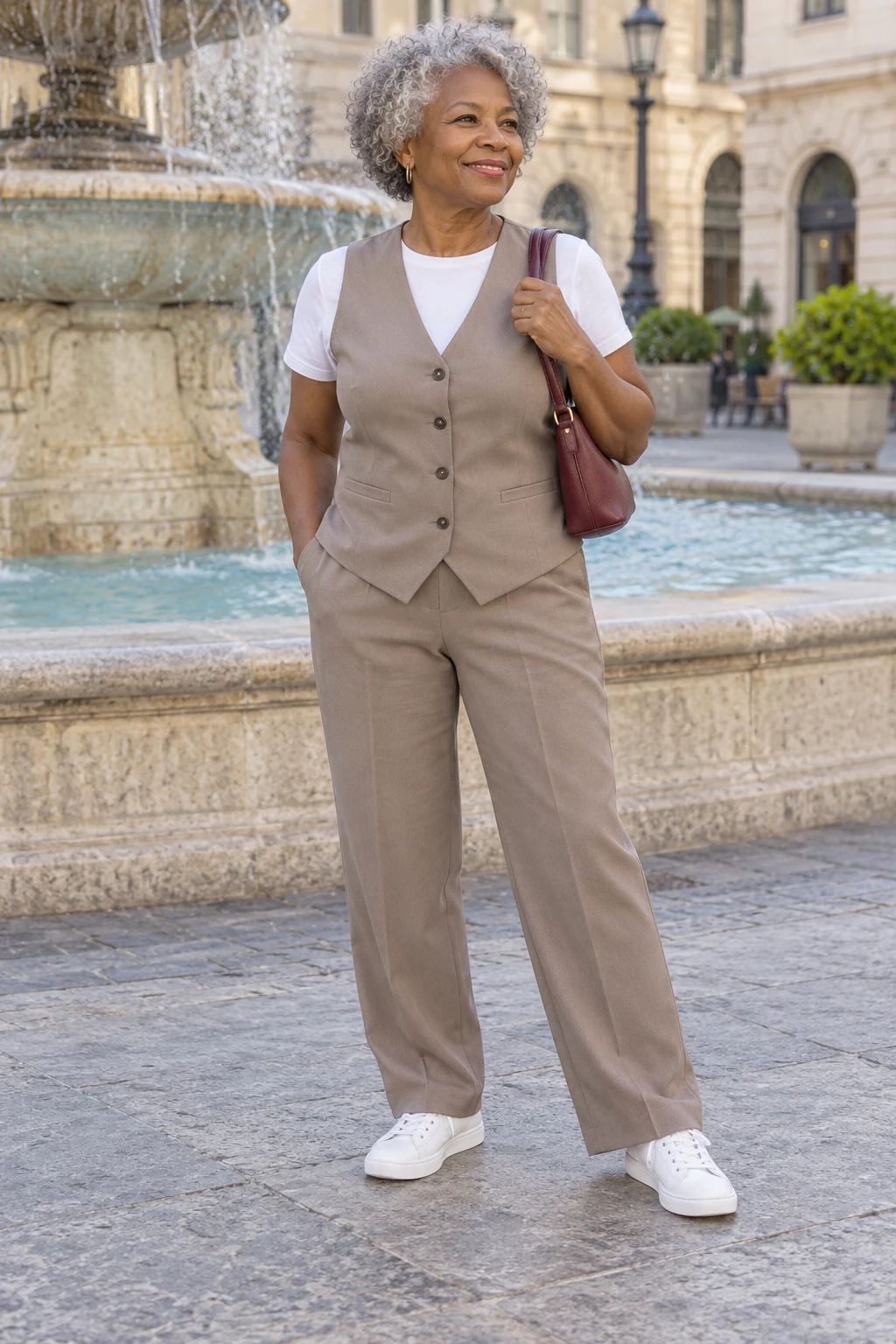
Check the vest buttons while seated. A neat standing fit can feel different across the waist or chest in a chair, and loosening the trousers does not solve a vest that pulls. Try the complete set before judging either piece alone.
- Set trouser length with your actual sneakers, keeping the hem clear of the ground.
- Compare a lighter tee if fabric collects beneath the vest, but keep the coverage you want.
Make the Clothes and Shoes Work Together
Try a sneaker outfit in the setting where you will actually wear it: a short errand, an informal lunch or a day at a museum can involve different amounts of walking and different dress expectations. A styling illustration cannot establish cushioning, grip, water resistance or personal comfort. Choose shoes you have assessed for your own needs, and check the venue’s guidance when a dress code applies.
Care for the Pieces You Already Own
Maintenance can be more useful than buying another pair. Nike’s shoe-cleaning guide starts with removing loose dirt and recommends gentle cleaning and air drying. Follow instructions for your actual shoe material, especially when finishes differ; a treatment suitable for one upper may not suit another.
For clothing, check the real garment’s fiber and care information rather than assuming a fabric from its appearance. The FTC’s apparel-labeling information explains the role of fiber and care labels. Our guide to repurposing old clothes offers another route when a familiar piece needs a different role.
Choose One Combination to Try First
Pick the look closest to clothes you already own. Put on the complete outfit, including socks and your actual sneakers, before assessing length or balance. Change one detail at a time: the trouser hem, a tuck, a jacket or an accessory. Keep the version that suits your movement, coverage and plans rather than collecting every item shown.

Alia Hashim
I'm Alia Hashim — a passionate blogger and founder of Modern Lady Magazine. I started this platform to create a space where women could find inspiration, empowerment, and real-life solutions for style, beauty, wellness, and beyond. Through Modern Lady Magazine, I aim to celebrate the modern woman — confident, creative, and full of dreams — while sharing ideas that help nurture both inner strength and outer beauty. Every story, every tip, every idea here is crafted to inspire you to embrace your journey and live life beautifully, one step at a time.
View author profile →