How to Mix Bright Colors Without Looking Over the Top

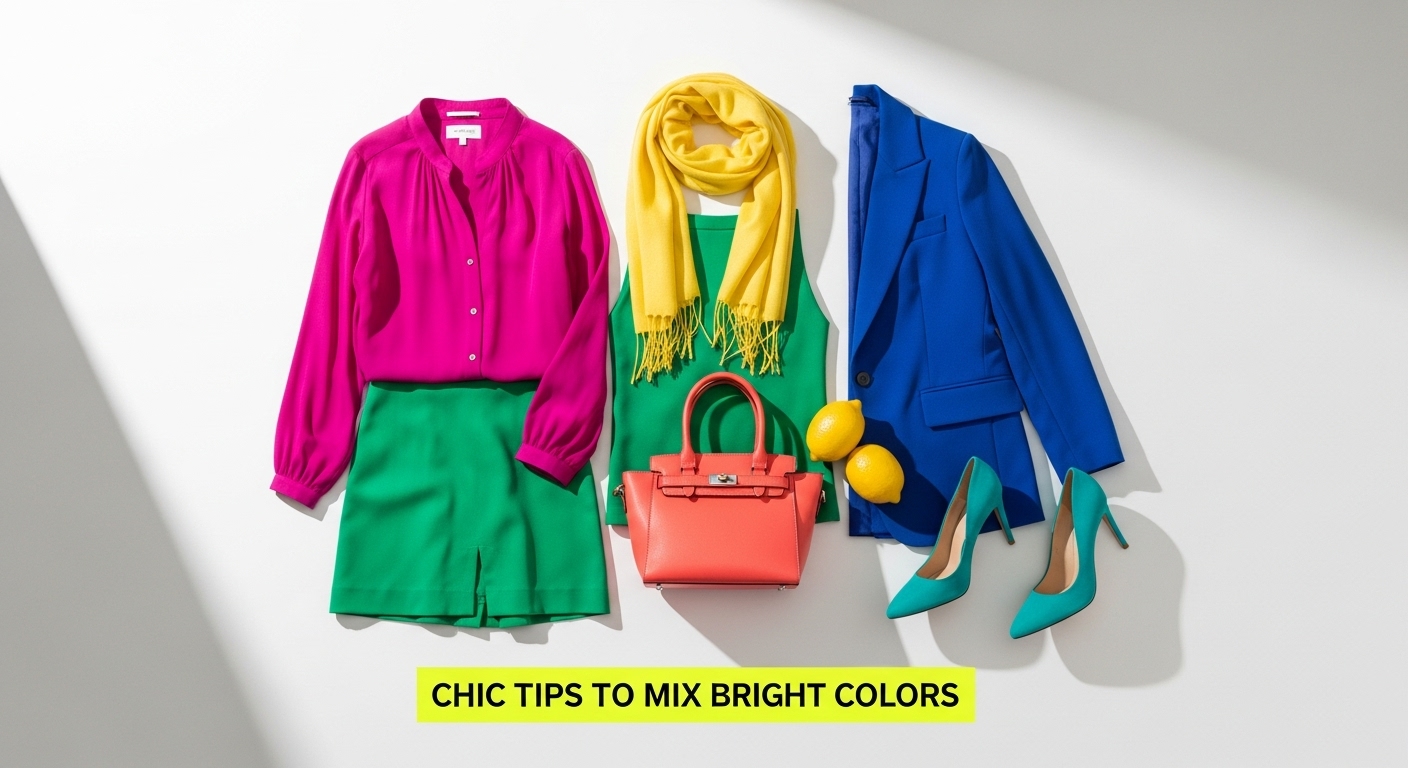
Bright color rises again across US, UK, CA, AU wardrobes. Street style shows bold greens, electric blues, deep magentas. Runways echo same pulse. Strong color. Confident energy. Modern flair. Women lean in. Women want freshness. Women want joy.
Yet hesitation grows fast. Many fear going too loud. Fear looks turning childish or messy. Fear bright shades clashing with personal style. Fear stepping outside muted comfort. Color confidence feels fragile. Bold hues feel risky. Everyday fashion ends up stuck inside beige, black, navy loops.
Good news. Bold-but-balanced looks sit within easy reach. Style can stay chic. Outfits can stay clean. Modern brights can look wearable for work, weekend, events, errands. Only a few clear ideas shift everything. Simple methods turn strong color into polished style. Clear rules lower noise. Controlled contrast lifts elegance.
Guide below shows practical ways to mix saturated hues without overwhelm. Step-by-step ideas shaped for real wardrobes across T1 cities. Expert-backed formulas, undertone guidance, silhouette logic, and season-friendly pairings. Strong color used wisely. Strong color used with purpose. Strong color used with ease.
Your confidence grows from here.
Read More: How to Choose the Right Hat for Your Face Shape
Why Bright Colors Can Feel Overdone — And How To Keep Looks Controlled
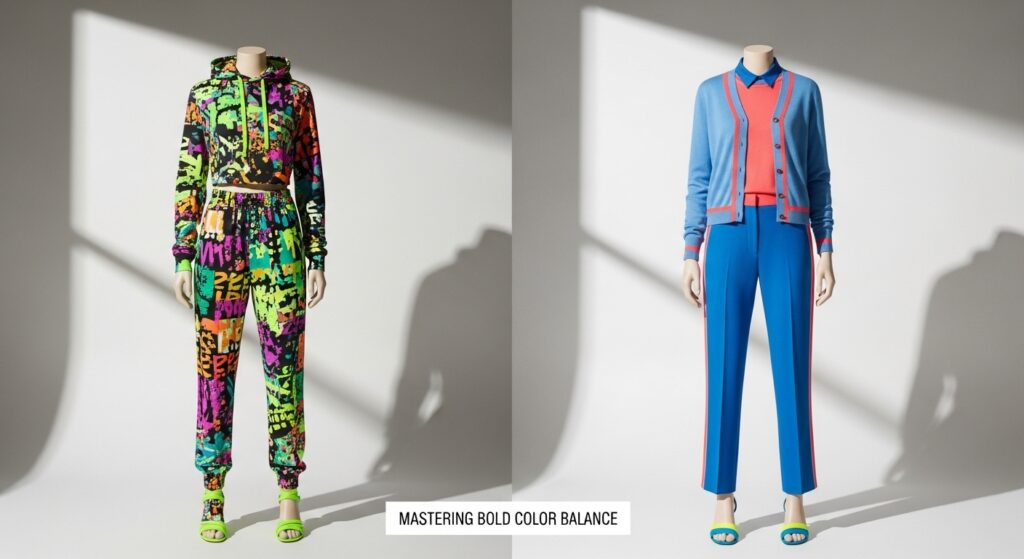
Bright shades carry strong visual weight. High saturation grabs attention fast. Eyes respond instantly. Color jumps forward. Shape feels larger. Movement feels louder. When many brights sit together, energy spikes even more. Looks shift from bold to chaotic within seconds. Women sense it. Women hesitate. Perfectly normal.
Understanding color behavior helps solve everything. Human eye reads saturation before form. Eye lands on strongest shade, not garment cut. High contrast deepens effect. Neon green next to hot pink? Sharp pull. Flame red beside icy blue? Strong clash. Some shades trigger emotional reactions too. Red signals power. Yellow signals joy. Fuchsia signals fun. Powerful traits, yet heavy when combined poorly.
Many outfits fall into trouble when saturation runs unchecked. Too many bright tones placed close together. Wrong undertone pairing. Loud prints clashing with loud colors. No neutral resting point for eye. All create visual noise. Noise hides elegance. Noise kills balance. Quiet control brings it back.
How Color Hits the Eye
Color perception runs on simple rules. Human eye reacts first to brightness, then to saturation, then to contrast. High-saturation hues push forward in space. Vivid surfaces appear larger, closer, louder. Soft tones retreat. Muted shades calm space. When brights sit beside muted pieces, harmony appears. When brights sit beside brights, intensity spikes.
Contrast shapes impact too. Big jumps between light and dark create powerful outlines. Strong contrast pulls focus toward meeting points. Outfits with bold contrast read heavier even when pieces remain simple.
Color psychology layers more meaning.
Red adds power. Strong presence. Fast attention.
Yellow adds cheer. Warm energy. Light mood.
Pink adds charm. Soft joy. Modern playfulness.
Blue adds strength. Calm. Stability.
Green adds balance. Freshness. Nature touch.
Each carries emotional load. When several emotional loads collide without intention, outfit feels confusing. Harmony fades. Controlled placement restores clarity.
Placement matters. Bright trousers widen leg line. Bright tops draw focus upward. Bright shoes brighten movement. Strategic placement gives shape direction, not chaos.
Common Mistakes Women Make
1. Overloading saturated colors
Many stack three or more vivid tones together. Strong saturation fights for space. Eye feels overwhelmed.
Fix: Limit vivid tones to one or two. Add muted or neutral anchor.
2. Mixing wrong undertones
Cool brights fight warm brights. Blue-based fuchsia beside orange-based coral creates odd tension.
Fix: Keep pairings within same undertone family or use one neutral buffer.
3. Loud prints paired with loud shades
Bold prints already carry visual energy. Adding neon or high-saturation colors adds more force.
Fix: Pair bold prints with softer brights or solid muted tones.
4. No neutral grounding
Neutral pieces give eye a pause. Without pause, look grows heavy.
Fix: Add beige, ivory, black, navy, tan, stone, or soft grey.
5. Bright placement on less-preferred areas
Saturated color highlights everything around it. Placing strong color on areas women prefer to downplay leads to imbalance.
Fix: Use brights where confidence feels strongest. Keep muted tones elsewhere.
Key Color Insights Many Women Never Learn
Many guides skip deeper truths. Small but powerful lessons improve every bright outfit.
1. Undertone awareness
Cool tones carry blue base. Warm tones carry yellow base. Wearing opposite temperature near face dulls skin glow. Correct match lifts complexion. Color harmony grows from undertone understanding.
2. Real outfit formulas
Most advice stays vague. Women need formulas. Clear repeatable steps. One bright + one neutral. Two brights + one muted. Monochrome with varied saturation. Formulas remove guesswork.
3. Age-specific guidance
Younger women often enjoy sharper contrast, playful pairings, trend-driven shades. Mature women often prefer refined jewel tones, controlled lines, saturated elegance. Color strategy shifts with life stage, lifestyle, mood.
4. Transition rules for office, day, and evening
Work calls for calm brights—emerald, cobalt, wine, soft coral. Day looks allow playful touches. Evening invites depth, sheen, contrast. Smooth transitions require awareness of surroundings, light, and mood.
All these layers help bright color feel intentional, not overwhelming. Confidence grows when color moves with purpose, not force.
You Might be Interested in: How to Style a Blazar: 15 Trendy Looks to Try
Foundation First — How to Choose Bright Colors That Work for Your Skin Undertone
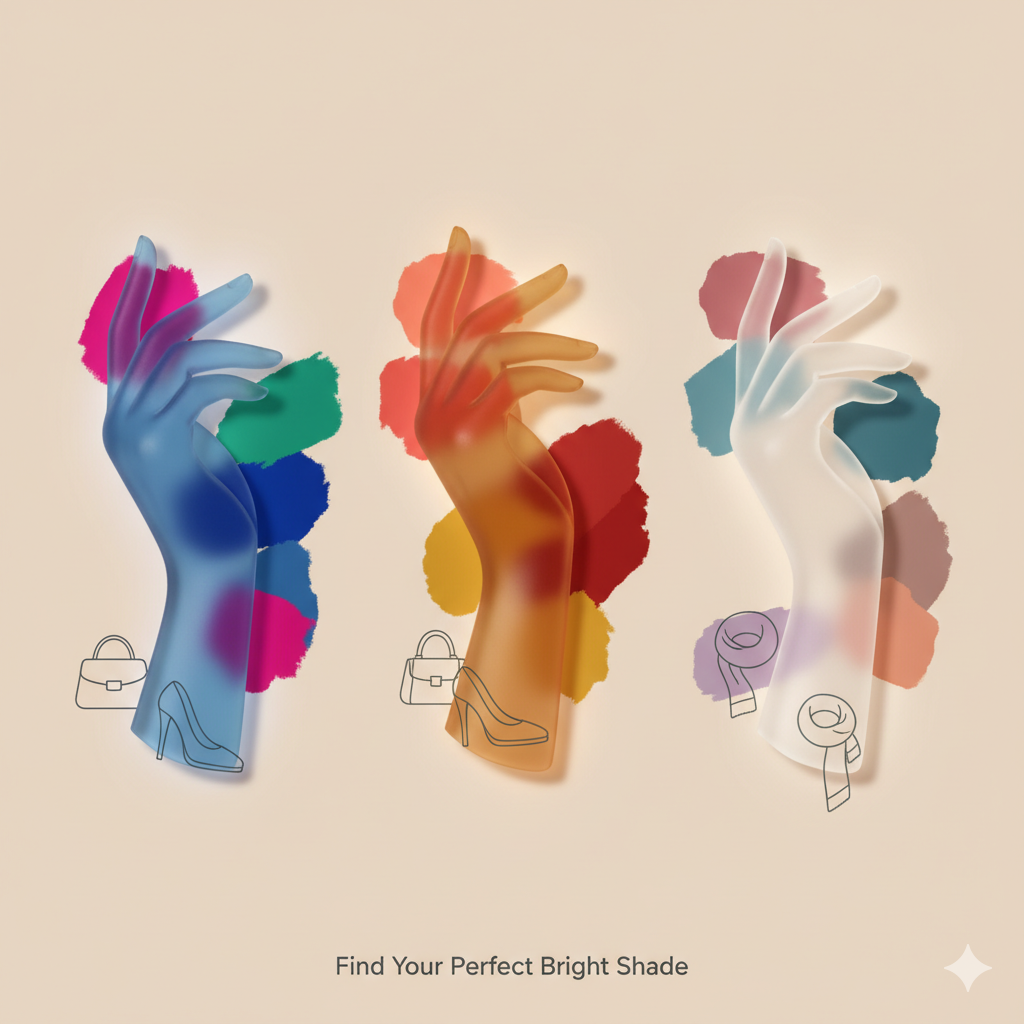
Bright color stays powerful only when undertones align. Skin tone carries its own warmth, coolness, or balance. Color harmony grows from that base. Flattering brights start with simple checks. Graceful pairing follows afterward. Strong hues feel easier once undertone becomes clear. Saturated colors stop fighting with complexion and start lifting it.
Determine Your Undertone (Cool, Warm, Neutral)
Undertone hides under skin surface. Not shade. Not depth. Pure temperature. Cool hues carry blue base. Warm hues carry golden base. Neutral sits in soft center. Small tests reveal balance fast.
Quick tests women use:
Vein check: Blue or purple veins signal cool undertone. Green-tinted veins signal warm. Mixed tones lean neutral.
Jewelry test: Silver glows on cool undertones. Gold glows on warm. Both look balanced on neutral.
White fabric test: Stark white sharpens cool skin. Cream softens warm skin. Both sit well on neutral.
Sun reaction: Fast tanning hints warm undertone. Easy burning hints cool. Mixed patterns often signal neutral.
Clarity makes color selection simple. Once undertone clicks, bright shades fall into place with ease.
Bright Colors for Each Undertone (Explained in Table-Style Paragraph Form)
Cool undertones:
Cool hues enhance skin glow. Blue-based pinks, fuchsia, cobalt, emerald, icy aqua, electric purple. Lemon yellow works well, while mustard feels heavy. Teal shines more than olive. Saturated colors with crisp edges bring clean brightness. Flattering brights stay in blue-based families.
Warm undertones:
Warm hues add radiance. Coral instead of cool-pink. Mustard instead of lemon yellow. Tomato red over blue-red. Olive green over teal. Tangerine, warm turquoise, rich sunflower. Color harmony grows from golden depth. Warm hues create soft, sunlit effect.
Neutral undertones:
Neutral sits lucky. Many shades work. Both cool hues and warm hues adapt well. Slightly softened brights look best. Creamy coral, softened sapphire, rose pink, teal, muted emerald. Ultra-saturated colors may overpower, so gentle restraint keeps balance clean.
Why Undertone Matching Matters
When undertone aligns with bright shade, skin lights up. Eyes look brighter. Lines soften. Strong color feels intentional. When undertone clashes, skin dulls, shadows deepen, features fade. Harmony depends on tone meeting tone. Undertone knowledge turns loud brights into flattering brights. Color confidence grows from here.
Color Wheel Method — Fool-Proof Pairings for Bright, Wearable Outfits
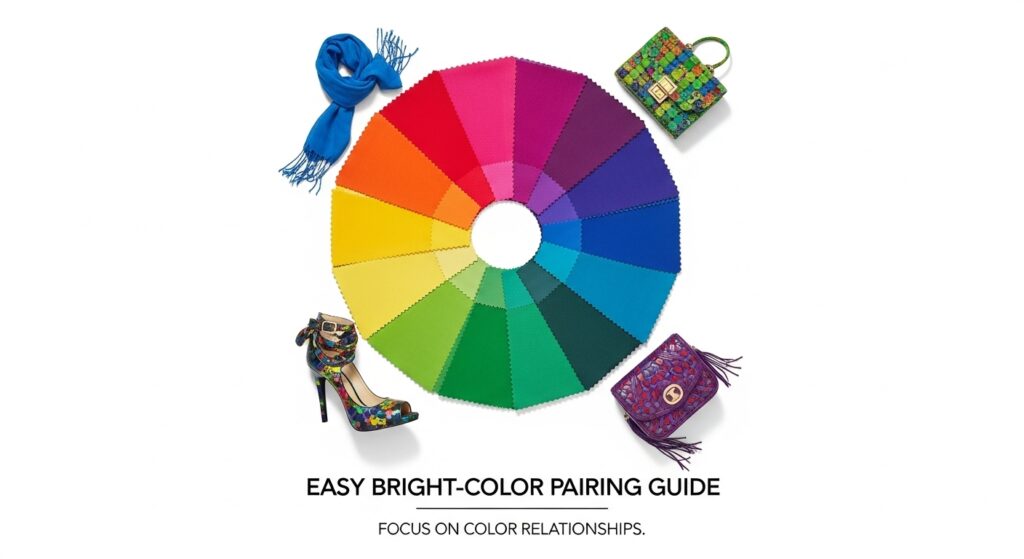
Color wheel gives structure. Clear map. Simple guide. Strong tool for color harmony. Women mixing saturated colors gain instant clarity from it. Every bright shade sits in a relationship with another shade. Some pairings feel calm. Some feel sharp. Some feel bold yet refined. Color wheel reveals why.
Bright color becomes easier when pairing rules turn visual chaos into order. Color wheel offers several safe paths: analogous blends, complementary contrasts, monochromatic flow, tonal layering. Each path shifts energy differently. Each keeps strong hues controlled. Each opens room for creativity without overwhelm.
Below, each method explained with real, wearable outfit ideas tailored for daily style across T1 markets.
Analogous Pairing — Soft Harmony, Easy Balance
Analogous colors sit side by side on wheel. Blue next to blue-green. Orange next to coral. Pink next to magenta. Natural flow. No drama. Smooth transition. Perfect for beginners or women seeking bold-but-balanced looks.
Key rule: pick one dominant shade. Support with softer neighbor tone. Add neutral if needed.
Examples:
– Cobalt top + turquoise skirt + white sandals
– Coral dress + tangerine bag + nude heels
– Orchid blouse + plum trousers + soft beige trench
Energy stays vivid but calm. Saturated colors stay bright without screaming. Harmony feels natural.
Complementary Pairing — High Contrast, Controlled Impact
Complementary colors sit opposite on wheel. Blue vs. orange. Pink vs. green. Purple vs. yellow. Strong tension. Pure contrast. Eye-catching instantly. If controlled, extremely chic.
Key rule: let one color lead. Keep second as accent or softened version. Add grounding element for stability.
Examples:
– Hunter green blazer + soft-pink blouse + cream trousers
– Royal blue trousers + muted-orange knit + nude flats
– Violet slip dress + pale-yellow wrap + gold earrings
Complementary looks stay bold yet refined when saturation stays in balance. Two vivid tones plus one calming neutral create artful contrast.
Monochromatic & Tonal Dressing — Polished Brights, Zero Chaos
Monochromatic style uses one color family. Tonal style uses different depths of same hue. Safe path for women drawn to strong color without wanting shock factor.
Monochromatic example: sapphire blouse + cobalt trousers + navy coat.
Tonal example: fuchsia top + rose skirt + dusty-pink jacket.
Key benefits:
– Elongates silhouette
– Softens saturated colors
– Adds modern depth
– Keeps focus clean
Perfect method for women who want color confidence without maximal drama.
Shade & Saturation Control — Smart Adjustment for Strong Hues
Color wheel shows relationships. Saturation decides intensity. Bright-on-bright feels loud. Bright-on-muted feels sleek. Smart saturation control turns heavy looks into refined style.
Examples:
– Neon green softened with olive
– Fuchsia cooled with blush
– Electric blue grounded with slate grey
– Hot pink eased by pale rose
Saturation control keeps outfit modern, not messy. Careful mix of vivid tone plus softened tone produces richness without overload.
Outfit Formulas That Make Bright Colors Wearable
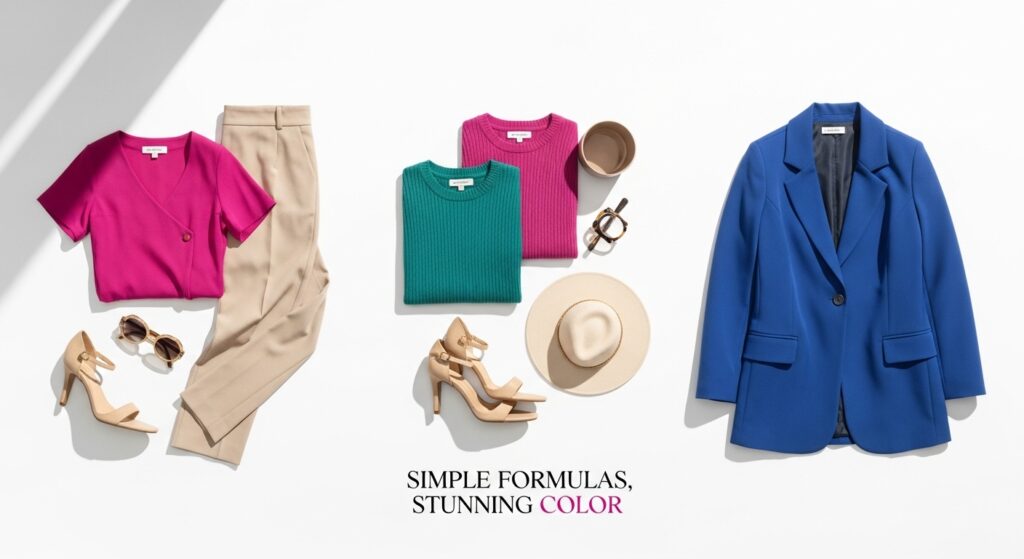
Formulas help remove fear. Clear rules. Easy structure. Strong colors fall into place without stress. Women gain control fast when pairings follow proven logic. Saturated tones feel calmer when balanced by silhouette, texture, undertone, and placement. Outfits stay chic. Style feels intentional. Confidence rises quickly.
Below, formulas shaped for real wardrobes. Workdays. Errands. Dinner plans. Travel. All simplified through smart color logic.
One Bright, One Neutral — Cleanest Formula for Daily Style
One vivid shade plus grounding neutral. Always works. Always clean. No noise. No clash. Perfect for women easing into bold color.
Neutrals include ivory, beige, tan, camel, black, navy, stone, charcoal. Each one quiets saturated brights and shapes controlled color harmony.
Examples:
– Fuchsia blouse + beige trousers + tan flats
– Cobalt blazer + white tee + dark denim
– Emerald skirt + black knit + gold hoops
Effect stays sharp yet calm. Bright piece takes spotlight. Neutral frame keeps polish strong.
Two Brights, One Muted Shade — Balanced Boldness
Two bright colors lift energy. Muted color steadies mood. Strong yet elegant. Bold yet wearable.
Muted shades include cream, soft grey, dusty rose, olive, taupe. Slight softness connects two saturated hues without creating noise.
Examples:
– Magenta top + teal trousers + cream trench
– Lemon-yellow skirt + sky-blue knit + soft-grey sneakers
– Orange blouse + pink trousers + muted-tan sandals
Powerful color. Controlled feel. Formula ideal for confident dressers wanting a strong presence.
Bright Statement Piece + Minimal Silhouette — Instant Chic
One statement piece in vivid tone carries outfit. Silhouette stays simple. Lines stay clean. No competition. Visual clarity stays strong.
Works with coats, blazers, wide-leg trousers, midi dresses, structured bags, bold heels.
Examples:
– Fire-red coat + black knit + slim denim
– Electric-blue wide trousers + white tank + silver hoops
– Hot-pink midi dress + nude heels + sleek clutch
Minimal shape + saturated color = effortless power. Pure, modern, flattering.
Accent Color Method — Easiest Entry Point
Small dose of bright color. Bag. Belt. Shoe. Scarf. Sunglasses. Pure control. Gentle confidence. Perfect for women nervous about color or women living in minimalist wardrobes.
Examples:
– All-black outfit + emerald heels
– White shirt + denim + coral crossbody
– Soft-grey dress + cobalt earrings
Accent color feels fresh, sharp, and safe. Bright pop without commitment.
Fabric, Texture & Pattern Play — Hidden Tools for Softer, Smarter Brights
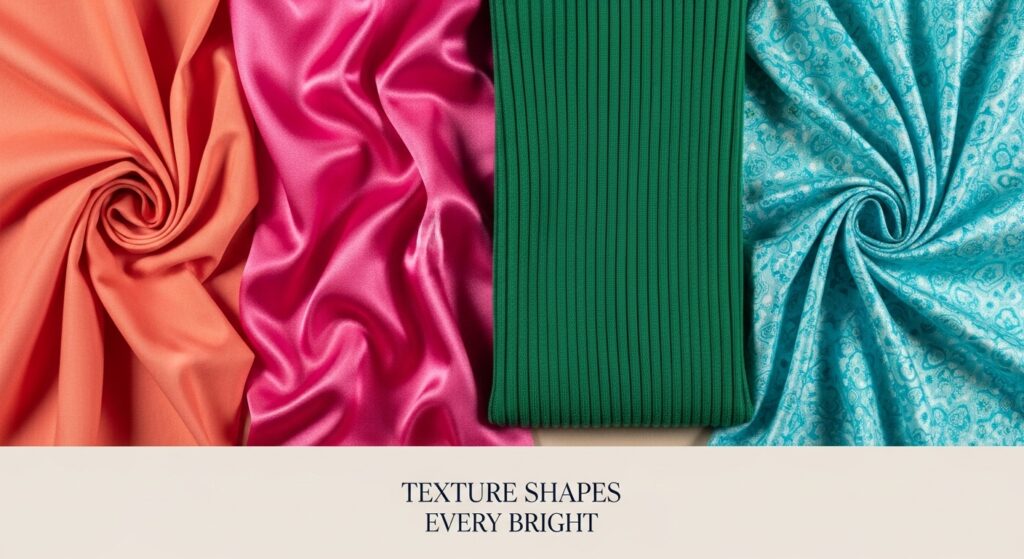
Color alone never decides impact. Fabric finish shifts intensity. Texture changes depth. Pattern shapes energy. All three guide bright color into balance. Many women forget fabric power. Many focus only on shade. Strong hues sit differently on cotton vs. silk. Neon changes mood on knit vs. patent leather. Texture smooths or sharpens saturation.
Understanding fabric play keeps saturated colors refined. Keeps looks polished. Keeps outfits wearable for everyday life.
Matte vs. Glossy Finishes — How Surface Changes Saturation
Matte finish softens color. Calms brightness. Creates smooth surface. Cotton, linen, wool, cashmere, brushed twill. Colors feel grounded. Shapes feel cleaner. Perfect for women easing into vivid tones or building daytime looks.
Glossy finish amplifies color. Intensifies saturation. Creates shine. Satin, silk, patent, sequins, vinyl. Bold energy. Evening-ready mood. Strong statement.
Examples:
– Hot-pink satin blouse louder than hot-pink cotton tee.
– Neon green knit softer than neon green patent shoe.
– Cobalt silk dress richer than cobalt crepe dress.
Smart rule: matte for balance, gloss for drama. Choose finish based on desired strength, not shade alone.
Prints That Pair Smoothly With Bright Colors
Prints carry attitude. Some calm color. Some add noise. Smart print choice matters.
Safe prints with brights:
– micro florals
– thin stripes
– soft geometrics
– delicate polka dots
– low-contrast patterns
They add detail without overwhelming saturated shades.
Avoid pairing loud prints with high-saturation colors unless goal is maximalism. Bold leopard + neon pink? Heavy impact. Watercolor florals + strong fuchsia? Too much movement.
Balanced examples:
– Turquoise blouse with fine white stripes + white trousers
– Coral skirt with micro floral print + ivory blouse
– Lemon-yellow knit + navy pinstripe trouser
Print scale sets tone. Small print = calm. Big print = extreme. Choose wisely.
Seasonal Texture Rules — How Fabric Weight Shapes Color Mood
Season influences texture. Texture influences color power. Strong link.
Spring:
Light cotton, flax linen, soft poplin. Fresh bright tones shine gently. Sky blue. Soft coral. Mint. Peach. Colors float with airiness.
Summer:
Crisp linen, gauze, lightweight denim, open knits. Tropical brights feel natural. Aqua, tangerine, hot pink, lime. Fabric breathes. Color stays vibrant without heaviness.
Fall:
Denser textures mute saturation. Suede, corduroy, structured knits. Brights like mustard, cranberry, olive, deep teal sit beautifully inside warm textures. Saturated colors soften.
Winter:
Wool, velvet, cashmere, leather. Rich brights thrive. Emerald, ruby, cobalt, amethyst. Heavy texture boosts depth. Color feels luxe and strong.
Fabric weight plus bright color decides mood. Lightweight fabric softens. Heavy fabric strengthens.
Mixing Bright Colors for Different Fashion Personalities
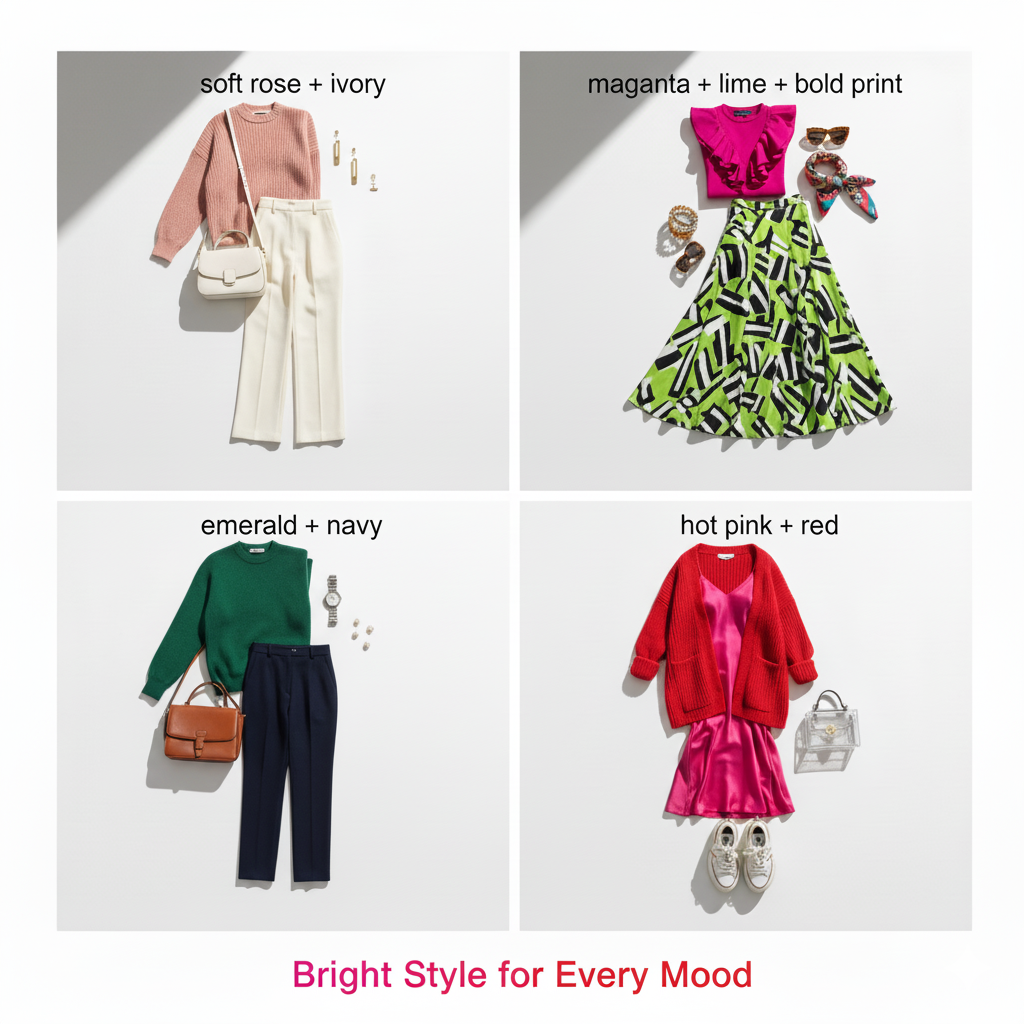
Style personality shapes color choices. Some women crave calm. Some crave edge. Some chase trend. Some prefer timeless polish. Bright color behaves differently inside each style identity. Understanding personal style makes saturated hues feel easier. Stronger. More natural. Color confidence grows when personality leads, not trend pressure.
Below, clear paths for each fashion type. Real-world examples. Simple rules. Pure clarity.
Minimalist Women — Clean Lines, Soft Power
Minimalists love clarity. Clean shape. Calm palette. Sharp edit. Bright color needs control here.
Best approach: single bright shade with streamlined silhouette. Soft-bright hues help. Rose. Sage. Sky. Dusty turquoise. Gentle coral. Muted sapphire. Strong color reduced to pure focus.
Examples:
– Sage knit + ivory trousers + tan sandals
– Soft-rose silk blouse + black slim trouser
– Sky-blue blazer + white tee + denim
Key rules:
– One bright piece only
– Matte finishes
– Simple tailoring
– Neutral grounding
Minimalist color harmony stays fresh, modern, intentional.
Maximalist Women — Bold Energy, Layered Saturation
Maximalists thrive on statement. Movement. Color play. Rich saturation. Strong print. Big personality. For them, bright color becomes a playground.
Key approach: repeat color notes for cohesion. Use pattern with purpose. Mix saturated hues with strategic anchoring.
Examples:
– Magenta trousers + lime blouse + cobalt bag
– Patterned skirt in bold florals + coral top + yellow earring
– Teal coat + fuchsia dress + multicolor scarf
Maximalist success depends on:
– Repeated accent shades across outfit
– Clear silhouette control
– Smart accessory linking
– One power item leading energy
Bold, electric, expressive. Yet still polished.
Classic & Elegant Dressers — Refined Lines, Timeless Color
Classic women value timeless pieces. Clean tailoring. Subtle detail. Quiet luxury. Bright color needs elegance here.
Best hues: jewel tones and elevated brights. Emerald. Ruby. Garnet. Sapphire. Deep teal. Soft coral. Consistent, rich, graceful.
Examples:
– Emerald blouse + navy skirt + pearl earring
– Sapphire dress + nude heel + structured tan bag
– Ruby knit + camel coat + gold bracelet
Rules for elegance:
– One strong shade only
– Balanced saturation
– High-quality fabric
– Polished accessories
Bright color feels refined, not loud.
Trend Lovers — Fresh Shades, Fast Shifts
Trend-focused women follow runway energy. Social feeds. Street style. Viral palettes. They want newness. Play. Change.
Bright color for trend lovers means adopting seasonal combos and daring mixes while keeping some grounding for wearability.
Current trend-friendly examples:
– Hot pink + red (modern power pairing)
– Aqua + chocolate brown (rising mix in T1 markets)
– Neon accents with muted foundation layers
– Cobalt outerwear with silver accessories
Guiding ideas:
– Try new hues in small doses first
– Balance high-saturation color with structured shape
– Pair trending brights with timeless staples
– Lean into unexpected pairings for modern edge
Fresh. Confident. Trend-forward without chaos.
Outfit Ideas By Occasion — Bright Color Done Right, Anytime
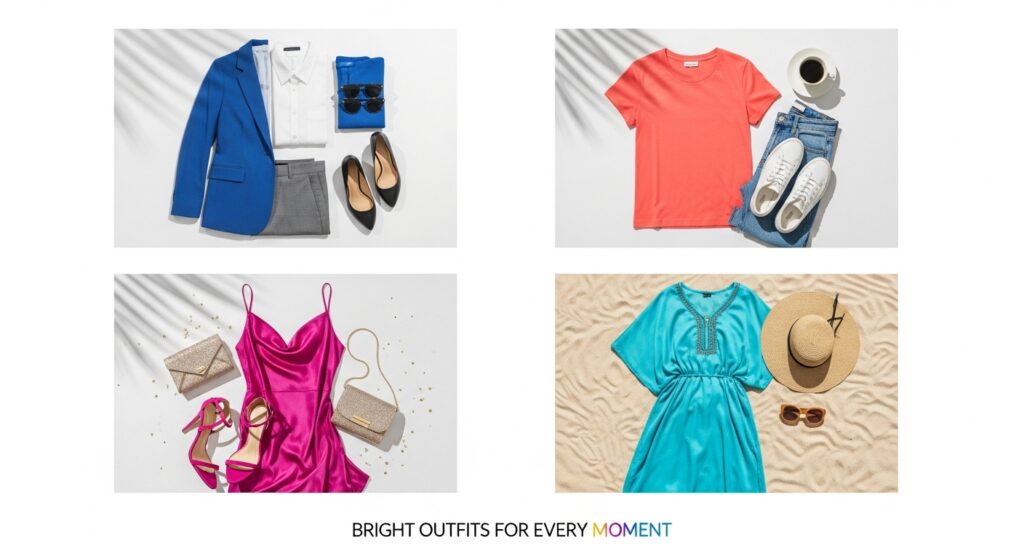
Life carries many settings. Workdays. Errands. Dinners. Flights. Beach walks. Every setting demands different color control. Bright shades shift mood fast. Strong at night. Soft in morning. Calm in office. Playful on weekend. When pairing fits occasion, confidence rises. Color feels intentional. Pure style.
Below, clear direction for each moment.
Workwear — Professional, Polished, Modern
Workspaces call for structure. Calm energy. Controlled saturation. Sharp tailoring holds bright color in place. Professional balance matters.
Best hues for work: cobalt, emerald, deep teal, wine, muted coral, clay pink. Strong but steady. Confident but not overpowering.
Examples:
– Cobalt blazer + white blouse + navy trouser + nude heel
– Emerald midi skirt + black knit + gold hoop
– Clay-pink silk blouse + charcoal trouser + tan bag
– Deep-teal dress + camel coat + subtle jewelry
Key rules:
– Keep silhouette clean
– Use matte fabrics for refined tone
– Anchor with black, navy, camel, cream
– Limit shine in accessories
Work brights should signal focus, not noise. Strong presence. Calm finish.
Casual Day Wear — Easy Movement, Light Mood
Daytime outfits need comfort. Flexibility. Low-fuss styling. Bright color adds lift, joy, freshness. Perfect time for playful shades and relaxed textures.
Strong picks for daytime: lemon, coral, sky, mint, lilac, aqua.
Examples:
– Coral tee + denim + white sneaker
– Mint knit + beige cargo + tan sandal
– Aqua tank + light-wash jean + straw tote
– Lilac dress + cream sneaker + minimal earring
Casual rules:
– Keep accessories simple
– Use one or two brights max
– Rely on denim, cotton, linen for balance
– Add soft neutrals when saturation feels too high
Day brights feel alive yet effortless when shaped by easy fabrics.
Evening & Party Looks — Depth, Drama, Glow
Evenings welcome intensity. Rich saturation. Glossy textures. Deeper jewel tones. Metallic accents. Bright color shines strongest under night lighting.
Best hues for evening: ruby, amethyst, royal blue, fuchsia, metallic turquoise, hot pink, deep orange.
Examples:
– Fuchsia slip dress + metallic heel + sleek clutch
– Royal-blue velvet blazer + black satin pant + silver drop earring
– Ruby midi dress + gold heel + structured bag
– Electric-orange gown + nude sandal + brushed-gold cuff
Evening rules:
– Allow one primary saturated shade
– Add shimmer thoughtfully
– Choose luxe fabrics to elevate color
– Keep lines clean so color leads
Night brights thrive on drama with sophistication.
Vacation & Resort Styling — Sun, Air, Color Freedom
Resort settings demand ease. Warm air. Open light. Vibrant palette. Tropical brights feel natural. Saturated colors work with sun, not against it.
Strong vacation tones: tangerine, lime, turquoise, hibiscus pink, sunny yellow.
Examples:
– Turquoise kaftan + nude sandal + straw hat
– Lime bikini + white linen pant + oversized sunnies
– Tangerine sundress + gold flat + woven bag
– Hibiscus-pink skirt + cream tank + tan slide
Resort rules:
– Keep fabrics airy: linen, gauze, rayon, open knits
– Let accessories stay natural: straw, rattan, rope
– Use brights freely but with soft silhouettes
– Balance one vivid item with easy textures
Vacation brights should feel relaxed yet radiant. Polished, not forced.
Color Mixing Tips for Different Body Shapes
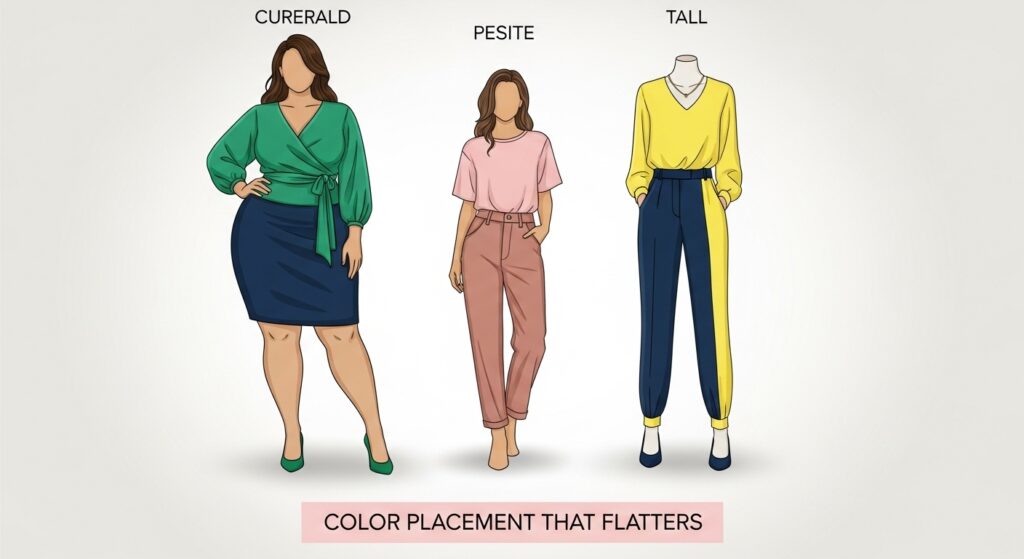
Body shape guides color placement. Bright shades highlight. Muted shades reduce focus. Strategic placement shapes silhouette without extra effort. Smart color use works like soft tailoring. No harsh lines. No hard rules. Just balance. Women gain freedom when color supports form, not fights it. All shapes benefit from intentional saturation control.
Below, clear guidance for curvy, petite, and tall women. Practical. Wearable. Real.
Curvy Figures — Shape Support Through Smart Saturation
Curvy silhouettes carry natural softness. Bright color can highlight curves beautifully when placed with intention. Strong hues call attention instantly, so aim focus toward favorite areas.
Best approach:
– Place saturated brights on zones you want to spotlight.
– Keep muted or neutral tones on zones you prefer softer.
– Use vertical lines or elongated pieces to keep flow clean.
Examples:
– Emerald wrap top + black trouser (focus upward)
– Fuchsia midi skirt + ivory blouse (highlight waist, soften shoulders)
– Cobalt blazer + dark denim (structure on top, calm on bottom)
Strong colors lift energy. Muted tones maintain balance. Matte fabrics keep shape smooth. Glossy finishes add volume, so use lightly.
Key rules:
– Favor V-necks or wrap cuts with bright tops
– Choose mid-rise bottoms in softer shades
– Use controlled contrast to avoid widening effect
Curvy women shine when brights point attention where confidence already lives.
Petite Women — Clean Lines, Height Illusion
Petite frames benefit from elongation. Bright color placement can add height visually. Long, uninterrupted lines create length. Low contrast keeps eyes moving upward without disruption.
Best approach:
– Tonal brights to create vertical flow
– Soft contrast instead of strong contrast
– Slim silhouettes over bulky shapes
Examples:
– Rose top + blush skirt + nude sandal (one-color flow)
– Cobalt jumpsuit + minimal jewelry + sleek bag
– Mint blouse + ivory trouser + mint heel
Petites thrive with monochrome and tonal pairings. Strong, high-contrast combinations can shorten silhouette, so use contrast sparingly.
Key rules:
– Keep hemlines smooth
– Avoid oversized bright blocks at mid-body
– Match shoe color to leg line when possible
Bright color becomes height-enhancing tool when shaped with flow and cohesion.
Just check: How to Style Wide-Leg Pants for Petite Women
Tall Women — Balance Through Color Breaks
Tall frames carry natural length. Bright color can create shape, add dimension, and break vertical stretch in flattering ways. Strategic blocks bring proportion without flattening presence.
Best approach:
– Use two-color combinations placed apart vertically
– Add belts or mid-body brights to shape silhouette
– Explore complementary hues for strong balance
Examples:
– Lemon-yellow top + navy trouser + tan belt (soft break)
– Teal blouse + white jean + coral sandal
– Violet sweater + cream midi skirt + warm-gold heel
Tall women can handle contrast better than most. Strong pairings feel elegant, not overwhelming.
Key rules:
– Use mid-body accents freely
– Choose wide belts, color belts, or cropped jackets in brights
– Balance long limbs with structured shapes
Bright color becomes a sculpting tool, not a distraction.
Bright Colors & Makeup Coordination — Seamless Harmony, Clean Finish
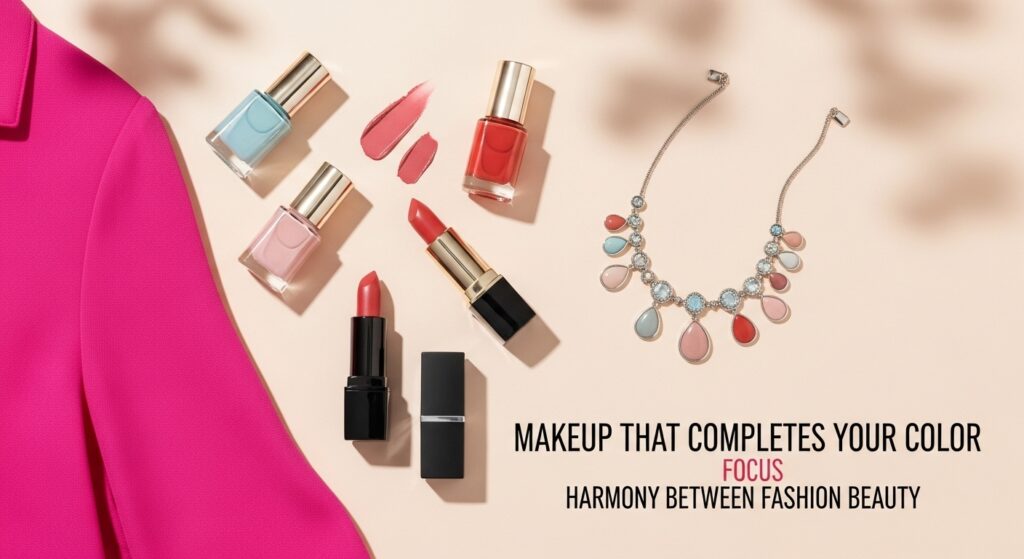
Outfit color works best when makeup supports tone. Bright clothing shifts skin temperature, shadow depth, and light balance on face. Makeup becomes anchor. Softening tool. Power tool. Balance comes from pairing lip shade, cheek tone, and eye detail with saturated color worn near face. Many women overlook beauty coordination. Small tweaks fix everything.
Makeup harmony ensures bold color stays polished, not harsh.
Lipstick + Outfit Balance — Shape, Tone, Confidence
Lip color carries huge influence. Strong lip against strong outfit color can elevate or overwhelm. Smart pairing keeps face bright and fresh.
Key logic:
– Cool brights pair with cool lip shades
– Warm brights pair with warm lip shades
– Neutrals pair with almost anything, but shine level matters
Cool outfits like cobalt, emerald, fuchsia work with blue-based pink, berry, plum, cool rose.
Warm outfits like coral, mustard, tomato red work with peach, warm nude, brick, terracotta.
Neutral outfits with bright accents work with soft brown, beige-pink, muted berry.
Examples:
– Cobalt blazer + cool-rose lip
– Coral dress + warm-peach lip
– Emerald top + berry stain
– Hot-pink blouse + nude gloss (keeps balance clean)
Short rule: bright top = softer lip. Soft top = stronger lip. Face stays centered. Color feels intentional.
Nail Colors That Support Bright Outfits — Small Detail, Big Payoff
Nail shades seem minor. Actually powerful. Nail color can connect outfit tones or calm saturated hues.
Best safe options:
– nude beige
– soft blush
– pale lavender
– milky white
– sheer pink
– soft taupe
All add quiet balance. Perfect for extremely bright outfits.
For women who want more color:
– coral nails with teal pieces
– lemon nails with blue outfits
– cobalt nails with neutral basics
– cherry nails with jewel tones
Short rule: hands should support outfit energy, never compete.
Accessory Color Rules — Shoes, Bags, Jewelry, Harmony
Accessories hold outfit together. They can quiet color. They can amplify it. They can redirect attention quickly. Finding correct accessory color makes bright outfit refined.
Shoes:
Nude, tan, black, white, metallic gold, metallic silver. All anchor bright clothing without adding noise.
Matching shoe to leg line elongates silhouette.
Matching shoe to bright piece creates coherence.
Bags:
Structured shapes look elegant with bold color.
Stick to tan, cream, charcoal, navy for calmer finish.
Use bright bag only when outfit stays mostly neutral.
Jewelry:
Gold flatters warm hues: coral, mustard, tomato red, olive, tangerine.
Silver flatters cool hues: cobalt, emerald, fuchsia, violet, icy blue.
Pearls elevate jewel tones.
Minimalist jewelry suits neon.
Balance comes from metal temperature, saturation level, and placement. Accessories must support overall rhythm, not fight it.
Bright Colors for Different Age Groups — Style That Evolves With Confidence

Color confidence grows with age. Style shifts. Lifestyle shifts. Mood shifts. Bright clothing adapts through every decade. Women across age groups wear saturated hues differently. No strict rules. Only small adjustments that shape polish, clarity, and personal identity. When age and color align, outfits feel effortless.
Below, refined direction for each age group.
Women 18–25 — Playful Energy, Fast Trends
Younger women bring natural boldness. Strong appetite for fun. Faster trend adoption. Bright color fits easily here. Street style, campus life, social nights, weekends out — strong hues match energy.
Best tones: hot pink, tangerine, lime, cobalt, lilac, teal, sunshine yellow.
Examples:
– Hot-pink crop + wide-leg jean + white sneaker
– Lilac mini dress + cream sandal
– Cobalt cardigan + denim short + silver hoop
– Lime tank + beige cargo + tan slide
Style notes:
– Try unexpected combos (pink + red, aqua + chocolate)
– Explore prints and glossy finishes
– Keep silhouettes youthful but balanced
– Use accessories to tone down stronger brights when needed
Playful. Free. Modern.
Women 25–40 — Balanced Chic, Versatile Wardrobe
Women in this range often juggle work, social life, family, travel, fitness. Outfits need flexibility. Bright color should feel polished yet creative. Chic yet practical. Clean structure carries color best.
Best tones: cobalt, deep pink, coral, emerald, navy-adjacent brights, wine, mustard, warm turquoise.
Examples:
– Coral silk blouse + beige trouser + tan heel
– Emerald midi dress + gold jewelry
– Cobalt blazer + black tank + straight denim
– Warm-turquoise knit + ivory trouser
Style notes:
– Pick saturated brights for key pieces, not full look
– Use neutrals to ground outfit
– Focus on clean tailoring for polish
– Add refined accessories to shape elegance
Sophisticated. Confident. Versatile.
Women 40+ — Refined Brightness, Elevated Depth
Mature women shine in controlled saturation. Jewel tones and rich brights create luminous, elegant presence. Silhouette and fabric quality matter more here. Depth over shock. Refinement over noise.
Best tones: ruby, garnet, emerald, deep teal, sapphire, mulberry, soft coral, cobalt with matte finish.
Examples:
– Garnet blouse + camel trouser + gold earring
– Sapphire wrap dress + nude pump
– Emerald coat + black knit + tailored trouser
– Soft-coral knit + cream skirt + tan bag
Style notes:
– Choose matte fabrics for balanced glow
– Avoid overly neon shades
– Keep accessories structured
– Use one bright per outfit for maximum elegance
Graceful. Strong. Elevated.
Seasonal Guides — Bright Colors That Shift With Weather, Light, Mood
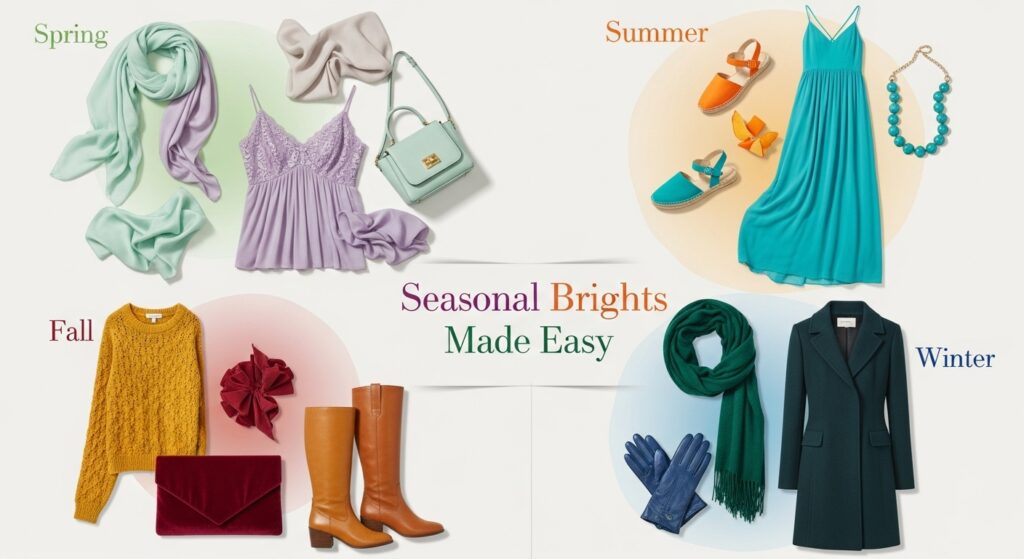
Seasons shape color behavior. Light changes. Textures change. Temperatures shift. Bright clothing reacts differently in spring sun, summer heat, fall shadow, winter chill. Smart color choice follows environment. Strong hues feel natural when matched with climate, fabric, mood.
Below, clear seasonal direction.
Spring Brights — Fresh Air, Soft Light
Spring brings new light. Gentle warmth. Clean air. Bright color should feel fresh. Soft. Uplifting. Slightly muted brights blend beautifully with blooming tones and transitional layers.
Best tones: peach, mint, sky blue, lilac, soft coral, lemon, aqua.
Examples:
– Lilac cardigan + white jean + tan flat
– Soft-coral dress + cream trench
– Mint blouse + light-wash denim + gold stud
– Lemon knit + ivory trouser + woven bag
Fabric focus: poplin, soft knit, light cotton, early linen.
Mood: airy, calm, open.
Summer Brights — Sun Heat, Bold Saturation
Summer invites energy. Strong sun intensifies color. Saturated tones feel natural here. Tropical hues shine. Light fabrics keep brights breathable.
Best tones: hibiscus pink, tangerine, turquoise, lime, bold coral, bright yellow, electric blue.
Examples:
– Turquoise slip + tan slide + straw tote
– Hibiscus bikini + white linen pant
– Tangerine maxi + gold flat
– Lime tank + denim short + cream sneaker
Fabric focus: linen, gauze, lightweight denim, rayon, open-knit cotton.
Mood: lively, vibrant, warm.
Fall Brights — Warm Shadow, Deep Comfort
Fall softens sun. Adds warmth to environment. Bright color needs grounding. Deeper brights, earthy brights, and muted saturated hues thrive with fall texture.
Best tones: mustard, cranberry, olive, deep teal, burnt orange, marigold, muted coral.
Examples:
– Cranberry knit + camel pant
– Deep-teal blouse + black leather skirt
– Mustard trench + navy jean
– Burnt-orange sweater + cream midi + tan boot
Fabric focus: suede, corduroy, wool blends, rib-knit jerseys.
Mood: cozy, rich, grounded.
Winter Brights — Cold Air, Jewel Depth
Winter gives sharp contrast. Dark backdrops. Clear lines. Jewel tones shine strongest in cold seasons. Brights feel luxe. Deep. Opulent.
Best tones: ruby, emerald, sapphire, cobalt, amethyst, wine, metallic blue.
Examples:
– Cobalt coat + black knit + charcoal trouser
– Ruby velvet dress + gold heel
– Emerald knit + dark denim + black boot
– Sapphire blouse + cream skirt + pearl drop
Fabric focus: velvet, wool, cashmere, leather, satin.
Mood: bold, refined, dramatic.
Shopping Guide — Bright Colors for Every Budget
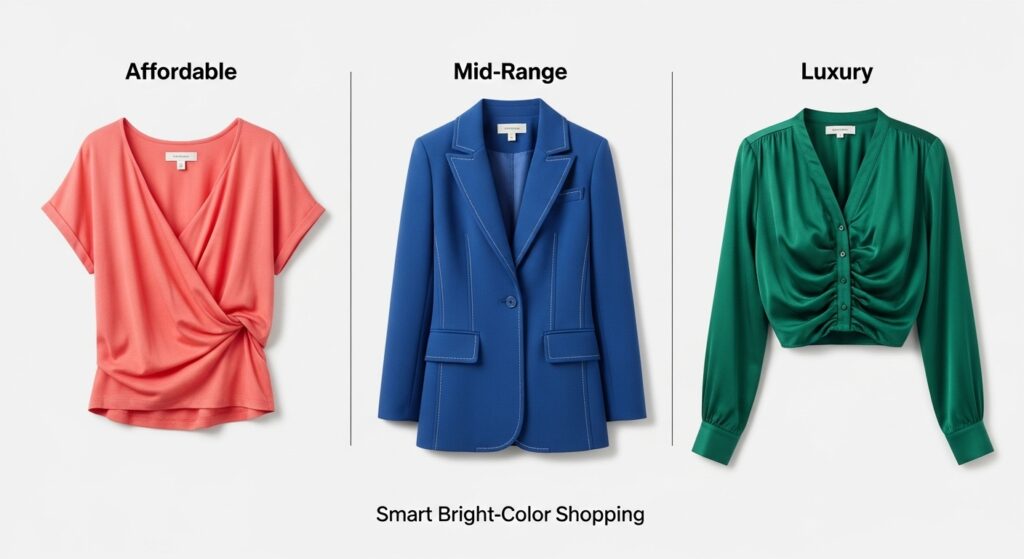
Finding bright pieces depends on budget, fit, and fabric quality. Color strength means little without clean structure. Quality fabric lifts hue. Poor fabric dulls it. Smart shopping helps bright clothing last longer, look sharper, feel better. Women across T1 markets benefit from clear direction tailored to price range.
Below, guide to affordable, mid-range, and luxury brights.
Affordable Options — Easy Access, Surprising Variety
Lower budgets still offer strong color. Many high-street labels deliver solid saturation with modern cuts. Quality varies, so focus shifts from trend to fabric.
Tips for smart affordable buys:
– Favor cotton, linen blends, structured knit
– Avoid cheap satin or thin polyester for strong brights
– Check stitching, shape, drape
– Choose simple silhouettes to avoid fit issues
Great picks:
– Bright tees
– Knit tops
– Cotton dresses
– Linen shorts
– Statement bags in vivid tones
Affordable brands often rotate bold palettes each season. Good place to test new hues before investing.
Mid-Range — Balanced Quality, Modern Shape
Mid-range labels deliver stronger construction. Better tailoring. Richer fabric. Cleaner drape. Bright colors look sharper with improved texture and weight.
Smart mid-range buys:
– Blazers in cobalt, emerald, or coral
– Midi dresses in bold jewel tones
– Tailored trousers in saturated shades
– Knit sets in modern brights
Why mid-range works well:
– Better fabric quality supports saturated color
– Strong fit improves color impact
– Finer texture elevates brightness
Mid-range sweet spot suits women wanting long-term wear without luxury pricing.
Premium & Luxury — Deep Saturation, Luxe Fabric
Luxury color behaves differently. Richer pigments. Precise cutting. Weighty fabric. Matte finish with depth. Shine without cheap glare. Luxury houses excel at saturated tones due to premium dye processes and refined textiles.
Best luxury bright investments:
– Cashmere or merino knit in jewel tone
– Structured coat in sapphire or emerald
– Tailored blazer in cobalt or ruby
– Leather bag in rich coral or deep teal
– Silk blouse in fuchsia or garnet
Why luxury brights stand apart:
– Higher pigment quality
– Better saturation stability
– More flattering drape
– Finer finish under natural and artificial light
Luxury brights hold power for years, not seasons. Perfect for women who want signature color pieces with long life.
Final Checklist — Bright Color Balance Formula
Bright color feels effortless when rules stay clear. Small steps. Sharp structure. Clean logic. Strong hues fall into place once formula becomes habit. Women gain instant confidence using simple checks. Outfits shift from chaotic to refined with tiny adjustments.
Below, complete balance formula for daily use.
1. Limit vivid pieces
One bright. Maybe two. More only when purposefully styled. Saturated color needs space to breathe.
2. Add neutral anchor
Ivory, camel, tan, black, navy, stone. Neutrals calm saturation. Build frame around bold tone.
3. Check undertone match
Cool hues for cool skin. Warm hues for warm skin. Softened brights for neutral skin. Undertone alignment improves glow instantly.
4. Control saturation
Use one vivid shade + one muted shade. Or vivid shade + matte fabric. Strong color feels polished with contrast in intensity.
5. Choose smart placement
Highlight favorite areas with bright tone. Soften zones you prefer less with muted or neutral color.
6. Keep silhouette simple
Structured lines support saturated tones. Complex shapes plus brights overwhelm. Clean shape = modern energy.
7. Use texture wisely
Matte finish softens brights. Glossy finish amplifies. Choose based on mood, setting, time of day.
8. Direct accessory harmony
Neutral shoe. Clean bag. Gold for warm tones. Silver for cool tones. Jewelry must support color, not fight it.
9. Adjust to occasion
Work needs calm brights. Day needs fresh brights. Evening welcomes deep jewel tones. Travel loves airy tropical hues.
10. Trust color rhythm
Color harmony comes from thoughtful repetition. Single pop. Linked accents. Tonal flow. Smart contrast.
Conclusion — Color Confidence, Unlocked
Bright color carries power. Joy. Presence. Energy. Many women avoid strong hues out of fear of loudness. Yet bold shades become elegant tools once structure enters. Color harmony grows with small choices. Undertone alignment. Clean formulas. Smart placement. Texture control. Season match. Accessory balance.
Strong color stops feeling risky. Starts feeling intentional. Wearable. Modern.
Women across all ages, shapes, budgets, and style identities can use saturated hues with confidence. Minimalists gain crisp lift. Maximalists gain expressive freedom. Workdays gain polish. Evenings gain depth. Vacations gain brightness. Life gains color.
Color becomes language. Mood. Style signature.
Confidence follows. Always.
FAQs
What is the 70–20–10 rule for colors?
The 70–20–10 rule is a simple color-balance formula often used in interior design and fashion.
70% of your look uses a dominant/base color (usually neutral)
20% uses a secondary color
10% uses an accent color
It keeps outfits visually balanced while still allowing bold shades to stand out in the accent spot.
What is the 60–30–10 rule with 4 colors?
The classic 60–30–10 rule works with three colors, but when expanded to four, the formula becomes:
60% main color
30% supporting color
10% accent color
Add a fourth micro-accent (5–10%) — often used in accessories or small details
This keeps outfits structured without losing harmony.
Which bright colors go together?
Many bright colors pair well when undertones match or when contrast stays intentional. Great combinations include:
Pink + Red
Orange + Pink
Cobalt + Lime
Fuchsia + Emerald
Aqua + Coral
Yellow + Royal Blue
Teal + Magenta
For safer pairings, use the color wheel: analogous pairings feel calm, complementary pairings feel bold.
What is the 6–3–1 color rule?
The 6–3–1 rule offers a slightly more structured approach than the classic 60–30–10 rule:
6 parts dominant color
3 parts secondary color
1 part accent color
It helps distribute color proportionally in styling or design.
What is the 80–20 color rule?
The 80–20 rule focuses on simplicity:
80% neutral or understated tones
20% bright or accent color
Perfect for women who prefer minimal color but still want a pop of brightness.
What is the 4-color method?
The 4-color method uses four distinct colors in a balanced, layered way:
Main color – foundation shade
Secondary color – supports main
Accent color – adds interest
Micro-accent – small, refined detail (jewelry, small accessories, trim)
It provides flexibility for more complex outfits while keeping harmony intact.