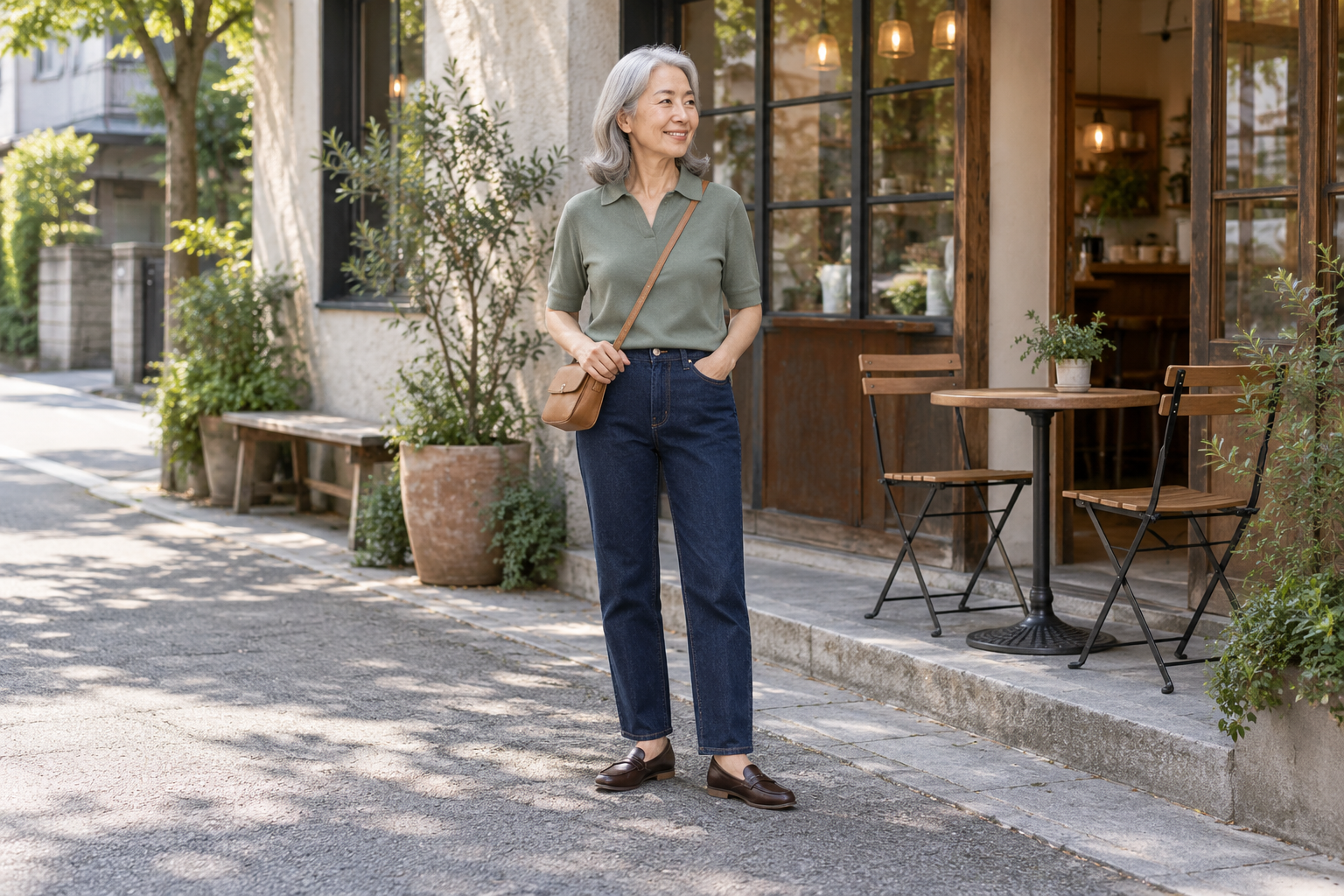
A straight-leg pair you like can anchor more than a sweater-and-jeans routine. Change the shirt shape, neckline, layer or color around it while keeping the familiar fit. These straight leg jeans outfit ideas include dark indigo, medium blue, gray, black and ecru denim, with a separate practical comparison for every image.
Choose the example closest to clothes you already have. The photographs illustrate combinations, not proof that a particular wash is more flattering or that a pictured pair has enough stretch for you. Your own seated fit and everyday movements provide that information.
Start with jeans you want to wear
Fasten the jeans normally, sit down and walk in the intended shoes before building the top half. If the waistband or seat needs constant adjustment, an attractive jacket will not answer that fit question. Use a comfortable familiar pair as the reference while you compare the styling choices here.
Keep the shoe and jean length together for the first try-on. A full-length pair over loafers and an ankle pair over sneakers can create different outlines without either being the required option. Our jeans inseam guide separates that question from choosing a new top.
Change one thing first: Keep the jeans and shoes you like, then compare a loose shirt with a shorter knit or an open jacket. Notice whether the difference you want comes from length, volume, texture or color before adding another accessory to the outfit.
Fourteen combinations for familiar straight-leg denim
The following examples use different upper shapes rather than asking every top to be tucked. Borrow a color relationship, a neckline or a layer independently. For each image, the accompanying question identifies something you can check with your own garments instead of copying an entire shopping list.
A White Shirt Under an Oatmeal Vest
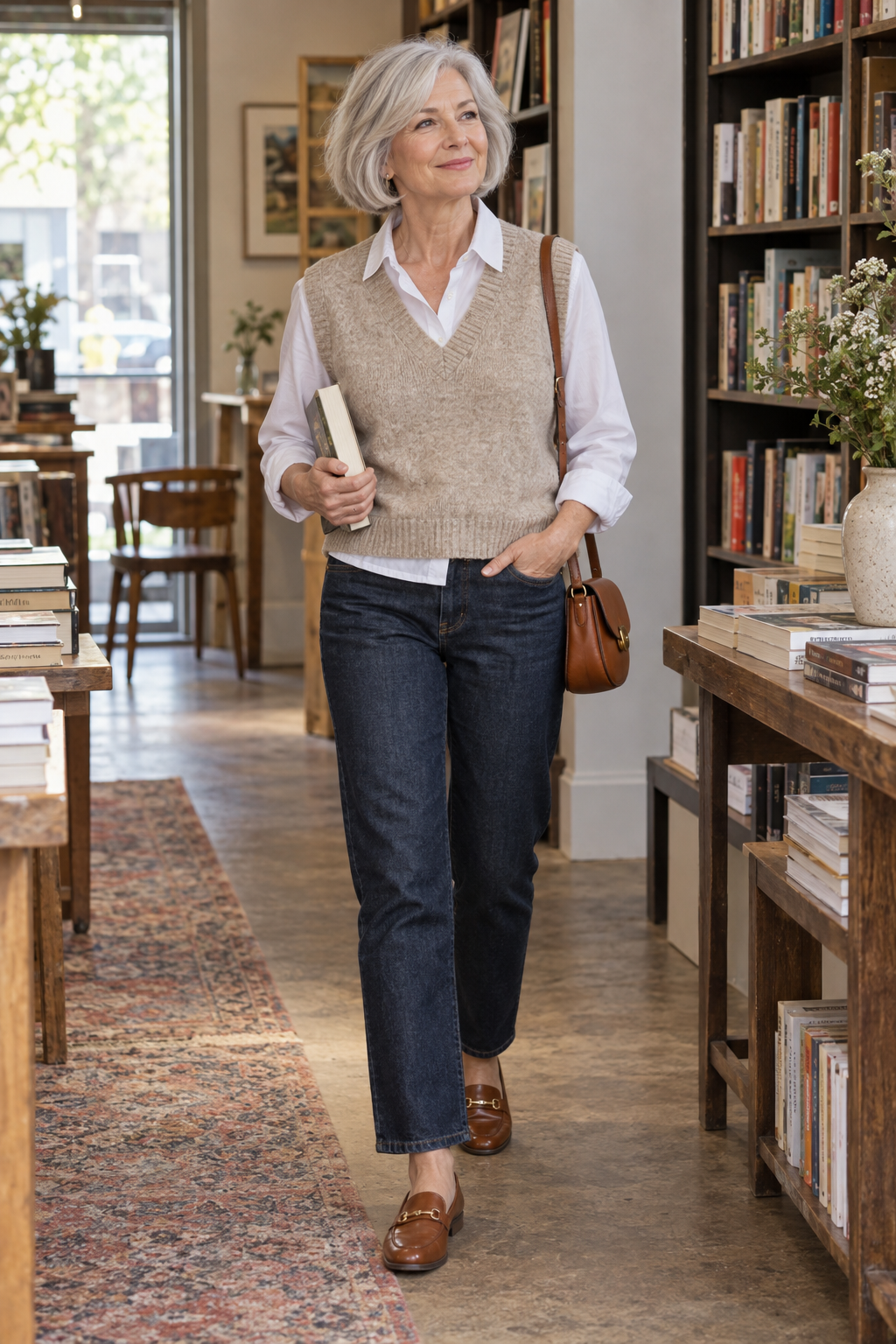
An oatmeal vest gives a white shirt a different outline without asking you to change the dark jeans underneath. Cognac loafers and the small bag keep the warmer tones connected. The photograph leaves a little shirt hem visible below the vest, so this example does not depend on a fully tucked front.
Try the shirt alone first. Move your arms and sit, noticing whether you like its room and length before adding the knit. If it already pulls at the buttons, the vest may cover the symptom without improving the fit.
Then put the vest on and compare the visible hem. You can leave a small edge showing or try another shirt length according to your preference. Keep the jeans and shoes steady during the comparison so the new upper-layer shape is easy to assess.
Gray Denim With a Loose White Shirt
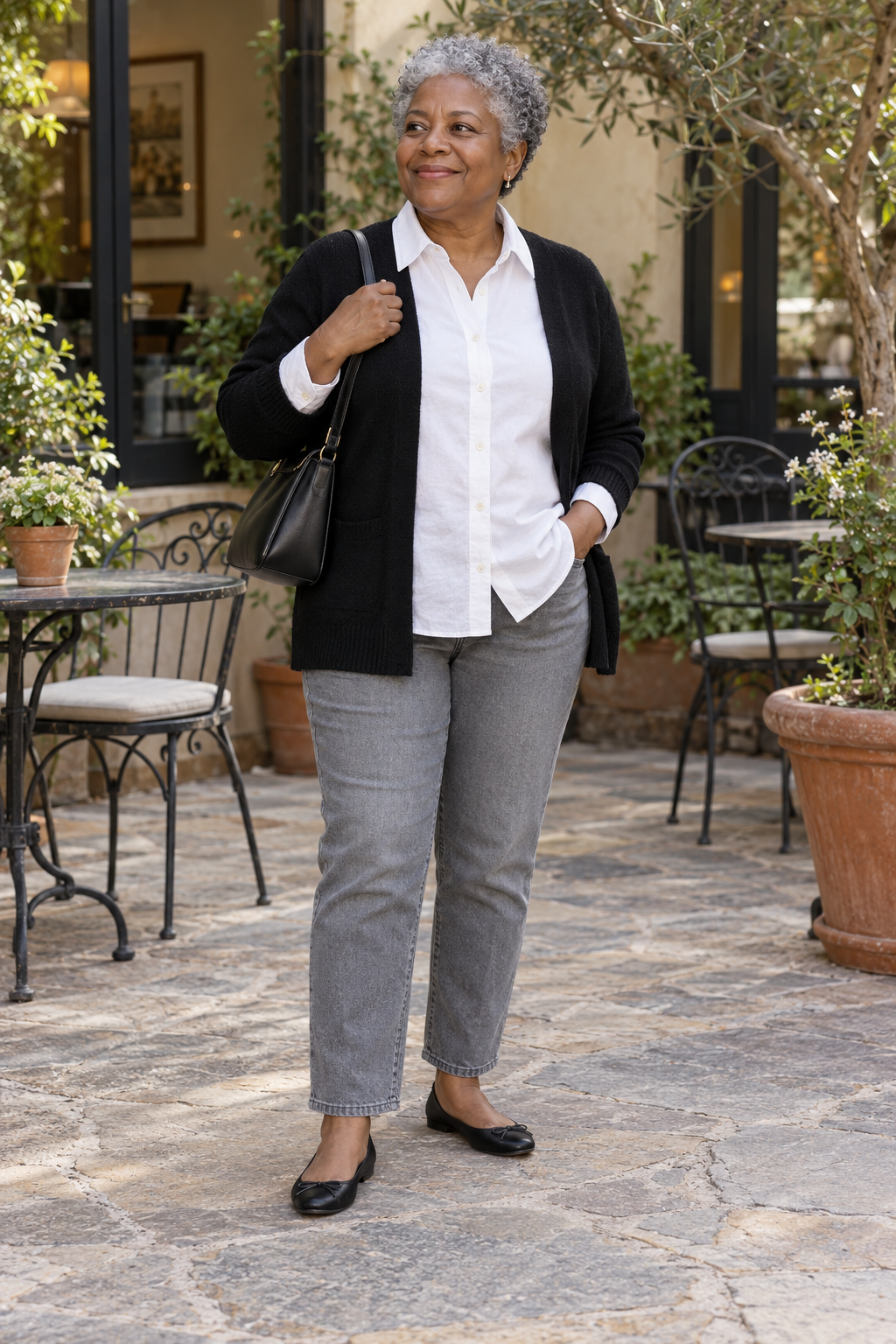
A loose white shirt and open black cardigan make gray jeans feel different from a short-knit outfit. Black ballet flats and a shoulder bag repeat the cardigan color, while the shirt supplies a bright center. This is a layered choice for someone who likes coverage over the waistband.
Look at the two hems from the side as well as the front. The shirt and cardigan do not need to end at the same point, but you may prefer one particular amount of overlap. Compare them loose before assuming both have to be tucked or shortened.
Sit and reach forward to check the shirt under the knit. If the sleeves collect inside the cardigan, try a smoother or narrower sleeve before rejecting the whole combination. Gray denim can be light or dark; use your actual pair to judge the contrast with white.
Oatmeal Ribbing With Dark Indigo
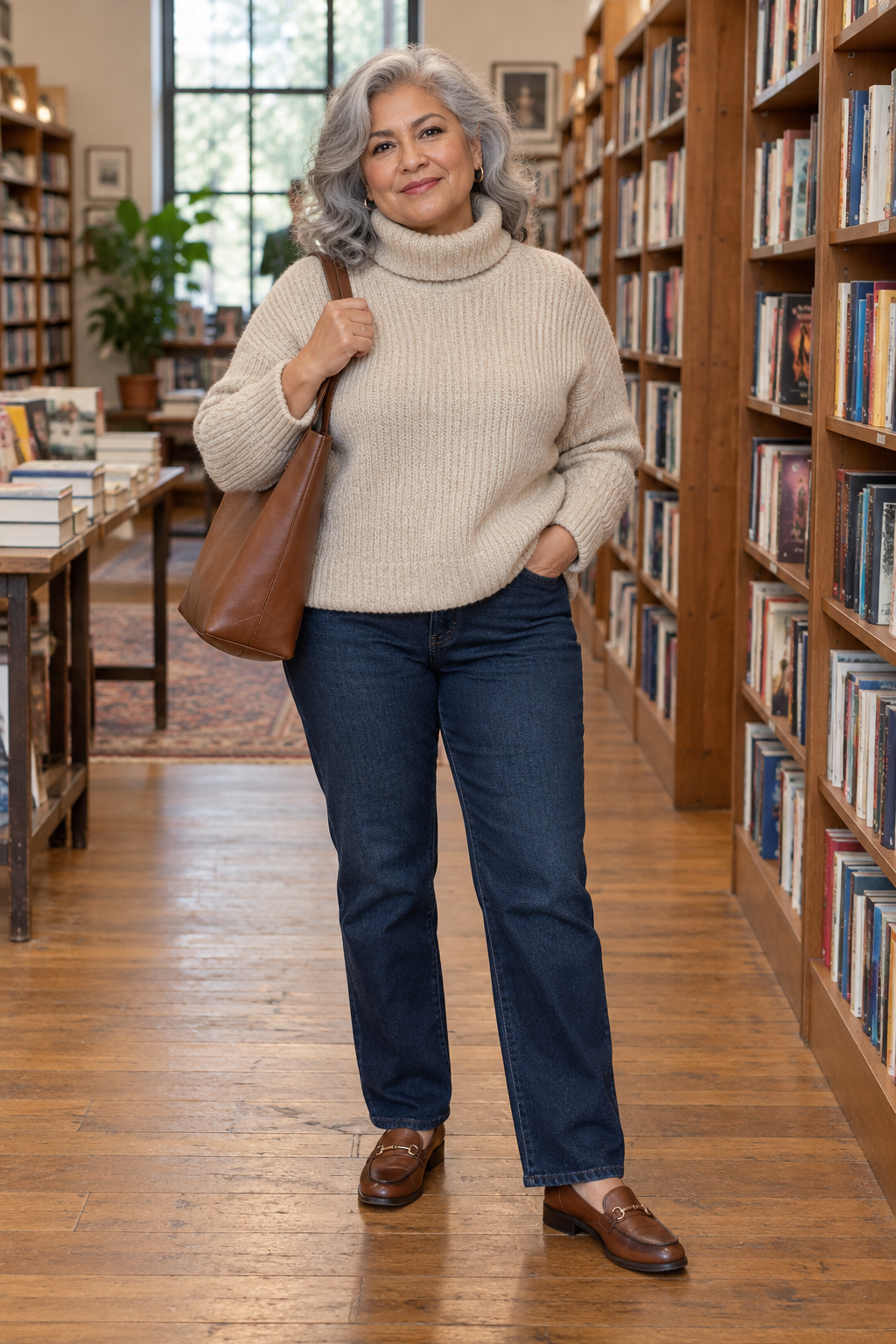
An oatmeal ribbed turtleneck gives dark straight jeans a substantial upper layer without a jacket. Brown loafers and a roomy brown tote continue the warm accents. The knit rests loose at the upper hip, making this a useful alternative when you do not want fabric tucked into the waistband.
Sit in the complete combination and notice where the ribbed edge settles. If it rolls or gathers in a way you dislike, compare another sweater length or a different placement before automatically choosing a smaller size. The intended room of the knit matters too.
The jeans are full length here, with the shoes still visible. Check your hem on the loafers you actually own rather than estimating from this image. A longer sweater or different shoe can change the overall feel while preserving the simple oatmeal-and-indigo palette.
An Olive Overshirt With a Navy Tee

Navy close to dark denim creates a quiet base, with an olive overshirt providing the visible layer. Tan loafers and a crossbody lift the lower and middle areas with a lighter accent. This offers a practical alternative to adding another blue denim layer over blue jeans.
Try the navy tee without the overshirt before deciding the outfit is complete. If the layer comes off, you should still like the tee’s coverage, sleeve length and relationship with the jeans. The open shirt is an option, not a way to hide a base you dislike.
Then reach forward with the overshirt on. Its room should be judged over that actual tee, especially around the upper back and arms. If you prefer the shirt fastened, try that version separately; an open photograph cannot establish whether your buttons will close comfortably.
Burgundy Texture With Gray Jeans
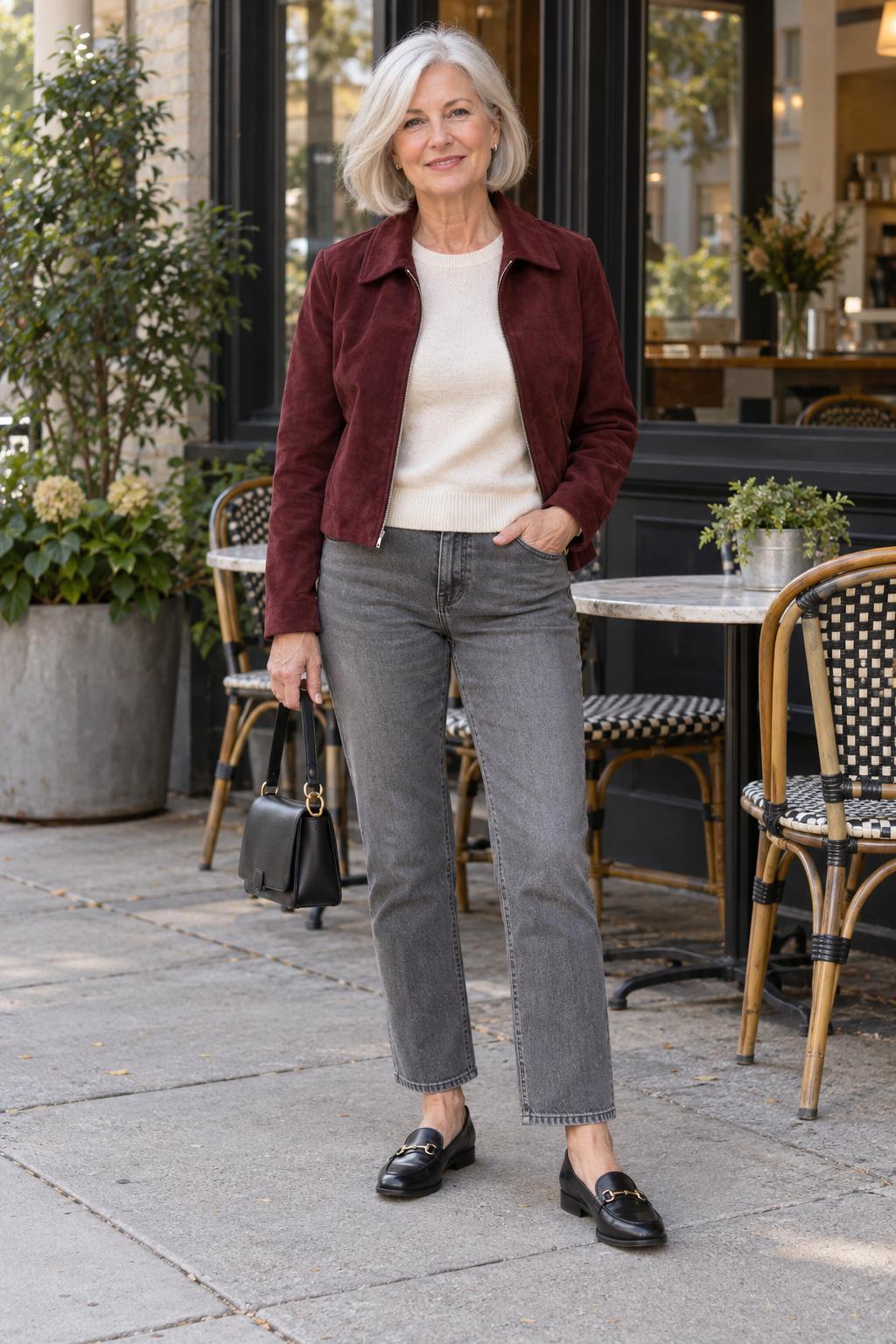
Burgundy brings the color in this outfit, with a cream knit, gray jeans and black loafers keeping the other pieces simple. The jacket ends higher than a long overshirt, so more of the jeans remain visible. A small black handheld bag echoes the shoes without adding another warm shade.
Separate your interest in the color from the surface. A plain burgundy jacket can give a similar palette even if you do not want a suede-like texture. The photograph cannot identify the material or its care needs; use your own garment’s label for that decision.
Check the knit edge below the jacket and compare it loose before considering a tuck. If the waistband is comfortable and you like the two hems, there is no missing belt to correct. Gray jeans need not be reserved for gray or black tops.
A Burgundy Blouse With Charcoal Denim
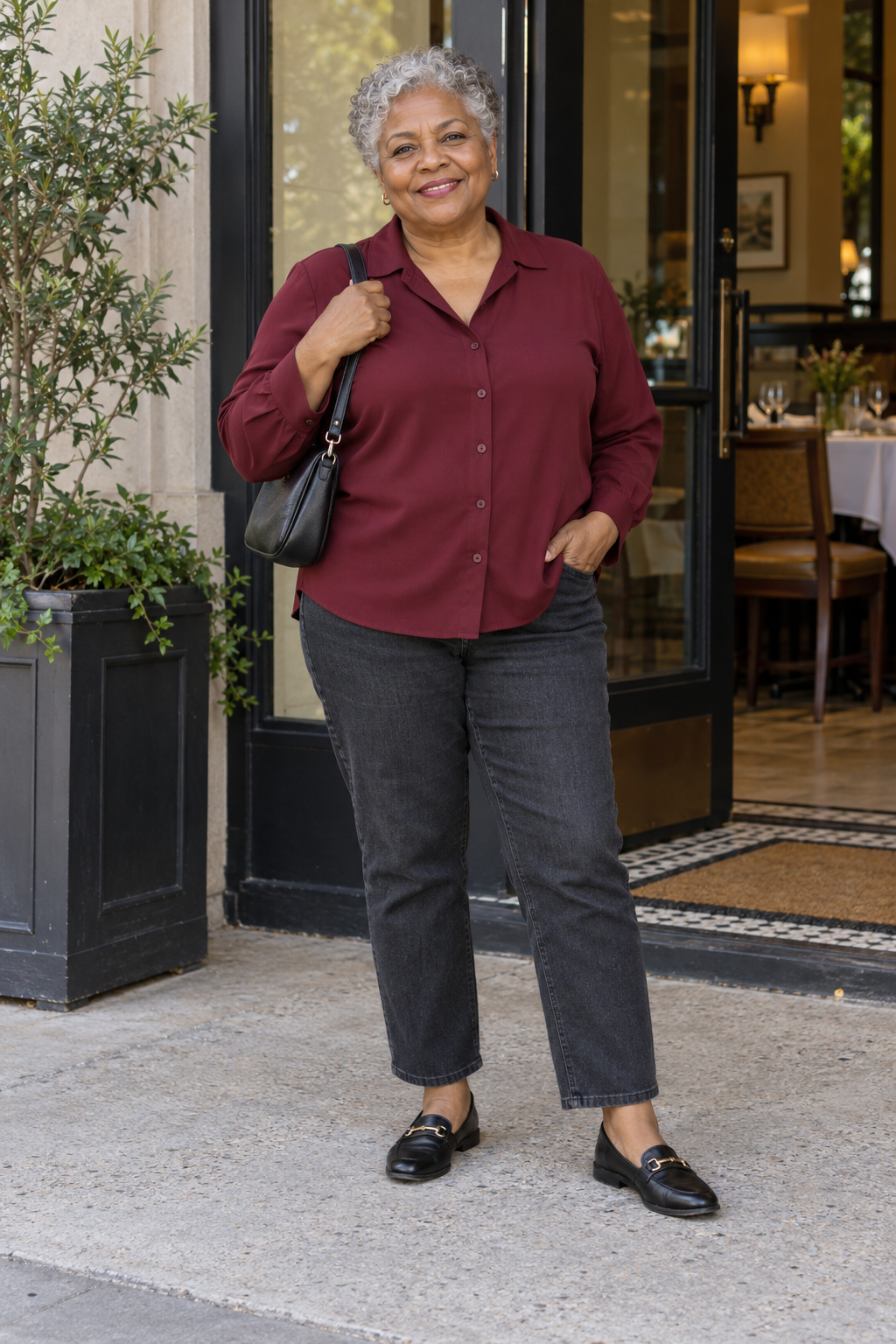
A burgundy blouse with charcoal jeans offers a softer top than the burgundy jacket in the previous example. Black loafers and a black shoulder bag leave the blouse as the main color. This is a useful way to compare two different upper shapes while keeping the broad palette related.
Fasten your blouse and sit before deciding whether to tuck it. Watch for pulling at the buttons when you lean forward; a tuck can change that tension. Leaving the blouse loose, as pictured, is a complete option if the edge falls where you like it.
The collar and cuffs provide detail already. Start without another accessory and see whether you want one after checking fit. For a lunch reservation, consult the actual venue guidance if denim is uncertain rather than treating a styled restaurant doorway as permission.
A Cable Vest With Medium Blue Jeans
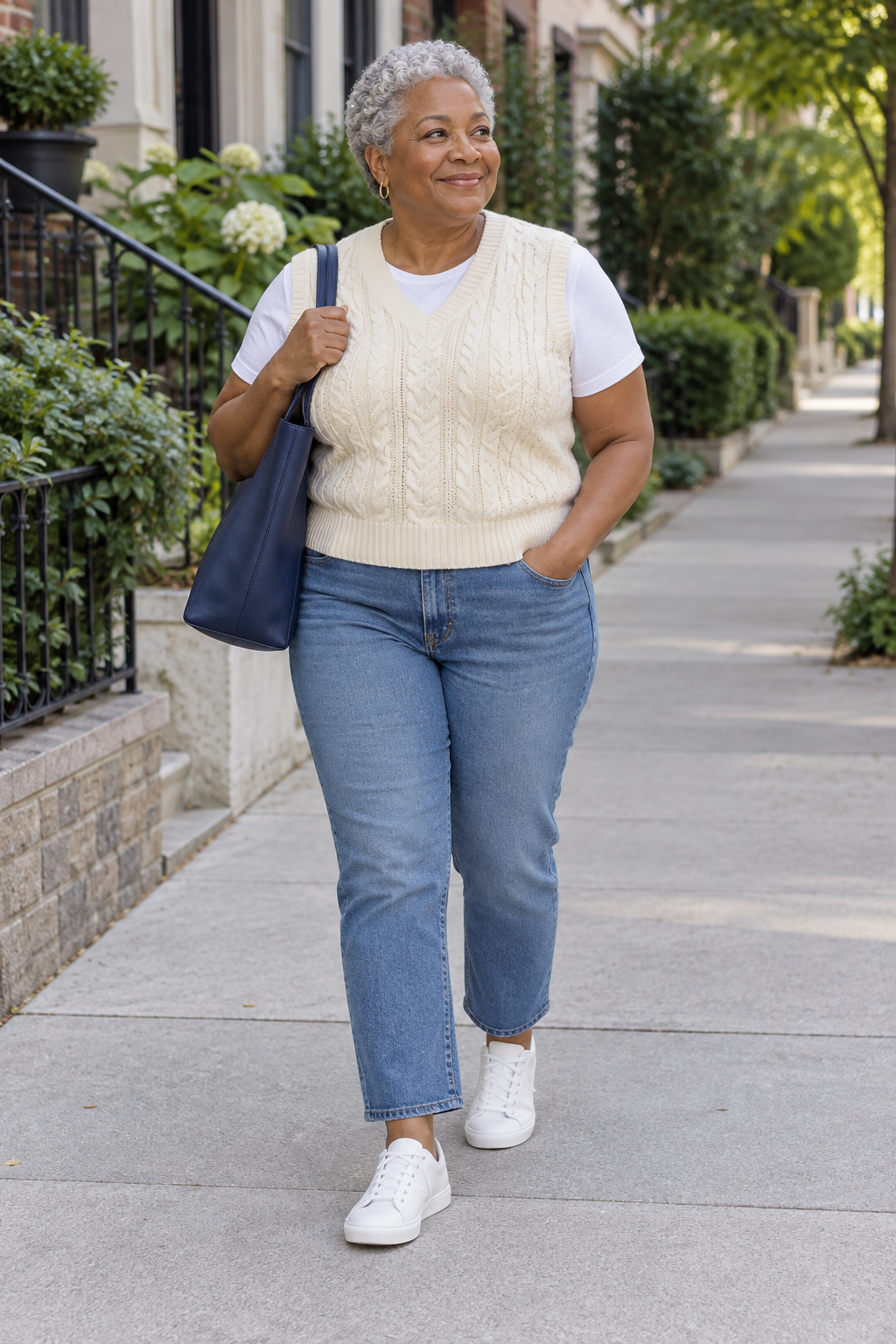
A cream cable vest over a white tee gives medium-blue jeans a lighter upper half than the oatmeal-and-shirt combination. White sneakers repeat the tee, and a navy tote adds carrying space. The difference here is partly in the sleeves: a short-sleeve base leaves the arms less covered than a buttoned shirt.
Choose that coverage first. If you want longer sleeves, compare a light long-sleeve tee rather than assuming the cable vest requires bare forearms. Check the underarm opening over the actual layer so the fabric is not repeatedly caught or pushed aside.
Keep your preferred jean length with the intended sneakers during the try-on. The cable texture already provides interest above the waistband, so a complicated belt or necklace remains optional. Borrow the light-on-blue palette even if your own knit has a simpler surface.
Ecru Denim With a Blue Popover
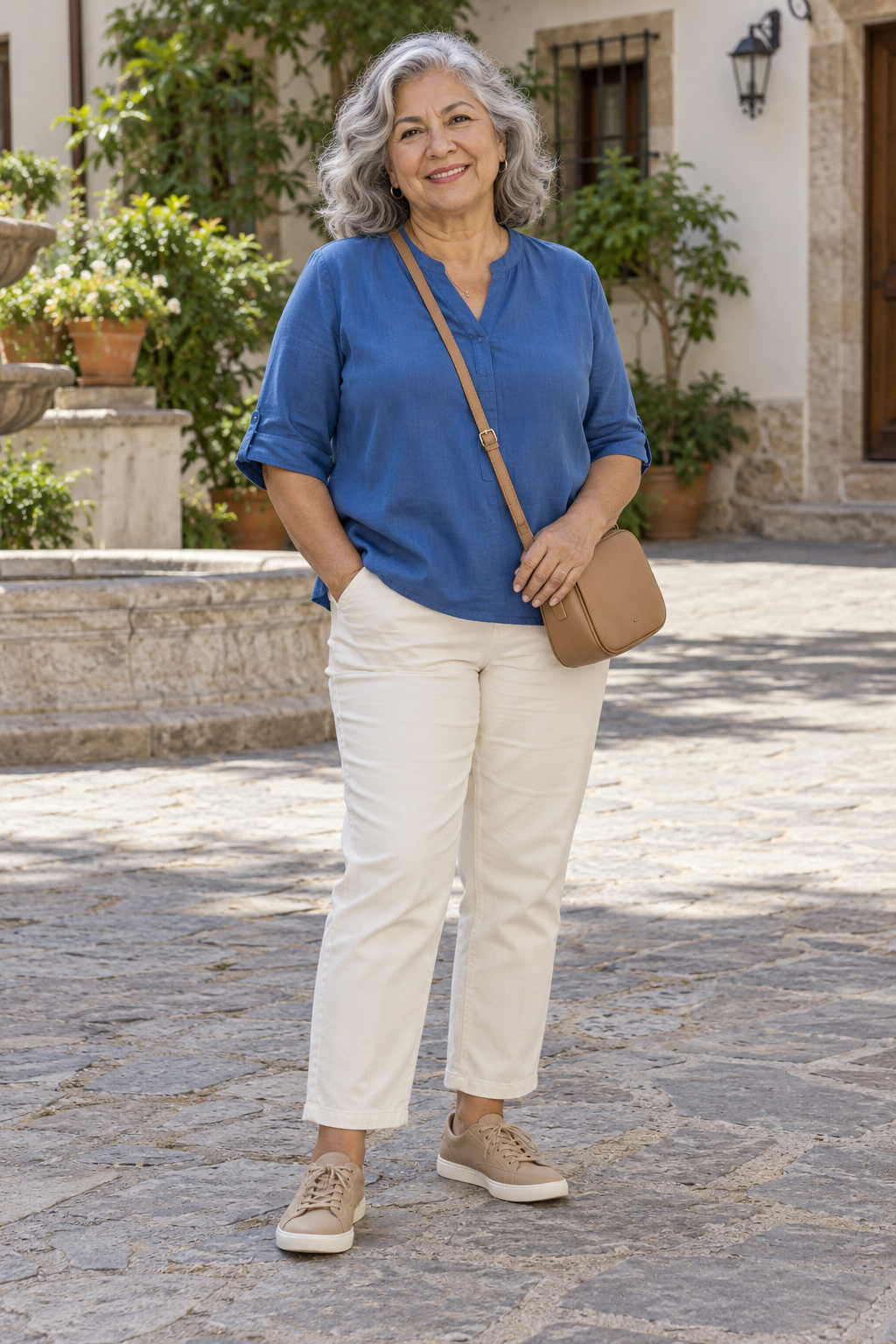
Ecru straight jeans give the blue popover a lighter setting than indigo denim would. Tan sneakers and a tan crossbody keep the accessories related without introducing a dark outline. The blouse is loose and uncollared, making this a different shirt shape from the white button-front example.
Compare your pale jeans and blouse in daylight before judging the contrast. Check the opacity of your actual garments with the intended underlayers; this illustration cannot establish how another fabric will look. A slightly different blue or cream can preserve the same broad idea.
The popover ends over the waistband. Sit and reach forward to see whether your version stays comfortably in place or collects at the hip. Try that loose treatment before adding a tuck. Use familiar sneakers so you can judge the jean hem against a shoe you already know.
Plaid Over Black Straight Jeans
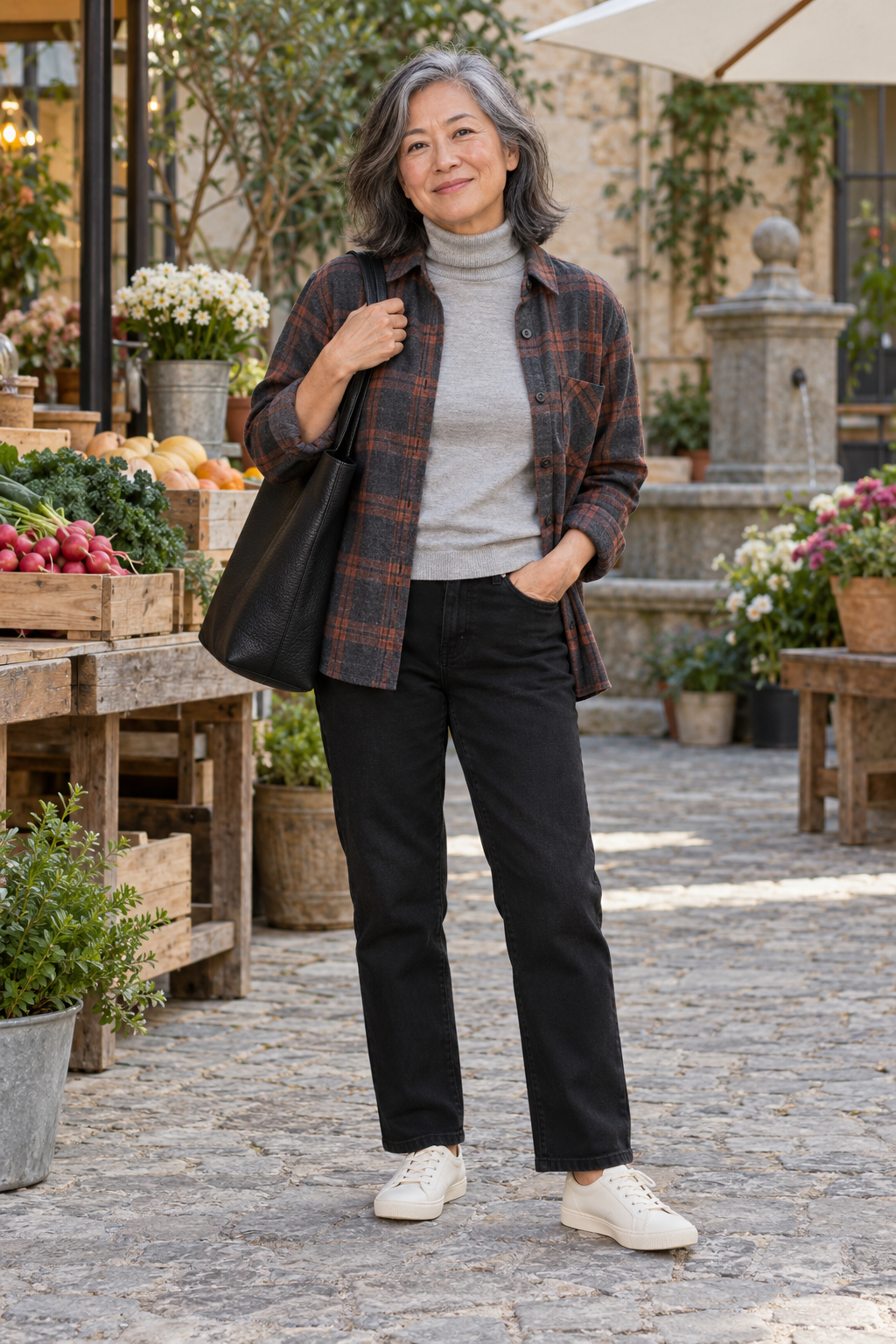
A charcoal-and-rust plaid overshirt gives black jeans pattern without using a printed top directly underneath. The gray turtleneck remains quiet, and cream sneakers create a light finish. A black tote stays close to the denim, leaving the overshirt as the main visual change.
Try the overshirt over the actual knit rather than a thinner tee you will not wear. Reach forward and cross your arms to check the combination around the back and sleeves. A layer that hangs freely on its own may behave differently with a folded neck underneath.
The jeans are straight and near full length here. Walk to check how your own black denim meets the sneakers. If the lower half feels too dark for your preference, compare the light shoes before changing the whole outfit. You can keep the plaid even with another familiar jean wash.
A Plum Blazer With Blue Jeans
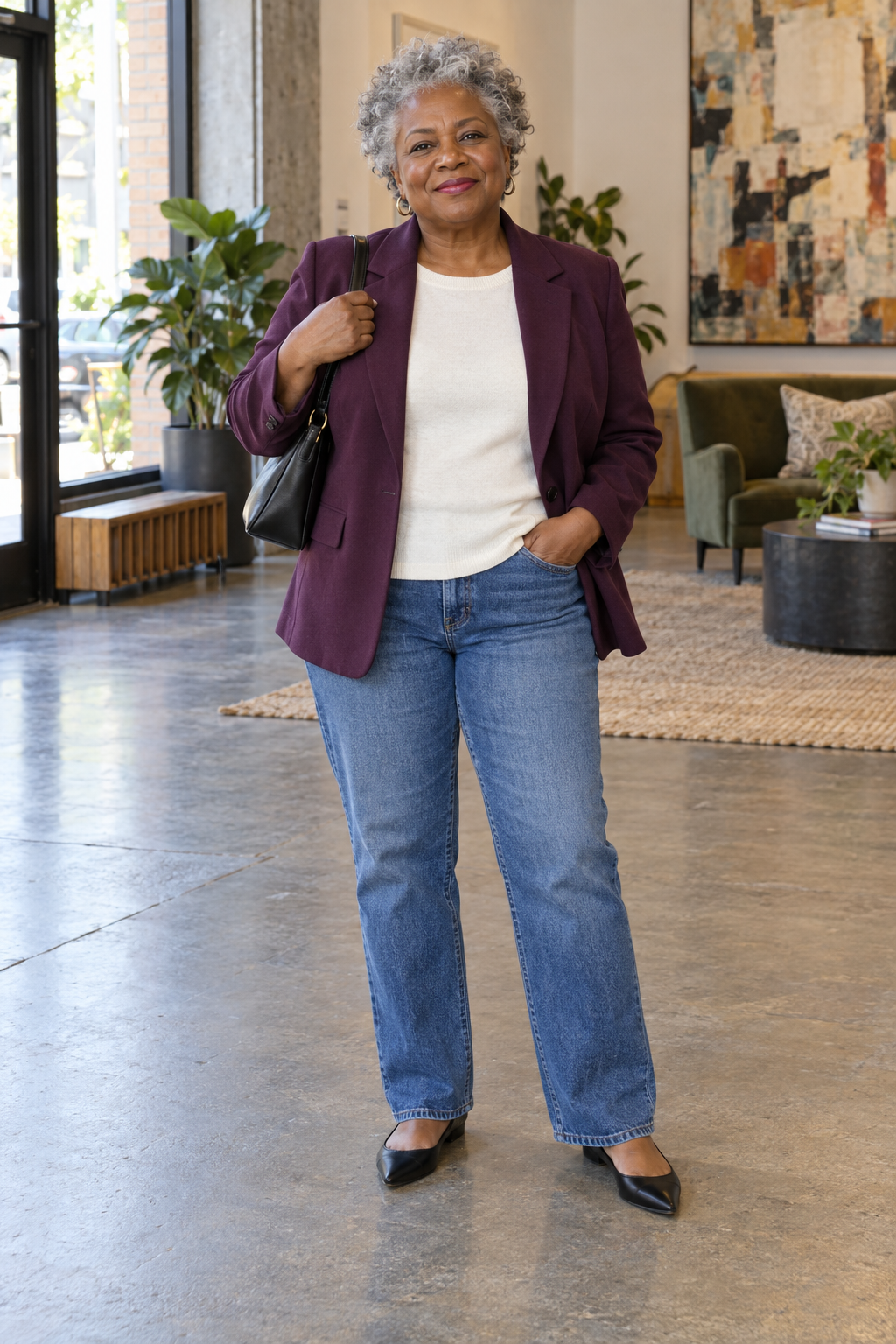
A plum blazer changes the upper shape of medium-blue jeans without needing a patterned blouse. The ivory shell creates a light center, while black pointed flats and a shoulder bag keep the accessories simple. This option offers soft tailoring alongside denim rather than a matching suit.
Put the shell and blazer on together, then reach forward as if using a desk or table. Check the upper back and arm area before deciding that the jacket’s hem is the only fit question. The open front shown here does not prove your own blazer will feel right fastened.
The jeans extend over part of the shoe. Judge your full-length pair on the actual flats, especially around the back of the hem. If you prefer a shorter denim length, compare it directly; there is no need to reproduce the photograph’s exact amount of shoe coverage.
Soft Blue Knit Over a White Collar

Soft blue knitwear and a thin white turtleneck offer a lighter upper palette with dark jeans. Gray loafers and a gray crossbody stay understated beside those colors. Unlike the cream cable vest above, this vest has a longer, simpler surface and a high-neck layer beneath it.
Look at the V and folded collar together before adding a necklace or scarf. You may already like the visible shape and color contrast. If the neckline feels crowded, compare a lower-neck underlayer rather than assuming the whole vest needs replacing.
Check the vest hem while seated in your jeans. A longer edge can rest differently around a waistband or bag strap, particularly when you stand again. Choose the amount of coverage you prefer. The gray loafers are a color option, not a requirement that every accessory stay cool-toned.
A Cream Cardigan With Black Jeans
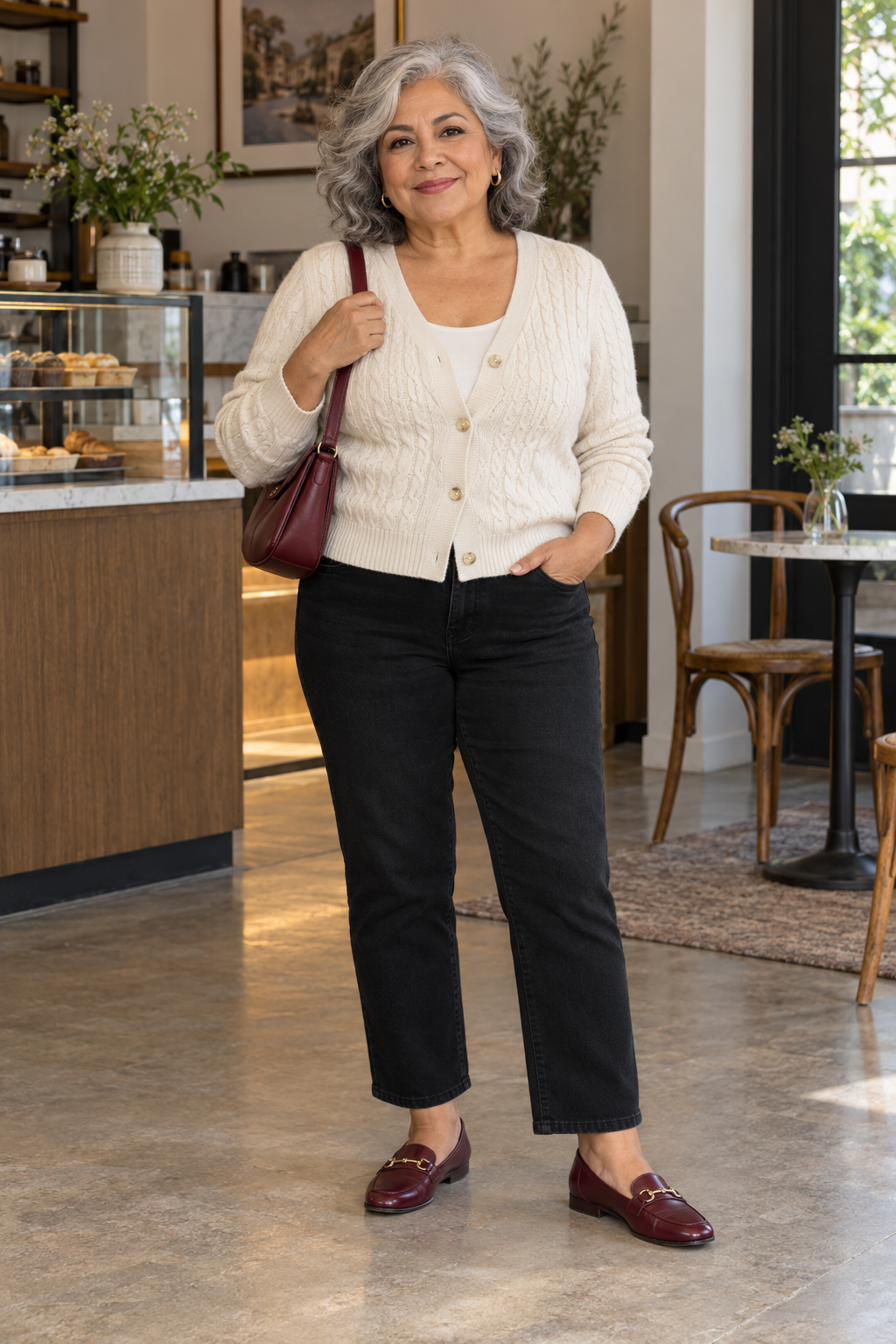
A cream cable cardigan gives black jeans a compact buttoned upper layer, with an ivory shell visible at the neckline. Burgundy loafers and the shoulder bag add a warm accent below and beside the knit. This is a cardigan-based alternative to the separate cream cable vest and white tee.
Try the cardigan with the intended shell and fasten only the buttons you plan to use. Sit and reach forward, noticing whether the spacing opens more than you want. Compare another fastening arrangement or size if needed rather than relying on the shell to disguise tension.
The black jeans stop above the shoes in the image. Check your own hem with the burgundy loafers and any socks you prefer. Cable texture and contrast already give the outfit detail, so additional jewelry can remain a personal choice after the fit feels settled.
A Gray Jacket With Black Denim
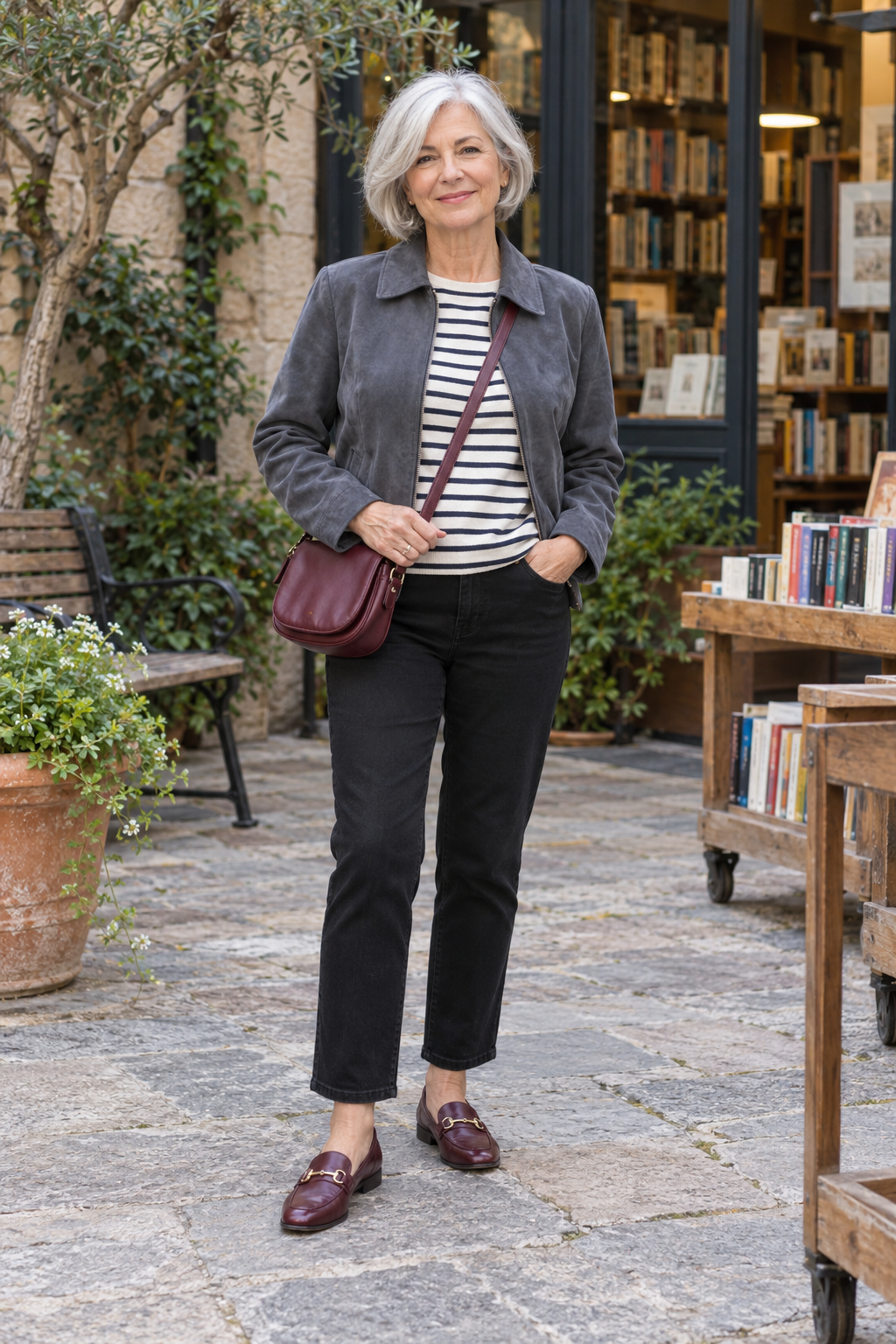
A gray soft-nap jacket frames navy-and-ivory stripes above black jeans. Burgundy loafers and a crossbody repeat a separate accent, creating a different finish from black shoes and a black bag. This is an option for someone who wants pattern in a familiar tee rather than a blouse.
Begin with the stripes as the detail. Try the outfit without a patterned scarf, then decide whether you want another pattern at all. There is no reason to remove stripes because of a shorter frame; judge the particular colors and spacing according to your own preference.
Check the tee edge below the open jacket while moving. If the two hems collect together, try another tee length before changing the jeans. The jacket’s surface is illustrated rather than fiber-verified, so use your actual care label and material information when choosing how to wear and maintain it.
Navy Stripes With a Short Zip Jacket
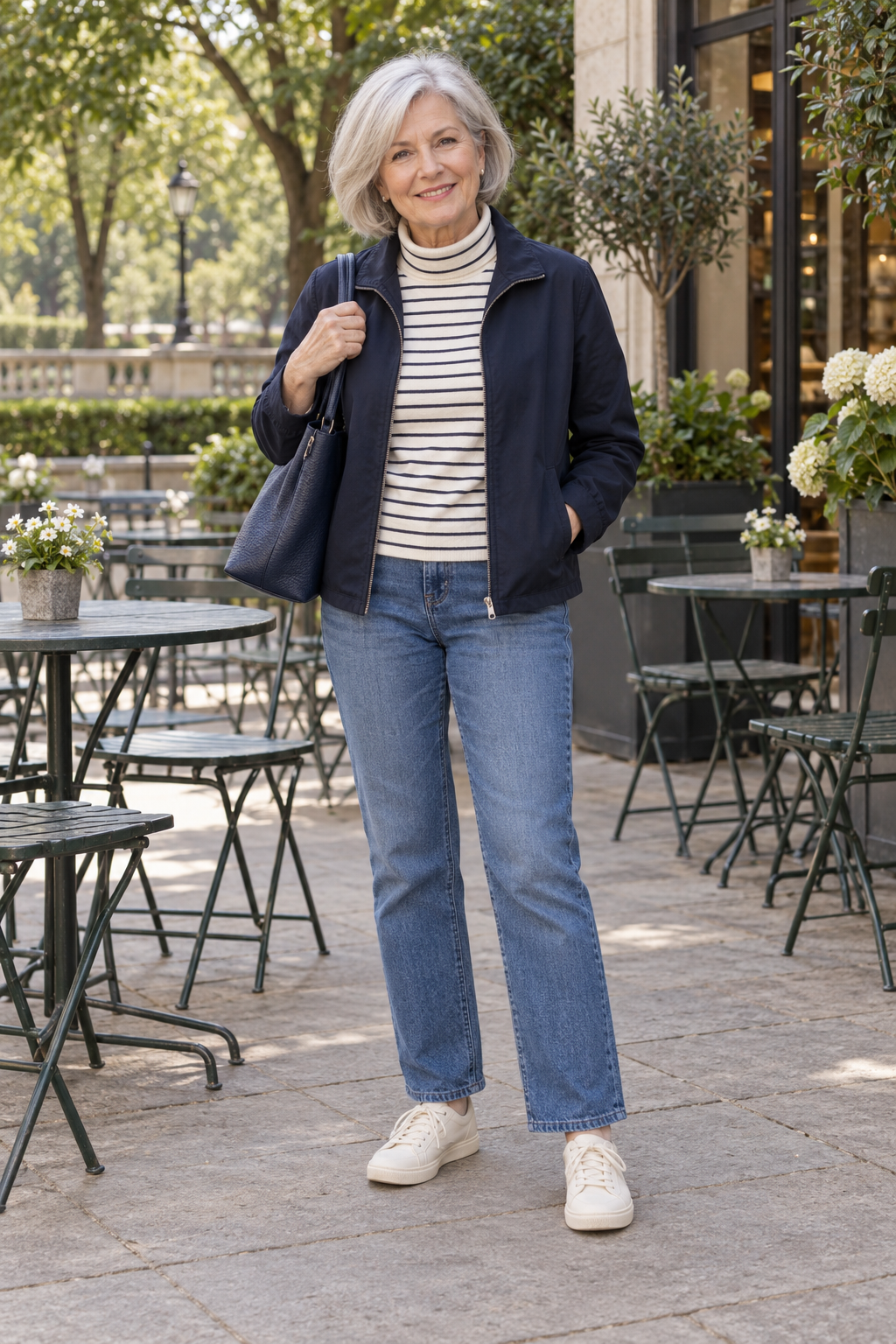
Medium-blue jeans, a striped turtleneck and a navy zip jacket finish the sequence with a casual layered option. Cream sneakers keep the feet light, while the roomy navy bag repeats the outer layer. The stripes appear on a folded-neck knit here rather than the crewneck tee in the previous outfit.
Compare the jacket collar with that folded neck. Move your head and try the fastening if you expect to close it outside. If several collar edges feel crowded, test another underlayer before assuming you need a different jacket or a new pair of jeans.
Check the denim with the intended sneakers, including any socks. The photograph cannot establish warmth or walking comfort, and a navy jacket is not automatically weather protection. Keep the easy blue palette if you like it and choose the actual layers for your day.
Compare the top without changing the jeans
If an outfit feels repetitive, try two genuinely different upper shapes on the same pair: a loose woven shirt and a compact cardigan, for example. Keep the shoes steady while you decide. That makes it easier to identify whether you want a different hem, a softer surface or simply another color.
View the result from the side and while seated. A tuck may look appealing standing yet feel crowded at the waistband; a loose top may settle differently after movement. Neither treatment is automatically right for a shorter frame. Choose the version you like wearing as well as looking at.
A useful outfit note: Record the jeans, shoes and one top detail that worked, such as “loose white hem below black cardigan” or “short cream knit with black denim.” A short specific note is easier to recreate than a general instruction to make jeans look polished.
Keep denim choices personal
Dark denim is one option among several, not an age requirement. Gray, black, pale and medium-blue pairs can give familiar tops a different setting. Use the everyday outfit guide for more ways to combine ordinary pieces, then keep the details that suit your actual day.
Wash, stretch and fiber cannot be reliably established from a styled image. Follow the actual garment label for care; the FTC care-label guidance explains the role of those instructions. Images are AI-generated editorial illustrations, including selected originals from our existing library, rather than wear-tested products or venue recommendations.

Alia Hashim
I'm Alia Hashim — a passionate blogger and founder of Modern Lady Magazine. I started this platform to create a space where women could find inspiration, empowerment, and real-life solutions for style, beauty, wellness, and beyond. Through Modern Lady Magazine, I aim to celebrate the modern woman — confident, creative, and full of dreams — while sharing ideas that help nurture both inner strength and outer beauty. Every story, every tip, every idea here is crafted to inspire you to embrace your journey and live life beautifully, one step at a time.
View author profile →

